Your Notifications
All done, no notifications

Meniscectomy: Symptoms, Classification, Diagnosis & Recovery

Meniscectomy is a surgical procedure used to treat a meniscus tear, a common knee injury. During this treatment, a portion of the meniscus, a cartilage in the knee, is removed. The decision to perform a full or partial meniscectomy is based on factors such as the patient's overall health, age, activity level, and the specific nature of the injury.

This surgical procedure is typically carried out by a team of orthopedic surgeons who evaluate the tear's location, pattern, and size to determine the best course of action for the patient.

Meniscus tears vary in type. Small tears often heal independently with home treatment and may not require surgery. However, moderate to larger tears in the red zone of the meniscus are usually best treated with meniscectomy surgery. Tears in the meniscus's white zone are less likely to heal and typically do not benefit from meniscectomy surgery.

There are different types of a meniscus tear. A mild meniscus tear usually generally requires no surgery and heals on its own with home treatment. A meniscectomy operation is the most effective treatment for a moderate to major tear in the red zone of the meniscus. A tear in the white zone of the meniscus, on the other hand, is not treated with the help of meniscectomy surgery due to there is a low possibility of healing.

Following a meniscectomy, common signs and symptoms can include:

  • There may be pain and swelling around the knee joint, which is common after surgery. This discomfort usually improves over time as healing progresses.
  • Limited Range of Motion: Temporary stiffness or difficulty fully extending or bending the knee may occur due to postoperative inflammation and tissue healing.
  • Bruising around the knee area is typical after surgery and may take a few weeks to fully resolve.
  • Walking Difficulty walking may be challenging or require the use of crutches for support until strength and mobility improve.

Before undergoing a meniscectomy, a comprehensive diagnosis and a series of tests are conducted to confirm the condition and plan the appropriate treatment. Here are the typical steps involved:

  • Medical History: The doctor will review the patient’s medical history, including any previous knee injuries or surgeries, and discuss the symptoms.
  • Physical Examination: The doctor will perform a physical examination to assess knee stability, range of motion, and areas of tenderness. Specific tests, such as the McMurray test, may be used to detect a meniscus tear.
  • X-rays: While X-rays do not show meniscus tears, they are useful to rule out other issues such as fractures, arthritis, or bone abnormalities.
  • Magnetic Resonance Imaging (MRI): An MRI is the most effective imaging test for diagnosing meniscus tears. It provides detailed images of the soft tissues in the knee, allowing the doctor to see the extent and location of the tear.
  • Ultrasound: In some cases, an ultrasound may be used to visualize the meniscus and other structures within the knee.

After the surgery, the patient will be advised to rest, followed by a gradual reintroduction of light exercises and walking. Recovery details vary based on the type of procedure:

Arthroscopic Procedure: Patients who undergo an arthroscopic procedure can generally put weight on their affected leg within a day or two. This minimally invasive procedure allows for a quick recovery with minimal pain and healing time. Patients can usually return to their normal routine and full activities within two to four weeks.

Open Surgery: Recovery may take a bit longer, with patients possibly needing a few extra days before they can put weight on the affected leg. Full recovery and return to normal activities can take up to eight weeks.

Best Meniscectomy Hospitals
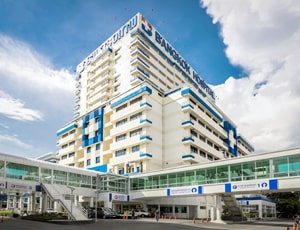
Bangkok Hospital

Bangkok Hospital

Bangkok, Thailand

One of the most renowned and honoured hospital networks in Asia- Pacific is Bangkok Dusit Medical Se...more

FACILITIES

Phone in Room

Foreign Currency Exchange

Rehabilitation

Free Wifi

Joint Commission International, or JCI
Mount Elizabeth Hospital

Mount Elizabeth Hospital

Singapore, Singapore

Mount Elizabeth Hospital is a multispecialty healthcare facility operated by Parkway Health. The hos...more

FACILITIES

phone in the room SIM

Free Wifi

Translator

Health Insurance Coordination

Joint Commission International, or JCI

Catholic kwandong university international St Mary hospital is one of its kind hospitals in Korea. I...more

FACILITIES

International Patient's Lounge

interpreter services Interpreter

Local Transportation Booking

family accomodation Accommodation Services

Joint Commission International, or JCI

Consult Online with World’s Best Meniscectomy

View All Doctors
Dr. Erden Erturer
Dr. Erden Erturer

Orthopedic & Joint Replacement Surgeon

Ulus, Turkey

23 of experience

USD  240 for video consultation

Dr. Rakesh Komuravelli

Orthopedic Surgeon

Hyderabad, India

5 of experience

USD  30 for video consultation

Dr. Akhil Dadi
Dr. Akhil Dadi

Orthopedics & Joint Replacement Surgeon

Hyderabad, India

22 of experience

USD  30 for video consultation

Dr. Abhishek Barli
Dr. Abhishek Barli

Orthopedic Surgeon

Hyderabad, India

14 of experience

USD  30 for video consultation

Frequently Asked Questions

Q: What is the recovery time for meniscus surgery?

A: It may take around four to six weeks for a patient to recover fully from the meniscus surgery.


Q: Can medial meniscus tear heal on its own?

A: A tear in the red zone of the meniscus heal on its own, while a tear in the white zone is repaired only with a surgery.


Q: How long does it take for a torn meniscus to heal on its own?

A: A torn meniscus may take around four to six weeks to heal on its own.


Q: What happens if you leave a torn meniscus untreated?


A: If left untreated, the torn meniscus may worsen over a period of time and lead to the onset of osteoarthritis in addition to other discomforting symptoms.


Explore Top Hospitals Worldwide for Meniscectomy

Explore Top Hospitals for Meniscectomy

Author

Dr. Shagufta Parveen

Doctor of Pharmacy

1.5 Years of Experience

Dr. Shagufta Parveen is a medical and scientific content writer with expertise in clinical pharmacology and pharmacotherapeutics. She holds a B.Pharm and Doctor of Pharmacy (Post-Baccalaureate) degree from Teerthanker Mahaveer University, Moradabad. During her clinical stint at BLK-Max Super Speciality Hospital and Indraprastha Apollo Hospital, she gained hands-on experience in the Clinical Pharmacology Department. Combining scientific knowledge with strong medical writing skills, Dr. Shagufta develops evidence-based healthcare content, treatment guides, and patient education resources. Her work focuses on simplifying complex medical concepts while maintaining scientific accuracy, helping readers better understand healthcare advancements and treatment options. . View More

Reviewer

Dr. Manoj Miglani

Orthopedic Surgeon

22 Years of Experience

Known for his soft-spoken nature, Dr. Manon Miglani had completed his MBBS from Maulana Azad Medical College and MS (Ortho) for All India Institute of Medical Sciences. Dr. Miglani was awarded AO spine fellowship from Queen’s Medical Center, Nottingham and he also received Stryker fellowship in Arthroplasty from Indraprastha Apollo Hospital. Dr. Manon Miglani has provided his expert services to various hospitals of Delhi and NCR including AIIMS, Indraprastha Apollo, Jaipur Golden hospital, and Artemis hospital Presently, Dr. Manon is the additional director of Fortis, Vasant Kunj and senior consultant at Fortis, Shalimar Bagh. View More