Vestibular Schwannoma Treatment in Thailand
- Top Accredited Hospitals
- Global Medical Standards
- Cutting-Edge Technology
- Proven Treatment Options
- High Success Rate
- Trusted by Millions

What is Vestibular Schwannoma?
A noncancerous tumour called an Vestibular Schwannoma forms on the major nerve that connects the inner ear to the brain. The vestibular nerve is the name of this nerve. Hearing and balance are directly impacted by the nerve's branches. Hearing loss, ringing in the ears, and balance issues can all be symptoms of pressure from an Vestibular Schwannoma. The Schwann cells that cover the vestibular nerve give rise to an auditory neuroma. Vestibular Schwannomas often grow slowly. On rare occasions, it could spread out rapidly and get big enough to put pressure on the brain and interfere with essential processes.
What is the Importance of Timely Treatment?
Timely treatment is important because Vestibular Schwannomas can exacerbate hearing loss and balance function even if they are not growing. Untreated Vestibular Schwannomas can result in a potentially fatal accumulation of fluid in the brain or in the compression of the brain stem and cerebellum.
What are the symptoms of Vestibular Schwannoma?
Vestibular Schwannoma symptoms can take years to manifest and are frequently overlooked. The tumor's impact on the hearing and balance nerves may result in symptoms. Additionally, the tumour may exert pressure on the facial nerve, which controls face muscles, and the trigeminal nerve, which controls sensation. Vestibular Schwannomas can potentially impact brain structures or blood vessels. The likelihood of more obvious or severe symptoms may increase as the tumour grows.
The following are typical signs of an Vestibular Schwannoma:
- Loss of hearing, typically occurring gradually over months to years. Rarely, hearing loss may occur suddenly. Usually, one side experiences hearing loss, or it is more severe on one side
- Tinnitus in the afflicted ear (ringing in the ear)
- Loss of equilibrium or unsteadiness
- Lightheadedness
- Numbness in the face and, in rare cases, loss of muscle mobility or paralysis.
Causes and Risk Factors of Tethered Vestibular Schwannoma
Causes
The primary aetiology of tethered vestibular schwannoma is NF2 gene mutations, which lead to tumours that can stick to surrounding tissues. Patterns of tumour growth, previous surgery or radiation therapy, and the development of scar tissue that binds the tumour to surrounding structures can also lead to it.
Risk Factors
Having a parent with neurofibromatosis type 2, a rare genetic condition, is the sole known risk factor for auditory neuromas. However, only around 5% of occurrences of auditory neuromas are caused by neurofibromatosis type 2.
Permanent side effects from an auditory neuroma could include:
- Loss of hearing
- Weakness and numbness in the face
- Balance issues
- Ear ringing
- Sometimes, the passage of cerebrospinal fluid between the brain and spinal cord is blocked by large tumours pressing on the brainstem. Hydrocephalus is the accumulation of fluid in the brain. The pressure inside the skull rises as a result.
Connect with our advisor for a PRIORITY response
Latest Research and Technologies in the Treatment of Vestibular Schwannoma in Thailand
Treatment for vestibular schwannoma in Thailand is wide-ranging and encompasses observation, stereotactic radiosurgery, and microsurgery. Specialised treatment for this condition is available from world-renowned medical centres. In addition, recent studies have determined that stereotactic radiosurgery can safely shrink tumours without compromising facial nerve function, enhancing patient outcomes.
Vestibular Schwannoma Prevention Tips
There are no proven preventative methods for vestibular schwannomas because the actual cause is unknown. Still, early detection through routine doctor's visits is essential, particularly if you have a family history of neurofibromatosis type 2.
Treatment options for Vestibular Schwannoma
Gamma Knife Radiosurgery: One non-invasive treatment option for vestibular schwannomas (also called Vestibular Schwannomas) is Gamma Knife radiosurgery, which is considered a first-line treatment for many patients with vestibular schwannomas. It is especially effective for small to medium-sized tumours and aims to stop tumour growth by delivering a focused dose of radiation without requiring a surgical incision. This procedure often preserves hearing function while managing symptoms like dizziness and hearing loss associated with the tumour
Cost Start From USD 7000 - USD 10000Explore Options
Microsurgery: Neurosurgeons can do surgery on extremely small body parts thanks to specialised tools. Vestibular Schwannomas can only be removed with this procedure
Chemotherapy: In rare instances, medical professionals may prescribe bevacizumab (Alymsys, Avastin, MVASI, Zirabeva). Children with Vestibular Schwannomas may be able to hear for longer thanks to this medication's potential to decrease tumours. The medication is also used to treat radiation necrosis, a side effect of radiation therapy
Cost Start From USD 1000 - USD 6800Explore Options
Vestibular Rehabilitation Therapy: Parts of the nerves that regulate balance may occasionally be removed during surgery. Therapy called vestibular rehabilitation helps you make up for the loss of those nerves and the functions they control.
- Audiometry: A test of hearing. An audiologist, a specialist in hearing, performs this exam. One ear at a time is exposed to noises during the test. A variety of sounds with different tones are presented by the audiologist. Every time you hear the sound, you indicate. To determine whether a tone is scarcely audible, it is repeated at progressively lower levels. To test THE patient’s hearing, the audiologist could also show you different words.
- MRI: To diagnose vestibular schwannoma, magnetic resonance imaging with contrast dye is typically utilized. Tumours as tiny as 1 to 2 millimetres in diameter can be found using this imaging examination. Computerised tomography (CT) can be utilised if MRI is unavailable.
MediRehab (chain of Rehab centres - Part of MediGence) provides comprehensive rehabilitation services rehabilitation services to support patients through Teleconsulations and online therapy sessions.
- Personalized Therapy Plans: A specialised type of treatment called vestibular rehabilitation (VR) aims to address the fundamental and secondary issues brought on by vestibular diseases. The main goals of this exercise-based program are to lessen vertigo and dizziness, gaze instability, imbalance, and fall risk, as well as to address any secondary impairments brought on by vestibular disorders
- Rehabilitation post Surgery: physiotherapy sessions focused on restoring hearing and balancing function
- Nutrition Guidance: Consuming lean meats, avoiding red meat, and only eating chicken after the skin has been removed are all recommended for those with vestibular disorders. When it comes to milk kinds, people with vestibular disorders should go for skim milk because it is better for their health.
- Depending on the circumstances, your doctor might recommend medication to help manage your symptoms and complement the course of treatment.
Instantly Connect with our Specialists


Hospitals for Vestibular Schwannoma in Thailand
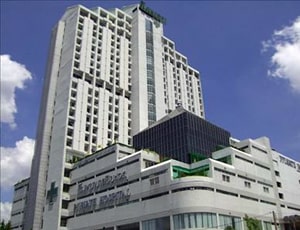
Piyavate Hospital
Bangkok, Thailand
Piyavate Hospital located in Bangkok, Thailand is accredited by JCI. Also listed below are some of the most prominent infrastructural details:
Medicine Centre: Piyavate Hospital provides advanced holistic treatment for their patients. They offer a complete range of services and physicians that specialize in various fields like the endocrine system, the nervous system, kidney function, cardiovascular care, respiratory and digestive system. They pride themselves for the familial care that they provide to their patients.
Fertility and In-Vitro Fertilization Centre: Helping the couples who walk into the Piyavate Hospital to achieve their dream of having a family. They have a medical team that specializes in male and female fertility. They offer consultation services, fertility check-up for both men and women and complete IVF services. They have advanced IVF cycle treatment facilities that offer a high rate of success.
Bone and Joint Institute: Piyavate Hospital houses one of the frontrunners in Orthopaedic health care in all of SouthEast Asia. They offer a wide range of services and surgeries in their bone and joint institute that include hand surgery, hip and knee replacement surgery, spinal cord surgery, upper extremity surgery, arthroscopic surgery and sports medicine.
Eye and Lasik Centre: Piyavate Hospital is fully equipped with the latest and most advanced technology for eye care and houses highly skilled ophthalmologists, sub-specialists and qualified nurses.
Physical Therapy and Rehabilitation Centre: One of the first hospitals to be equipped with the Hybrid Assistive Limb technology that will help a neurologically challenged patient to control the rehabilitation robot limb with a signal from their brain. The Physical Therapy and Rehabilitation Centre at Piyavate Hospital uses this system encourage patients to regain muscle memory to walk and function normally.
Amenities for Patient’s Family:
Piyavate Hospital also offers additional apartment facilities to house the kin of the patients who come to visit them from distant places. A restaurant, a flower shop and a café are a few of the other amenities provided by the hospital.
These are the most popular services offered by the Piyavate Hospital in Bangkok, Thailand. They also provide a plethora of other medical services that are listed below:
Diabetic Foot Centre
Check-up centre
Urology Centre
Heart Institute
Paediatric Centre
Obstetrics and Gynaecology Centre
Surgery Centre
Ear Nose Throat Centre
Haemodialysis Centre
Dental Centre
X-Ray Centre
Gastroenterology Centre
Cancer Centre
Neonatal Intensive Care Unit (NICU)
Emergency Services and Centre
Tele-medicine

Phyathai 2 International Hospital
Bangkok, Thailand
Phyathai 2 International Hospital located in Bangkok, Thailand is accredited by JCI. Also listed below are some of the most prominent infrastructural details:
- Fully equipped rooms are available for convenience of the patients- Gold B Room, Gold A Room, Pediatric Gold A, Platinum room, and Prestige ward
- Nearby accommodations are also available- Abloom Service Apartments, Bangkok Patio, VIB Best Western Sanam Pao, VIC3 Hotel
- Operating room
- International Patient Medical Center to assist overseas patients

Asia clinic thonglor
Bangkok, Thailand
- A wide range of services in cosmetic surgery, skincare, wellness, and weight control.
- Experienced doctors and specialists with medical licenses and expert training.
- Use of trusted, approved products and techniques that meet global safety standards.
- Non-surgical beauty options include facial lifting, wrinkle care, and skin treatments.
- Health screening packages that check for hormones, allergies, and early signs of disease.
- Private recovery rooms are designed for comfort and relaxation after treatments.
- Additional conveniences include a café, free Wi-Fi, and clean, modern surroundings.
- Friendly staff who speak Thai, English, and Turkish for easier communication.
- A central location inside Marché Thonglor, a well-known health and lifestyle complex.
- Services for adults only, with about 1,500 people visiting each year.
Our Services to better your experience
Opinion & Option
We submit the most accurate opinion and options from one or more countries for your review
Consult Privately
Consult with a certified specialist privately on our telemedicine platform even before you decide to travel
Logistics
We handle flights, visas, transfers, and accommodation—so you can focus on your health.
Recovery
Our In-house rehabilitation service packages to better your recovery and treatment outcome
Why Choose Thailand for Vestibular Schwannoma Treatment?
Here are some of the reasons for choosing Thailand:
- Due to advancements in medical facilities, such as minimally invasive surgical techniques and gamma knife radiotherapy procedures.
- World-class experts include highly experienced doctors and JCI-accredited healthcare institutions.
- Compared to other countries, treatment in Thailand hospitals is cost-effective.
- Thailand hospitals provide international patient services, including a multilingual support system.
- Improved treatment methods and biological therapies.
Frequently Asked Questions
Acoustic neuromas or vestibular schwannomas are rarely life-threatening. Patients are expected to have a relatively normal life span when treated effectively.
The nation's healthcare institutions offer top-notch treatment alternatives, guaranteeing successful outcomes for many patients. Vestibular Schwannoma is effectively treated in Thailand. Hearing loss that has already occurred from the tumour cannot be reversed, but the remaining hearing can be preserved in some cases. Surgical tumour removal and gamma knife radiotherapy can often address balance problems, facial numbness and other symptoms.
Yes, many Thailand hospitals offer the following for Vestibular Schwannoma treatment:
- Advanced diagnostic tools like MRI, CT scan, electromyography, and PET scan for accurate diagnoses of Vestibular Schwannoma.
- Skilled neurologists, surgeons, and therapists perform surgery and use Gamma Knife radiotherapy to treat Vestibular Schwannoma.
- Comprehensive post-surgery care and rehabilitation for long-term health benefit
Always consider the following factors when selecting Thailand hospitals:
- Hospitals that are accredited (authorised by JCI).
- Patient reviews and success rates.
- Hospitals that provide seamless care to patients from abroad.
Considering that auditory neuromas are benign, patients often have a very high survival rate. People can have a normal life expectancy with proper medical treatment and continuous monitoring.
However, chronic, long-lasting symptoms like unsteadiness, dizziness, or spatial disorientation develop in half of all individuals with the illness. A person may suffer irreversible inner ear damage or hearing loss in severe situations.
Treatment options for Vestibular Schwannoma differ based on variables such as:
- The location and size of the tumour
- How hearing and balance are affected by the tumour
- General health and age

Reviewer

Dr. Mohit Agarwal
Medical Oncologist
14 Years of Experience
One of the finest Oncologist in New Delhi, India, Dr. Mohit Agarwal has worked with several world class multidisciplinary hospitals over the years. Dr. Mohit Agarwal has over 14+ years of experience in his field. The doctor treats and manages a wide range of conditions such as Stomach Cancer, Rectal Cancer, Breast Cancer, Brain Cancer View More
Last Reviewed - January 2026