Uterine Polyps Treatment in Thailand
- Top Accredited Hospitals
- Global Medical Standards
- Cutting-Edge Technology
- Proven Treatment Options
- High Success Rate
- Trusted by Millions

What are Uterine Polyps?
Uterine polyps are growths that connect to the uterine wall and spread out into the uterus. Uterine polyps, are caused by the overgrowth of cells in the endometrium, the lining of the uterus. While most of these polyps are benign (noncancerous), some may be cancerous or potentially develop into cancer (precancerous polyps).
The size range of uterine polyps is a few millimetres to several centimetres or more. They are attached to the uterine wall by a slender stalk or a significant base.
One or more uterine polyps may be present. Although they often remain inside the uterus, they can enter the vagina through the cervix, the uterine opening.
What is the Importance of Timely Treatment?
Uterine polyps must be treated on time for a number of reasons. First, it helps avoid problems like heavy or irregular bleeding, which can cause serious discomfort or anaemia. Early treatment of polyps can enhance reproductive health because they can also result in infertility or pregnancy difficulties like miscarriage and preterm birth.
Even though the majority of polyps are benign, some may contain precancerous cells or eventually turn into cancer, so early detection and excision are crucial for preventing cancer. Uterine polyps can prevent embryo implantation in women who are trying to conceive, therefore early removal can increase fertility.
Early polyp treatment can also improve overall quality of life by reducing symptoms including irregular bleeding and pelvic pain.
What are the Common Symptoms of Uterine Polyps?
Uterine polyp signs and symptoms include:
- Bleeding from the vagina after menopause
- Bleeding in between menstruation
- Regular, unpredictable intervals that vary in length and weight
- Really heavy menstruation
- Infertility
Some people have no symptoms, while others just have minor spotting or bleeding.
Causes, Risk Factors and Complications of Uterine Polyps
Causes
- Hormonal factors appear to be important.
- Because uterine polyps are estrogen-sensitive, their growth is influenced by the body's estrogen production.
Risk Factors
Risk factors for developing uterine polyps include:
- Being perimenopausal or postmenopausal.
- Being obese.
- Taking a drug therapy for breast cancer.
- Taking hormone therapy for menopause symptoms.
Complications
- Infertility may be linked to uterine polyps.
- Although the evidence is conflicting, removing uterine polyps that prevent you from becoming pregnant may help you conceive.
Connect with our advisor for a PRIORITY response
Uterine Polyps Prevention Tips
Some tips to help prevent uterine polyps:
- Maintain a healthy weight
- Manage estrogen levels
- Exercise regularly
- Follow a balanced diet
- Monitor menstrual health
- Avoid smoking
- Regular gynecological checkups
These practices can help lower the risk, even though prevention isn't always assured.
Treatment options for Uterine Polyps
Fibroid removal surgery: Uterine polyps can be removed surgically, just like uterine fibroids. Hysteroscopy with polypectomy and fibroid removal is the name of this technique. Heavy bleeding and persistent stomach pain can be relieved with this minimally invasive surgery.
Cost Start From USD 4500 - USD 5500Explore Options
Laparoscopic Abdominal Hysterectomy: Laparoscopic abdominal hysterectomy, which involves minimally invasive surgery to remove the uterus through tiny incisions guided by a camera, is an option for uterine polyps if other treatments are unsuccessful.
{laparoscopic-abdominal-hysterectomy}- Pelvic exam: Although imaging tests are usually required for confirmation, a pelvic exam can assist in detecting uterine polyps by enabling the doctor to feel for abnormalities in the uterus or cervix.
- Pap smear: A Pap smear is not typically used to diagnose uterine polyps, as it screens for cervical cancer, but it may reveal abnormal cells that could indicate related issues in the reproductive tract.
- Transvaginal ultrasound: During a transvaginal ultrasound, your healthcare professional will put an ultrasound transducer, a small, portable device, into your vagina. The device's sound waves produce an image of your uterus' interior, including any potential abnormalities.
- Sonohysterography: Following your first transvaginal ultrasound, your doctor might use a catheter a thin tube to inject a sterile solution into your uterus. Your uterus expands due to the fluid, making any growth inside your uterine cavity easier to see during the ultrasound scan.
- Hysteroscopy: Your provider inserts a long, thin tube with a lighted telescope (hysteroscope) through your vagina and cervix into your uterus. The hysteroscope allows your provider to examine the inside of your uterus. Hysteroscopy is sometimes used in combination with surgery to remove uterine polyps.
- Endometrial biopsy: Your doctor takes tissue from the inside walls of your uterus using a soft plastic tool. A laboratory test is performed on the sample to look for abnormal cells.
- Curettage: It is the process of scraping tissue from the inner walls of the uterus with a long metal instrument to test for cancer cells.
Rehabilitation options for uterine polyps
- Post-Surgical Care: Patients who have had their uterine polyps surgically removed should rest for a few days and avoid vigorous activities.
- Physical Activity:
- Once a doctor has cleared you, gradually resume light physical exercise, such as walking.
- To avoid issues, refrain from performing high-impact exercises until you fully recover.
Certain hormonal medications, such as gonadotropin-releasing hormone agonists and progestins, may reduce polyp symptoms.
However, using these medications is usually only a temporary fix, and once the medication is removed, symptoms frequently return.
Instantly Connect with our Specialists


Hospitals for Uterine Polyps in Thailand
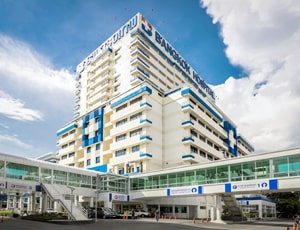
Bangkok Hospital
Bangkok, Thailand
Bangkok Hospital located in Bangkok, Thailand is accredited by JCI. Also listed below are some of the most prominent infrastructural details:
- It is recognised for the application of the newest healthcare technology.
- Blood analysis center that is not just the best in Thailand but in Asia Pacific as well.
- Biomolecule center that is the seed of healthcare equipment for Thailand and overseas.
- International affiliations and collaborations with universities and hospitals in Japan and the United States of America.
- 11 hospitals are recognised as Centers of Excellence.
- Known excellence in Trauma, Orthopedics, Cardiovascular, Neurology as well as Cancer Care.
- There is a proper streamlined patient services process followed in Bangkok Dusit Medical Services, Bangkok, Thailand.
- A well developed research center showcases the intent of the organisation to provide research based treatment opportunities to the patients.
- The group has several Medical industry partnerships as well to ensure healthcare solutions.

Vejthani Hospital
Bangkok, Thailand
Vejthani Hospital located in Bangkok, Thailand is accredited by NABH, NABL. Also listed below are some of the most prominent infrastructural details:
- It is among the topmost private hospitals functioning in Thailand.
- The bed capacity of the hospital is 263.
- There are more than three hundred thousand patients visiting the hospital every year.
- Vejthani hospital has more than 40 outpatient clinics and centers.
- International patient care center with all kinds of services: air ambulance, transfers, travel, stay, embassy liaison, patient coordinators, prayer rooms, visa coordination and translators for 20 languages.
- The special facilities are:
- International Certified Laboratory
- 10 Operating Rooms
- Radiology Section: Portable X-ray, CT-scan and C-ARM and MRI
- Neonatal Critical Care Unit
- Water-jet technique applied for liposuction
- Computer navigation and mini-invasive technique for Joint Replacement surgery

Bangpakok 9 International Hospital
Bangkok, Thailand
Bangpakok 9 International Hospital located in Bangkok, Thailand is accredited by JCI. Also listed below are some of the most prominent infrastructural details:
- It would be prudent to summarise the Medical Services provided at the Bangpakok 9 International Hospital (BPK 9), Bangkok, Thailand:
- Cosmetic Dentistry
- Dental Implants
- Electrocardiogram (EKG or ECG)
- Exercise Stress Test
- Health Screening
- Laser Vagina Firming
- Pediatric Physical Therapy
- Perfect Slim by Vela II
- Physical Therapy for Musculoskeletal
- Prosthodontics
- The Medical Services are also inclusive of the International Patient Services such as the ones listed here:
- Thai, English, French, Arabic, Chinese, Myanmar, Cambodia, Bangladeshi, Bahasa and Tagalog are the languages in which there are Translation services available for International Patients.
- Visa extension related assistance
- International health insurance related assistance
- Embassy and international organizations related assistance
- A variety of meals of choice for International Patients
- Email consultation services
- Transfer to either airport and/or hotels
- Prayer room
- Four different types of rooms are available such as Deluxe room, two kinds of suites, and a VIP suite.
- Hospital facilities like The Coffee shop, Food Hall, Cafe and Medical Spa.
- Complete health and safety protocols are maintained in the various Medical Centers some of whom are as follows:
- Aesthetic Center
- 24 Hour Emergency Center
- Allergy Center
- Breast Center
- bSmart Center
- Checkup Center
- Dental Center,
- Happy Long Life Center
- Medical Fitness Center
- Psychiatric Center
- Rehabilitation Center
- Sleep Disorders Center
Our Services to better your experience
Opinion & Option
We submit the most accurate opinion and options from one or more countries for your review
Consult Privately
Consult with a certified specialist privately on our telemedicine platform even before you decide to travel
Logistics
We handle flights, visas, transfers, and accommodation—so you can focus on your health.
Recovery
Our In-house rehabilitation service packages to better your recovery and treatment outcome
Why Choose Thailand for Uterine Polyps Treatment?
Here are some of the reasons for choosing Thailand:
- Due to advancements in medical facilities, such as minimally invasive surgical techniques.
- World-class experts include highly experienced doctors, JCI accredited healthcare institutions.
- Compared to other countries, treatment in Thailand hospitals is cost-effective.
- Thailand hospitals provide International patient services, including a multilingual support system.
- Improved treatment methods and biological therapies.
Frequently Asked Questions
One significant predictor of polyps is age. Uterine polyps are most likely to appear in people in their 40s and 50s as they approach menopause (perimenopause). Though they are uncommon in those under 20, uterine polyps can develop after menopause (postmenopause).
You are also more likely to develop uterine polyps if you:
- Are obese (BMI > 30) or overweight (BMI 25 < 30).
- Possess hypertension or elevated blood pressure.
- Take the medication which is used to treat breast cancer.
- Get a high dose of estrogen as part of hormone replacement treatment.
Sometimes, uterine polyps are asymptomatic, which means they don't produce any symptoms. Because of this, many uterine polyp sufferers might never be diagnosed. There is evidence that some populations have higher rates of polyps. For example, persons who have experienced menopause are more likely to have them than those who have not.
The success rate of uterine polyp treatment is good in Thailand; hysteroscopic polypectomy is successful in 90–95% of patients for both polyp removal and symptom reduction. Recurrence rates are typically low (10–20%), mainly when appropriate follow-up care is provided. The size, quantity, and general health of the patient can all affect the result.
Like menstruation cramps, large polyps can occasionally cause dull pain in your lower back or abdomen. However, pain is not a typical sign of uterine polyps.
It varies. The polyp is regarded as a minimal danger if you are premenopausal and have no symptoms. It might not have to be taken out. Your doctor could advise removal if you are postmenopausal or exhibiting signs like irregular bleeding. If polyps potentially interfere with your fertility or cause issues during pregnancy, your doctor may also remove them.
The results of removing uterine polyps are very good. According to research, 75% to 100% of the time, eliminating polyps reduces symptoms. After removal, polyps hardly ever regrow. Your provider can suggest therapies if they do.
Author

Alvina Hasan
Alvina Hasan is a dedicated medical researcher and scientific writer with a strong foundation in pharmaceutical sciences. She holds a B.Pharm from Jamia Hamdard University and an M.Pharm in Quality Assurance from DIPSAR University.
With deep medical expertise and a strong interest in healthcare communication, she focuses on transforming complex clinical and scientific information into clear, engaging, and easy-to-understand narratives. She develops insightful healthcare articles and research-driven content designed to support both medical professionals and patients, helping bridge the gap between advanced medical knowledge and practical understanding.
Readers can explore her published research and articles here:
https://carcinogenesis.com/index.php/JOC/article/view/868
https://carcinogenesis.com/index.php/JOC/article/view/870
View MoreReviewer

Dr. Uma Vaidyanathan
Gynecologist Laproscopic Surgeon
19 Years of Experience
Dr. Uma Vaidyanathan joined Fortis Healthcare in November 2019 after practising an effective clinical practice in prestigious corporate hospitals.She has previously worked on research initiatives related to maternal mortality and infections during pregnancy at AIIMS, Safdarjung Hospital, and WHO. View More
Last Reviewed - January 2026