Urinary Retention Treatment in India
- Top Accredited Hospitals
- Global Medical Standards
- Cutting-Edge Technology
- Proven Treatment Options
- High Success Rate
- Trusted by Millions

What is Urinary Retention?
Urinary retention is a condition in which a person cannot completely empty the bladder. It may be acute, causing a sudden inability to urinate, or chronic, in which the bladder gradually fails to empty fully. Urinary retention can result from a urinary tract blockage, weak bladder muscle activity, nerve-related problems, certain medicines, or other underlying conditions.
What is the Importance of Timely Treatment?
Timely treatment is important because acute urinary retention can cause severe pain and requires urgent bladder drainage. Persistent or untreated retention may increase the risk of urinary tract infections, bladder damage, bladder stones, and kidney problems. Identifying and treating the underlying cause can help restore bladder emptying and reduce complications.
What are the Common Symptoms of Urinary Retention?
- Sudden inability to urinate
- Severe lower abdominal pain or pressure
- Difficulty starting urination
- Weak or slow urinary stream
- Frequent urination in small amounts
- Feeling that the bladder has not emptied completely
- Urgent need to urinate with little urine passed
- Dribbling or involuntary urine leakage
- Lower abdominal discomfort or swelling
- Recurrent urinary tract infections
Causes and Risk Factors of Urinary Retention
Causes
- Benign prostatic hyperplasia (BPH)
- Urethral stricture or narrowing
- Bladder or urinary tract stones
- Pelvic organ prolapse
- Constipation in some cases
- Urinary tract or prostate infections
- Neurological disorders affecting bladder function
- Weak or underactive bladder muscles
- Pelvic or urinary tract injury
- Surgery or anesthesia
- Certain medicines, including anticholinergics, opioids, some antidepressants and antihistamines
- Tumors or other structural abnormalities
Risk Factors
- Older age, particularly in men
- Enlarged prostate
- Previous urinary tract surgery or procedures
- Neurological disorders
- Diabetes
- Recurrent urinary tract infections
- Previous episodes of urinary retention
- Pelvic surgery or trauma
- Certain medications
- Urethral abnormalities or previous urethral injury
Latest Research and Technologies in the Treatment of Urinary Retention in India
- Modern management of urinary retention increasingly focuses on identifying the specific cause rather than treating the bladder-emptying problem alone. Advanced assessment may include bladder ultrasound and postvoid residual measurement, uroflowmetry, urodynamic testing, cystoscopy, and targeted imaging. Treatment options may include intermittent or indwelling catheterisation, minimally invasive procedures for prostate obstruction, urethral dilation or repair for strictures, and surgery for structural causes. For selected patients with BPH, minimally invasive approaches such as laser procedures, prostatic urethral lift and water-vapour therapy may be considered.
Treatment options for Urinary Retention
Immediate Bladder Drainage: Acute urinary retention generally requires prompt catheterisation to drain the bladder and relieve pressure. Intermittent or longer-term catheterisation may be used in selected patients with chronic retention.
Treatment of Prostate Enlargement: When BPH causes obstruction, medicines or procedures may improve urine flow. Selected patients may undergo laser treatment, transurethral procedures, prostatic urethral lift, or water-vapour therapy.
Treatment of Urethral Strictures: Urethral dilation or reconstructive procedures may be used when scar tissue narrows the urethra and obstructs urine flow.
Treatment of Infections and Other Causes: Urinary tract infections or prostatitis may require appropriate antimicrobial treatment, while stones, tumors, pelvic organ prolapse, or neurological causes are treated according to their specific diagnosis.
Prostatectomy : The surgical removal of part or all of the prostate gland is an exceptionally effective, definitive treatment for severe urinary retention when the underlying cause is an enlarged prostate (Benign Prostatic Hyperplasia, or BPH)
Cost Start From 6500Explore Options
Transurethral Resection of the Prostate (TURP) : It is used for moderate-sized prostates. A surgeon inserts a thin scope through the urethra and uses an electrical loop to shave away pieces of the obstructing prostate tissue.
Cost Start From 2750Explore Options
- Clinical assessment:
- Detailed medical history and physical examination: Including assessment of urinary symptoms, previous surgeries or catheterisation, medications, prostate or pelvic conditions, bowel symptoms, and neurological status.
- A postvoid residual (PVR) measurement using bladder ultrasound or catheterisation helps determine how much urine remains after urination. Urinalysis, kidney-function blood tests, and other lab tests may be done to identify infection, diabetes, kidney problems, or other contributing conditions.
- Imaging Tests:
- Ultrasound: Evaluates the bladder, kidneys, prostate and urinary tract and can measure postvoid residual urine.
- CT scan: May be used when stones, obstruction, tumors or other structural abnormalities are suspected.
- MRI: May be considered for selected urinary tract, pelvic or neurological conditions.
- Voiding cystourethrogram (VCUG): Uses X-rays to assess urine flow and structural abnormalities in selected cases.
- Urodynamic testing: Measures bladder pressure, urine flow and bladder muscle function when the cause of retention is unclear.
- Cystoscopy: Allows direct examination of the urethra and bladder to identify strictures, stones, tumors, inflammation or other structural problems.
MediRehab (a chain of Rehab centres, part of MediGence) provides comprehensive rehabilitation services designed to support Urinary Retention patients in India. These services include:
- Pelvic Floor Physiotherapy: Targeted exercises can help improve pelvic floor coordination and bladder control when pelvic floor dysfunction contributes to urinary symptoms.
- Bladder Training: Structured bladder routines, including timed voiding and double voiding, may help improve bladder-emptying patterns in selected patients.
- Catheter Management: Patients using intermittent or indwelling catheters can receive training on safe catheter care, hygiene, and techniques to reduce complications.
- Bowel and Bladder Management: Managing constipation, maintaining appropriate fluid habits, and monitoring bladder function can support recovery and help reduce urinary complications.
- Medicines are selected according to the cause of urinary retention. Alpha-blockers may help relax the bladder outlet and prostate in men with BPH. Antibiotics may be prescribed when infection, such as a urinary tract infection or prostatitis, is responsible. If another medicine is contributing to urinary retention, the treating physician may adjust or discontinue it when appropriate. Medication alone may not resolve retention caused by significant obstruction or structural abnormalities.
Instantly Connect with our Specialists


Hospitals for Urinary Retention in India

Manipal Hospital, Dwarka
Delhi, India
Manipal Hospital Dwarka is a leading multi-super speciality tertiary care hospital offering world-class, affordable, and accessible healthcare. Backed by renowned doctors, advanced technology, and global standards in clinical care, the hospital provides comprehensive preventive, diagnostic, and therapeutic services for all age groups. With 380 beds, 13 modular OTs, 118 critical care beds, and 24/7 emergency services, it combines excellence in patient care with innovations like AI, telemedicine, remote monitoring, and EMR—striving to become a fully digital, paperless hospital setting new standards in modern healthcare.

Dr. Rela Institute and Medical Centre
Chennai, India
The mega-structure of RIMC serves as a hospital as well as an educational institute. Hence, it offers a huge array of medical services and facilities to cater to the needs of its patients.
Fertility Services - RIMC specializes in both male and female fertility and in procedures like IntraCytoplasmic Sperm Injection (ICSI), Uterine Transplants, Preimplantation genetics and Laser Assisted Hatching (LAH).
Anaesthesia and ICU - The ICU rooms in RIMC are equipped to serve the individual needs of every patient. They boast the largest liver transplant ICU in India and a specific ICU dedicated to pediatrics multi-organ transplants.
Radiology and Imaging Sciences - RIMC has the infrastructure to support high-quality scans including 128 Slice CT, Cardiac MRI, and 3 Tesla MRIs.
Blood Bank and Transfusion Medicine - RIMC has an active blood bank system with facilities dedicated to Blood Component Separation and Therapy. They use high-end technology like the Automated 1H500 Analyser and have a separate Therapeutic Apheresis Unit.
Advanced Endoscopy - Dr. Rela Institute and Medical Centre has one of the most advanced hospital facilities with an individual healthcare unit specifically dedicated to Endoscopy. Advanced procedures like Spyglass Cholangioscopy, Laser therapy, Endoscopic Ultrasound, Capsule Endoscopy, and special ERCP and EUS Suite.
Some of the other healthcare facilities, departments, and services offered by Dr. Rela Institute and Medical Healthcare are listed below:
- Orthopaedics
- Obstetrics and Gynaecology
- Reproductive Medicine
- Hepatology
- Cardiology
- Internal Medicine and Diabetology
- Advanced Paediatrics
- Ear Nose and Throat
- Emergency Medicine
- Interventional Radiology and Imaging Services
- Neonatology
- Neurology
- Liver Disease and Transplantation
- Gastroenterology
- Medical Oncology
- Nephrology
- Neonatology
- Pathology
- Ophthalmology
- Plastic and Reconstructive Surgery
- Radiation Oncology
- Pulmonary Medicine
- Urology
- Surgical Oncology
- Transfusion Medicine
Apart from these facilities, Dr. Rela Institute and Medical Centre also have a preventive health check lounge, 72 consultation suites, and 360 degrees including lab facilities specifically for outpatients.
Visit Dr. Rela Institute and Medical Centre in Chromepet, Chennai today and find the best care for you and your loved ones.
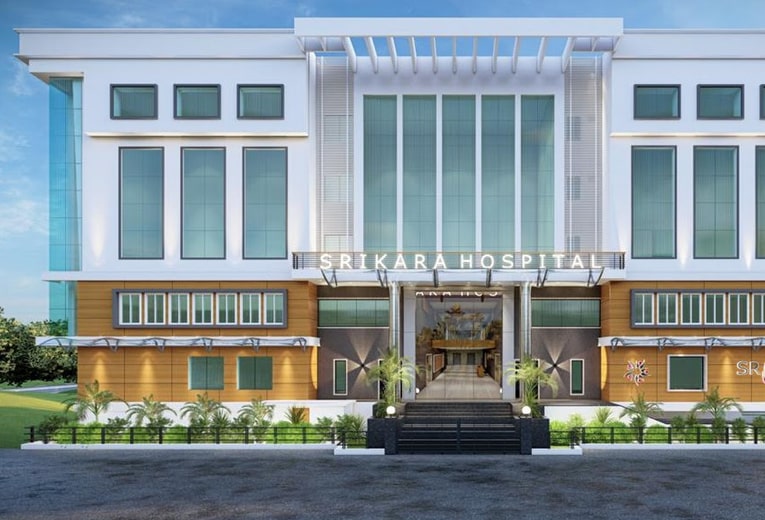
Srikara Hospital, RTC Cross Roads
Hyderabad, India
Srikara Group of Hospitals is an 850-Bedded Tertiary Care healthcare facility, spread over 7 branches and two states in Southern India. 6 out of these 7 branches are situated in the twin city of Hyderabad- Secunderabad and 1 branch is at Vijayawada, Andhra Pradesh. As the ultimate combination of benefits a hospital can provide, Srikara Ortho & Multi-Specialty Hospitals represents the infusion of quality, knowledge, technical proficiency, international standards, compassion, and reasonably priced care. Srikara Hospital is known for its excellence in Orthopedic as well as Neuro-Spine Surgeries. With top-of-the-chart technical proficiency, quality, and skills; Srikara is the destination of choice for patients from not only India but across the globe. Srikara Hospitals are the pioneers in doing Robotics-assisted Joint Replacements in Southern India. These hospitals have been using technologies like Computer Navigation and I-Suite theaters since their inception. Three of its 7 branches offer minimally Invasive Spine surgeries done with the use of top quality Operating microscopes. For patients from other countries seeking treatment at its facilities, Srikara has established a separate unit. By partnering with hospitals and institutions that share its commitment to and passion for ‘Patient Care’, it now hopes to expand its surgical expertise throughout the country and the world.
International quality care at affordable prices is what the Srikara Group of Hospitals strives for. The quality & compassion in care can be bought in only by the human skills behind world-class technology. Rich in human skills & experience, the team of doctors at Srikara Hospitals is decorated with a collective experience of more than 23000 Knee Replacement Surgeries over a period of two decades. 5000+ of these Knee Replacements were Robotic-assisted Knee Replacement surgeries. The team of surgeons and the Sports Medicine Unit at SRIKARA Group of Hospitals hold experience in doing more than 5500 Knee Ligament surgeries. The team of Neuro-spine surgeons holds a collective experience of 11+ years and offers various surgical remedies with and without the assistance of an Operating Microscope. Srikara Group of Hospitals offers a wide array of specialties like Orthopaedics, Neuro-spine, Urology, Laparoscopy, Cardiology, Cosmetic Surgery, etc. with the help of nationally and internationally acclaimed doctors.
To expand their healthcare services globally and for the ease of their patients, the doctors at Srikara Group of Hospitals are also providing Online Consultations to individuals who are unable to visit in person but are in need of medical attention. Srikara Group of Hospitals looks forward to continuing to cater to its domestic as well as overseas patients with compassion and evidence-based healthcare services. All the hospitals of Srikara Group are built in accordance to provide relaxing, serene surroundings, greenery, and a hygienic setting to the patients & visitors. With a large influx of people seeking the best care and facilities in Hyderabad, it is well renowned for its dedication to providing unique and evidence-based healthcare services.
Our Services to better your experience
Opinion & Option
We submit the most accurate opinion and options from one or more countries for your review
Consult Privately
Consult with a certified specialist privately on our telemedicine platform even before you decide to travel
Logistics
We handle flights, visas, transfers, and accommodation—so you can focus on your health.
Recovery
Our In-house rehabilitation service packages to better your recovery and treatment outcome
Why Choose India for Urinary Retention Treatment?
- Experienced Urology Specialists: Patients can access urologists experienced in managing prostate-related obstruction, urethral strictures, neurogenic bladder and other causes of urinary retention.
- Advanced Diagnostic Facilities: Hospitals offer investigations such as bladder ultrasound, postvoid residual measurement, uroflowmetry, urodynamic testing and cystoscopy.
- Minimally Invasive Treatment Options: Selected patients may have access to laser prostate procedures, endoscopic interventions, urethral procedures and other minimally invasive approaches.
- Multidisciplinary Care: Complex cases can be evaluated with support from urology, nephrology, neurology, physiotherapy and other relevant specialities.
- International Patient Support: Many major Indian hospitals provide assistance with appointments, medical documentation, travel coordination, accommodation and follow-up for international patients.