Ureteral Obstruction Treatment in India
- Top Accredited Hospitals
- Global Medical Standards
- Cutting-Edge Technology
- Proven Treatment Options
- High Success Rate
- Trusted by Millions

What are Ureteral Obstruction?
A ureteral obstruction occurs when one or both of your ureters get blocked. The tubes that transport urine from your kidneys to your bladder are called ureters. A blockage in your ureters can result from various illnesses and ailments.
Urine cannot enter your bladder and exit your body if there is a ureteral blockage. Urine can back up and harm your kidneys if the blockage is not treated and removed. In addition to causing discomfort, this increases your chance of infection.
What is the Importance of Timely Treatment?
To avoid kidney damage, maintain function, and alleviate pain, ureteral blockage must be treated timely. It can result in severe infections such as pyelonephritis, hydronephrosis, and renal failure if left untreated.
Additionally, early intervention lowers the likelihood of consequences like electrolyte imbalances and kidney stones.
Early intervention improves overall results and prognosis by enabling less intrusive procedures. The obstruction must be addressed immediately to preserve kidney health and avoid long-term problems.
What are the Common Symptoms of Ureteral Obstruction?
Signs and symptoms might include:
- Pain.
- Changes in how much urine you produce (urine output).
- Difficulty urinating.
- Blood in the urine.
- Urinary tract infections.
- High blood pressure (hypertension).
Causes, Risk Factors and Complications of Ureteral Obstruction
Causes
A ureteral blockage can be caused by:
- Benign prostatic hyperplasia (BPH)
- Urine may have trouble passing through scar tissue in your ureter.
- Abdominal tumours or cysts that put pressure on your ureter.
- Blood clots and vascular (blood vessel) diseases.
- Gastrointestinal (GI) conditions include diverticulitis, Crohn's disease, and an enlarged appendix.
- Kidney stones that travel to your ureter are known as ureteric stones.
- A ureter blockage at the point where it connects to your kidney is known as ureteropelvic junction obstruction.
- When your ureter attaches to the incorrect location in your body, it is known as an ectopic ureter.
- Ureterocele is a congenital disorder that results in ureteric enlargement.
- Endometriosis, pregnancy, or uterine prolapse
Risk Factors
- Certain congenital defects may increase the likelihood of ureteral blockage. An obstruction of one of the ureters may also be more likely if you have kidney or bladder stones. Tumours, blood clots, specific tissue development, and swollen lymph nodes may also bring on this illness.
Complications
- Urinary tract infections
- Kidney damage
- Hydronephrosis
Connect with our advisor for a PRIORITY response
Latest Research and Technologies in the Treatment of Ureteral Obstruction
- One recent development in treating ureteral blockage is creating novel stents, such as biodegradable and silicone-covered metallic mesh alternatives, which provide improved performance and fewer problems.
- The main goals of new technologies are to minimise patient discomfort, lower the risk of infection, and eliminate the need for repeat procedures. These developments aim to enhance patient outcomes and quality of life.
Ureteral Obstruction Prevention Tips
The best way to avoid ureteral blockage is to concentrate on lifestyle modifications that reduce the chance of kidney stones, which are a frequent cause of ureteral blockage. These include:
- Drinking lots of water throughout the day.
- Keeping a healthy weight,
- Consuming less sodium
- Keeping an eye on your diet for possible stone formation Components such as animal protein and oxalate
Treatment options for Ureteral Obstruction
Kidney Stone Removal: Urinary obstruction is treated via kidney stone removal procedures, such as ureteroscopy, to remove the obstructing stones and restore urine flow.
Cost Start From USD 2500 - USD 3500Explore Options
Extracorporeal shock wave lithotripsy (ESWL): ESWL (Extracorporeal Shock Wave Lithotripsy) is typically used for urethral obstruction caused by ureteral stones or kidney stones.
Cost Start From USD 200 - USD 500Explore Options
Hypospadias surgery: Sometimes, Hypospadias surgery is specifically done to correct congenital abnormalities in the male urethra, not blockages in the ureter.
Cost Start From USD 1500 - USD 2000Explore Options
Percutaneous nephrostomy: To drain the kidney directly, your doctor will place a tube through your back during a percutaneous nephrostomy.
Ureteral stent: A hollow tube called a ureteral stent is placed inside the ureter to maintain its opening.
- Blood and urine tests: Healthcare looks for infection symptoms and creatinine, a sign that your kidneys aren't functioning correctly, in blood and urine samples.
- Ultrasound: Your doctor can see the kidneys and ureters by performing a retroperitoneal ultrasound, which is an ultrasound of the region behind your abdominal organs.
- Bladder catheterisation: Your doctor will put a tiny tube (catheter) through your urethra, inject dye into your bladder, and take X-rays of your kidneys, ureters, bladder, and urethra before and during urination to check for incomplete or blocked urine flow.
- Renal nuclear scan: This procedure helps medical professionals assess kidney function by creating images of the urinary system by infusing a tiny quantity of radioactive tracer.
- Cystoscopy: Through a little incision or into your urethra, a tiny tube equipped with a camera and light is placed. The provider can look within the bladder and urethra using optical equipment.
- CT scan (computerised tomography): A CT scan creates cross-sectional images of your kidneys, ureter, and bladder by combining some X-ray views from various angles with computer processing.
- Magnetic resonance imaging (MRI): A magnetic field and radio waves are used in an abdomen MRI to produce fine-grained images of your urinary system's tissues and organs.
The goals of ureteral obstruction rehabilitation are to manage symptoms, prevent recurrence, and improve overall urinary tract and kidney health.
- Physical therapy: To increase muscle strength and mobility after treatment.
- Hydration: Ensure you consume enough fluids to maintain kidney function and avoid kidney stones.
- Dietary changes: Changes can lower the chance of future blockages, including reducing oxalates and salt.
- The main goals of ureteral obstruction medications are to control pain, avoid complications, and facilitate the obstruction's clearance.
- Alpha-blockers can help relax the ureter muscles, which makes it easier for stones to pass, while painkillers such as NSAIDs are used to reduce discomfort.
- Diuretics may be used to lessen edema and encourage urine flow, and antibiotics are administered if an infection is present or in danger.
Instantly Connect with our Specialists


Hospitals for Ureteral Obstruction in India

Fortis Hospital, Mulund
Mumbai, India
Fortis Hospital Mulund, located in Mulund West, Mumbai, is a premier healthcare facility providing excellence in multi-speciality healthcare for over 20 years. The global leader in advancing medical technology and clinical expertise, the hospital offers specialities including Cardiology, Neurosciences, Oncology, Transplants, and Orthopaedics. The hospital is well-known for being the largest transplant center in Maharashtra and offers advanced treatment options, including Transcatheter Aortic Valve Implantation (TAVI) and stereotactic precision radiotherapy for cancer. Fortis Mulund is equipped with a 24/7 Emergency Department and International Patient Unit to provide world-class patient-centric care.
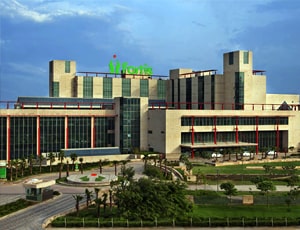
Fortis Memorial Research Institute
Gurgaon, India
Fortis Healthcare Limited stands as one of India's largest integrated healthcare providers, managing 33 hospitals across 11 states and operating more than 5,700 beds and 400 diagnostic labs. Four of our hospitals are accredited by JCI and 26 by NABH. With a workforce of over 12,500 healthcare professionals, we combine clinical excellence, a patient-focused approach, and innovation to provide high-quality, affordable, and compassionate healthcare to patients in India.
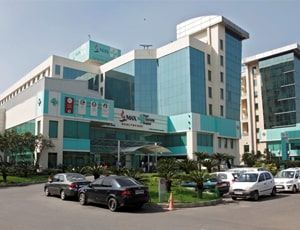
Max Super Speciality Hospital, Saket
Delhi, India
Max Smart Super Speciality Hospital, Saket, is a 250-bed tertiary care hospital awarded NABH accreditation, which provides advanced medical care in various specialities such as Cardiac Sciences, Orthopaedics, Neurology, Urology, Kidney Transplant, Paediatrics, and Obstetrics & Gynaecology. The hospital provides quality, safe, integrated, and patient-centric medical care using modular OTs, ICUs, Cath Labs, CT, MRI and Dialysis units.
Our Services to better your experience
Opinion & Option
We submit the most accurate opinion and options from one or more countries for your review
Consult Privately
Consult with a certified specialist privately on our telemedicine platform even before you decide to travel
Logistics
We handle flights, visas, transfers, and accommodation—so you can focus on your health.
Recovery
Our In-house rehabilitation service packages to better your recovery and treatment outcome
Why Choose India for Ureteral Obstruction Treatment?
Here are some of the reasons for choosing India:
- Due to advancements in medical facilities, such as minimally invasive surgical techniques.
- World-class experts include highly experienced doctors, JCI, and NABH-accredited healthcare institutions.
- Compared to other countries, treatment in Indian hospitals is cost-effective.
- Indian hospitals provide International patient services, including a multilingual support system.
- Improved treatment methods and biological therapies.
Frequently Asked Questions
Depending on whether kidney damage occurred during the time that urine was unable to drain, your prognosis for ureteral obstruction will change. Urinary obstruction typically has no significant long-term repercussions if your doctor removes the obstruction before considerable kidney damage develops. If left untreated, a significant ureteral blockage can result in kidney failure and even death.
Men are more likely than women to have urethral blockage, mainly when it results from diseases like benign prostatic hyperplasia (BPH). But urethral blockage can also occur in women, typically as a result of bladder prolapse or urethral strictures.
The length of recovery varies according to the surgery. Recovery from less invasive procedures like urethrotomy or dilatation could take a few days to a week. Recovery from more involved procedures, such as tumour excision or prostate surgery, may take several weeks.
In general, urethral blockage treatment in India has a high success rate. Depending on the severity and underlying cause, success rates for medications, non-surgical procedures, and operations range from 70 to 95 per cent. Early diagnosis, advanced medical facilities, and appropriate follow-up care influence positive results.
Recurrence of urethral blockage is possible, especially in urethral strictures, where scar tissue may regenerate. Routine follow-up with a healthcare professional is important to keep an eye out for recurrence.
It is true that urine retention, which raises the risk of UTIs, can result from urethral blockage. Infections may result from the germs that thrive in the retained urine.
An infection, trauma, or surgery can cause scar tissue to constrict the urethra, a condition known as a urethral stricture. The symptoms of urethral blockage may result from this constriction, which may restrict the flow of urine.

Reviewer

Dr. Ashish George
Gastroenterologist
18 Years of Experience
Dr. Ashish George is one of the leading names in HPB surgery & liver transplantation and has about 18+ years of experience.He is a principal consultant & unit head of liver transplant at Fortis Shalimar Bagh. View More
Last Reviewed - January 2026