Transverse Myelitis Treatment in India
- Top Accredited Hospitals
- Global Medical Standards
- Cutting-Edge Technology
- Proven Treatment Options
- High Success Rate
- Trusted by Millions

What is Transverse Myelitis?
An inflammation that affects both sides of a single spinal cord segment is known as transverse myelitis. This neurological condition frequently destroys the myelin sheath that surrounds nerve cell fibres. The messages sent throughout the body by the spinal cord nerves are disrupted by transverse myelitis. Pain, paralysis, muscle weakness, sensory issues, or problems with the bladder and bowel might result from this.
What is the Importance of Timely Treatment?
Timely treatment of Transverse Myelitis is very important because some patients develop long-term physical impairments, including paralysis, muscle weakness, loss of bladder or bowel function, and muscle stiffness. Physical therapy will probably be a crucial component of your treatment if you have any of these problems.
What are the symptoms of Transverse Myelitis
Transverse myelitis signs and symptoms often appear within a few hours to a few days, while they might occasionally appear gradually over a few weeks. Although transverse myelitis often affects both sides of the body beneath the damaged spinal cord, symptoms might occasionally only appear on one side.
Typical symptoms and indicators include of:
- Pain. Pain from transverse myelitis may start abruptly in your lower back. You may have a sharp pain around your chest or belly, or it may radiate down your arms or legs. Depending on whether area of your spinal cord is injured, different pains have different symptoms
- Unusual feelings. Transverse myelitis patients sometimes experience burning, tingling, coldness, or numbness. Some people are particularly sensitive to extremes in temperature, such as the slightest touch of clothes. You can have the sensation that something is tightly around your legs, abdomen, or chest.
Your arms or legs are weak. Some people observe that their legs are heavy, that they are dragging one foot, or that they are stumbling. Others might become completely paralysed or experience extreme weakness - Intestinal and bladder issues: Like constipation, urinary retention, bladder control issue and urinary incontinence
- Sexual dysfunction.
Causes and Risk Factors of Tethered Transverse Myelitis
Causes
It is unknown what specifically causes transverse myelitis. Sometimes the cause is unknown. Transverse myelitis can be brought on by bacterial, fungal, or viral infections that affect the spinal cord. After recovering from the infection, the inflammatory condition usually manifests.
The following viruses are linked to transverse myelitis:
- Herpes viruses, such as the one that causes chickenpox (zoster) and shingles
- Epstein-Barr virus cytomegalovirus
- HIV-related enteroviruses, including coxsackievirus, poliovirus, and West Nile echovirus
- The Zika virus
- Hepatitis B
- Rubella, measles, and mumps
- Other viruses that do not directly infect the spinal cord can nevertheless cause an autoimmune reaction.
The following bacterial infections are linked to transverse myelitis:
- Lyme illness
- Tuberculosis Actinomyces Syphilis
- Diphtheria, tetanus, and pertussis
The illness seems to be caused by several inflammatory conditions:
- Myelin covering nerves in the brain and spinal cord is destroyed by the immune system in multiple sclerosis
- The disorder known as neuromyelitis optica, or Devic's disease, results in inflammation and myelin loss around the spinal cord and the nerve in your eye that sends signals to your brain
- In certain individuals, autoimmune diseases most likely have a role in transverse myelitis
- On rare occasions, vaccinations against infectious diseases have been linked to potential triggers.
- The disorder sarcoidosis causes inflammation in the spinal cord, optic nerve, and other parts of the body.
Risk Factors
Transverse myelitis patients often only have one episode. But issues frequently persist, such as the following:
- One of the most prevalent and incapacitating long-term effects of the illness is pain
- Your muscles may feel tight, stiff, or painfully spasm (muscle spasticity). The legs and buttocks are where this occurs most frequently
- Paralysis of your arms, legs, or both, either completely or partially. After the initial symptoms, this can continue
- One common side effect of transverse myelitis is sexual dysfunction. Men may have trouble getting an erection or having an orgasm. Orgasm may be harder for women to achieve
- Because of the substantial lifestyle changes, the stress of chronic pain or disability, and the effect that sexual dysfunction has on relationships, people with long-term difficulties frequently experience depression or anxiety.
Connect with our advisor for a PRIORITY response
Transverse Myelitis Prevention Tips
The prevention of transverse myelitis is unknown. However, there are drugs to stop transverse myelitis bouts from happening again. To lower their risk of further transverse myelitis bouts or optic neuritis, people with antibodies linked to neuromyelitis optica require continuous therapy, such as corticosteroids and/or immunosuppressants.
Treatment options for Transverse Myelitis
Plasmapheresis: Plasma exchange therapy may be necessary for patients who do not react to intravenous steroids. This entails taking out the plasma that contains blood cells and substituting it with other fluids. Although this therapy's exact mechanism of action is unknown, plasma exchange may eliminate inflammatory antibodies.
Cost Start From USD 600 - USD 1500Explore Options
Immunotherapy: When patients don't respond well to initial steroid treatment, such as methylprednisolone or dexamethasone, intravenous immunoglobulin (IVIG), which involves injecting a concentrated solution of antibodies from healthy donors to help "reset" the immune system, is the main immunotherapy used to treat transverse myelitis.
Cost Start From USD 3000 - USD 5000Explore Options
To identify transverse myelitis and its cause, your doctor could prescribe the following tests:
- MRI (magnetic resonance imaging) of your complete spine: MRI is a painless procedure that uses a big magnet, radio waves, and a computer to create comprehensive images of the organs and structures inside your body. For your doctor to distinguish between compressive and noncompressive lesions, you might require two spine MRIs: one with and one without gadolinium contrast.
- Brain MRI: To check for signs of brain lesions, your doctor may prescribe a brain MRI both with and without gadolinium contrast. An MRI of the brain may provide hints of additional underlying causes, including multiple sclerosis
- Lumbar puncture, often known as a spinal tap: In order to obtain a sample of cerebrospinal fluid (CSF), your healthcare professional will put a needle into your lower back. The transparent liquid that envelops your brain and spine is called cerebrospinal fluid. The CSF sample is then examined in a lab to check for increased white blood cells, an elevated IgG index, or the presence of CSF-specific oligoclonal IgG bands. In TM, these inflammatory indicators are prevalent
- Blood tests: To look for immune system and infection-related causes of TM, your doctor may probably prescribe a number of blood tests.
MediRehab (chain of Rehab center - part of MediGence provides comprehensive rehabilitation services designed to support arthritis patients in <India>. These services include:
- physical therapy: This enhances coordination and strength. You can learn how to use any necessary assistance devices, including braces, canes, or a wheelchair, from your physical therapist
- Occupational therapy. This aids individuals with transverse myelitis in learning new techniques for carrying out daily tasks, including cleaning, cooking, and taking a shower
- Psychoanalysis. Anxiety, sadness, sexual dysfunction, and other emotional or behavioural problems resulting from managing transverse myelitis can be treated by a psychotherapist using talk therapy.
- Depending on the situation, your healthcare professional may prescribe medicine to help control your symptoms and support the treatment plan.
Instantly Connect with our Specialists


Hospitals for Transverse Myelitis in India

Fortis Hospital, Mulund
Mumbai, India
Fortis Hospital Mulund, located in Mulund West, Mumbai, is a premier healthcare facility providing excellence in multi-speciality healthcare for over 20 years. The global leader in advancing medical technology and clinical expertise, the hospital offers specialities including Cardiology, Neurosciences, Oncology, Transplants, and Orthopaedics. The hospital is well-known for being the largest transplant center in Maharashtra and offers advanced treatment options, including Transcatheter Aortic Valve Implantation (TAVI) and stereotactic precision radiotherapy for cancer. Fortis Mulund is equipped with a 24/7 Emergency Department and International Patient Unit to provide world-class patient-centric care.
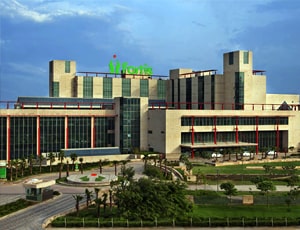
Fortis Memorial Research Institute
Gurgaon, India
Fortis Healthcare Limited stands as one of India's largest integrated healthcare providers, managing 33 hospitals across 11 states and operating more than 5,700 beds and 400 diagnostic labs. Four of our hospitals are accredited by JCI and 26 by NABH. With a workforce of over 12,500 healthcare professionals, we combine clinical excellence, a patient-focused approach, and innovation to provide high-quality, affordable, and compassionate healthcare to patients in India.
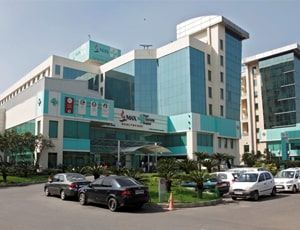
Max Super Speciality Hospital, Saket
Delhi, India
Max Smart Super Speciality Hospital, Saket, is a 250-bed tertiary care hospital awarded NABH accreditation, which provides advanced medical care in various specialities such as Cardiac Sciences, Orthopaedics, Neurology, Urology, Kidney Transplant, Paediatrics, and Obstetrics & Gynaecology. The hospital provides quality, safe, integrated, and patient-centric medical care using modular OTs, ICUs, Cath Labs, CT, MRI and Dialysis units.
Our Services to better your experience
Opinion & Option
We submit the most accurate opinion and options from one or more countries for your review
Consult Privately
Consult with a certified specialist privately on our telemedicine platform even before you decide to travel
Logistics
We handle flights, visas, transfers, and accommodation—so you can focus on your health.
Recovery
Our In-house rehabilitation service packages to better your recovery and treatment outcome
Why Choose India for Transverse Myelitis Treatment?
Here are some of the reasons for choosing India:
- Due to advancements in medical facilities, such as minimally invasive surgical techniques and plasmaphereses procedures.
- World-class experts include highly experienced doctors, JCI, and NABH-accredited healthcare institutions.
- Compared to other countries, treatment in Indian hospitals is cost-effective.
- Indian hospitals provide international patient services, including a multilingual support system.
- Improved treatment methods and biological therapies.
Frequently Asked Questions
The majority of people heal after three months of the ailment. Healing can take months or even years for some people. About one-third of transverse myelitis patients fully recover. Walking difficulties and gastrointestinal issues are examples of mild disabilities that some people recover from.
The nation's healthcare institutions offer top-notch treatment alternatives, guaranteeing successful outcomes for many patients. Transverse myelitis is effectively treated in India, where the majority of patients recover at least partially, which is on par with international standards.
Yes, many Indian hospitals offer the following for Transverse Myelitis treatment:
- Advanced diagnostic tools like MRI, CT scan, electromyography, and PET scan for accurate diagnoses of Transverse Myelitis.
- Skilled neurologist, surgeons and therapist performing plasmapheresis and immunotherapy to treat Transverse Myelitis.
- Comprehensive post-surgery care and rehabilitation for long-term health benefit
Always consider the following factors when selecting Indian hospitals:
- Hospitals that are accredited (authorised by JCI and NABH).
- Patient reviews and success rates.
- Hospitals that provide seamless care to patients from abroad.
The majority of people only experience one transverse myelitis episode. However, some people can experience a recurrence. Some transverse myelitis patients develop long-term physical impairments, including paralysis, muscle weakness, loss of bladder or bowel function, and muscle stiffness.

Reviewer

Dr. Mohit Agarwal
Medical Oncologist
14 Years of Experience
One of the finest Oncologist in New Delhi, India, Dr. Mohit Agarwal has worked with several world class multidisciplinary hospitals over the years. Dr. Mohit Agarwal has over 14+ years of experience in his field. The doctor treats and manages a wide range of conditions such as Stomach Cancer, Rectal Cancer, Breast Cancer, Brain Cancer View More
Last Reviewed - January 2026