Transposition of the Great Arteries (TGA) Treatment in India
- Top Accredited Hospitals
- Global Medical Standards
- Cutting-Edge Technology
- Proven Treatment Options
- High Success Rate
- Trusted by Millions

What is a Transposition of the Great Arteries (TGA)?
Transposition of the Great Arteries is a heart defect present at birth in which the aorta and pulmonary artery have abnormal connections with the heart's ventricles. In d-TGA, oxygen-poor blood returning from the body is pumped back to the body through the aorta, while oxygen-rich blood returning from the lungs is pumped back toward the lungs. This creates two separate circulation loops and limits oxygen delivery to the body.
What is the Importance of Timely Treatment?
Timely treatment is critical in d-TGA because inadequate mixing of oxygenated and deoxygenated blood can cause severe oxygen deficiency soon after birth. Immediate stabilisation, maintenance or creation of adequate blood mixing, and definitive surgical repair can improve oxygen delivery and reduce the risk of serious complications. Lifelong congenital heart follow-up is also important after repair because some patients may develop valve, coronary artery, rhythm, or other cardiac problems later in life.
What are the Common Symptoms of a Transposition of the Great Arteries (TGA)?
- Cyanosis: Bluish or greyish skin, lips, or nails may appear soon after birth because of low blood oxygen levels.
- Breathing Difficulties: Rapid or difficult breathing may occur when the baby has inadequate oxygen delivery or associated heart problems.
- Poor Feeding: Babies may have difficulty feeding, tire easily during feeds, or take longer to feed.
- Weak Pulse: Reduced oxygen delivery and impaired circulation may contribute to weak pulses.
- Rapid Heartbeat: A fast heartbeat may occur as the heart attempts to maintain adequate circulation.
- Poor Weight Gain: Babies with significant congenital heart disease may have difficulty gaining weight and growing normally.
Causes and Risk Factors of Transposition of the Great Arteries (TGA)
Causes
- Abnormal Heart Development: TGA occurs because the major arteries do not develop with their normal connections to the ventricles during fetal heart development.
- Genetic Factors: Genetic or chromosomal factors may contribute to some congenital heart defects, although the specific cause of d-TGA is unknown in most cases.
- Developmental Factors: Complex interactions between genetic and environmental factors may influence heart development.
Risk Factors
- Maternal Diabetes: Poorly controlled diabetes during pregnancy has been associated with an increased risk of d-TGA.
- Family History: A family history of congenital heart defects may increase the likelihood of certain congenital cardiac abnormalities.
- Genetic or Chromosomal Conditions: Some congenital heart defects occur as part of genetic or chromosomal conditions.
- Pregnancy-Related Factors: Certain maternal health, environmental, medication, or nutritional factors may increase the risk of congenital heart defects.
Latest Research and Technologies in the Treatment of Transposition of the Great Arteries (TGA) in India
- Current TGA care focuses on early prenatal and newborn diagnosis, rapid stabilisation, advanced echocardiography, specialised neonatal cardiac care, and timely surgical repair. Fetal echocardiography can help identify d-TGA before birth, while newborn pulse oximetry screening can help detect critical congenital heart defects. Postnatal echocardiography provides detailed information about the great arteries, associated defects, blood flow, and cardiac function.
Treatment options for Transposition of the Great Arteries (TGA)
Balloon Atrial Septostomy : A catheter-based procedure can enlarge the opening between the atria, allowing more oxygen-rich and oxygen-poor blood to mix when natural mixing is inadequate.
Cost Start From 4500Explore Options
Arterial Switch Operation : The most commonly used definitive repair for d-TGA. The aorta and pulmonary artery are reconnected to the appropriate ventricles, and the coronary arteries are transferred to the new aortic position. Older surgical procedures such as the Mustard or Senning operation redirect blood flow inside the atria rather than switching the great arteries.
Cost Start From 11000Explore Options
- Clinical assessment:
- Prenatal Assessment: Routine pregnancy ultrasound may identify suspected TGA, followed by fetal echocardiography for detailed assessment.
- Medical and Birth History: Assessment includes pregnancy history, delivery details, cyanosis, feeding, breathing, and associated congenital conditions.
- Physical Examination: Evaluation of skin colour, breathing, pulse, heart sounds, oxygen saturation, blood pressure, and signs of poor circulation.
- Pulse Oximetry: Measures blood oxygen saturation and can help identify critical congenital heart disease in newborns.
- Electrocardiogram (ECG): May provide information about heart rhythm and electrical activity.
- Blood Tests: Blood gases, electrolytes, glucose, blood counts, and other tests may be performed during neonatal stabilisation.
- Imaging Tests:
- Fetal Echocardiography: Provides detailed prenatal assessment of the heart chambers, valves, great arteries, and blood flow.
- Transthoracic Echocardiography (TTE): The principal postnatal imaging test used to confirm TGA, assess associated defects, and evaluate heart function.
- Chest X-Ray: May provide information about the heart and lungs and help assess other causes of respiratory symptoms.
- Cardiac CT: May provide detailed anatomical information in selected complex cases or for procedural planning.
- Cardiac MRI: Can assess cardiac anatomy and ventricular function during later follow-up in selected patients.
- Cardiac Catheterisation: May be used for selected diagnostic or interventional procedures, including balloon atrial septostomy.
- Advanced Three-Dimensional Imaging: May support detailed anatomical assessment and surgical or catheter-based planning in selected complex cases.
MediRehab (a chain of Rehab centres, part of MediGence) provides comprehensive rehabilitation services designed to support Transposition of the Great Arteries (TGA) patients in India. These services include:
- Cardiac Rehabilitation: Selected children and adults may benefit from structured rehabilitation based on their cardiac function and treatment history.
- Gradual Physical Activity: Increase activity according to heart function, symptoms, rhythm status, and congenital heart specialist advice.
- Paediatric Developmental Support: Babies and children with complex congenital heart disease may require developmental assessment and support.
- Occupational Therapy: Selected children may benefit from support with age-appropriate functional activities.
- Long-Term Congenital Heart Follow-Up: Regular specialist assessments help monitor heart function, rhythm, valves, coronary arteries, exercise capacity, and late complications.
- Medicines used in TGA depend on the patient's age, anatomy, oxygen level, and associated complications. Prostaglandins may be used in newborns with d-TGA to maintain ductal patency and support blood mixing before definitive treatment. Other medicines may support cardiac function, manage fluid retention, control blood pressure, or treat abnormal heart rhythms when needed. Medication needs may change after surgery and during long-term follow-up.
Instantly Connect with our Specialists


Hospitals for Transposition of the Great Arteries (TGA) in India

Yatharth hospital
Delhi, India
- The hospital features over 400 beds with advanced infrastructure for multi-speciality treatment.
- Much of the facility is dedicated to ICU units with the latest life-saving equipment.
- Advanced medical imaging systems include a 64-slice cardiac CT scanner, a dual-head gamma camera, a 16-slice PET-CT scanner, and a fan-beam bone density scanner (BMD).
- The radiology setup operates through a fully integrated RIS-HIS system for smooth diagnostics and reporting.
- The hospital offers high-resolution colour Doppler ultrasound systems for precise vascular and soft tissue imaging.
- The cardiology wing is equipped with a Philips FD20/10 cath lab, enhanced by modern stent-boost imaging technology.
- Cutting-edge tools, such as optical coherence tomography (OCT), intravascular ultrasound (IVUS), and fractional flow reserve (FFR), support advanced heart diagnostics.
- Facilities include rotablator technology for hardened arteries and an Ensite Velocity cardiac mapping system for complex arrhythmias.
- A fully functional hybrid endovascular suite supports combined surgical and interventional heart procedures.
- The ICU and NICU areas feature high-frequency ventilators, central pressure monitoring, and advanced bedside diagnostic tools.
- Life-support systems include intra-aortic balloon pumps, invasive blood pressure monitoring, and bedside percutaneous tracheostomy.
- Patient safety and comfort are enhanced with temperature-controlled blankets, bedside echocardiography, and mobile X-ray systems.
- Operation theatres are fitted with navigation-assisted systems for knee replacement and MEP monitoring for spine surgeries.
- Fiberoptic bronchoscopes, PCA pumps for pain control, and SSEP monitoring during neurosurgeries enhance surgical precision.
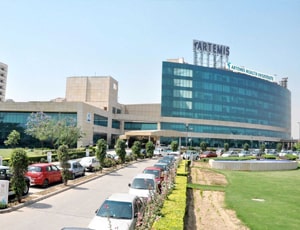
Artemis Health Institute
Gurgaon, India
Artemis Hospital, established in 2007 in Gurgaon, India, is a 750+ bed, state-of-the-art multi-speciality hospital and the first in Gurgaon accredited by JCI and NABH. A flagship of the Apollo Tyres Group, it offers advanced care across cardiology, oncology, orthopaedics, neurology, and transplant medicine, supported by modern infrastructure and 60+ world-class operating theatres. Its Centres of Excellence span critical areas like heart, cancer, neurosciences, orthopaedics, and women & child care. Guided by values of Service, Compassion, and Integrity, Artemis combines innovation, technology, and affordability, making it a trusted international healthcare destination for comprehensive and compassionate patient care.

Star Hospitals
Hyderabad, India
Star Hospitals located in Hyderabad, India is accredited by NABH, NABL. Also listed below are some of the most prominent infrastructural details:
- The bed capacity of Star Hospitals, Hyderabad, India is 130.
- The hospital has Intensive Care Units which are upgraded with the latest technologies.
- International patient care services are applied to make the process of medical travel easier for international patients.
- Centres of Excellence across disciplines such as Cardiac Sciences, Renal Sciences, Critical Care, ENT, Spine Surgery etc.
- A radiology centre which has been digitised.
- There are Centers of Excellence for prominent specialties such as cardiac care and neurosciences, there are a total of six.
Our Services to better your experience
Opinion & Option
We submit the most accurate opinion and options from one or more countries for your review
Consult Privately
Consult with a certified specialist privately on our telemedicine platform even before you decide to travel
Logistics
We handle flights, visas, transfers, and accommodation—so you can focus on your health.
Recovery
Our In-house rehabilitation service packages to better your recovery and treatment outcome
Why Choose India for Transposition of the Great Arteries (TGA) Treatment?
- Experienced Paediatric Cardiac Specialists: Access to paediatric cardiologists, congenital heart surgeons, cardiac intensivists, and other specialists involved in TGA care.
- Advanced Newborn Cardiac Care: Specialised centres may provide neonatal intensive care, continuous monitoring, respiratory support, and urgent cardiac stabilisation.
- Advanced Echocardiography: Fetal and postnatal echocardiography can support early diagnosis and treatment planning.
- Cardiac Catheterisation Facilities: Eligible newborns may have access to procedures such as balloon atrial septostomy.
- Congenital Heart Surgery: Specialised centres can perform arterial switch operations and manage associated congenital heart abnormalities.
- Multidisciplinary Heart Teams: Paediatric cardiologists, cardiac surgeons, anaesthesiologists, intensivists, imaging specialists, nurses, nutritionists, and rehabilitation professionals can coordinate care.
- Long-Term Follow-Up: Congenital heart programmes can monitor patients from childhood through adulthood for potential late complications.
- International Patient Support: Many major Indian hospitals assist international patients with medical records, appointments, treatment coordination, accommodation, and follow-up.