Transitional Cell Carcinoma Treatment in Thailand
- Top Accredited Hospitals
- Global Medical Standards
- Cutting-Edge Technology
- Proven Treatment Options
- High Success Rate
- Trusted by Millions

What is Transitional Cell Carcinoma?
Urothelial carcinoma (transitional carcinoma) begins in the urothelium, the tissue lining some areas of the urinary system. About 90% of bladder cancer cases and 7% of kidney cancer cases, including cancer of the renal pelvis and ureter, are caused by urothelial carcinoma. The symptoms of urothelial carcinoma-induced bladder and kidney cancers are comparable. Their prognoses are similar; these malignancies are easily treated when detected early but frequently return.
How does urothelial carcinoma affect my body?
Urothelial carcinoma affects the bladder and kidneys in various ways. Bladder abnormal urothelial cells can move from the lining to deeper structures, potentially travelling to distant sites such as the liver, lungs, bones, fatty tissues, and lymph nodes. Low-grade bladder cancer is not likely to metastasise, whereas high-grade disease can be lethal and might recur. Urothelial carcinoma in the kidney may progress to develop tumours in the renal pelvis or ureter, which may then extend to other organs. Both diseases, if not treated, may lead to severe implications.
What is the Importance of Timely Treatment?
Transitional cell carcinoma (TCC), also known as urothelial carcinoma, needs to be treated early to enhance prognoses and prevent the cancer from spreading. If diagnosed early, TCC is often successfully treated with less invasive methods, such as localised or transurethral resection. Postponing therapy may make treatment more difficult and reduce survival by giving the cancer time to move to other parts of the body, such as the liver, lungs, or lymph nodes, or grow deeper into the bladder. Early treatment significantly enhances the outlook for individuals with TCC, controls symptoms, and prevents recurrence.
What are the Common Symptoms of Transitional Cell Carcinoma?
Symptoms of urothelial cancer may not be present at once. Usually, the first noticeable sign is blood in the urine. You should consult a healthcare provider if you notice any symptoms, including blood in the urine.
- Chronic pain in the back.
- Fatigue.
- Unexplained weight loss.
- Dysuria is painful urination.
- Tumour or lump near your kidneys.
- Low-grade fever.
Causes and Risk Factors of Transitional Cell Carcinoma
Causes
The exact aetiology of urothelial carcinoma in the kidneys and bladder is not known to medical scientists. They have found, however, a few common risk factors:
- Cigarette smoke: Smoking cigarettes increases the risk of urothelial carcinoma-related urinary system malignancies.
- Exposuretocertainchemicals: Studies show that individuals who work with chemicals used in paint, leather, rubber, dyes, certain fabrics, and hair care products are at increased risk for urinary system malignancies linked to urothelial carcinoma.
Risk Factors
Some risks of transitional cell carcinoma are mentioned below:
- Smoking
- Exposure to chemicals
- Family history
- Genetic factors
Connect with our advisor for a PRIORITY response
Latest Research and Technologies in the Treatment of Transitional Cell Carcinoma in Thailand
The treatment of transitional cell carcinoma (TCC) has significantly improved in Thailand, primarily due to developments in immunotherapy. The creation of the Thailand Hub of Talents in Cancer Immunotherapy (TTCI) and more research in organisations like creating CAR T-cell therapy offer a promising treatment for TCC.
Transitional Cell Carcinoma Prevention Tips
Although there is no guaranteed method to prevent Transitional Cell Carcinoma (TCC), the most important things you can do to lower your risk are to stop smoking, limit your exposure to certain chemicals at work, drink lots of water, and eat a diet high in fruits and vegetables.
Treatment options for Transitional Cell Carcinoma
Surgery is the primary treatment for localised TCC. This includes partial nephrectomy for kidney tumours and transurethral resection for bladder tumours. In certain situations, a radical cystectomy (removal of the bladder) or nephrectomy (removal of the kidney) may be necessary.
Chemotherapy: isfrequently used to eradicate any cancer cells that remain after surgery or for advanced TCC. Chemotherapy is administered intravenously or directly into the bladder for superficial bladder tumours.
Cost Start From USD 1000 - USD 6800Explore Options
Immunotherapy: Pembrolizumab and other immune checkpoint inhibitors are used more frequently, particularly for advanced or metastatic TCC, since they aid the immune system in recognising and combating cancer cells.
Cost Start From USD 3000 - USD 13578Explore Options
Radiation therapy is used to decrease tumours before surgery, particularly for bladder TCC, or to treat tumours in locations that are challenging for surgery to reach.
Targeted Therapy: Medications that attack cancer cells specifically based on genetic mutations or tumor-specific proteins are applied in targeted therapy for urothelial carcinoma. The medications can block the signals through which cancer cells grow and disseminate.
Cost Start From USD 3500Explore Options
- Urinalysis: A test to determine the colour of your urine and its components, including germs, blood, protein, and sugar.
- Urine cytology: Medical professionals use a microscope to look for abnormal cells in your urine. Cancer cells may leak into your urine if you have cancer in your kidneys, bladder, or ureter.
- An intravenous pyelogram (IVP) is a sequence of X-rays of the kidneys, ureter, and bladder to screen for malignancy. Medical professionals inject a contrast dye into one of the veins. To check for obstructions, physicians take X-rays as the dye passes through the kidneys, ureter, and bladder.
- Ureteroscopy: To view the ureter and renal pelvis and acquire tissue samples, healthcare professionals use a narrow, tube-like device with a light and viewing lens.
- Computed tomography (CT) scans provide detailed images of your internal organs by connecting a computer to an X-ray machine. Computerised tomography or computerised axial tomography are other names for this process.
- Ultrasound: A process that creates echoes by reflecting high-energy sound waves off of inside organs or tissues. A sonogram is an image of bodily tissues produced by the echoes. Medical professionals may perform an abdominal ultrasound to help in the diagnosis of renal pelvic and ureter cancer.
- Magnetic resonance imaging (MRI) involves creating finely detailed images of body parts, such as the pelvis, using a magnet, radio waves, and a computer. Nuclear magnetic resonance imaging (NMRI) is another name for this process.
MediRehab (chain of Rehab centres - Part of MediGence) provides comprehensive rehabilitation services rehabilitation services to support patients through Teleconsulations and online therapy sessions.
- Physical therapy enhances strength, endurance, and mobility after chemotherapy or surgery.
- Occupational therapy: Helping the patient return to usual work and activities, especially after invasive treatment such as surgery or chemotherapy.
- Depending on the situation, your healthcare professional may prescribe medicine to help control your symptoms and support the treatment plan.
Instantly Connect with our Specialists


Hospitals for Transitional Cell Carcinoma in Thailand
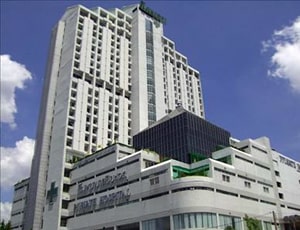
Piyavate Hospital
Bangkok, Thailand
Piyavate Hospital located in Bangkok, Thailand is accredited by JCI. Also listed below are some of the most prominent infrastructural details:
Medicine Centre: Piyavate Hospital provides advanced holistic treatment for their patients. They offer a complete range of services and physicians that specialize in various fields like the endocrine system, the nervous system, kidney function, cardiovascular care, respiratory and digestive system. They pride themselves for the familial care that they provide to their patients.
Fertility and In-Vitro Fertilization Centre: Helping the couples who walk into the Piyavate Hospital to achieve their dream of having a family. They have a medical team that specializes in male and female fertility. They offer consultation services, fertility check-up for both men and women and complete IVF services. They have advanced IVF cycle treatment facilities that offer a high rate of success.
Bone and Joint Institute: Piyavate Hospital houses one of the frontrunners in Orthopaedic health care in all of SouthEast Asia. They offer a wide range of services and surgeries in their bone and joint institute that include hand surgery, hip and knee replacement surgery, spinal cord surgery, upper extremity surgery, arthroscopic surgery and sports medicine.
Eye and Lasik Centre: Piyavate Hospital is fully equipped with the latest and most advanced technology for eye care and houses highly skilled ophthalmologists, sub-specialists and qualified nurses.
Physical Therapy and Rehabilitation Centre: One of the first hospitals to be equipped with the Hybrid Assistive Limb technology that will help a neurologically challenged patient to control the rehabilitation robot limb with a signal from their brain. The Physical Therapy and Rehabilitation Centre at Piyavate Hospital uses this system encourage patients to regain muscle memory to walk and function normally.
Amenities for Patient’s Family:
Piyavate Hospital also offers additional apartment facilities to house the kin of the patients who come to visit them from distant places. A restaurant, a flower shop and a café are a few of the other amenities provided by the hospital.
These are the most popular services offered by the Piyavate Hospital in Bangkok, Thailand. They also provide a plethora of other medical services that are listed below:
Diabetic Foot Centre
Check-up centre
Urology Centre
Heart Institute
Paediatric Centre
Obstetrics and Gynaecology Centre
Surgery Centre
Ear Nose Throat Centre
Haemodialysis Centre
Dental Centre
X-Ray Centre
Gastroenterology Centre
Cancer Centre
Neonatal Intensive Care Unit (NICU)
Emergency Services and Centre
Tele-medicine

Phyathai 2 International Hospital
Bangkok, Thailand
Phyathai 2 International Hospital located in Bangkok, Thailand is accredited by JCI. Also listed below are some of the most prominent infrastructural details:
- Fully equipped rooms are available for convenience of the patients- Gold B Room, Gold A Room, Pediatric Gold A, Platinum room, and Prestige ward
- Nearby accommodations are also available- Abloom Service Apartments, Bangkok Patio, VIB Best Western Sanam Pao, VIC3 Hotel
- Operating room
- International Patient Medical Center to assist overseas patients
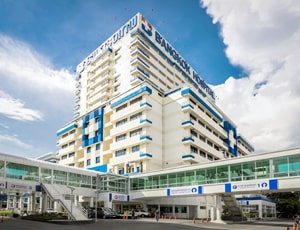
Bangkok Hospital
Bangkok, Thailand
Bangkok Hospital located in Bangkok, Thailand is accredited by JCI. Also listed below are some of the most prominent infrastructural details:
- It is recognised for the application of the newest healthcare technology.
- Blood analysis center that is not just the best in Thailand but in Asia Pacific as well.
- Biomolecule center that is the seed of healthcare equipment for Thailand and overseas.
- International affiliations and collaborations with universities and hospitals in Japan and the United States of America.
- 11 hospitals are recognised as Centers of Excellence.
- Known excellence in Trauma, Orthopedics, Cardiovascular, Neurology as well as Cancer Care.
- There is a proper streamlined patient services process followed in Bangkok Dusit Medical Services, Bangkok, Thailand.
- A well developed research center showcases the intent of the organisation to provide research based treatment opportunities to the patients.
- The group has several Medical industry partnerships as well to ensure healthcare solutions.
Our Services to better your experience
Opinion & Option
We submit the most accurate opinion and options from one or more countries for your review
Consult Privately
Consult with a certified specialist privately on our telemedicine platform even before you decide to travel
Logistics
We handle flights, visas, transfers, and accommodation—so you can focus on your health.
Recovery
Our In-house rehabilitation service packages to better your recovery and treatment outcome
Why Choose Thailand for Transitional Cell Carcinoma Treatment?
Thailand is an excellent place for transitional cell carcinoma treatment because of its top-notch medical facilities, qualified oncologists, and best-in-class treatment facilities at reasonable prices. The nation has the latest technology-equipped state-of-the-art hospitals to facilitate effective diagnosis and treatment. Thailand’s hospitals are also internationally accredited, offering high-quality care.
Frequently Asked Questions
Early-stage TCC kidney carcinoma may have over 90% survival, as the National Carcinoma Institute (NCI) reported. The survival rate may be 15% or below if the TCC has progressed past the bladder's inner lining or to other body parts.
The diagnosis of Transitional Cell Carcinoma, or TCC, is more prevalent among older individuals, particularly in Thailand, who are over the age of 55. It is more prevalent among men compared to women. With age, the risk increases due to factors such as prolonged exposure to carcinogens (such as nicotine and industrial chemicals) and the additive effects of long-standing renal or bladder diseases.
Since smoking is one of the substantial risk factors for bladder, kidney, and ureter cancers, it plays a significant role in developing Transitional Cell Carcinoma (TCC) in Thailand. Aromatic amines and various carcinogens present in tobacco smoke are absorbed into the bloodstream, filtered through the kidneys, and finally excreted in urine. These compounds can damage healthy urinary tract cells, causing mutations and the development of TCC. In Thailand, smoking is believed to increase an individual's risk of developing TCC by as much as three times for both genders. It is one of the country's leading preventable causes of TCC.
In Thailand, transitional cell carcinoma (TCC), especially of the bladder and ureters, can recur after treatment. TCC is a high-recurrence tumour, especially in superficial or early-stage cases, even after successful initial treatment, e.g., surgery or chemotherapy.
Regular follow-up with imaging, urine examination, and cystoscopy is mandatory to detect any recurrence at an early stage. Recurrence may be more aggressive and more challenging to manage in advanced cases. To manage the risk of recurrence, Thailand patients are advised to undergo therapy and monitoring on a routine basis.
In Thailand, radiation therapy is used to cure Transitional Cell Carcinoma (TCC) in cases where the tumour is incurable or advanced. It is also commonly used to cure bladder cancer, either alone or as a means to destroy cancer cells that remain even after surgery.
Radiation therapy can be combined with chemotherapy for better results. However, due to anatomical challenges, its use is limited to TCC, which aims to decrease symptoms, reduce tumours, and improve the overall quality of life.
Lifestyle and dietary changes can improve overall health and treatment outcomes for TCC patients in Thailand. Some recommendations include
- Drinking plenty of water to help remove toxins and reduce the risk of recurrence.
- Consuming a diet rich in whole grains, fruits, and vegetables to enhance overall health and immunity.
- Reducing the risk of cancer by eating less processed food and red meat.
- Decreasing alcohol intake and smoking can enhance the recovery process and reduce the risk of cancer development.
- Maintaining an active lifestyle to cope with stress, build strength, and reduce fatigue.
- Enhancing mental well-being during treatment through taking part in stress-relieving activities such as yoga or meditation.
Yes, you can get a second opinion on Transitional Cell Carcinoma treatment in Thailand through MediGence. With MediGence, you can connect with highly experienced professionals from top Thai hospitals who can provide additional information regarding your diagnosis and treatment options. The platform facilitates easy access to professional help so you can make informed healthcare choices and receive the best care possible.
To find a certified cancer specialist, search MediGence’s website, which offers a list of top-class and internationally trained oncologists from Thailand's best hospitals. Through MediGence, you can search the profiles of specialists, check their credentials, reviews, and experience, and book online consultations. To get the best care for your condition, the website also assists you in finding the best hospitals and provides personalised assistance for your health requirements.

Reviewer

Dr. Mohit Agarwal
Medical Oncologist
14 Years of Experience
One of the finest Oncologist in New Delhi, India, Dr. Mohit Agarwal has worked with several world class multidisciplinary hospitals over the years. Dr. Mohit Agarwal has over 14+ years of experience in his field. The doctor treats and manages a wide range of conditions such as Stomach Cancer, Rectal Cancer, Breast Cancer, Brain Cancer View More
Last Reviewed - January 2026