Squamous Cell Carcinoma Treatment in Thailand
- Top Accredited Hospitals
- Global Medical Standards
- Cutting-Edge Technology
- Proven Treatment Options
- High Success Rate
- Trusted by Millions

What is Squamous Cell Carcinoma?
Squamous cell carcinoma (SCC) or cutaneous squamous cell carcinoma (CSCC) is the second most frequent type of skin cancer, following basal cell carcinoma. It begins in squamous cells in your outer layer of skin, the epidermis. Squamous cell carcinomas typically develop on sun-exposed skin parts, such as your head, arms and legs. Cancer can also develop in the parts of your body where you have mucous membranes, that is, the inner lining of your organs and body cavities such as in your mouth, lungs and anus.
Types of Squamous Cell Carcinoma
Depending on the location and extent of the cancer in your body, there are various forms of squamous cell carcinoma:
- Cutaneous: Cancer that simply affects your skin's outermost layer (in situ) or has spread to other body parts.
- Metastatic cancer is cancer that has spread to areas of the body other than the skin.
What is the Importance of Timely Treatment?
Squamous cell carcinoma (SCC) should be treated early to enhance cure rates, reduce complications, and prevent the cancer from spreading. Early detection allows for more effective therapy, often resulting in less invasive procedures and a better quality of life for the patient. Delaying treatment can cause more aggressive, costly, and less likely to heal cancer.
What are the Common Symptoms of Squamous Cell Carcinoma?
Depending on the location of the cancer, squamous cell carcinoma (SCC) symptoms may differ, but they generally include:
Skin Lesions: A flat, scaly, crusted lesion or a firm, red nodule often seen on sun-shaded areas like the hands, face, ears, or neck.
Bleeding or Ulceration: Bleeding, ulceration, or an unhealing scab is caused by the tumour.
Pain or Tenderness: The affected region becomes painful or tender upon palpation.
Itching or Burning: Itching or burning can be associated with the lesion.
Lumps or Swelling: Lumps can occur in the neck or nearby regions if SCC invades lymph nodes.
Causes and Risk Factors of Squamous Cell Carcinoma
Causes
Squamous cell carcinoma is due to a mutation of the p53 gene. Ultraviolet (UV) light from the sun or indoor tanning beds is the most common cause of mutations of the p53 gene.
Risk Factors
- Age
- Weakened Immune System
- Smoking
- Fair Skin
- Human Papillomavirus (HPV) Infection
- Chronic Skin Conditions
- Exposure to Chemicals
- History of Skin Cancer
- Radiation Exposure
Connect with our advisor for a PRIORITY response
Latest Research and Technologies in the Treatment of Squamous Cell Carcinoma in Thailand
Recent research into squamous cell carcinoma (SCC) has shown promising findings in terms of therapeutic strategies. New therapeutic agents that inhibit cancer cells from taking up glucose have been the focus of significant research. Thailand has been involved in international clinical trials and studies, contributing to further research into these new treatments.
Squamous Cell Carcinoma Prevention Tips
There are a few tips to prevent squamous cell carcinoma, including:
- Wear protective clothing such as long sleeves, caps, and sunglasses to protect the skin from the sun.
- Avoid tanning beds since they expose the skin to dangerous UV rays.
- Visit a dermatologist for a professional skin checkup and conduct routine skin checks.
- Quit smoking since it raises the risk of SCC, especially in the lungs, throat, and mouth.
- Vaccinate yourself against the human papillomavirus (HPV), which has been connected to genital SCC.
- Avoid exposing your skin to chemicals like arsenic, which might increase your chance of developing SCC.
Treatment options for Squamous Cell Carcinoma
Chemotherapy: kills cancer cells by using potent medications. Chemotherapy can be used either alone or in conjunction with other therapies, such as radiation therapy and targeted therapy if squamous cell carcinoma spreads to the lymph nodes or other areas of the body.
Cost Start From USD 1000 - USD 6800Explore Options
Targeted therapy: Drugs that target particular molecules in cancer cells are used in targeted therapy. Targeted therapies can kill cancer cells by preventing these molecules from functioning. Chemotherapy is typically combined with targeted therapy.
Cost Start From USD 3500Explore Options
Immunotherapy: It is a treatment that assists the body's immune system in destroying cancerous cells. The immune system targets bacteria and other cells that shouldn't be in the body to fight against illnesses. To survive, cancer cells hide themselves from the immune system. Immunotherapy aids the cells of the immune system in locating and eliminating cancer cells.
Cost Start From USD 3000 - USD 13578Explore Options
Cryosurgery: The process of freezing cancer cells to kill them.
Photodynamic treatment (PDT): Using light-sensitive chemicals and blue light to eradicate skin cancer.
Curettage and electrodesiccation include using a spoon-like tool (curette) to scrape off the malignant lump and then using an electric needle to burn the region.
Excision is the process of removing the cancer from your skin and then stitching it back together.
Mohs surgery: Usually performed for face malignancies, this procedure involves removing cancerous skin layers.
- Physicalexamination: Besides asking about your medical history, a healthcare team member will examine your skin for signs of squamous cell carcinoma.
- A biopsy is the process of taking a sample of tissue for analysis. The method of taking a tissue sample for laboratory examination is called a biopsy. Using a tool, a member of your healthcare team will cut, shave, or punch off part or all of the skin that appears abnormal. It is examined in a lab to determine whether the sample is cancerous.
MediRehab (chain of Rehab centres - Part of MediGence) provides comprehensive rehabilitation services rehabilitation services to support patients through Teleconsulations and online therapy sessions.
- Physical Therapy: Physical therapy may be used to regain strength and mobility if it is damaged by radiation or surgery, particularly after head, neck, or limb surgery.
- Speech and Swallowing Therapy: If SCC treatment affects the mouth, throat, or neck, speech or swallowing therapy can restore normal function.
- Depending on the situation, your healthcare professional may prescribe medicine to help control your symptoms and support the treatment plan.
Instantly Connect with our Specialists


Hospitals for Squamous Cell Carcinoma in Thailand

Piyavate Hospital
Bangkok, Thailand
Piyavate Hospital located in Bangkok, Thailand is accredited by JCI. Also listed below are some of the most prominent infrastructural details:
Medicine Centre: Piyavate Hospital provides advanced holistic treatment for their patients. They offer a complete range of services and physicians that specialize in various fields like the endocrine system, the nervous system, kidney function, cardiovascular care, respiratory and digestive system. They pride themselves for the familial care that they provide to their patients.
Fertility and In-Vitro Fertilization Centre: Helping the couples who walk into the Piyavate Hospital to achieve their dream of having a family. They have a medical team that specializes in male and female fertility. They offer consultation services, fertility check-up for both men and women and complete IVF services. They have advanced IVF cycle treatment facilities that offer a high rate of success.
Bone and Joint Institute: Piyavate Hospital houses one of the frontrunners in Orthopaedic health care in all of SouthEast Asia. They offer a wide range of services and surgeries in their bone and joint institute that include hand surgery, hip and knee replacement surgery, spinal cord surgery, upper extremity surgery, arthroscopic surgery and sports medicine.
Eye and Lasik Centre: Piyavate Hospital is fully equipped with the latest and most advanced technology for eye care and houses highly skilled ophthalmologists, sub-specialists and qualified nurses.
Physical Therapy and Rehabilitation Centre: One of the first hospitals to be equipped with the Hybrid Assistive Limb technology that will help a neurologically challenged patient to control the rehabilitation robot limb with a signal from their brain. The Physical Therapy and Rehabilitation Centre at Piyavate Hospital uses this system encourage patients to regain muscle memory to walk and function normally.
Amenities for Patient’s Family:
Piyavate Hospital also offers additional apartment facilities to house the kin of the patients who come to visit them from distant places. A restaurant, a flower shop and a café are a few of the other amenities provided by the hospital.
These are the most popular services offered by the Piyavate Hospital in Bangkok, Thailand. They also provide a plethora of other medical services that are listed below:
Diabetic Foot Centre
Check-up centre
Urology Centre
Heart Institute
Paediatric Centre
Obstetrics and Gynaecology Centre
Surgery Centre
Ear Nose Throat Centre
Haemodialysis Centre
Dental Centre
X-Ray Centre
Gastroenterology Centre
Cancer Centre
Neonatal Intensive Care Unit (NICU)
Emergency Services and Centre
Tele-medicine

Phyathai 2 International Hospital
Bangkok, Thailand
Phyathai 2 International Hospital located in Bangkok, Thailand is accredited by JCI. Also listed below are some of the most prominent infrastructural details:
- Fully equipped rooms are available for convenience of the patients- Gold B Room, Gold A Room, Pediatric Gold A, Platinum room, and Prestige ward
- Nearby accommodations are also available- Abloom Service Apartments, Bangkok Patio, VIB Best Western Sanam Pao, VIC3 Hotel
- Operating room
- International Patient Medical Center to assist overseas patients
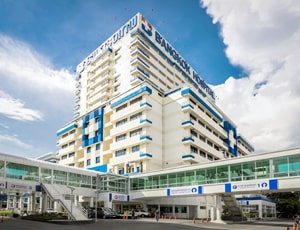
Bangkok Hospital
Bangkok, Thailand
Bangkok Hospital located in Bangkok, Thailand is accredited by JCI. Also listed below are some of the most prominent infrastructural details:
- It is recognised for the application of the newest healthcare technology.
- Blood analysis center that is not just the best in Thailand but in Asia Pacific as well.
- Biomolecule center that is the seed of healthcare equipment for Thailand and overseas.
- International affiliations and collaborations with universities and hospitals in Japan and the United States of America.
- 11 hospitals are recognised as Centers of Excellence.
- Known excellence in Trauma, Orthopedics, Cardiovascular, Neurology as well as Cancer Care.
- There is a proper streamlined patient services process followed in Bangkok Dusit Medical Services, Bangkok, Thailand.
- A well developed research center showcases the intent of the organisation to provide research based treatment opportunities to the patients.
- The group has several Medical industry partnerships as well to ensure healthcare solutions.
Our Services to better your experience
Opinion & Option
We submit the most accurate opinion and options from one or more countries for your review
Consult Privately
Consult with a certified specialist privately on our telemedicine platform even before you decide to travel
Logistics
We handle flights, visas, transfers, and accommodation—so you can focus on your health.
Recovery
Our In-house rehabilitation service packages to better your recovery and treatment outcome
Why Choose Thailand for Squamous Cell Carcinoma Treatment?
Thailand's advanced medical infrastructure, highly qualified medical personnel, and availability of the newest research and technologies make it an excellent destination for treating squamous cell carcinoma (SCC). For SCC, the top institutions in the US provide state-of-the-art care, including immunotherapy, targeted medicines, and novel surgical alternatives. International clinical trials are also conducted in Thailand, giving patients access to exciting new therapies.
Frequently Asked Questions
Yes, squamous cell carcinoma (SCC) can spread to other body parts if left untreated in its initial stages. It can metastasise to distant sites such as the lymph nodes, lungs, liver, or bones or locally spread to adjacent tissues. Early diagnosis and treatment are essential for a good prognosis since SCC becomes increasingly more challenging to treat when it metastasises.
Following an assessment of these variables, the oncologist will classify the tumour into one of the following phases of squamous cell carcinoma:
Stage 0: Only the epidermis, or the outermost layer of the skin, has cancer.
Stage 1: The cancer has advanced profoundly into the skin, but it hasn't reached any healthy tissues or lymph nodes nearby.
Stage 2: Cancer has not migrated to neighbouring lymph nodes or healthy tissues, but it has deepened into the skin and exhibits one or more high-risk characteristics (such as metastases to nerves or lower skin layers).
Stage 3: Although the cancer has spread to lymph nodes, it has not yet reached any other organs outside the skin.
Stage 4: The disease has progressed to one or more distant organs, including the liver, lungs and part of the skin.
The location, stage, and overall health of the patient are among the factors that influence the survival rate of squamous cell carcinoma (SCC) in Thailand, as elsewhere. The survival rate for localised SCC is typically high, i.e., the cancer has not metastasised outside the original site. The key to better outcomes is early diagnosis and treatment.
Squamous cell carcinoma (SCC) can recur after treatment, mainly if it is advanced or not fully cured. Recurrence is more likely to happen if the patient has a history of skin cancer or if the tumour has spread to lymph nodes or surrounding tissues.
Regular follow-up and monitoring are necessary to detect recurrence symptoms early and initiate the appropriate treatment.
Squamous cell carcinoma (SCC) cannot be transmitted. It cannot be passed from person to person by touch, contact, or commingling surroundings. SCC is a type of skin cancer not caused by bacteria, viruses, or other infectious processes; it arises from injury caused by conditions such as smoking, UV radiation, or specific infection. Environmental exposure and personal habits are generally responsible for the risk factors of SCC.
Yes, you can get a second opinion on Squamous Cell Carcinoma treatment in Thailand through MediGence. With MediGence, you can connect with highly experienced professionals from top Thai hospitals who can provide additional information regarding your diagnosis and treatment options. The platform facilitates easy access to professional help so you can make informed healthcare choices and receive the best care possible.
To find a certified cancer specialist, search MediGence’s website, which offers a list of top-class and internationally trained oncologists from Thailand's best hospitals. Through MediGence, you can search the profiles of specialists, check their credentials, reviews, and experience, and book online consultations. To get the best care for your condition, the website also assists you in finding the best hospitals and provides personalised assistance for your health requirements.

Reviewer

Dr. Mohit Agarwal
Medical Oncologist
14 Years of Experience
One of the finest Oncologist in New Delhi, India, Dr. Mohit Agarwal has worked with several world class multidisciplinary hospitals over the years. Dr. Mohit Agarwal has over 14+ years of experience in his field. The doctor treats and manages a wide range of conditions such as Stomach Cancer, Rectal Cancer, Breast Cancer, Brain Cancer View More
Last Reviewed - January 2026