Presbyopia Treatment in India
- Top Accredited Hospitals
- Global Medical Standards
- Cutting-Edge Technology
- Proven Treatment Options
- High Success Rate
- Trusted by Millions

What is Presbyopia?
Presbyopia is an age-related eye condition in which the eye’s natural lens gradually becomes less flexible, making it harder to focus on nearby objects. It typically becomes noticeable after age 40.
What is the Importance of Timely Treatment?
Timely correction can improve near vision, reduce eye strain and headaches, and make everyday activities such as reading, using a phone, or working on a computer easier.
What are the common symptoms of presbyopia?
- Blurry near vision
- Eye strain and fatigue
- Headache
- Difficulty in reading small print
- Difficulty in focusing
- Need for bright light while reading
Causes and Risk Factors of Presbyopia
Causes
- Natural aging: The eye’s natural lens gradually loses flexibility with age, making it harder to focus on nearby objects.
- Reduced focusing ability: The muscles that change the lens’s shape become less effective over time.
Risk Factors
- Increasing age
- Eye trauma or previous eye injury
- Certain medical conditions like diabetes, multiple sclerosis, and cardiovascular disease increase risk.
- Certain Medications: Certain drugs, such as antihistamines, antidepressants, and diuretics, can cause near-vision difficulties
Latest Research and Technologies in the Treatment of Presbyopia in India
- In India, newer presbyopia treatments include trifocal and extended-depth-of-focus intraocular lenses, advanced lens-exchange procedures, and prescription eye drops being studied to improve near vision temporarily. Researchers are also exploring drug combinations and treatments that may improve the eye’s ability to focus while reducing side effects such as glare and halos.
Treatment options for Presbyopia
Laser Refractive Procedures: A laser reshapes the cornea so that one eye is optimised for distance vision and the other for near vision. This reduces dependence on reading glasses. A contact-lens trial is often used beforehand to check whether the patient can adapt to monovision.
Refractive Lens Exchange (RLE): The eye’s natural lens is surgically removed and replaced with an artificial intraocular lens (IOL). A multifocal, trifocal, or EDOF IOL can provide distance and near vision and reduce reliance on glasses.
- Clinical assessment:
- Visual clarity test: Checks the distance and near vision using eye charts.
- Refraction test: It is used to check the power of the glasses or contact lenses
- Slit-lamp examination: Used to examine the cornea, lens, and other front structures of the eye.
- Pupil assessment: Checks pupil size and response, which may help assess suitability for certain treatments.
- Imaging Tests:
- Corneal topography/tomography: This test checks the shape and curvature of the cornea, particularly before refractive surgery.
- Anterior-segment OCT: This test provides detailed images of the cornea, anterior chamber, and lens when additional structural assessment is needed.
- Ocular biometry: This measures eye dimensions before planning lens-based surgery such as refractive lens exchange.
- Medicines do not directly treat presbyopia; however, supportive therapy can help, such as miotic eye drops, which temporarily constrict the pupil to improve near vision. Medications may manage symptoms but do not reverse age-related changes in the eye and should be taken only on a doctor's recommendation.
Instantly Connect with our Specialists


Hospitals for Presbyopia in India
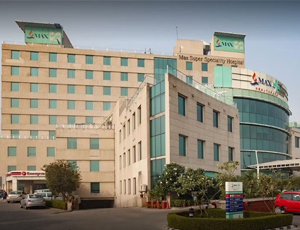
Max Super Specialty Hospital, Shalimar Bagh
Delhi, India
- Max Super Speciality Hospital, Shalimar Bagh, is a 402-bed quaternary-care hospital in New Delhi, offering advanced treatment across 37+ specialities, including Cancer, Cardiac, Neurosciences, Gastroenterology, Orthopaedics, and Renal Transplant.
- Equipped with state-of-the-art technology and a team of highly skilled doctors and nurses, the hospital provides complex procedures, minimally invasive surgeries, and targeted cancer treatments, making it one of India’s leading healthcare destinations.
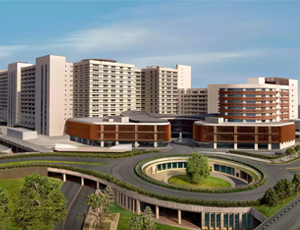
Amrita Hospital
Faridabad, India
Founded in 1998 by Mata Amritanandamayi (Amma), the Amrita Institute of Medical Sciences and Research Centre is one of India’s leading healthcare institutions, accredited by ISO, NABH, and NABL. With 2 branches, 7 medical colleges, and a network of 800+ doctors and 2,600+ beds, it offers comprehensive care across 81 specialties and 12 super-specialty departments, supported by 60+ modern operating theatres and 534 critical care beds. The Faridabad campus, a world-class multispeciality facility, houses advanced centers for oncology, neurosciences, cardiac sciences, gastro-sciences, mother and child care, and trauma care, along with India’s most comprehensive infectious disease unit. Guided by a mission of compassion and innovation, Amrita Hospitals combine cutting-edge medicine with humanitarian service to empower communities and promote holistic well-being.

Rajagiri Hospital
Kochi, India
- Rajagiri Hospital, Kochi, Kerala, is a leading multi-speciality tertiary care hospital known for providing world-class medical services with advanced technology and compassionate care.
- Accredited by JCI, NABH, and NABL, the hospital offers comprehensive treatment across specialities like Cardiology, Oncology, Neurology, Gastroenterology, Orthopaedics, Nephrology, Urology, and Paediatrics, making it a trusted healthcare destination in South India.
Our Services to better your experience
Opinion & Option
We submit the most accurate opinion and options from one or more countries for your review
Consult Privately
Consult with a certified specialist privately on our telemedicine platform even before you decide to travel
Logistics
We handle flights, visas, transfers, and accommodation—so you can focus on your health.
Recovery
Our In-house rehabilitation service packages to better your recovery and treatment outcome