Polycystic Kidney Disease Treatment in Thailand
- Top Accredited Hospitals
- Global Medical Standards
- Cutting-Edge Technology
- Proven Treatment Options
- High Success Rate
- Trusted by Millions

What is Polycystic Kidney Disease?
Polycystic kidney disease (PKD) is an inherited genetic disorder in which numerous fluid-filled cysts develop in the kidneys. As cysts grow and multiply, the kidneys may become enlarged, and their ability to filter blood can gradually decline. PKD can also affect organs outside the kidneys, particularly the liver and blood vessels. The two main forms are autosomal dominant PKD (ADPKD), which usually develops in adulthood, and autosomal recessive PKD (ARPKD), which often presents during infancy or childhood.
What is the Importance of Timely Treatment?
PKD may progress gradually without noticeable symptoms in its early stages. Timely diagnosis and regular monitoring can help detect high blood pressure, declining kidney function, increasing kidney volume and other complications. In adults with ADPKD who are at risk of rapid disease progression, appropriate assessment can help identify patients who may benefit from disease-modifying treatment such as tolvaptan. Early management of blood pressure and other complications can also help protect kidney function.
What are the Common Symptoms of Polycystic Kidney Disease?
- Pain in the back, sides or abdomen
- High blood pressure
- Blood in the urine
- Recurrent urinary tract or kidney cyst infections
- Kidney stones
- Increased abdominal fullness due to enlarged kidneys or liver cysts
- Headaches
- Fatigue
- Frequent urination or other urinary changes
- Reduced kidney function
- Swelling in advanced kidney disease
- Symptoms related to kidney failure in severe disease
Causes and Risk Factors of Polycystic Kidney Disease
Causes
- PKD is caused by disease-causing genetic variants that affect kidney cell development and function. ADPKD is most commonly associated with variants in the PKD1 or PKD2 genes and is usually inherited from one affected parent.
- ARPKD is caused by variants in the PKHD1 gene and occurs when a child inherits disease-causing variants from both parents.
- In some cases, a new genetic variant may occur without a known family history.
Risk Factors
- Having a parent with ADPKD
- Family history of PKD
- Inheriting disease-causing variants associated with PKD
- Having a sibling or close relative with PKD
- Genetic factors associated with more rapid disease progression
- High blood pressure, which can accelerate kidney damage
- Increasing kidney size or total kidney volume in ADPKD
- Reduced kidney function or evidence of rapid eGFR decline
Latest Research and Technologies in the Treatment of Polycystic Kidney Disease in Thailand
- Advances in PKD management focus on earlier diagnosis, assessing disease progression, and preserving kidney function. Renal ultrasound commonly identifies kidney cysts, while MRI provides more detailed measurements of kidney volume and helps estimate progression risk in adults with ADPKD. Researchers are also investigating additional treatments, biomarkers, and approaches that target the biological pathways involved in cyst development. Patients considering treatment in Thailand should confirm the availability, eligibility criteria and monitoring arrangements with the treating hospital.
Treatment options for Polycystic Kidney Disease
Peritoneal Dialysis (PD) : PD offers excellent, continuous fluid removal, gentler blood pressure control, and fewer needle sticks, making it a popular home-based option.
Cost Start From 110Explore Options
Hemodialysis (HD) : Hemodialysis allows for aggressive fluid removal during sessions to help manage fluid-dependent hypertension.
Cost Start From 120Explore Options
Kidney Transplantation : Advanced PKD may eventually cause kidney failure. Patients with kidney failure may require hemodialysis, peritoneal dialysis or kidney transplantation depending on their medical condition and eligibility.
Cost Start From 33000Explore Options
- Clinical assessment:
- Medical and Nephrological Evaluation: A detailed history assesses family history of PKD, blood pressure, urinary symptoms, flank or abdominal pain, kidney stones, urinary infections, blood in the urine and symptoms of declining kidney function.
- Kidney Function Assessment: Blood tests, including serum creatinine and estimated glomerular filtration rate (eGFR), assess kidney function. Urinalysis and urine protein or albumin measurements may help identify additional kidney abnormalities.
- Blood Pressure Assessment: Regular blood-pressure measurement is important because hypertension is common in ADPKD and can contribute to faster kidney-function decline and cardiovascular complications.
- Family and Genetic Assessment: A detailed family history can help identify inherited disease. Consider genetic testing when the diagnosis is uncertain.
- Risk and Prognostic Assessment: In adults with ADPKD, clinicians may assess the likelihood of rapid progression using kidney size, eGFR trajectory, age, and the PROPKD score.
- Imaging Tests:
- Renal Ultrasound: Commonly used to detect kidney cysts and assess kidney size and structure.
- Magnetic Resonance Imaging (MRI): Provides detailed assessment of kidney and cyst volume and can support Mayo Imaging Classification for risk stratification.
- Computed Tomography (CT): May provide detailed anatomical information and can help evaluate kidney stones, bleeding, cyst complications or other abdominal conditions. Low-dose CT may also be considered for kidney-volume assessment when MRI is unavailable or unsuitable.
- Liver Imaging: Ultrasound, CT, or MRI may evaluate liver cysts and other abdominal complications.
- Brain Vascular Imaging: Magnetic resonance angiography (MRA) may be considered in selected patients to evaluate intracranial aneurysms, particularly when clinical or family-history factors indicate increased risk.
MediRehab (a chain of Rehab centres, part of MediGence) provides comprehensive tele-rehabilitation services designed to support Polycystic Kidney Disease patients in Thailand. These Services include:
- Physical Activity and Exercise: Regular, appropriate physical activity can help maintain strength, cardiovascular health and healthy body weight. Adapt activities when enlarged kidneys, pain, or other complications limit certain movements.
- Pain and Mobility Management: Physiotherapy may help patients manage chronic musculoskeletal discomfort, improve posture and maintain safe mobility. Patients with significantly enlarged or symptomatic kidneys may need individual assessment for high-impact or contact activities.
- Medicines for PKD are used to control blood pressure, manage symptoms, and, in selected adults with ADPKD, slow the decline in kidney function. ACE inhibitors or ARBs may be prescribed for blood-pressure control and kidney protection, with other antihypertensive medicines added when necessary. Some pain medicines, particularly non-steroidal anti-inflammatory drugs (NSAIDs), may be unsuitable or require caution in people with reduced kidney function.
Instantly Connect with our Specialists


Hospitals for Polycystic Kidney Disease in Thailand
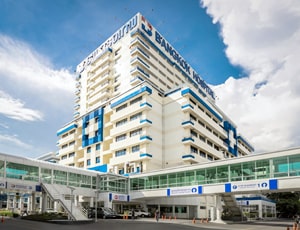
Bangkok Hospital
Bangkok, Thailand
Bangkok Hospital located in Bangkok, Thailand is accredited by JCI. Also listed below are some of the most prominent infrastructural details:
- It is recognised for the application of the newest healthcare technology.
- Blood analysis center that is not just the best in Thailand but in Asia Pacific as well.
- Biomolecule center that is the seed of healthcare equipment for Thailand and overseas.
- International affiliations and collaborations with universities and hospitals in Japan and the United States of America.
- 11 hospitals are recognised as Centers of Excellence.
- Known excellence in Trauma, Orthopedics, Cardiovascular, Neurology as well as Cancer Care.
- There is a proper streamlined patient services process followed in Bangkok Dusit Medical Services, Bangkok, Thailand.
- A well developed research center showcases the intent of the organisation to provide research based treatment opportunities to the patients.
- The group has several Medical industry partnerships as well to ensure healthcare solutions.

Vejthani Hospital
Bangkok, Thailand
Vejthani Hospital located in Bangkok, Thailand is accredited by NABH, NABL. Also listed below are some of the most prominent infrastructural details:
- It is among the topmost private hospitals functioning in Thailand.
- The bed capacity of the hospital is 263.
- There are more than three hundred thousand patients visiting the hospital every year.
- Vejthani hospital has more than 40 outpatient clinics and centers.
- International patient care center with all kinds of services: air ambulance, transfers, travel, stay, embassy liaison, patient coordinators, prayer rooms, visa coordination and translators for 20 languages.
- The special facilities are:
- International Certified Laboratory
- 10 Operating Rooms
- Radiology Section: Portable X-ray, CT-scan and C-ARM and MRI
- Neonatal Critical Care Unit
- Water-jet technique applied for liposuction
- Computer navigation and mini-invasive technique for Joint Replacement surgery

Bangpakok 9 International Hospital
Bangkok, Thailand
Bangpakok 9 International Hospital located in Bangkok, Thailand is accredited by JCI. Also listed below are some of the most prominent infrastructural details:
- It would be prudent to summarise the Medical Services provided at the Bangpakok 9 International Hospital (BPK 9), Bangkok, Thailand:
- Cosmetic Dentistry
- Dental Implants
- Electrocardiogram (EKG or ECG)
- Exercise Stress Test
- Health Screening
- Laser Vagina Firming
- Pediatric Physical Therapy
- Perfect Slim by Vela II
- Physical Therapy for Musculoskeletal
- Prosthodontics
- The Medical Services are also inclusive of the International Patient Services such as the ones listed here:
- Thai, English, French, Arabic, Chinese, Myanmar, Cambodia, Bangladeshi, Bahasa and Tagalog are the languages in which there are Translation services available for International Patients.
- Visa extension related assistance
- International health insurance related assistance
- Embassy and international organizations related assistance
- A variety of meals of choice for International Patients
- Email consultation services
- Transfer to either airport and/or hotels
- Prayer room
- Four different types of rooms are available such as Deluxe room, two kinds of suites, and a VIP suite.
- Hospital facilities like The Coffee shop, Food Hall, Cafe and Medical Spa.
- Complete health and safety protocols are maintained in the various Medical Centers some of whom are as follows:
- Aesthetic Center
- 24 Hour Emergency Center
- Allergy Center
- Breast Center
- bSmart Center
- Checkup Center
- Dental Center,
- Happy Long Life Center
- Medical Fitness Center
- Psychiatric Center
- Rehabilitation Center
- Sleep Disorders Center
Our Services to better your experience
Opinion & Option
We submit the most accurate opinion and options from one or more countries for your review
Consult Privately
Consult with a certified specialist privately on our telemedicine platform even before you decide to travel
Logistics
We handle flights, visas, transfers, and accommodation—so you can focus on your health.
Recovery
Our In-house rehabilitation service packages to better your recovery and treatment outcome
Why Choose Thailand for Polycystic Kidney Disease Treatment?
- Multidisciplinary Nephrology Care: Patients can access nephrologists, urologists, genetic specialists, radiologists, transplant specialists, and other professionals as needed.
- Advanced Diagnostic Facilities: Major centres may provide renal ultrasound, MRI, CT, genetic testing, kidney-function assessment and imaging-based progression-risk evaluation.
- Disease-Modifying Treatment: Eligible patients with rapidly progressive ADPKD may be evaluated for treatments such as tolvaptan under specialist supervision.
- Comprehensive International Patient Support: Major hospitals may provide medical-record review, specialist consultations, treatment coordination, accommodation assistance and follow-up care for international patients.
Frequently Asked Questions

Reviewer

Dr. Akash Khandelwal
Hematologist
9 Years of Experience
Dr. Akash Khandelwal is a distinguished Hematologist, Hemato-oncologist, and Bone Marrow Transplant (BMT) Physician with extensive training from the prestigious AIIMS New Delhi. His expertise encompasses a wide range of specialized techniques in bone marrow transplantation, including autologous and allogeneic transplants such as matched sibling donors, matched unrelated donors (MUD), and haploidentical donor transplants. Dr. Khandelwal has personally supervised and conducted over 100 bone marrow transplants. View More
Last Reviewed - January 2026