Ovarian cysts Treatment in India
- Top Accredited Hospitals
- Global Medical Standards
- Cutting-Edge Technology
- Proven Treatment Options
- High Success Rate
- Trusted by Millions

What are Ovarian cysts?
Ovarian cysts are fluid-filled sacs found within or on the surface of the ovary. Females possess two ovaries. One ovary is found on each side of the uterus.
There are several forms of ovarian cysts, the majority of which are painless and noncancerous (benign). Ovarian cysts do not usually produce symptoms. You won't know you have one unless your healthcare professional discovers it during a pelvic exam or ultrasound.
What is the Importance of Timely Treatment?
Early treatment for ovarian cysts is essential for avoiding complications, including rupture, torsion (twisting), or infection, which can cause extreme discomfort and necessitate emergency surgery. Early discovery and treatment also reduce the chance of fertility problems, as some cysts, if left untreated, can impair ovarian function. In addition, timely intervention helps distinguish benign cysts from possibly cancerous ones, allowing for proper therapies and lowering the risk of future health concerns.
What are the Common Symptoms of Ovarian cysts?
Some tiny cysts produce no symptoms. In many circumstances, you may not know you have a cyst. Larger cysts could cause:
- Pelvic pain or dull soreness in your back
- A sense of fullness (bloating in your lower tummy) may be more assertive on one side of your body
- Dyspareunia refers to pain during sexual activity
- Painful and/or irregular menstruation
- Having trouble pooping or wanting to pee regularly
- Persistent symptoms may indicate polycystic ovary syndrome
Causes, Risk Factors and Complications of Ovarian cysts
Causes
Ovulation is the primary cause of ovarian cysts. It is a natural procedure that occurs during the menstrual cycle. Other factors are:
- Abnormal cell reproduction: Cysts can develop due to abnormal cell proliferation.
- Endometriosis: You may develop endometriomas on your ovary if you have extensive endometriosis.
- Polycystic Ovarian Syndrome (PCOS): PCOS can cause many tiny cysts to develop on your ovaries.
- Pelvic inflammatory disease, or PID: Severe pelvic infections can extend to the ovaries, resulting in cysts.
Risk Factors
The risk of having an ovarian cyst is higher with:
- Hormonal issues: These include using a fertility medicine that induces ovulation.
- Pregnancy: Sometimes, the follicle that emerges when you ovulate remains on your ovary throughout the pregnancy. It can sometimes become larger.
- Endometriosis: Some tissue can connect to your ovary, forming a cyst.
- Severe pelvic infection: If the infection spreads to the ovaries, it might result in cysts.
- Previous ovarian cysts: If you have had one ovarian cyst, you are more likely to get another.
Complications
Although they are uncommon, complications from ovarian cysts might develop. This includes:
- Ovarian torsion. Cysts that get large can cause the ovary to shift. This raises the risk of painful ovarian torsion. If this happens, you may experience sudden, intense pelvic pain, nausea, and vomiting. Ovarian torsion can also restrict or prevent blood supply to the ovary.
- Cysts rupture. A ruptured cyst can cause significant pelvic pain and bleeding. The larger the cyst, the higher the likelihood of rupture.
Connect with our advisor for a PRIORITY response
Latest Research and Technologies in the Treatment of Ovarian Cysts in India
- Recent advances in ovarian cyst therapy include less invasive laparoscopic surgery for faster recovery, ultrasound monitoring for non-invasive tracking of small cysts, and novel treatments such as cyst ablation using lasers or radiofrequency.
- Current research also looks into targeted pharmacological therapies to prevent cyst formation and cryoablation to maintain ovarian tissue while treating cysts. These developments are aimed at minimising recuperation time and preserving fertility.
Ovarian cysts Prevention Tips
- Regular pelvic checks can help detect ovarian abnormalities early on.
- Be alert to changes in your monthly cycle.
- Take note of any odd menstruation symptoms, particularly if they persist for over a few cycles.
Treatment options for Ovarian cysts
Laparoscopic Abdominal Hysterectomy: Laparoscopic surgery is a minimally invasive procedure in which a laparoscope and tools are inserted through tiny cuts in the belly. If the cyst is large or cancer is suspected, an open operation with a more significant cut may be required.
Cost Start From USD 2000 - USD 4000Explore Options
Fibroid removal surgery: Fibroid removal surgical procedures, such as laparoscopic surgery and myomectomy, are occasionally used for ovarian cyst removal, especially if the cyst is big or producing symptoms. These minimally invasive techniques help to preserve ovarian function while eliminating the cyst.
Cost Start From USD 2500 - USD 3500Explore Options
Diagnostic tests done for the determination of ovarian cysts are as follows:
- Pelvic examination: Your doctor may examine your pelvis for lumps or changes.
- Pregnancy tests: A positive test may indicate an early pregnancy. Corpus luteum cysts are normal during pregnancy.
- Pelvic ultrasound: An instrument (transducer) sends and receives high-frequency sound waves, creating an image of your uterus and ovaries on a video screen (ultrasound). The image is utilised to confirm the presence of a cyst, identify its location, and evaluate if it is solid or fluid-filled.
- Laparoscopy: A slim, illuminated device (laparoscope) is placed into your abdomen via a small incision. Your provider will use the laparoscope to examine your ovaries and any cysts.
- Tumor marker tests: Ovarian cancer is frequently associated with higher blood levels of a protein known as a cancer antigen. If your cyst appears solid and you are at high risk for ovarian cancer, your doctor may conduct a cancer antigen test or other blood tests.
Rehabilitation alternatives for ovarian cyst therapy are mainly focused on symptom management and post-operative recovery. This may include:
Physical therapy: This involves pelvic floor exercises to strengthen muscles and enhance circulation.
Lifestyle Changes: Consuming anti-inflammatory foods and maintaining a healthy weight will help lower the chance of future cysts.
- Medication for ovarian cysts focuses on symptom management and avoiding new cyst formation.
- Hormonal contraceptives (birth control pills) prevent ovulation. This may prevent you from developing further ovarian cysts. However, birth control tablets will not decrease an existing cyst.
Instantly Connect with our Specialists


Hospitals for Ovarian cysts in India

Fortis Hospital, Mulund
Mumbai, India
Fortis Hospital Mulund, located in Mulund West, Mumbai, is a premier healthcare facility providing excellence in multi-speciality healthcare for over 20 years. The global leader in advancing medical technology and clinical expertise, the hospital offers specialities including Cardiology, Neurosciences, Oncology, Transplants, and Orthopaedics. The hospital is well-known for being the largest transplant center in Maharashtra and offers advanced treatment options, including Transcatheter Aortic Valve Implantation (TAVI) and stereotactic precision radiotherapy for cancer. Fortis Mulund is equipped with a 24/7 Emergency Department and International Patient Unit to provide world-class patient-centric care.

Fortis Memorial Research Institute
Gurgaon, India
Fortis Healthcare Limited stands as one of India's largest integrated healthcare providers, managing 33 hospitals across 11 states and operating more than 5,700 beds and 400 diagnostic labs. Four of our hospitals are accredited by JCI and 26 by NABH. With a workforce of over 12,500 healthcare professionals, we combine clinical excellence, a patient-focused approach, and innovation to provide high-quality, affordable, and compassionate healthcare to patients in India.
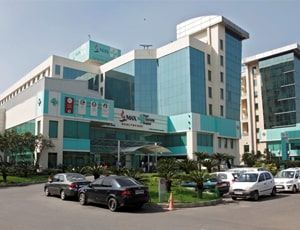
Max Super Speciality Hospital, Saket
Delhi, India
Max Smart Super Speciality Hospital, Saket, is a 250-bed tertiary care hospital awarded NABH accreditation, which provides advanced medical care in various specialities such as Cardiac Sciences, Orthopaedics, Neurology, Urology, Kidney Transplant, Paediatrics, and Obstetrics & Gynaecology. The hospital provides quality, safe, integrated, and patient-centric medical care using modular OTs, ICUs, Cath Labs, CT, MRI and Dialysis units.
Our Services to better your experience
Opinion & Option
We submit the most accurate opinion and options from one or more countries for your review
Consult Privately
Consult with a certified specialist privately on our telemedicine platform even before you decide to travel
Logistics
We handle flights, visas, transfers, and accommodation—so you can focus on your health.
Recovery
Our In-house rehabilitation service packages to better your recovery and treatment outcome
Why Choose India for Ovarian cysts Treatment?
Here are some of the reasons for choosing India:
- Due to advancements in medical facilities, such as minimally invasive surgical techniques.
- World-class experts include highly experienced doctors, JCI, and NABH-accredited healthcare institutions.
- Compared to other countries, treatment in Indian hospitals is cost-effective.
- Indian hospitals provide International patient services, including a multilingual support system.
- Improved treatment methods and biological therapies.
Frequently Asked Questions
Maybe. Some cysts can cause bloating, so eliminating one may make you feel lighter.
Most ovarian cysts are not a cause for concern. Your healthcare provider can inform you whether a cyst requires immediate attention or is harmful. Cysts that cause symptoms or continue growing in size require more frequent monitoring than others.
It depends on the nature and cause. Some ovarian cysts might not require treatment and resolve independently over time. Others require therapy or immediate treatment because they indicate more significant health problems.
In India, ovarian cyst therapy typically consists of monitoring tiny cysts, using hormonal medications such as birth control to prevent new cysts, and doing surgical procedures such as laparoscopy to remove more significant or symptomatic cysts. In some circumstances, advanced methods, such as radiofrequency ablation, may also be considered. The treatment technique is determined by the cyst's size, symptoms, and the patient's overall health.
Several factors influence healthcare providers' decision to remove a cyst:
- Size of the cyst: Your doctor may advise you to have a cyst more significant than 10 cm removed because larger cysts cause discomfort.
- Symptoms: If the cyst causes you pain, interferes with menstruation, or contributes to your inability to conceive, your provider may prescribe removal.
- Suspicion of cancer: Suppose there is any suspicion that a cyst is carcinogenic. In that case, your doctor may recommend that you have it removed, especially if you are at a higher risk of developing ovarian cancer.
- The type of cyst: Functional cysts tend to be tiny and disappear after a few menstrual cycles. Other cysts become more prominent and do not go away independently, so your doctor is more likely to prescribe removal.
Yes, ovarian cysts can reoccur, mainly if they are caused by underlying diseases such as PCOS; therefore, regular monitoring is essential.
Yes, surgery to remove ovarian cysts, particularly laparoscopic surgery, is safe and commonly performed by qualified surgeons in India with excellent success rates.
The success rate of ovarian cyst treatments in India is generally high, with laparoscopic surgery (a minimally invasive approach) removing cysts without complications at 85-90%. Nonsurgical treatments, such as hormone therapy, can help prevent recurrence and manage symptoms, especially in smaller cysts. However, the actual success percentage varies based on the cyst type, size, location, and whether it is associated with disorders such as PCOS. Regular follow-ups and timely interventions significantly improve outcomes.

Reviewer

Dr. Uma Vaidyanathan
Gynecologist Laproscopic Surgeon
19 Years of Experience
Dr. Uma Vaidyanathan joined Fortis Healthcare in November 2019 after practising an effective clinical practice in prestigious corporate hospitals.She has previously worked on research initiatives related to maternal mortality and infections during pregnancy at AIIMS, Safdarjung Hospital, and WHO. View More
Last Reviewed - January 2026