Obstructive Jaundice Treatment in India
- Top Accredited Hospitals
- Global Medical Standards
- Cutting-Edge Technology
- Proven Treatment Options
- High Success Rate
- Trusted by Millions

What is Obstructive Jaundice?
When bile cannot pass from the liver to the intestines due to a blockage in the bile ducts, it will result in obstructive jaundice. This obstruction results in an accumulation of the yellow pigment bilirubin in the blood, giving the skin and eyes a distinctive yellowing.
What is the Importance of Timely Treatment?
The treatment of obstructive jaundice is beneficial for several reasons:
- Preventing Complications: Early care can prevent serious complications, such as liver damage infections in the bile duct and other parts of the organs due to blocked bile flow.
- Reducing symptoms- Early treatment can improve a patient's quality of life by reducing abdominal pain, discomfort, weight loss and yellowing of the skin and eyes.
- Avoiding further medical interventions: Treatment on time lessens the need for long-term medications and their side effects associated with the long-term medication. More invasive surgical procedures might be avoided with early management.
What are the Common Symptoms of Obstructive Jaundice?
Obstructive Jaundice can cause a set of common symptoms
- Yellowing of the Skin and Eyes (Jaundice)
- Dark Urine
- Pale Stools
- Abdominal Pain
- Itching (Pruritus)
- Loss of Appetite
- Nausea and Vomiting
- Fever
- Weight Loss
Causes and Risk Factors of Obstructive Jaundice
Causes
- Gallstones
- Tumors
- Inflammation
- Structural Issues
- Parasitic Infections
- Pancreatitis
- Iatrogenic Causes
Risk Factors
- Age
- Gender
- Family History
- Obesity
- Certain Medications
- Liver Diseases
Connect with our advisor for a PRIORITY response
Latest Research and Technologies in the Treatment of Obstructive Jaundice in India
- Magnetic Resonance Cholangiopancreatography (MRCP): It helps detect obstructions by providing detailed imaging of the bile ducts.
- Endoscopic Ultrasound (EUS): Combines ultrasonography and endoscopy to produce high-resolution pictures of the bile ducts and their surroundings.
- Elastography: Helps diagnose liver conditions that can result in obstructive jaundice by measuring liver stiffness.
- Liver Transplantation: The only effective treatment for severe liver illnesses like cirrhosis is still liver transplantation. Transplant success rates have increased due to advancements in medicine.
- Nanoparticle-Based Therapies
Obstructive Jaundice Prevention Tips
While there is no promising way to prevent Obstructive Jaundice, A few lifestyle modifications and practices can lower your risk and improve your overall liver health in general :
- Maintain a balanced diet rich in fibers that includes fruits, vegetables, and whole grains to aid the liver in processing waste efficiently, have lean proteins like meat, beans, and legumes, and avoid uncontrolled consumption of saturated fats and refined sugars.
- Staying physically active is key to maintaining a healthy weight that reduces liver fat. Activities like swimming, cycling, and walking are aerobic activities that help maintain a healthy weight.
- Limit exposure to harmful chemicals, cleaning products and insecticides.
- Avoid smoking
- Monitor liver function through regular Blood tests that identify liver problems early and enable timely treatment.
- Follow Medical Advice if you have any family history of Liver disease or other risk factors.
Treatment options for Obstructive Jaundice
Endoscopic Retrograde Cholangiopancreatography (ERCP) : It uses an endoscope to remove clogged bile ducts to open up by placing stents.
Cost Start From USD 400 - USD 900Explore Options
Cholecystectomy : It can be performed in case of obstruction of the gallbladder, infection and gallstone if the patient already has jaundice complication.
Cost Start From USD 3500 - USD 4500Explore Options
Laboratory Tests
- Liver Function Test (LFTs): It can detect the measurement of bilirubin, alkaline phosphatase(ALP), aspartate aminotransferase (AST), and alanine aminotransferase (ALT) to assess Liver function and obstructions in suspected patients.
- Complete Blood Count(CBC)
- Prothrombin Time (PT)
Endoscopic Procedures
- Endoscopic Retrograde Cholangiopancreatography (ERCP) {ercp-diagnostic} : Utilizes an endoscope to inject dyes into the bile duct, to observe medical images X-rays to visualize obstructions in bile duct.
- Choledochoscopy: A tiny camera is inserted into the bile ducts using an endoscope for direct visual examinations.
Imaging Studies
- Ultrasound (USG)
- Magnetic Resonance Cholangiopancreatography (MRCP)
- Computed Tomography (CT) Scan
- Endoscopic Ultrasound (EUS)
Other Diagnostic Tests
- Narrow Band Imaging (NBI): It increases the visualisation of bile ducts during the endoscopy.
- Probe-Based Confocal Endomicroscopy: Bile ducts can be visualised at microscopic levels through high-resolution images provided by probe-based confocal endoscopy.
MediRehab (chain of Rehab centres - Part of MediGence, which provides comprehensive rehabilitation services designed to support Obstructive Jaundice patients in India. These services include:
Lifestyle changes and modification
Dietary adjustments and supplements should be made, as well as tailored meal plans to control symptoms and guarantee adequate nourishment. Treating vitamins and mineral deficiency if detected in obstructive jaundice patients. To enhance health and well-being, lifestyle adjustments and modifications involve modifying long-term habits, especially nutrition, exercise, avoiding alcohol, quitting smoking, and stress reduction management.
Depending on the circumstances, your doctor might recommend medication to help manage your symptoms and complement the course of treatment.
Instantly Connect with our Specialists


Hospitals for Obstructive Jaundice in India

Apollo Multispecialty Hospitals
Kolkata, India
Apollo Multispecialty Hospitals located in Kolkata, India is accredited by JCI, NABH. Also listed below are some of the most prominent infrastructural details:
- International patient Center
- Focus on research and innovation
- Different amenities: Transport, Security, Travel Desk, Places of Worship, Telecommunication Service, Special Nurse, Food & Dietary Services
- Several kinds of rooms: General ward, Semi Private Rooms, Private Rooms, Deluxe, Super Deluxe, Suite, Maharaja Suite, HDU, Gastro ICU, Emergency, Neonatal ICU, Level 1, Level 2 & Level 3
- Health Insurance coverage available
- Here is a comprehensive list of the various kinds of key medical procedures performed through the latest technology.
- Arthroscopy
- Bone Marrow Transplant
- Cosmetic Surgery
- Da Vinci Robotic Surgical System
- Fractional Flow Reserve (FFR)
- Hand Microsurgery
- Hip Arthroscopy
- Minimally Invasive Cardiac Surgery
- Minimally Invasive Subvastus Total Knee Replacement
- Oral & Maxillofacial Surgery
- 128 Slice PET CT
- Bioresorbable Vascular Scaffold (BVS)
- ECMO
- OCT Technique - Optical Coherence Tomography
- Single Port Endoscopic technique of Carpal Tunnel Release (ECTR)

Apollo Hospital
Chennai, India
Apollo Hospital located in Chennai, India is accredited by JCI, NABH. Also listed below are some of the most prominent infrastructural details:
- Committed Centers of Excellence involving many major specialties, super specialties
- Assistance in trip planning and execution
- Insurance related assistance
- Visa facilitation
- International patient representatives for complete end to end travel and transfer processing for medical travellers
- Language translators availability
- Robust safety and infection protocols
- Personalised, Visa and Premium Health Checks available
- Health Library and accessing health records online
- Wide variety of procedures accomplished including complex and critical procedures
- Technologically advanced systems and procedures in place
- Research and academics base of healthcare delivery
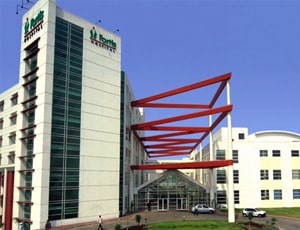
Fortis Hospital
Noida, India
Fortis Healthcare Limited is one of India’s prominent providers of integrated healthcare services, offering comprehensive medical care across multiple specialities. The company’s operations span hospitals, diagnostic centres, and day-care speciality facilities, ensuring a wide range of healthcare solutions under one umbrella. Fortis has established a strong presence across the country, managing 33 healthcare facilities, which include joint ventures and operational & management (O&M) setups, across 11 states.
The company’s hospital network comprises more than 5,700 operational beds, including O&M beds, catering to patients with varied healthcare needs. In addition to inpatient services, Fortis operates around 400 diagnostic laboratories, providing reliable and timely diagnostic support for accurate medical care. This extensive network enables Fortis to deliver high-quality healthcare services consistently and efficiently, from routine diagnostics to specialised treatments and complex procedures.
Our Services to better your experience
Opinion & Option
We submit the most accurate opinion and options from one or more countries for your review
Consult Privately
Consult with a certified specialist privately on our telemedicine platform even before you decide to travel
Logistics
We handle flights, visas, transfers, and accommodation—so you can focus on your health.
Recovery
Our In-house rehabilitation service packages to better your recovery and treatment outcome
Why Choose India for Obstructive Jaundice Treatment?
- Advanced Medical Centers: Modern hospitals and medical facilities in India have the newest technologies to spot and treat Obstructive Jaundice. A lot of hospitals have dedicated gastroenterology and hepatology departments with experienced and skilled healthcare professionals.
- Cost-Effective Treatment: Compared to Western countries, excellent care is offered cheaply.
- Comprehensive Care: Indian hospitals follow a holistic approach to treatment, including pain management, dietary support, psychological counselling, and medical and surgical intervention.
- Advanced Diagnostic tools: Advanced diagnostic equipment such as MRCP, ERCP, and endoscopic ultrasound are available in Indian hospitals to ensure precise diagnosis and treatment planning.
Frequently Asked Questions
The recovery time for obstructive jaundice can vary depending on the type of jaundice a patient is suffering and several factors, including the apparent cause, the seriousness of the condition, and the individual's overall health. For Mild jaundice, it usually takes one to two weeks; for Moderate jaundice, it might take two to four weeks, and for severe jaundice, it could take several months depending upon the severity of the disease.
Yes, if obstructive jaundice is not treated correctly, the harm it causes may be irreparable. Liver damage, infections, and even liver failure are outcomes from delayed diagnosis and treatment. Long-term blockage can harm the liver and bile ducts and leave lasting scars. To improve results and avoid lasting harm, early intervention is essential.
Yes, Indian hospitals are provided with advance technology and tools for the treatment of obstructive jaundice such as Magnetic Resonance Cholangiopancreatography (MRCP), Endoscopic Ultrasound (EUS), and Computed Tomography (CT) scans to diagnose the condition accurately, other treatments include Endoscopic Retrograde Cholangiopancreatography (ERCP), laparoscopic surgery, and minimally invasive techniques to remove obstructions and restore bile flow.
Most hospitals in India offer the following:
- Assistance in obtaining visas.
- Airport Service to and from the hospitals.
- Multilingual experts and Best accommodations services
Obstructive Jaundice symptoms can affect day-to-day functioning by interfering with social interactions, work and productivity, emotional and psychological health, Digestive issues, abdominal pain and nutritional challenges. Many Obstructive Jaundice sufferers, however, lead happy lives when their condition is treated correctly.
If medicine and lifestyle modifications don't work, surgery can be required in case of gallstone, tumor and bile duct injuries.
Absolutely. Obstructive Jaundice can remarkably impact the quality of life due to its chronic nature and the symptoms that it causes on physical impacts like chronic abdominal pain, fatigue, itching,p oor quality of sleep due to itching, Digestive issues due to poor nutrition absorbtion, emotional and psychological impacts like stress, anxiety, social isolation, Reduced work capacity, Dietary restrictions that includes careful meal plannings.
You should get medical attention right away if you have experienced persistent abdominal pain, cramping, yellowing of skin, dark urine, pale and clay colored stool, fever, nausea and vomiting, confusion and changes of behaviour. If anyone experiences this symptom, it's beneficial to get in touch with healthcare professionals for further diagnosis and treatment of obstructive Jaundice. Early interventions help patients to manage symptoms and prevent complications.
There is no direct link between obstructive jaundice and Hepatitis B. Contact with contaminated blood or bodily fluids can result in the transmission of the viral infection known as hepatitis B, which damages the liver. However, obstructive jaundice can worsen liver damage and make the illness more complicated if the patient additionally has a Hepatitis B virus infection.
- Preventing Complications: Early care can prevent serious complications like infections and liver damage.
- Reducing symptoms: Early treatment can improve a patient's quality of life by lowering the yellowing of skin and eyes, as well as abdominal pain and discomfort.
- Improving overall health: Treatment on time ensures proper nutrient absorption, which will initially prevent weight loss by maintaining normal digestive functions.
- Enhancing quality of life: Resolving obstructions in the gall bladder can improve individuals' overall well-being and energy levels.

Reviewer

Dr. Pradeep Jain
General & Laparoscopic Surgeon
33 Years of Experience
Dr. Pradeep Jain has completed his MBBS, MS - General Surgery, MCh - Surgical Gastroenterology/G.I. Surgery, and MCh - Surgical Oncology. He is a GastroIntestinal Surgeon, General Surgeon, Surgical Oncologist, Bariatric Surgeon par excellence with total experience of 36 years of which about 33+ years have been as a specialist View More
Last Reviewed - January 2026