Obesity Treatment in Thailand
- Top Accredited Hospitals
- Global Medical Standards
- Cutting-Edge Technology
- Proven Treatment Options
- High Success Rate
- Trusted by Millions

What is Obesity?
Obesity is a complex condition primarily caused by excess body fat. Obesity is more than a cosmetic issue. This medical condition increases the risk of many other illnesses and health issues. Heart disease, diabetes, hypertension, hypercholesterolemia, liver disease, sleep apnea, and many forms of cancer are among them.
Some people find it difficult to lose weight for various reasons. Sometimes, obesity is caused by a combination of environment, physiology, genetic variables, diet, exercise, and physical activity choices.
What is the Importance of Timely Treatment?
Obesity must be treated in time to prevent significant health issues such as diabetes, heart disease, high blood pressure, and some types of cancer. Early treatment can improve general health and well-being by reducing the risk of long-term diseases, improving quality of life, and helping with proper weight management. It also leads to better long-term control and successful weight loss.
What are the Common Symptoms of Obesity?
Common symptoms of obesity include the following:
- Excessive Body Fat: Gaining much weight in the thighs, hips, and abdomen.
- Breathlessness: Shortness of breath upon exertion
- Fatigue: Weak and getting tired, even after rest.
- Snoring or Sleep apnea refers to breathing difficulties that disturb sleep most of the time.
- Excessive Sweating: Sweating more, especially at rest or exercising.
- Difficulty moving around and, for this reason, being unable to carry out any physical activity.
- Increased Appetite: Always feeling hungry or wanting to eat.
- Mood Changes: Depressed, anxious, or low self-esteem feelings linked to weight-related problems.
Causes and Risk Factors of Obesity
Causes
- Poor Diet: Consumption of processed snacks, sugary drinks, high-calorie foods, and low-nutrient fast food.
- Lack of Physical Activity: Prolonged sitting and inactivity lead to lower caloric expenditure.
- Genetics: Genetic predisposition, inherited genes, and family history may influence the body's way of storing fat and controlling metabolism.
- Medical Conditions: Insulin resistance, hypothyroidism, and polycystic ovarian syndrome (PCOS) can increase the risk of obesity.
- Hormonal Imbalances: Hormonal imbalances in leptin, ghrelin, and insulin may affect appetite and fat storage.
- Emotional Factors: Overeating as a coping mechanism may be caused by stress, despair, and emotional eating.
Risk Factors
- Age
- Physical Inactivity
- Poor Diet
- Medical Conditions
- Medications
- Psychological Factors
- Socioeconomic Factors
- Sleep Issues
Connect with our advisor for a PRIORITY response
Latest Research and Technologies in the Treatment of Obesity in Thailand
Thailand is taking significant steps in the treatment of obesity by employing novel strategies, such as the use of GLP-1 receptor agonists for weight loss and bariatric surgery for extreme obesity. Thailand has also established national metabolic and bariatric surgery guidelines to enhance patient care.
Studies further indicate that laparoscopic bariatric surgery is an economical option, especially in people with obesity-associated illnesses like type 2 diabetes. Moreover, Thailand is incorporating digital healthcare technologies to enhance access and patient outcomes, a holistic approach to addressing obesity.
Obesity Prevention Tips
Here are some tips for preventing obesity:
Keep Your Diet Balanced: Limit processed foods, sugar-filled beverages, and high-calorie snacks while eating a diet full of fruits, vegetables, whole grains, lean meats, and healthy fats.
Maintain Your Physical Activity Level: Try to get in at least 30 minutes of moderate activity, such as swimming, cycling, or walking, on most days of the week.
Control Portion Sizes: Eat smaller, more frequent meals throughout the day and be aware of portion sizes to prevent overindulgence.
Keep Yourself Hydrated: Limit sugary drinks and sip water throughout the day.
Get Enough Sleep: Get between seven and nine hours of sound sleep every night. Lack of sleep can alter appetite hormones and cause overeating.
Treatment options for Obesity
Gastric Bypass: This technique prevents food intake and nutrient absorption by bypassing a portion of the small intestine and creating a tiny pouch-like stomach.
Cost Start From USD 6500 - USD 12000Explore Options
Sleeve Gastrectomy: A sleeve-shaped stomach that limits food intake is left behind after a significant section of the stomach is removed during a sleeve gastroscopy.
Cost Start From USD 4500 - USD 6500Explore Options
Lap Gastric Banding: restricts the amount of food consumed by wrapping a band around the upper part of the stomach to form a small pouch known as an Adjustable Gastric Banding or lap band.
Cost Start From USD 9000 - USD 15000Explore Options
- Clinical assessment:
- Physical Examination: A thorough physical examination evaluates overall health. This includes measuring waist circumference, waist-to-hip ratio, and body mass index. It helps estimate body fat distribution and the possible risk of developing diabetes or heart problems.
- Blood Tests: Blood tests are used to screen for potential subclinical medical disorders such as insulin resistance, hypothyroidism, hyperglycemia, and high cholesterol that could be associated with obesity.
- Imaging Tests:
- The DEXA scan is a test that measures bone density, lean mass, and fat mass. It provides a detailed assessment of fat distribution, which is essential to understand the health risks associated with obesity.
- Ultrasound: Fatty liver and abdominal fat are common conditions in obese individuals, and ultrasound imaging can be used to assess these conditions.
Our MediRehab facilities, part of MediGence in India, offer physical therapy services for international patients. We also have convenient teleconsultation options so that patients all over the globe can receive expert treatment remotely. A few services such as:
- Behaviouraltherapy is focused on solving emotional eating, developing self-control, and changing pathological eating habits. It may aid people in formulating and reaching weight loss objectives, and it may use support groups, cognitive behavioural therapy (CBT), or counselling.
- Physical therapy: Customized exercise programs for obese individuals help improve their strength, cardiovascular fitness, and ambulation ability. A physical therapist can design low-impact exercises that can gradually raise the intensity of a patient's activity without harming the patient.
- Depending on the situation, your healthcare professional may prescribe medicine to help control your symptoms and support the treatment plan.
Instantly Connect with our Specialists


Hospitals for Obesity in Thailand

Piyavate Hospital
Bangkok, Thailand
Piyavate Hospital located in Bangkok, Thailand is accredited by JCI. Also listed below are some of the most prominent infrastructural details:
Medicine Centre: Piyavate Hospital provides advanced holistic treatment for their patients. They offer a complete range of services and physicians that specialize in various fields like the endocrine system, the nervous system, kidney function, cardiovascular care, respiratory and digestive system. They pride themselves for the familial care that they provide to their patients.
Fertility and In-Vitro Fertilization Centre: Helping the couples who walk into the Piyavate Hospital to achieve their dream of having a family. They have a medical team that specializes in male and female fertility. They offer consultation services, fertility check-up for both men and women and complete IVF services. They have advanced IVF cycle treatment facilities that offer a high rate of success.
Bone and Joint Institute: Piyavate Hospital houses one of the frontrunners in Orthopaedic health care in all of SouthEast Asia. They offer a wide range of services and surgeries in their bone and joint institute that include hand surgery, hip and knee replacement surgery, spinal cord surgery, upper extremity surgery, arthroscopic surgery and sports medicine.
Eye and Lasik Centre: Piyavate Hospital is fully equipped with the latest and most advanced technology for eye care and houses highly skilled ophthalmologists, sub-specialists and qualified nurses.
Physical Therapy and Rehabilitation Centre: One of the first hospitals to be equipped with the Hybrid Assistive Limb technology that will help a neurologically challenged patient to control the rehabilitation robot limb with a signal from their brain. The Physical Therapy and Rehabilitation Centre at Piyavate Hospital uses this system encourage patients to regain muscle memory to walk and function normally.
Amenities for Patient’s Family:
Piyavate Hospital also offers additional apartment facilities to house the kin of the patients who come to visit them from distant places. A restaurant, a flower shop and a café are a few of the other amenities provided by the hospital.
These are the most popular services offered by the Piyavate Hospital in Bangkok, Thailand. They also provide a plethora of other medical services that are listed below:
Diabetic Foot Centre
Check-up centre
Urology Centre
Heart Institute
Paediatric Centre
Obstetrics and Gynaecology Centre
Surgery Centre
Ear Nose Throat Centre
Haemodialysis Centre
Dental Centre
X-Ray Centre
Gastroenterology Centre
Cancer Centre
Neonatal Intensive Care Unit (NICU)
Emergency Services and Centre
Tele-medicine

Asia clinic thonglor
Bangkok, Thailand
- A wide range of services in cosmetic surgery, skincare, wellness, and weight control.
- Experienced doctors and specialists with medical licenses and expert training.
- Use of trusted, approved products and techniques that meet global safety standards.
- Non-surgical beauty options include facial lifting, wrinkle care, and skin treatments.
- Health screening packages that check for hormones, allergies, and early signs of disease.
- Private recovery rooms are designed for comfort and relaxation after treatments.
- Additional conveniences include a café, free Wi-Fi, and clean, modern surroundings.
- Friendly staff who speak Thai, English, and Turkish for easier communication.
- A central location inside Marché Thonglor, a well-known health and lifestyle complex.
- Services for adults only, with about 1,500 people visiting each year.
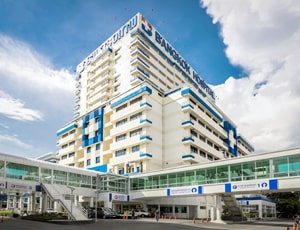
Bangkok Hospital
Bangkok, Thailand
Bangkok Hospital located in Bangkok, Thailand is accredited by JCI. Also listed below are some of the most prominent infrastructural details:
- It is recognised for the application of the newest healthcare technology.
- Blood analysis center that is not just the best in Thailand but in Asia Pacific as well.
- Biomolecule center that is the seed of healthcare equipment for Thailand and overseas.
- International affiliations and collaborations with universities and hospitals in Japan and the United States of America.
- 11 hospitals are recognised as Centers of Excellence.
- Known excellence in Trauma, Orthopedics, Cardiovascular, Neurology as well as Cancer Care.
- There is a proper streamlined patient services process followed in Bangkok Dusit Medical Services, Bangkok, Thailand.
- A well developed research center showcases the intent of the organisation to provide research based treatment opportunities to the patients.
- The group has several Medical industry partnerships as well to ensure healthcare solutions.
Our Services to better your experience
Opinion & Option
We submit the most accurate opinion and options from one or more countries for your review
Consult Privately
Consult with a certified specialist privately on our telemedicine platform even before you decide to travel
Logistics
We handle flights, visas, transfers, and accommodation—so you can focus on your health.
Recovery
Our In-house rehabilitation service packages to better your recovery and treatment outcome
Why Choose Thailand for Obesity Treatment?
Thailand is a popular destination for treating obesity for several significant reasons:
Affordable Healthcare: Compared to many Western countries, Thailand provides affordable treatment options, including weight loss programs and bariatric surgery, at a fraction of the cost.
Highly Trained Medical Professionals
Thailand has highly trained doctors and surgeons, many internationally qualified and aware of the latest obesity treatments.
State-of-the-Art Facilities
Most Thailand hospitals are equipped with the latest medical technology to ensure quality care and follow international healthcare standards.
There are various treatment options, ranging from incredibly complex bariatric operations to non-surgical weight loss programs. Patients can expect therapy plans that address their specific needs.
Frequently Asked Questions
A well-balanced diet rich in nutritious food with limited portions will help you lose weight. Include common exercise, with 150 minutes of moderate activity per week, and drink plenty of water. Eat mindfully, get seven to nine hours of good sleep, and use yoga or other stress-reduction techniques. To maintain motivation, set reasonable weight loss objectives, don't skip meals, and surround yourself with encouraging people.
Bariatric surgery is a weight-loss method for severely obese individuals that alters the digestive tract to help the patient lose weight. The options include sleeve gastrectomy, adjustable gastric banding, and gastric bypass. Candidates must have failed other efforts at weight loss and have a BMI of 40 or higher or 35 or higher with obesity-related medical conditions. To undergo the procedure, they must also be generally healthy and committed to lifestyle changes over the rest of their lives.
Although the recovery time after bariatric surgery in Thailand varies by patient and technique, it generally takes three to six weeks. Patients usually spend one to three days in the hospital immediately following surgery. The diet is liquid or soft food for the first few weeks, and rest is essential.
Most people can return to mild work or hobbies within two to three weeks, but physical activity should be avoided for four to six weeks. Complete healing takes six months, but readjusting to the new food and lifestyle changes may take up to three months.
There are several types of bariatric surgery, all of which aim at helping patients lose weight by effecting changes to the digestive system in some way:
Gastric Bypass: This technique prevents food intake and nutrient absorption by bypassing a portion of the small intestine and creating a tiny pouch-like stomach.
Sleeve gastrectomy: A sleeve-shaped stomach that limits food intake is left behind after a significant section of the stomach is removed during a sleeve gastroscopy.
Adjustable Gastric Banding: This technique restricts the amount of food consumed by wrapping a band around the upper part of the stomach to form a small pouch known as an Adjustable Gastric Banding or lap band.
Most patients experience a loss of between 50% and 70% of their excess weight within a year or two of bariatric surgery. However, this varies from patient to patient, depending on factors such as metabolism, lifestyle changes, and the surgery performed. After one year, weight loss tends to slow down; therefore, continuing healthy practices and annual check-ups are critical for long-term success.
Maintaining a healthy diet, exercising regularly, and, in some cases, medical care or bariatric surgery can all help manage obesity, which can be a lifelong condition. Although it cannot be totally "cured," durability depends on making these adjustments to avoid weight gain and improve overall health.
Yes, bariatric surgery is available at many reputable hospitals throughout Thailand by physicians who are experts in weight-loss methods such as sleeve gastrectomy and gastric bypass.

Reviewer

Dr. Ashish George
Gastroenterologist
18 Years of Experience
Dr. Ashish George is one of the leading names in HPB surgery & liver transplantation and has about 18+ years of experience.He is a principal consultant & unit head of liver transplant at Fortis Shalimar Bagh. View More
Last Reviewed - January 2026