Neurofibroma Treatment in Thailand
- Top Accredited Hospitals
- Global Medical Standards
- Cutting-Edge Technology
- Proven Treatment Options
- High Success Rate
- Trusted by Millions

What is Neurofibroma?
Benign tumors called neurofibromas develop on the body's nerves. They are made up of blood arteries, various cell and fiber types, and an overabundance of nerve tissue. Subcutaneous neurofibroma, cutaneous neurofibroma, and cutaneous neurofibroma can develop on nerves beneath the skin or deeper within the body, such as the spine, chest, and abdomen.
What can I expect if my child has Neurofibroma?
Compared to ordinary children, children with neurofibroma may take longer to walk, talk, and accomplish other developmental milestones. They might also suffer headaches, trouble learning, hyperactivity, a head that appears enormous for the body, and lumps under and under the skin. A lower height than the majority of kids their age, as well as scoliosis, or side-to-side backbone bends. Freckles in their armpits or in the groin, the fold between the belly and hip, or a curvature, weakening, or weakness of the forearms or lower leg bones.
What are the Common Symptoms of Neurofibroma?
The kind, size, and location of the tumor all affect the symptoms of neurofibroma. Some neurofibroma patients may never have any symptoms. However, neurofibromas can occasionally result in severe health problems like blindness or paralysis. Pressing on neurofibromas can cause pain and itching.
Causes, Risk Factors and Complications of Neurofibroma
Causes
A mutation or alteration in a gene known as the NF1 gene results in neurofibromas, a sign of neurofibromatosis Type 1 (NF1). Instructions for producing the protein neurofibromin are encoded by the NF1 gene. A tumor suppressor protein called neurofibromin typically stops cells from proliferating or dividing too rapidly or uncontrolled. It accomplishes this by controlling a protein known as the ras protein, which promotes cell division and proliferation. A mutation in the NF1 gene allows cells to proliferate and develop into tumors by ceasing to inhibit cell proliferation.
If one parent has the genetic mutation, the person may inherit NF1. One of their parents might have passed the mutation on to that parent. About half of NF1 patients have no family history of the condition.
Risk Factors
The majority of neurofibromas are not dangerous and can be monitored by a physician by routine physical examinations, imaging tests, and, if necessary, biopsies.
Complications
Neurofibroma location can complicate things and surgery can be challenging depending on the tumors’ size, location, and connection with the underlying nerve. As the surgical team prepares to remove the tumor, it may have to deal with a number of obstacles. Based on particular symptoms and concerns, doctors will assist in reviewing the advantages and disadvantages of surgery.
Connect with our advisor for a PRIORITY response
Latest Research and Technologies in the Treatment of Neurofibroma in Thailand
Thailand is making strides in the treatment of neurofibroma because to innovative research and state-of-the-art medical equipment. To remove tumors while maintaining nerve function, hospitals use minimally invasive surgical procedures including robotic-assisted and laser-guided surgeries. Advanced imaging techniques, such as PET scans and MRI neurography, enable accurate diagnosis and therapy planning. Furthermore, immunotherapy and targeted medicines are being investigated to limit the growth of tumors, particularly in patients with Neurofibromatosis Type 1 (NF1).
Neurofibroma Prevention Tips
Since neurofibroma is a genetic disorder, there is no way that we can prevent neurofibroma.
Treatment options for Neurofibroma
Chemotherapy: Chemotherapy is often used to treat neurofibromatosis tumors, including neurofibromas and plexiform neurofibromas. While most patients with neurofibromatosis do not develop cancer, chemotherapy can also be used to treat malignant peripheral nerve sheath tumors (MPNSTs) and other complications. Chemotherapy drugs work by destroying cells that divide rapidly, helping to shrink neurofibromas and alleviate symptom
Cost Start From USD 1000 - USD 6800Explore Options
Radiation Therapy: Radiation therapy can be used to treat certain complications of neurofibromatosis, such as optic nerve gliomas, acoustic neuromas, and malignant peripheral nerve sheath tumors. It can also be used to shrink neurofibromas, although these noncancerous tumors are usually left untreated unless they are particularly large or painful
A medical practitioner will examine the patient and evaluate their medical history in order to diagnose a neurofibroma.
A CT or MRI scan may be necessary for the patient. Imaging can assist in determining the tumor's location. Additionally, CT and MRI can identify the tissues that are impacted and detect extremely small tumors. The tumor's malignancy status can be determined via a PET scan. Benign tumors are those that are not malignant.
For diagnosis, a sample of the neurofibroma may be obtained and examined. We call this a biopsy. A biopsy also may be needed if surgery is being considered as a treatment.
Some patients return home the same day of surgery, while others may need to stay in the hospital for one to three days, depending on the size and location of the neurofibroma. Rehab may be necessary for a full recovery, which could take six months.
Depending on the situation, your healthcare professional may prescribe medicine to help control your symptoms and support the treatment plan.
Instantly Connect with our Specialists


Hospitals for Neurofibroma in Thailand
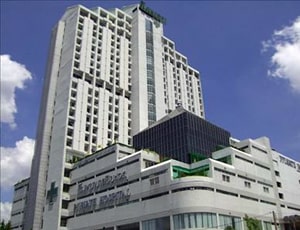
Piyavate Hospital
Bangkok, Thailand
Piyavate Hospital located in Bangkok, Thailand is accredited by JCI. Also listed below are some of the most prominent infrastructural details:
Medicine Centre: Piyavate Hospital provides advanced holistic treatment for their patients. They offer a complete range of services and physicians that specialize in various fields like the endocrine system, the nervous system, kidney function, cardiovascular care, respiratory and digestive system. They pride themselves for the familial care that they provide to their patients.
Fertility and In-Vitro Fertilization Centre: Helping the couples who walk into the Piyavate Hospital to achieve their dream of having a family. They have a medical team that specializes in male and female fertility. They offer consultation services, fertility check-up for both men and women and complete IVF services. They have advanced IVF cycle treatment facilities that offer a high rate of success.
Bone and Joint Institute: Piyavate Hospital houses one of the frontrunners in Orthopaedic health care in all of SouthEast Asia. They offer a wide range of services and surgeries in their bone and joint institute that include hand surgery, hip and knee replacement surgery, spinal cord surgery, upper extremity surgery, arthroscopic surgery and sports medicine.
Eye and Lasik Centre: Piyavate Hospital is fully equipped with the latest and most advanced technology for eye care and houses highly skilled ophthalmologists, sub-specialists and qualified nurses.
Physical Therapy and Rehabilitation Centre: One of the first hospitals to be equipped with the Hybrid Assistive Limb technology that will help a neurologically challenged patient to control the rehabilitation robot limb with a signal from their brain. The Physical Therapy and Rehabilitation Centre at Piyavate Hospital uses this system encourage patients to regain muscle memory to walk and function normally.
Amenities for Patient’s Family:
Piyavate Hospital also offers additional apartment facilities to house the kin of the patients who come to visit them from distant places. A restaurant, a flower shop and a café are a few of the other amenities provided by the hospital.
These are the most popular services offered by the Piyavate Hospital in Bangkok, Thailand. They also provide a plethora of other medical services that are listed below:
Diabetic Foot Centre
Check-up centre
Urology Centre
Heart Institute
Paediatric Centre
Obstetrics and Gynaecology Centre
Surgery Centre
Ear Nose Throat Centre
Haemodialysis Centre
Dental Centre
X-Ray Centre
Gastroenterology Centre
Cancer Centre
Neonatal Intensive Care Unit (NICU)
Emergency Services and Centre
Tele-medicine

Phyathai 2 International Hospital
Bangkok, Thailand
Phyathai 2 International Hospital located in Bangkok, Thailand is accredited by JCI. Also listed below are some of the most prominent infrastructural details:
- Fully equipped rooms are available for convenience of the patients- Gold B Room, Gold A Room, Pediatric Gold A, Platinum room, and Prestige ward
- Nearby accommodations are also available- Abloom Service Apartments, Bangkok Patio, VIB Best Western Sanam Pao, VIC3 Hotel
- Operating room
- International Patient Medical Center to assist overseas patients
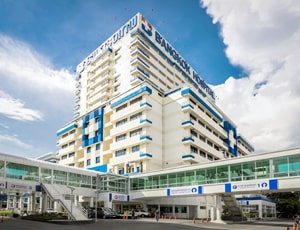
Bangkok Hospital
Bangkok, Thailand
Bangkok Hospital located in Bangkok, Thailand is accredited by JCI. Also listed below are some of the most prominent infrastructural details:
- It is recognised for the application of the newest healthcare technology.
- Blood analysis center that is not just the best in Thailand but in Asia Pacific as well.
- Biomolecule center that is the seed of healthcare equipment for Thailand and overseas.
- International affiliations and collaborations with universities and hospitals in Japan and the United States of America.
- 11 hospitals are recognised as Centers of Excellence.
- Known excellence in Trauma, Orthopedics, Cardiovascular, Neurology as well as Cancer Care.
- There is a proper streamlined patient services process followed in Bangkok Dusit Medical Services, Bangkok, Thailand.
- A well developed research center showcases the intent of the organisation to provide research based treatment opportunities to the patients.
- The group has several Medical industry partnerships as well to ensure healthcare solutions.
Our Services to better your experience
Opinion & Option
We submit the most accurate opinion and options from one or more countries for your review
Consult Privately
Consult with a certified specialist privately on our telemedicine platform even before you decide to travel
Logistics
We handle flights, visas, transfers, and accommodation—so you can focus on your health.
Recovery
Our In-house rehabilitation service packages to better your recovery and treatment outcome
Why Choose Thailand for Neurofibroma Treatment?
Here are some of the reasons for choosing Thailand:
- Due to advancements in medical facilities, such as minimally invasive surgical techniques.
- World-class experts include highly experienced doctors, JCI, and NABH-accredited healthcare institutions.
- Compared to other countries, treatment in Thailand hospitals is cost-effective.
- Thailand hospitals provide international patient services, including a multilingual support system.
Frequently Asked Questions
There is currently no treatment that can cause the majority of neurofibromas to recede or go away, and the only option to get rid of them once they have grown is through surgery. For children aged 2 and up with NF1 who have plexiform neurofibromas that produce symptoms and cannot be surgically removed, the Food and Drug Administration has approved the oral drug selumetinib. A malignant plexiform neurofibroma may require chemotherapy and radiation treatment. There may be clinical trials available for specific neurofibroma types.
With skilled neurosurgeons and cutting-edge medical technology, Thailand has demonstrated significant success rates in treating neurofibroma. The nation's healthcare institutions offer top-notch treatment alternatives, guaranteeing successful outcomes for many patients.
Yes, many Thailand hospitals offer the following for neurofibroma treatment:
- Advanced diagnostic tools like MRI, CT scan, electromyography, and PET scan for accurate neurofibroma diagnosis.
- Skilled neurologist and oncologist for neurofibroma.
- Advanced radiation and chemotherapy procedures.
- Comprehensive post-surgery care and follow-up to ensure long-term heart health.
Always consider the following factors when selecting Thailand hospitals:
- Hospitals that are accredited (authorised by JCI).
- Patient reviews and success rates.
- Hospitals that provide seamless care to patients from abroad.
In general, neurofibroma treatment has much improved in Thailand. The success rate largely depends on tumor size and their location. Some neurofibromas can be completely removed surgically while others require both chemotherapy and radiation therapy to keep them under check or to reduce size so that they can be surgically removed.
You must look for any lumps or rubbery bumps on the baby's skin and determine whether the baby is itching. To confirm the diagnosis, a concerned physician should do a physical examination and other tests.
Significant growth of neurofibromas, particularly plexiform kinds, can press on nerves and organs, resulting in discomfort, weakness, or functional impairment. The chance of developing cancer may increase if they turn into malignant peripheral nerve sheath tumors (MPNSTs). High blood pressure, noticeable skin patches that can lower self-esteem, neurological problems, and bone deformities including scoliosis are further risks.
No, we cannot cure neurofibroma before birth.
Here are some ways you can take care of your child:
The majority of kids with neurofibroma lead normal, full lives with only minor symptoms. A child with neurofibroma requires routine examinations so that medical professionals can screen for:
- Issues with the eyes
- Issues with blood pressure
- Fresh tumors
- Tumor growth, scoliosis, and difficulties with learning
Yes, you can see top Neuro hospitals and doctors in Thailand for a second opinion on Neurofibroma treatment. Numerous prestigious medical facilities consult with skilled doctors who will examine your diagnosis and suggest the best course of action

Reviewer

Dr. Mohit Agarwal
Medical Oncologist
14 Years of Experience
One of the finest Oncologist in New Delhi, India, Dr. Mohit Agarwal has worked with several world class multidisciplinary hospitals over the years. Dr. Mohit Agarwal has over 14+ years of experience in his field. The doctor treats and manages a wide range of conditions such as Stomach Cancer, Rectal Cancer, Breast Cancer, Brain Cancer View More
Last Reviewed - January 2026