Neuroendocrine Tumors Treatment in Thailand
- Top Accredited Hospitals
- Global Medical Standards
- Cutting-Edge Technology
- Proven Treatment Options
- High Success Rate
- Trusted by Millions

What are Neuroendocrine Tumors?
Cancers known as neuroendocrine tumours start in specialised cells known as neuroendocrine cells. Neuroendocrine cells have characteristics of hormone-producing and nerve cells.
Although they are uncommon, neuroendocrine tumours can develop anywhere in the body. Most neuroendocrine tumours develop in the pancreas, rectum, small intestine, appendix, and lungs.
Neuroendocrine tumours come in a variety of forms. Some grow very swiftly, while others grow slowly. Excess hormones are produced by certain neuroendocrine tumours (functional neuroendocrine tumours). Nonfunctional neuroendocrine tumours either don't release hormones at all or don't release enough to produce symptoms.
Types of Neuroendocrine Tumors
NETs are characterised according to their origin and whether they are operational (producing hormones) or non-functioning. They can arise in different organs. The following are a few typical NET types:
The term "gastrointestinal neuroendocrine tumours" (GI NETs) refers to tumours that develop in the stomach, small intestine, colon, and rectum.
Pancreatic neuroendocrine tumours (PNETs) can be either non-functional or functioning, producing hormones such as glucagon or insulin.
Thyroid neuroendocrine tumours are rare growths in the thyroid gland, including medullary thyroid cancer, which begins in the thyroid's calcitonin-producing C-cells.
Adrenal neuroendocrine tumours occur in the adrenal glands, which sit above the kidneys and generate the chemicals cortisol and adrenaline.
CarcinoidTumour: One of the subtypes of neuroendocrine tumours, carcinoid tumours are most commonly found in the gastrointestinal system, particularly in the small intestine, appendix, and rectum. Some cancers produce or do not produce hormones.
What is the Importance of Timely Treatment?
Early treatment of neuroendocrine tumours (NETs) is essential for enhancing patient outcomes. Early intervention and detection can prevent the tumour from spreading or becoming more malignant. NETs may develop slowly, and symptoms do not usually appear until the tumour has progressed, so early diagnosis is vital. Early treatment of NETs gives the best hope of successful surgery, possibly removing the tumour before it metastasises.
Moreover, early intervention can control hormone-related symptoms and avoid complications such as hormone overproduction, enhancing the patient's quality of life. Because NETs exhibit a wide range of behaviours, early treatment also ensures a more specific treatment modality, enhancing overall prognosis.
What are the Common Symptoms of Neuroendocrine Tumors?
Initial signs and symptoms are not usually present in neuroendocrine tumours. Your tumour's location and whether it produces too many hormones will determine the symptoms you might experience.
Signs and symptoms of neuroendocrine tumours generally may include:
- The discomfort caused by an expanding tumour
- A growing bulge beneath the skin that you may feel
- I'm feeling quite exhausted.
- Losing weight without making an effort
Excessive hormone production by neuroendocrine tumours (functional tumours) may result in:
- Flushing of the skin
- Vomiting
- Regular urination
- Dizziness and increased thirst
- shakiness
- A rash on the skin
Causes and Risk Factors of Neuroendocrine Tumors
Causes
- Although the exact causes of neuroendocrine tumours (NETs) remain unknown, genetic abnormalities, such as those found in von Hippel-Lindau disease and Multiple Endocrine Neoplasia (MEN), can raise the risk.
- Environmental variables and chronic illnesses, including gastritis, hormone imbalances, and family history, may all play a role. Random genetic alterations in neuroendocrine cells are frequently the cause of NET development.
Risk Factors
- Genetic Conditions
- Family History
- Age
- Gender
- Chronic Conditions
- Hormonal Imbalances
- Environmental and Lifestyle Factors
Connect with our advisor for a PRIORITY response
Latest Research and Technologies in the Treatment of Neuroendocrine Tumors in Thailand
Advanced treatments such as immunotherapy, targeted drugs, and peptide receptor radionuclide therapy (PRRT) are increasingly used to treat NETs. Genetic analysis, molecular characterisation, and PET scanning are advanced diagnostic techniques that facilitate personalised treatment plans. Thailand hospitals are conducting clinical studies to explore new combinations of medications and treatments.
Treatment options for Neuroendocrine Tumors
Surgery: The tumour is surgically removed. Surgeons attempt to take out as much of the surrounding healthy tissue as possible, along with the entire tumour. Remove as much of the tumour as possible if complete removal is impossible.
Chemotherapy: Chemotherapy uses powerful drugs to destroy tumour cells. It may be taken orally or injected into an arm vein. If your neuroendocrine tumour recurs after surgery, chemotherapy is recommended. It can also help cancers that are too advanced to remove with surgery.
Cost Start From USD 1000 - USD 6800Explore Options
Targeted Therapy: Targeted medication therapies concentrate on particular abnormalities in tumour cells. Targeted pharmacological treatments can potentially kill tumour cells by preventing these aberrations. Chemotherapy and targeted medication therapy are typically used in conjunction with advanced neuroendocrine tumours.
Cost Start From USD 3500Explore Options
Radiation Therapy: This treatment employs intense energy beams, such as protons and X-rays, to destroy tumour cells. It may be effective for certain neuroendocrine tumour types. It could be suggested in cases where surgery is not a possibility.
- Biochemical tests quantify the quantity or activity of a specific protein or enzyme in your blood or urine. They may indicate that the NET is functioning (secreting hormones).
- Imaging tests: Your doctor may order imaging tests, such as an MRI, CT scan, or X-ray, which can reveal internal malignancies. PET scans can detect cancer spread.
- Endoscopy involves removing tissue and examining tumours inside your body using a scope. A particular kind of endoscopy, such as a colonoscopy or an esophagogastroduodenoscopy, may be required, depending on the tumour's location.
- Endoscopic ultrasound: Your physician can perform an endoscopy and an imaging study to find a NET. For example, endoscopic ultrasonography can detect a neuroendocrine tumour in your pancreas.
- Biopsy: Providers perform biopsies to collect tissue or fluid samples. The sample is then scanned using a microscope to identify cancerous cells. This examination also reveals essential information about the type of NET and its degree of aggression.
MediRehab (chain of Rehab centres - Part of MediGence) provides comprehensive rehabilitation services rehabilitation services to support patients through Teleconsulations and online therapy sessions.
- Physical therapy: To help improve energy, strength, and mobility, especially after surgery or extensive treatment.
- Occupational therapy can help patients regain independence if pain or fatigue affects their daily routine.
- Depending on the situation, your healthcare professional may prescribe medicine to help control your symptoms and support the treatment plan.
Instantly Connect with our Specialists


Hospitals for Neuroendocrine Tumors in Thailand

Piyavate Hospital
Bangkok, Thailand
Piyavate Hospital located in Bangkok, Thailand is accredited by JCI. Also listed below are some of the most prominent infrastructural details:
Medicine Centre: Piyavate Hospital provides advanced holistic treatment for their patients. They offer a complete range of services and physicians that specialize in various fields like the endocrine system, the nervous system, kidney function, cardiovascular care, respiratory and digestive system. They pride themselves for the familial care that they provide to their patients.
Fertility and In-Vitro Fertilization Centre: Helping the couples who walk into the Piyavate Hospital to achieve their dream of having a family. They have a medical team that specializes in male and female fertility. They offer consultation services, fertility check-up for both men and women and complete IVF services. They have advanced IVF cycle treatment facilities that offer a high rate of success.
Bone and Joint Institute: Piyavate Hospital houses one of the frontrunners in Orthopaedic health care in all of SouthEast Asia. They offer a wide range of services and surgeries in their bone and joint institute that include hand surgery, hip and knee replacement surgery, spinal cord surgery, upper extremity surgery, arthroscopic surgery and sports medicine.
Eye and Lasik Centre: Piyavate Hospital is fully equipped with the latest and most advanced technology for eye care and houses highly skilled ophthalmologists, sub-specialists and qualified nurses.
Physical Therapy and Rehabilitation Centre: One of the first hospitals to be equipped with the Hybrid Assistive Limb technology that will help a neurologically challenged patient to control the rehabilitation robot limb with a signal from their brain. The Physical Therapy and Rehabilitation Centre at Piyavate Hospital uses this system encourage patients to regain muscle memory to walk and function normally.
Amenities for Patient’s Family:
Piyavate Hospital also offers additional apartment facilities to house the kin of the patients who come to visit them from distant places. A restaurant, a flower shop and a café are a few of the other amenities provided by the hospital.
These are the most popular services offered by the Piyavate Hospital in Bangkok, Thailand. They also provide a plethora of other medical services that are listed below:
Diabetic Foot Centre
Check-up centre
Urology Centre
Heart Institute
Paediatric Centre
Obstetrics and Gynaecology Centre
Surgery Centre
Ear Nose Throat Centre
Haemodialysis Centre
Dental Centre
X-Ray Centre
Gastroenterology Centre
Cancer Centre
Neonatal Intensive Care Unit (NICU)
Emergency Services and Centre
Tele-medicine

Phyathai 2 International Hospital
Bangkok, Thailand
Phyathai 2 International Hospital located in Bangkok, Thailand is accredited by JCI. Also listed below are some of the most prominent infrastructural details:
- Fully equipped rooms are available for convenience of the patients- Gold B Room, Gold A Room, Pediatric Gold A, Platinum room, and Prestige ward
- Nearby accommodations are also available- Abloom Service Apartments, Bangkok Patio, VIB Best Western Sanam Pao, VIC3 Hotel
- Operating room
- International Patient Medical Center to assist overseas patients
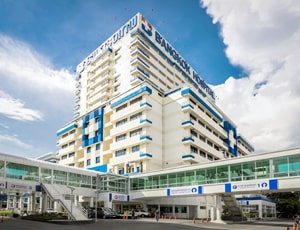
Bangkok Hospital
Bangkok, Thailand
Bangkok Hospital located in Bangkok, Thailand is accredited by JCI. Also listed below are some of the most prominent infrastructural details:
- It is recognised for the application of the newest healthcare technology.
- Blood analysis center that is not just the best in Thailand but in Asia Pacific as well.
- Biomolecule center that is the seed of healthcare equipment for Thailand and overseas.
- International affiliations and collaborations with universities and hospitals in Japan and the United States of America.
- 11 hospitals are recognised as Centers of Excellence.
- Known excellence in Trauma, Orthopedics, Cardiovascular, Neurology as well as Cancer Care.
- There is a proper streamlined patient services process followed in Bangkok Dusit Medical Services, Bangkok, Thailand.
- A well developed research center showcases the intent of the organisation to provide research based treatment opportunities to the patients.
- The group has several Medical industry partnerships as well to ensure healthcare solutions.
Our Services to better your experience
Opinion & Option
We submit the most accurate opinion and options from one or more countries for your review
Consult Privately
Consult with a certified specialist privately on our telemedicine platform even before you decide to travel
Logistics
We handle flights, visas, transfers, and accommodation—so you can focus on your health.
Recovery
Our In-house rehabilitation service packages to better your recovery and treatment outcome
Why Choose Thailand for Neuroendocrine Tumor Treatment?
Thailand is suitable for treating neuroendocrine tumours (NETs) due to its skilled oncologists, advanced medical technology, and affordable healthcare. The country offers various therapeutic options, including peptide receptor radionuclide therapy (PRRT), targeted drugs, chemotherapy, and surgery. Many hospitals in Thailand are equipped with multidisciplinary treatment and international accreditation.
Frequently Asked Questions
Neuroendocrine tumours (NETs) can be benign or malignant, depending on their rate of growth and metastasis. Because benign NETs grow very slowly, they are noncancerous and never metastasise to other body regions. They often only require surgical removal. However, malignant NETs grow more aggressively, are carcinogenic, and potentially metastasise to other organs, requiring more aggressive treatments, including surgery, chemotherapy, or other therapies.
Yes, neuroendocrine tumours (NETs), particularly malignant ones, can migrate to other areas of the body. This process is called metastasis. The liver, lungs, bones, and lymph nodes are familiar places for spreading NETs. The tumour's size, grade, and whether it is malignant or benign all affect its tendency to spread.
Somatostatin therapy uses synthetic forms of somatostatin, a hormone that usually regulates the secretion of several other hormones, to treat neuroendocrine tumours (NETs). Somatostatin analogues suppress the tumours' secretion of excessive hormones, reducing symptoms like flushing, diarrhoea, and other side effects. By binding to specific receptors on NET cells, these treatments also reduce tumour activity and, in some cases, reduce the size of the tumours, slowing their development.
The prognosis of a neuroendocrine tumour (NET) depends on tumour grade (its rate of growth), stage (whether it has spread), site, and hormone production. The prognosis is typically worse for high-grade tumours and those that have spread. Factors related to the patient, including overall health, age, and response to treatment, also impact the prognosis.
Surgical removal of tumours, if possible, chemotherapy or targeted therapy for more severe cases, and medications such as somatostatin analogues to treat hormone-related symptoms are all involved with treating the symptoms of a neuroendocrine tumour (NET). To improve overall comfort, symptoms might also be treated with painkillers, antidiarrheals, and changes in diet. Symptom treatment and quality of life can be enhanced with an individualised treatment plan developed with input from a medical team.
Yes, you can get a second opinion on Neuroendocrine tumour treatment in Thailand through MediGence. With MediGence, you can connect with highly experienced professionals from top Thai hospitals who can provide additional information regarding your diagnosis and treatment options. The platform facilitates easy access to professional help so you can make informed healthcare choices and receive the best care possible.
To prevent the growth of the tumour further, surgery is a common form of therapy for localised NETs. The size and site of the tumour and whether or not it has involved other organs decide if surgery is possible.
To find a certified cancer specialist, search MediGence’s website, which offers a list of top-class and internationally trained oncologists from Thailand's best hospitals. Through MediGence, you can search the profiles of specialists, check their credentials, reviews, and experience, and book online consultations. To get the best care for your condition, the website also assists you in finding the best hospitals and provides personalised assistance for your health requirements.

Reviewer

Dr. Mohit Agarwal
Medical Oncologist
14 Years of Experience
One of the finest Oncologist in New Delhi, India, Dr. Mohit Agarwal has worked with several world class multidisciplinary hospitals over the years. Dr. Mohit Agarwal has over 14+ years of experience in his field. The doctor treats and manages a wide range of conditions such as Stomach Cancer, Rectal Cancer, Breast Cancer, Brain Cancer View More
Last Reviewed - January 2026