Nearsightedness (Myopia) Treatment in India
- Top Accredited Hospitals
- Global Medical Standards
- Cutting-Edge Technology
- Proven Treatment Options
- High Success Rate
- Trusted by Millions

What is Nearsightedness?
Myopia, often known as nearsightedness, is a common refractive defect in which nearby items appear distinct, but distant objects appear blurry. Light focuses in front of the retina rather than directly on it when the eye is too long or the cornea is excessively curved. Some symptoms are squinting, headaches, eye strain, and blurred distance vision. Refractive surgery, contact lenses, and glasses can all be used to treat myopia. It is generally diagnosed before 20 years of age.
What is the importance of timely treatment?
It's essential to treat myopia (nearsightedness) as soon as possible to slow its growth and prevent risks like glaucoma or retinal detachment. Clear vision and eye health are maintained through early intervention with glasses, contact lenses, or myopia management techniques (such as atropine drops or orthokeratology). Severe myopia can result from delaying treatment, raising the likelihood of vision-threatening disorders. Routine eye exams ensure proper maintenance and long-term eyesight protection.
What are the Common Symptoms of Nearsightedness?
If you are nearsighted, you might observe:
- Distant objects appear fuzzy or blurry.
- Closed objects are as apparent.
- Headaches.
- Eye strain.
- Squinting.
- Fatigue, whether from playing sports, driving, or spotting farther than a few feet away.
Other myopia symptoms you should keep an eye out for in your kids include:
- Inadequate academic achievement.
- Reduced capacity for focus.
- Keeping things near their face.
Causes and Risk Factors of Nearsightedness
Causes
- Genetics: Nearsightedness is more likely if one or both parents have myopia.
- Excessive screen use, reading, and close-up work can strain the eyes and accelerate the development.
- Absence of Outdoor Exposure: Spending little time outside limits exposure to natural light, which controls eye growth and guards against the eyeball becoming overly lengthy.
- Abnormal eye growth occurs when the cornea is too curved or the eyeball is too long, which makes it difficult for light to focus correctly on the retina.
- Underlying Medical Conditions: Several illnesses, including diabetes, may be linked to myopia development.
Risk Factors
Among the risk factors for nearsightedness are:
- There is a history of myopia in the family.
- Much time is spent on close-up tasks, such as reading or utilising screens like those on computers or cell phones.
- Avoid being outside too much. According to some research, this could contribute to the development of myopia.
- Ethnicity. Myopia is more prevalent in specific age brackets than others.
Connect with our advisor for a PRIORITY response
Latest Research and Technologies in the Treatment of Nearsightedness India
Recent studies and technological advancements in treating nearsightedness (myopia) emphasise reducing its progression and enhancing vision correction in India.
- Specialised Eyewear: To decrease the onset of myopia in children, advanced lenses such as Hoya MiYOSMART and Essilor Stellest use technologies called Defocus Incorporated Multiple Segments (DIMS) and Highly Aspherical Lenslet Target (HALT).
- Orthokeratology (Ortho-K): These contact lenses, which are worn overnight, temporarily restructure the cornea to allow for clear vision during the day and delay the onset of myopia.
- AI-Based Monitoring & Digital Health: AI helps medical professionals develop individualised treatment strategies by screening for and monitoring the progression of myopia.
- Combination treatments increase overall efficacy. For example, atropine can be used with Ortho-K or specific lenses.
Nearsightedness(Myopia) Prevention Tips
To prevent Myopia, one should follow the following tips:
- Increase Outdoor Time: Exposure to natural sunshine for at least two hours each day can lower the incidence of myopia and decrease its progression.
- Limit Screen Time & Near Work
- Use Appropriate Lighting: To avoid needless eye strain, ensure appropriate lighting is present when reading or using screens.
- Keep a Healthy Distance: Keep screens at arm's reach and reading materials at least 14 inches away.
- Maintain a Healthy Diet: For eye health, eat foods high in omega-3 fatty acids and vitamins A, C, and E.
- Frequent eye exams can help control the progression of myopia by detecting it early through yearly screenings.
Treatment options for Nearsightedness (Myopia)
Lasik: Laser-Assisted In Situ Keratomileusis, or LASIK, is a common surgical technique that uses a laser to reshape the cornea to treat myopia. A thin corneal flap is made, the underlying tissue is reshaped using an excimer laser, and the flap is then repositioned to allow for spontaneous healing. Long-term vision enhancement, low discomfort, and a speedy recovery are all benefits of LASIK. However, people with thin corneas, dehydrated eyes, or unstable prescriptions might be unable to use it.
Cost Start From USD 1000 - USD 2000Explore Options
Various Options for Diagnostics for Near-Sightedness:
- The Visual Acuity Test uses an eye chart, a Snellen chart, to measure vision clarity.
- Refraction tests determine the proper prescription for contact lenses or glasses.
- Retinoscopy measures how light bounces off the retina to determine refractive errors.
- Autorefractor & Aberrometry: This technique measures the ability of the eyes to focus using electronic tools.
Although rehabilitation therapy does not yet exist, myopia can be improved by following these guidelines.
- Lifestyle Modifications: Engaging in outdoor activities, limiting screen time, and adhering to the 20-20-20 rule promote eye health.
- Vision therapy: Eye exercises and strategies to enhance concentration and lessen strain
- Although there is no specific medication for Myopia, several medications can help control symptoms and halt the condition's growth. These consist of lubricating eye drops, anti-allergy medicines, and Anti-inflammatory medicines.
Instantly Connect with our Specialists


Hospitals for Nearsightedness (Myopia) in India

Sterling Wockhardt Hospital
Mumbai, India
Sterling Wockhardt Hospital located in Mumbai, India is accredited by NABH. Also listed below are some of the most prominent infrastructural details:
- The bed capacity of Sterling Wockhardt Hospital is 50.
- Critical care and complex cases resolution is done with excellent results.
- Emergency departments with 3 beds capacity and Intensive Care Unit with 10 beds capacity.
- The healthcare delivery focus of the hospital is both on prevention as well curing the conditions.
- Diagnostics are well developed with the latest technological developments.
- Pharmacy, operating rooms, lab services are at par with the best in the country.
- 24/7 ambulance services to cover healthcare requirements in Panvel and Vashi.
- Accommodation, airport transfers, flight bookings and translation services are all available for international patients.

nanavati Super Speciality Hospital
Mumbai, India
Nanavati Super Speciality Hospital located in Mumbai, India is accredited by NABH. Also listed below are some of the most prominent infrastructural details:
- Capacity of 350 beds
- 75 Critical Care Beds
- 11 Operation Theatres
- 24/7 Catheterization Lab for interventional cardiac services.
- The hospital has a total of 1500 staff with over 350 consultants, 100 resident doctors and 0ver 400 nursing staff.
- Special services to international patients including airport transfer, travel and accommodation booking for attendants, appointments, hospital logistics etc.

Max Super Speciality Hospital, Patparganj
Delhi, India
Max Super Speciality Hospital, Patparganj, a 400+ bed NABH-accredited facility under Balaji Medical and Diagnostic Research Centre, offers world-class care across 33+ specialties, including Cardiac Sciences, Oncology, Neurosciences, Orthopaedics, Obstetrics & Gynaecology, and Kidney Transplant. With 116 ICU beds, 14 HDU beds, 11 modular OTs, and an NABL-accredited Max Lab, the hospital ensures advanced, quality-driven care. Staffed by 510+ expert doctors and 770+ nurses, it’s India’s first AACI-accredited super speciality hospital and North & West India’s first QAI-accredited Advanced Brain Stroke Centre. Max Patparganj is a regional leader in complex surgeries, blending cutting-edge technology with compassionate, patient-centric healthcare.
Our Services to better your experience
Opinion & Option
We submit the most accurate opinion and options from one or more countries for your review
Consult Privately
Consult with a certified specialist privately on our telemedicine platform even before you decide to travel
Logistics
We handle flights, visas, transfers, and accommodation—so you can focus on your health.
Recovery
Our In-house rehabilitation service packages to better your recovery and treatment outcome
Why Choose India for Nearsightedness Treatment?
India is a popular place to treat myopia because it combines affordability, knowledge, and cutting-edge medical facilities. Here are some of the reasons for choosing India:
- Advanced Medical Technology: At prestigious eye hospitals in India, state-of-the-art procedures like LASIK, SMILE, and AI-powered diagnostics are available.
- Highly Qualified Ophthalmologists: Indian eye doctors are known worldwide for their proficiency in laser eye surgery and myopia treatment.
- Reasonably priced treatment: In India, the price of LASIK, prescription lenses, and other eye procedures is far less than in Western nations.
- Specialised Eye Hospitals: Sankara Nethralaya, AIIMS, and LV Prasad Eye Institute are just a few of India's top eye hospitals that provide top-notch treatment.
- Comprehensive Treatment Options: Patients can access pharmaceutical, non-pharmacological, and surgical options, such as tailored lenses and atropine drops.
- Medical Tourism Facilities: Several hospitals provide overseas patients with packages that cover consultation, surgery, lodging, and aftercare.
Frequently Asked Questions
Nearsightedness can be treated without surgery. The primary forms of treatment consist of:
- The most straightforward and popular remedial action is wearing glasses.
- Compared to glasses, contact lenses provide superior peripheral vision.
- Orthokeratology (Ortho-K): This involves temporarily reshaping the cornea with special hard lenses worn overnight.
- Refractive Surgery: LASIK, SMILE, and ELITA SILK are procedures that can reshape the cornea to correct myopia for those who want permanent correction.
According to ongoing research, the frequency of myopia is rising in India, particularly among youngsters, from 24% in the 1990s to 36% in 2023. Around 40% of the population is anticipated to be impacted by 2050. This increase is caused by excessive screen time, metropolitan lifestyles, and decreased outdoor activities.
Analysis of myopia is essential for identifying problems early and preventing them. It consists of retinal imaging, vision, and refraction tests to evaluate eye conditions. Children, individuals with a family history, and those with blurred, distant vision must all get regular screenings.
Following are some of the long-term complications of untreated Myopia:
- Increased Risk of Eye Conditions: Greater likelihood of retinal detachment, glaucoma, and cataracts.
- Myopic maculopathy and other consequences, such as severe vision impairment, can result from progressive myopia.
- Decreased Quality of Life: Challenges with everyday tasks like reading and driving.
- Increased Medical Expenses: More complex conditions may need surgery and ongoing care.
Most hospitals in India offer the following:
- Assistance in obtaining visas.
- Airport Service to and from the hospitals.
- Multilingual experts and Best accommodations services.
- Personalised treatment plans for patients from abroad.
When selecting the best myopia treatment, you should consider Top facilities in India that specialise in LASIK and cutting-edge eye care institutions accredited with JCI or NABH, which must always be checked. Examine the surgeon's background, foreign education, and patient testimonials. You can get support by speaking with a medical tourism facilitator at mediGence to select the best doctor and facility.
To treat nearsightedness, Indian hospitals use cutting-edge technologies like SMILE (Small Incision Lenticule Extraction), ELITA SILK Laser, Contoura Vision, and Femtosecond LASIK. Modern laser vision correction techniques are available at Eye hospitals for secure and efficient care.
Various research studies have reported that India has a high success rate in treating myopia or nearsightedness, particularly with cutting-edge laser operations like LASIK, Contoura Vision, and the most recent ELITA SILK laser eye surgery. Following surgery, many patients report having super vision clarity, indicating that these operations have a high patient satisfaction rate.
Yes, Indian ophthalmologists have a great deal of expertise in treating nearsightedness. Our numerous experts have decades of experience and have received international training in cutting-edge laser vision correction methods like Contoura Vision, SMILE, and LASIK.
Following laser eye surgery for nearsightedness, most patients recover quickly and can see clearly in as little as 24 to 48 hours. Procedures like ELITA SILK Laser provide the quickest recovery durations, enabling patients to return to regular activities in as little as one day. However, complete eyesight stabilisation could take a few weeks, depending on the technique.

Reviewer
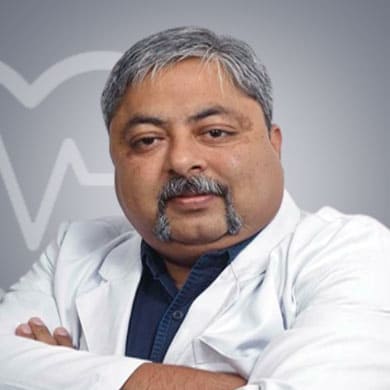
Dr. Vidit Tripathi
ENT Surgeon
24 Years of Experience
One of the finest ENT Surgeon in New Delhi, India, Dr. Vidit Tripathi, has worked with several world class multidisciplinary hospitals over the years. Dr. Vidit Tripathi has over 24+ years of experience in his field. The specialist treats and manages a wide range of conditions such as Goiter, Radiation Necrosis in Neck, Neck Injury, Perforates Eardrum View More
Last Reviewed - January 2026