Intramural Fibroids Treatment in India
- Top Accredited Hospitals
- Global Medical Standards
- Cutting-Edge Technology
- Proven Treatment Options
- High Success Rate
- Trusted by Millions

What are Intramural Fibroids?
Intramural fibroids are benign growths of smooth muscle and connective tissue that develop within the muscular wall (myometrium) of the uterus. They are a common type of uterine fibroid and may occur as a single growth or as multiple fibroids. Some intramural fibroids do not cause symptoms, while larger or multiple fibroids may contribute to heavy or prolonged menstrual bleeding, pelvic pressure, abdominal or back pain, urinary symptoms and reproductive difficulties. Symptoms depend on the size, number, and location of the fibroids and whether they distort the uterine cavity.
What is the Importance of Timely Treatment?
Timely evaluation can help determine the size, number and location of intramural fibroids and whether they are contributing to symptoms such as heavy menstrual bleeding, anemia, pelvic pressure or fertility problems. Asymptomatic fibroids may only require observation, whereas symptomatic or enlarging fibroids may require medication, minimally invasive procedures or surgery. Early assessment also helps identify other causes of abnormal uterine bleeding or pelvic symptoms and allows treatment to be selected according to reproductive plans and individual preferences.
What are the Common Symptoms of Intramural Fibroids?
- Heavy or prolonged menstrual bleeding
- Menstrual bleeding between periods
- Painful menstrual periods
- Pelvic pressure or a feeling of fullness
- Lower abdominal or pelvic pain
- Lower back pain
- Abdominal enlargement or fullness
- Frequent urination or difficulty emptying the bladder when a fibroid presses on the urinary tract
- Constipation or rectal pressure in larger fibroids
- Pain during sexual intercourse
- Fatigue or weakness related to iron-deficiency anemia from heavy bleeding
- Difficulty conceiving in some patients
- Pregnancy-related complications in selected cases
Causes and Risk Factors of Intramural Fibroids
Causes
- The exact cause of intramural fibroids is not completely understood. They develop from abnormal growth of smooth muscle cells within the uterine wall and are influenced by genetic and hormonal factors.
- Oestrogen and progesterone contribute to fibroid growth, which is why fibroids commonly develop during the reproductive years and often shrink after menopause.
- Genetic changes within uterine cells may also contribute to their development.
Risk Factors
- Increasing reproductive age, particularly during the years when fibroids are most likely to develop
- Family history of uterine fibroids
- Genetic or cellular factors associated with fibroid development
- Overweight or obesity
- Hormonal exposure during the reproductive years
- Early onset of menstruation
- Certain population and genetic factors
- Increasing age before menopause
- Factors associated with metabolic and hormonal health
Latest Research and Technologies in the Treatment of Intramural Fibroids in India
- Current advances in fibroid management focus on accurate imaging, uterus-preserving treatment and minimally invasive procedures. Transvaginal ultrasound is commonly used to evaluate fibroid size, number and location, while MRI can provide more detailed mapping when treatment planning requires it. Research continues to evaluate newer medical therapies and minimally invasive techniques while considering symptom control, fertility goals and long-term outcomes.
Treatment options for Intramural Fibroids
Myomectomy : Myomectomy removes fibroids while preserving the uterus and may be considered for patients with significant symptoms or selected fertility-related concerns. Depending on fibroid size and location, it may be performed through laparoscopic, robotic or open surgery.
Cost Start From 3000Explore Options
Uterine Artery Embolisation: UAE is a minimally invasive procedure in which small particles are introduced through the uterine arteries to reduce blood flow to the fibroid, causing it to shrink over time. It can provide a uterus-preserving treatment option for appropriately selected patients, although its suitability should be discussed carefully in patients who wish to become pregnant.
Hysterectomy : Hysterectomy removes the uterus and provides definitive treatment for uterine fibroids. It may be considered when symptoms are severe, other treatments are unsuitable or unsuccessful, or the patient does not wish to preserve fertility. The decision depends on individual circumstances and preferences
Cost Start From 3000Explore Options
- Clinical assessment:
- Gynecological Evaluation: A detailed medical and menstrual history assesses bleeding pattern, pelvic pain, pressure symptoms, urinary or bowel symptoms, reproductive history, fertility concerns and previous treatment. Pelvic examination may help identify an enlarged or irregular uterus.
- Assessment of Menstrual Blood Loss and Anemia: Complete blood count and iron studies may be performed when clinically indicated to assess the effects of chronic blood loss.
- Reproductive and Fertility Assessment: For patients who are planning pregnancy or experiencing difficulty conceiving, evaluation may include reproductive history and assessment of the uterine cavity and other potential causes of infertility.
- Assessment for Other Causes of Abnormal Bleeding: Depending on age, symptoms, and clinical findings, doctors may evaluate other causes of abnormal uterine bleeding, including endometrial pathology, adenomyosis, endometriosis, pregnancy-related conditions, or hormonal disorders.
- Imaging Tests:
- Transvaginal Ultrasound: Commonly used to identify fibroids and assess their size, number and location within the uterus.
- Transabdominal Ultrasound: May be useful for evaluating larger fibroids or when a broader view of the pelvis is required.
- Pelvic MRI: Provides detailed mapping of fibroid size, number and location and may be useful when ultrasound findings are inconclusive or when planning complex surgery or other interventions.
- Hysteroscopy: May be considered when an intracavitary abnormality is suspected, although intramural fibroids themselves are located within the uterine wall and are primarily assessed through imaging such as ultrasound or MRI.
- Additional Imaging: Selected patients may require further pelvic imaging depending on symptoms, treatment planning or concern about another pelvic condition.
MediRehab (a chain of Rehab centres, part of MediGence) provides comprehensive rehabilitation services designed to support Intramural Fibroid patients in India. These Services include:
- Physical Activity and Mobility: Appropriate physical activity can help maintain strength and general well-being. Activity may be temporarily modified after myomectomy or other procedures according to the surgeon's advice.
- Pain Management: Patients may receive guidance on safe movement, prescribed pain medicines, and a gradual return to normal activities after treatment.
- Postoperative Recovery Support: After surgery, rehabilitation focuses on a gradual return to walking, daily activities, work, and exercise while following wound-care and activity restrictions.
- Medicines for intramural fibroids primarily control symptoms rather than permanently removing the fibroid. Non-steroidal anti-inflammatory drugs (NSAIDs) can help relieve menstrual pain and may reduce bleeding in some patients. Hormonal treatments, including combined hormonal contraceptives, progestogen-based treatments or a levonorgestrel-releasing intrauterine system in appropriate patients, may help manage heavy menstrual bleeding. Other fibroid-directed hormonal medicines may temporarily reduce bleeding and fibroid-related symptoms.
Instantly Connect with our Specialists


Hospitals for Intramural Fibroids in India

BGS Gleneagles Global Hospitals
Bangalore, India
Gleneagles BGS Hospital, Kengeri, is a leading healthcare centre in Bengaluru, committed to delivering compassionate, patient-focused care locally and globally. The hospital houses 15 specialised departments with over 30 medical and surgical specialities, supported by 450 beds, advanced emergency services, imaging, laboratory, and transfusion facilities.
It is renowned for pioneering initiatives such as South India’s first 5G-enabled ambulance and Karnataka’s largest Multi-Organ Transplant Program. Recognised among India’s top paediatric cranio-maxillofacial centres, it is also the first in Karnataka to receive the AHPI Award 2024 for “Excellence in Nursing Practices” consecutively.

Indraprastha Apollo Hospital
Delhi, India
Indraprastha Apollo Hospital is known for delivering treatment to over 200,000 patients every year; 10,000 of which are generally medical tourists. The efficient team of doctors has the record of 99.6 percent success rate. Indraprastha Apollo Hospital deals in treatment of over 50 specialities.
Let’s see some of the features of the infrastructure:
- Spread over 15 acres, the hospital has 710 beds.
- 6 beds dedicated to bone marrow transplant units with very strict infection control practices.
- 64-Slice Scan coupled with data acquisition which provides highest temporal resolution
- One of the hospitals to be using Da Vinci Robotics Surgery System
- In South Asia, the Spect-CT and Pet-CT got their first installation at Indraprastha Apollo Hospital in India
- Technologies such as PET- MR, BrainLab Navigation System, PET-CT, Portable CT Scanner, Tilting MRI, NovalisTx, Cobalt based HDR Brachytherapy, Hyperbaric Chamber, DSA Lab, Fibroscan, 3 Tesla MRI, Endosonography, 128 Slice CT scanner are all installed at the hospital.
- The Cancer Institute at Indraprastha Apollo is equipped with a highly advanced Radiation Oncology Center with ClinaciX, NovalisTx, and HDR-Brachytherapy.
- It is equipped with the largest Sleep Lab in Asia, & has one of the largest Dialysis Units in India.
- A large number of ICU beds than any other Private Hospitals in India.
- WIFI is accessible across the whole campus.
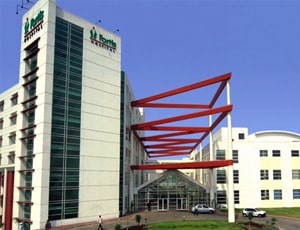
Fortis Hospital
Noida, India
Fortis Healthcare Limited is one of India’s prominent providers of integrated healthcare services, offering comprehensive medical care across multiple specialities. The company’s operations span hospitals, diagnostic centres, and day-care speciality facilities, ensuring a wide range of healthcare solutions under one umbrella. Fortis has established a strong presence across the country, managing 33 healthcare facilities, which include joint ventures and operational & management (O&M) setups, across 11 states.
The company’s hospital network comprises more than 5,700 operational beds, including O&M beds, catering to patients with varied healthcare needs. In addition to inpatient services, Fortis operates around 400 diagnostic laboratories, providing reliable and timely diagnostic support for accurate medical care. This extensive network enables Fortis to deliver high-quality healthcare services consistently and efficiently, from routine diagnostics to specialised treatments and complex procedures.
Our Services to better your experience
Opinion & Option
We submit the most accurate opinion and options from one or more countries for your review
Consult Privately
Consult with a certified specialist privately on our telemedicine platform even before you decide to travel
Logistics
We handle flights, visas, transfers, and accommodation—so you can focus on your health.
Recovery
Our In-house rehabilitation service packages to better your recovery and treatment outcome
Why Choose India for Intramural Fibroids Treatment?
- Multidisciplinary Gynecological Care: Patients can access gynecologists, minimally invasive surgeons, reproductive specialists, radiologists and other specialists according to their individual needs.
- Advanced Diagnostic Facilities: Major centres may provide transvaginal ultrasound, pelvic MRI, laboratory testing and detailed fibroid mapping for treatment planning.
- Uterus-Preserving Treatment Options: Depending on individual suitability, treatment may include myomectomy, uterine artery embolisation and other minimally invasive approaches.
- Advanced Surgical Techniques: Selected hospitals may offer laparoscopic, robotic-assisted and open myomectomy as well as hysterectomy when clinically appropriate.
- Comprehensive International Patient Support: Major hospitals may provide medical-record review, specialist consultations, treatment coordination, accommodation assistance and follow-up services for international patients.