Inflammatory Bowel Disease (IBD) Treatment in Thailand
- Top Accredited Hospitals
- Global Medical Standards
- Cutting-Edge Technology
- Proven Treatment Options
- High Success Rate
- Trusted by Millions

What is Inflammatory Bowel Disease?
This term refers to a group of long-term illnesses that cause inflammation of the digestive system. Two primary types of IBD are Ulcerative colitis and Crohn's disease.
Crohn's Disease
Although it can affect any area of the digestive system, from the mouth to the anus, this variety most frequently affects the ileum, the end of the small intestine, and the beginning of the colon. It can result in complications like strictures, fistulas, and abscesses and frequently affects the digestive tract's deeper layers.
Ulcerative Colitis
This colitis affects only the colon and rectum, causing ulcers and inflammation along their lining. Symptoms include abdominal pain, bloody diarrhoea, and the need to defecate quickly.
What is the Importance of Timely Treatment?
Preventing Complications
Early care can prevent serious complications, such as fistulas, strictures, swelling, and malnourishment.
Reducing symptoms
Early treatment can improve a patient's quality of life by reducing diarrhoea, weight loss, and abdominal pain.
Avoiding Surgery
Advanced medical management can reduce the necessity for surgical interventions, which may carry a higher risk of invasion.
Slowing Disease Progression
Treatment on time can help slow the disease progression, avoiding further damage to the digestive tract.
Enhancing Long-Term Outcomes
Early diagnosis for treating the disease can achieve better long-term outcomes. Lowering the risk of hospitalisations and improving overall health.
What are the Common Symptoms of Inflammatory Bowel Disease?
Inflammatory Bowel Disease (IBD) can cause symptoms that affect the digestive tract.
- Abdominal Pain
- Blood in Stool
- Diarrhea
- Fatigue
- Weight Loss
- Loss of Appetite
- Mucus in Stool
- Fever
- Joint Pain
Causes and Risk Factors of Inflammatory Bowel Disease
Causes
- Immune System Dysfunction: IBD occurs when the immune system mistakenly attacks the digestive tract's healthy cells, leading to inflammation.
- Genetic Factors: Genetics play the most prominent role, with many people having a family history of IBD.
- Environmental Triggers: Factors such as diet, pollution, and stress can activate IBD in genetically susceptible individuals.
- Gut Microbiome: IBD may occur as a result of an imbalance in gut microflora
Risk Factors
- Family History
- Age
- Geographical area
- Lifestyle factors
- Certain Medications (such as NSAIDs)
Connect with our advisor for a PRIORITY response
Latest Research and Technologies in the Treatment of Inflammatory Bowel Disease in Thailand
Olamkicept is a recombinant protein mainly designed to inhibit the IL-6 signalling pathway implicated in IBD; still, phase 2 clinical research trials are taking place in many countries where they have seen promising results.
Chitosan oligosaccharide is a biodegradation product of dietary fiber chitosan, and it is a promising treatment of IBD by reducing inflammation and maintaining the integrity of the gut barrier.
Curcumin is the active compound present in turmeric. It has been demonstrated by numerous scientific and clinical investigations that curcumin can both treat and keep IBD in remission.
Inflammatory Bowel Disease Prevention Tips
While there is no promising way to prevent inflammatory bowel disease, A few lifestyle modifications and practices can lower your risk and improve your gut health in general:
- Eat a healthy diet
- Stay physically active
- Inflammation
- Avoid smoking
- Limit antibiotics
- Get enough sleep
- Manage stress
- Stay hydrated
Treatment options for Inflammatory Bowel Disease (IBD)
Bowel resection: It's a common surgical technique used to treat Crohn’s disease and other forms of Inflammatory Bowel Disease. It involves the removal of damaged portions of the intestine and rejoining the healthy ends. This procedure can help reduce the symptoms, prevent complications, and improve the patient's quality of life.
Colectomy : It involves the removal of a part of the large intestine. It typically comes under light when other medications and treatment go wrong to manage severe inflammation and damage to the colon.
Cost Start From USD 12000 - USD 25000Explore Options
Ileostomy: In an ileostomy, a stoma is created by surgically bringing the ileum, which is the end part of the small intestine, out to the abdominal surface. This permits waste to be collected in an external sack by diverting it from the colon's damaged or removed portion.
These are the standard diagnostic methods for diagnosing IBD :
Laboratory Tests
- Blood Tests: These can detect the signs of infection, inflammation, anaemia and other abnormalities.
- Stool Tests: These examinations look for substances like blood, mucus or organisms that could indicate inflammation and infection.
Endoscopic Procedures
- Colonoscopy: It uses a flexible, illuminated tube with a camera to examine the whole colon and portions of the small intestine.
Imaging Test
- CT Scan: It offers comprehensive images to determine the degree of inflammation and complications.
- MRI: It offers complete images of the intestine and shows the verge of any inflammation and complications.
Other Tests
- Biopsies: Endoscopy tissue samples can aid in diagnostic confirmation.
MediRehab (chain of Rehab centres - Part of MediGence) provides comprehensive rehabilitation services designed to support inflammatory bowel disease patients who are present abroad. These services include:
- Exercise Programs : Structured workout regimens to increase muscular strength, flexibility, and cardiovascular endurance.
- Pelvic Floor Therapy: Aids in managing symptoms like pelvic discomfort or urine leakage.
- Lifestyle changes and modification: Dietary adjustments and supplementations should be made, as well as tailored meal plans to control symptoms and guarantee adequate nourishment. Treating iron and vitamin D deficiency, which is prevalent in IBD patients. Lifestyle adjustments and modifications involve modifying long-term habits, especially nutrition, exercise, and stress reduction, to enhance health and well-being.
Depending on the situation, your healthcare professional may prescribe medicine to help control your symptoms and support the treatment plan.
Instantly Connect with our Specialists


Hospitals for Inflammatory Bowel Disease (IBD) in Thailand

Vejthani Hospital
Bangkok, Thailand
Vejthani Hospital located in Bangkok, Thailand is accredited by NABH, NABL. Also listed below are some of the most prominent infrastructural details:
- It is among the topmost private hospitals functioning in Thailand.
- The bed capacity of the hospital is 263.
- There are more than three hundred thousand patients visiting the hospital every year.
- Vejthani hospital has more than 40 outpatient clinics and centers.
- International patient care center with all kinds of services: air ambulance, transfers, travel, stay, embassy liaison, patient coordinators, prayer rooms, visa coordination and translators for 20 languages.
- The special facilities are:
- International Certified Laboratory
- 10 Operating Rooms
- Radiology Section: Portable X-ray, CT-scan and C-ARM and MRI
- Neonatal Critical Care Unit
- Water-jet technique applied for liposuction
- Computer navigation and mini-invasive technique for Joint Replacement surgery

Bangpakok 9 International Hospital
Bangkok, Thailand
Bangpakok 9 International Hospital located in Bangkok, Thailand is accredited by JCI. Also listed below are some of the most prominent infrastructural details:
- It would be prudent to summarise the Medical Services provided at the Bangpakok 9 International Hospital (BPK 9), Bangkok, Thailand:
- Cosmetic Dentistry
- Dental Implants
- Electrocardiogram (EKG or ECG)
- Exercise Stress Test
- Health Screening
- Laser Vagina Firming
- Pediatric Physical Therapy
- Perfect Slim by Vela II
- Physical Therapy for Musculoskeletal
- Prosthodontics
- The Medical Services are also inclusive of the International Patient Services such as the ones listed here:
- Thai, English, French, Arabic, Chinese, Myanmar, Cambodia, Bangladeshi, Bahasa and Tagalog are the languages in which there are Translation services available for International Patients.
- Visa extension related assistance
- International health insurance related assistance
- Embassy and international organizations related assistance
- A variety of meals of choice for International Patients
- Email consultation services
- Transfer to either airport and/or hotels
- Prayer room
- Four different types of rooms are available such as Deluxe room, two kinds of suites, and a VIP suite.
- Hospital facilities like The Coffee shop, Food Hall, Cafe and Medical Spa.
- Complete health and safety protocols are maintained in the various Medical Centers some of whom are as follows:
- Aesthetic Center
- 24 Hour Emergency Center
- Allergy Center
- Breast Center
- bSmart Center
- Checkup Center
- Dental Center,
- Happy Long Life Center
- Medical Fitness Center
- Psychiatric Center
- Rehabilitation Center
- Sleep Disorders Center
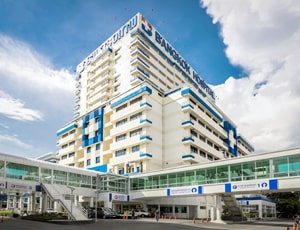
Bangkok Hospital
Bangkok, Thailand
Bangkok Hospital located in Bangkok, Thailand is accredited by JCI. Also listed below are some of the most prominent infrastructural details:
- It is recognised for the application of the newest healthcare technology.
- Blood analysis center that is not just the best in Thailand but in Asia Pacific as well.
- Biomolecule center that is the seed of healthcare equipment for Thailand and overseas.
- International affiliations and collaborations with universities and hospitals in Japan and the United States of America.
- 11 hospitals are recognised as Centers of Excellence.
- Known excellence in Trauma, Orthopedics, Cardiovascular, Neurology as well as Cancer Care.
- There is a proper streamlined patient services process followed in Bangkok Dusit Medical Services, Bangkok, Thailand.
- A well developed research center showcases the intent of the organisation to provide research based treatment opportunities to the patients.
- The group has several Medical industry partnerships as well to ensure healthcare solutions.
Our Services to better your experience
Opinion & Option
We submit the most accurate opinion and options from one or more countries for your review
Consult Privately
Consult with a certified specialist privately on our telemedicine platform even before you decide to travel
Logistics
We handle flights, visas, transfers, and accommodation—so you can focus on your health.
Recovery
Our In-house rehabilitation service packages to better your recovery and treatment outcome
Why Choose Thailand for Inflammatory Bowel Disease Treatment?
The following are the growing reasons for Thailand being frequented for IBD treatment :
- Advanced Medical Facilities: Modern hospitals and medical facilities in Thailand have the newest technologies that adhere to international standards to spot and treat IBD.
- Expert Medical Professionals: Thailand hospitals employ highly qualified and experienced surgeons and gastroenterologists who specialise in curing IBD.
- Cost-Effective Treatment: Compared to Western countries, excellent care is offered at low cost in Thailand.
- Integrative Therapies: Besides standard IBD treatments, Thailand provides access to supplementary therapies like alternative therapies and traditional Thai medicine, which can promote general well-being.
- Cultural and Natural Healing Environment: The Serene surroundings and rich cultural legacy offer a soothing setting for recovery, encouraging mental and emotional health during therapy.
Frequently Asked Questions
Inflammatory Bowel Disease (IBD) recovery can vary significantly based on the patient, the kind of IBD, the severity of the illness, and the treatment approach. The following are some broad points:
- Acute flare-ups : Acute flare-ups could last for anywhere from a few days to several weeks. Medications prescribed by specialised Doctors can help reduce symptoms and shorten the duration of flare-ups.
- Post-surgery Recovery : Recovery from surgery can take a few weeks to several months, depending on the type of surgery and the patient's general condition.
- Lifestyle Adjustments: To control symptoms and avoid problems after surgery, patients might need to modify their lifestyles and follow a diet.
- Holistic Approach:A combination of medicine, diet, exercise, and mental health assistance is frequently used to manage IBD and improve overall health and quality of life.
Inflammatory Bowel Disease (IBD) can cause irreparable harm if it is not treated correctly. Prolonged inflammation can result in issues like stricture, where the intestine narrows due to scar tissue formation, Fistulas, Abscesses, Malnutrition and elevated cancer risk due to long-term inflammation.
Thailand hospitals have modern equipment for treating Inflammatory Bowel Disease (IBD). With the use of advanced diagnostic and treatment facilities in Thailand, from advanced endoscopy & imaging techniques to biologic and targeted therapy, moderate to severe IBD is managed. Fecal Microbiota Transplant & Stem Cell Therapy is an ongoing clinical application and treatment in Thailand to restore gut health in several IBD patients.
Most hospitals in Thailand offer the following:
- Assistance in obtaining visas.
- Airport Service to and from the hospitals.
- Multilingual experts and Best accommodations services.
Before selecting hospitals in Thailand, always look for the following:
- Look for a hospital that has a dedicated gastroenterology department with experienced specialists.
- Check accredited hospitals with advanced technology for diagnosing and treating IBD such as endoscopy & imaging techniques to biologic and targeted therapy.
- Ensure the hospital offers modern treatments for Inflammatory bowel disease(IBD), like surgical and non-surgical treatment and psychological therapy, and a wide range of support services such as patient education Programs, mental health assistance, and nutritionists.
- Choose a doctor with in-depth experience and qualifications in gastroenterology and IBD treatment.
IBD symptoms can affect day-to-day functioning by interfering with social interactions, employment, and general health. Many IBD sufferers, however, lead happy lives when their condition is appropriately managed.
If medicine and lifestyle modifications don't work, surgery may be required. Additionally, it can treat ulcerative colitis but not Crohn's disease.
Chronic pain, exhaustion, frequent bathroom visits, and emotional distress such as despair and anxiety are all symptoms of Inflammatory Bowel Disease (IBD), which has a substantial negative impact on quality of life. Malnutrition and dietary limitations make matters worse, necessitating cautious meal preparation. Modifications in lifestyle, such as consistent exercise, a healthy diet, and stress reduction, can enhance wellbeing.
You should get medical attention right away if you have experienced persistent abdominal pain, cramping, chronic diarrhoea, constipation, blood in your stool, strange weight loss, persistent fever, severe fatigue, or noticeable changes in bowel habits. If anyone experiences these symptoms, it's beneficial to get in touch with healthcare professionals for further diagnosis and treatment of IBD. Early interventions help patients manage symptoms and prevent complications.
Over time, chronic inflammatory bowel disease may raise the risk of particular types of cancers, most commonly colorectal cancer, small bowel cancer and nonmelanoma skin cancer in IBD patients. Patients with chronic IBD should schedule routine follow-up visits to keep an eye out for any changes that could point to malignancy.
When other therapies for Inflammatory Bowel Disease (IBD), like medication and lifestyle modifications, are ineffective or complications occur, surgery is usually explored. For individuals with IBD, surgery can help manage problems, reduce symptoms, and enhance the overall quality of life. However, the best course of action should be taken after consulting a healthcare professional about all available options.
Yes, It is possible to obtain a second opinion from skilled gastroenterologists regarding the treatment of Inflammatory Bowel Disease (IBD) in Thailand. Prominent medical facilities provide professional consultations to review your diagnosis and suggest the best course of action.

Reviewer

Dr. Mohit Agarwal
Medical Oncologist
14 Years of Experience
One of the finest Oncologist in New Delhi, India, Dr. Mohit Agarwal has worked with several world class multidisciplinary hospitals over the years. Dr. Mohit Agarwal has over 14+ years of experience in his field. The doctor treats and manages a wide range of conditions such as Stomach Cancer, Rectal Cancer, Breast Cancer, Brain Cancer View More
Last Reviewed - January 2026