Hepatoblastoma Treatment in India
- Top Accredited Hospitals
- Global Medical Standards
- Cutting-Edge Technology
- Proven Treatment Options
- High Success Rate
- Trusted by Millions

What is Hepatoblastoma?
Hepatoblastoma is an extremely rare liver cancer that mainly affects children aged one to three. Surgeons may be able to treat hepatoblastoma if it is detected, while liver cancer tumours are small enough to be removed completely during surgery.
What is the Importance of Timely Treatment?
Timely treatment of hepatoblastoma, a rare liver cancer that mainly affects youngsters, is critical for improving survival rates. Early detection and timely management considerably improve the chances of successfully managing the condition and preventing its spread. If treated early, the tumour can be surgically removed, and chemotherapy can be used to target any leftover cancer cells, lowering the risk of recurrence. Delaying therapy can allow the cancer to develop, making it more difficult to cure and decreasing the likelihood of complete recovery. Timely therapy also increases overall survival rates and improves the quality of life for affected youngsters.
What are the Common Symptoms of Hepatoblastoma?
Common symptoms include:
- An uncomfortable lump in your child's abdomen's middle or upper right side.
- Consistent nausea and vomiting.
- Loss of appetite.
- Abdominal discomfort.
- Jaundice is caused by the accumulation of bilirubin in your child's body, resulting in yellow skin or eyes.
- Unexplained weight loss.
Causes, Risk Factors and Complications of Hepatoblastoma
Causes
Children are more likely to get hepatoblastoma if they:
- Are born early with a very low birth weight
- Have a growth disorder called Beckwith-Wiedemann syndrome (which makes the body and internal organs grow too much or get too big)
- Have a genetic condition called familial adenomatous polyposis (which causes growths in the lining of the intestines).
- Mutations in the gene
- Hepatoblastoma is more common in boys than in girls.
Risk Factors
Risk factors include:
- Premature birth: Most babies arrive at 37 weeks or later.
- Low birth weight: This refers to babies weighing less than 5.5 pounds at delivery.
- Early hepatitis B infection, which damages your child's liver.
- Biliary atresia: It harms newborn babies by preventing bile from passing to their small intestines. The backed-up bile harms their livers.
- Hemihyperplasia: This disorder makes one side of your child's body larger than the other.
- Beckwith-Wiedemann syndrome: This genetic growth problem raises the risk of developing juvenile cancer, particularly hepatoblastoma.
- Familial adenomatous polyposis (FAP): It is characterised by the presence of a mutant APC gene.
- Aicardi syndrome damages your child's brain and eyes, causing seizures.
- Glycogen storage disease (GSD): This disease affects how your child’s body processes glucose (sugar).
- Simpson-Golabi-Behmel syndrome (SGB): Children born with SGB grow and gain weight unusually rapidly.
- Edwards syndrome (trisomy 18): Recent studies have shown some links between this inherited disorder and hepatoblastoma.
Complications
- Hepatoblastoma can spread (metastasise) to other parts of your child's body, especially the lungs.
Connect with our advisor for a PRIORITY response
Hepatoblastoma Prevention Tips
Hepatoblastoma is a rare cancer, and while there are no sure ways to prevent it, certain precautions may minimise risk factors or aid in early discovery. Here are some preventative tips:
- Monitor for Risk Factors: Hepatoblastoma is frequently associated to specific genetic disorders. If you have a family history of these or other genetic problems, consult your doctor about getting frequent testing.
- Avoid harmful chemicals.
- Early Diagnosis: Because hepatoblastoma is more common in newborns and young children, parents should be on the lookout for symptoms as soon as possible to get an early diagnosis.
- Prenatal Care: Good prenatal care can aid in the early discovery of any problems. Regular check-ups and tests during pregnancy can detect issues that could lead to children's cancers, such as hepatoblastoma.
Treatment options for Hepatoblastoma
They may combine surgery with the following treatments:
Chemotherapy: Providers may use chemotherapy to shrink tumours before surgery. Chemotherapy may be systemic or local.
Cost Start From USD 600 - USD 700Explore Options
Transarterial chemoembolisation (TACE): Providers inject anti-cancer drugs into one of the arteries that supply blood to your child’s liver. Then, they inject a substance to block the artery.
Radiation therapy: Providers may use radiation therapy after surgery to remove any remaining cancer cells or as an alternative way to treat tumours that surgery can’t remove.
Ablation therapy: This treatment destroys or removes tissue. Providers use ablation therapy to treat recurring hepatoblastoma.
Liver transplantation: Your child’s surgeon may recommend a liver transplant if tumours in your child’s liver are too large to remove with surgery.
Cost Start From USD 25000 - USD 35000Explore Options
The tests include:
- Alpha-fetoprotein (AFP) tests: AFP is a protein your child's liver produces.
- Comprehensive metabolic panel (CMP): It examines your child's blood for 14 distinct chemicals and assesses liver function.
- Vascular ultrasound: This test allows clinicians to see the network of blood vessels entering and exiting your child's liver.
- Complete blood count (CBC): This test measures and counts the blood cells in your child's blood.
- Liver and Doppler ultrasounds: These tests produce images of the inside of your child's liver.
- Magnetic resonance imaging (MRI): This painless test produces crystal-clear images of your child's organs and structures.
Rehabilitation following hepatoblastoma treatment is an essential part of the recovery process. It promotes a child's physical, emotional, and social well-being. The following are some rehabilitation alternatives for children recovering from hepatoblastoma:
- Physical therapy improves strength, coordination, and overall bodily function, allowing the kid to resume regular movement and activity levels.
- Occupational therapy aims to help children adapt to everyday chores and regain independence.
- Nutrition: A nutritionist or dietitian can provide specialised guidance and meal plans to help the youngster recover.
- Psychosocial Support: Psychologists or counsellors can assist children in addressing emotional and psychological difficulties, providing coping techniques, and dealing with anxiety, depression, or stress following therapy.
- Speech Therapy: If the kid has difficulty speaking or swallowing due to the condition or treatment side effects, speech therapy can help improve communication and swallowing skills.
Depending on the circumstances, your doctor may prescribe medication to assist you in managing your symptoms and support your treatment plan.
Treatment regimens are adapted to the patient's specific cancer stage and location.
Instantly Connect with our Specialists


Hospitals for Hepatoblastoma in India

Pushpawati Singhania Research Institute
Delhi, India
Pushpawati Singhania Research Institute located in New Delhi, India is accredited by NABH, NABL. Also listed below are some of the most prominent infrastructural details:
- Multi-bed hospital with state-of-art infrastructure
- Advanced medical equipment
- High-tech labs
- Modular operation theaters
- Cath labs with Clarity Platform, 128 channel CARTO 3 version 4 with ICE mapping facility, FD 10 Prucka 2D EP system
- High-end Intensive Coronary Care Unit
- Dedicated Pre-Post Cath Unit
- Multislice CT Scan, 1.5 Tesla MRI
- 24 *7*365 functional cardiac Cath lab & operation theatre
- Fifteen bedded Coronary Care Unit
- 3D, 4D Echo & Trans-oesophageal Echo, Non Invasive cardiology (Holter, TMT, Echo, 24hrs ambulatory BP Monitoring
- Radio Frequency Ablation like Complex Arrhythmia such as ischemic VT, AF with 3 D Mapping imaging
- RFA using ICE Intra-cardiac Echo
- Well-equipped inpatient and intensive care services
- Ultra-modern Blood Bank Facility
- Advanced Physiotherapy center, 24/7 Emergency &Trauma services
- Gastroenterology department equipped with Capsule endoscopy, Endoscopic retrograde cholangiopancreatography, Single balloon enteroscopy, High resolution esophageal and anorectal manometry, Endoscopic ultrasound, and hydrogen breath test
Sustained low-efficiency daily dialysis and Continuous Renal Replacement Therapy - Exhaled Nitric oxide (FeNO) and allergy testing for the management of asthma
- Conventional PAP/ Liquid PAP/ HPV-DNA test for the patients with the High risk of cervical cancer
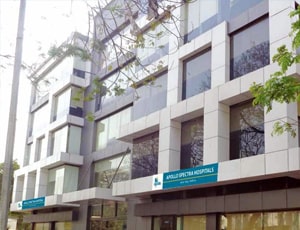
Apollo Spectra Hospital
Pune, India
Apollo Spectra Hospital located in Pune, India is accredited by JCI. Also listed below are some of the most prominent infrastructural details:
- Present in a 30000 sq. ft. area
- 5 beds are for critical care
- 5 ultra-modern modular OTs
- World class rehabilitation center
- In-house pharmacy
- Beautifully designed In-patients waiting area
- 80 plus healthcare professionals which also includes 45 specialist consultants

Max Smart Super Speciality Hospital
Delhi, India
- Max Smart Super Speciality Hospital, Saket, New Delhi, is a 250-bed tertiary care hospital known for advanced medical technology and patient-centred care.
- The hospital offers services across 22+ specialities, including Cardiac Sciences, Orthopaedics, Urology, Neurology, Neurosurgery, Paediatrics, Obstetrics, and Gynaecology.
- It is a regional hub for complex procedures such as neurovascular interventions, targeted cancer treatments, heart surgeries, kidney and liver transplants, and bariatric care.
- Equipped with a 3.0 Tesla MRI, 256 Slice CT Angio, Cath Labs, Digital Orthopaedic Suite, and advanced diagnostic tools, and supported by 275+ doctors and 606+ trained staff, Max Smart Saket provides high-quality, multidisciplinary care for domestic and international patients.
Our Services to better your experience
Opinion & Option
We submit the most accurate opinion and options from one or more countries for your review
Consult Privately
Consult with a certified specialist privately on our telemedicine platform even before you decide to travel
Logistics
We handle flights, visas, transfers, and accommodation—so you can focus on your health.
Recovery
Our In-house rehabilitation service packages to better your recovery and treatment outcome
Why Choose India for Hepatoblastoma Treatment?
Here are some of the reasons for choosing India:
- Due to advancements in medical facilities, such as minimally invasive surgical techniques.
- World-class experts include highly experienced doctors, JCI, and NABH-accredited healthcare institutions.
- Compared to other countries, treatment in Indian hospitals is cost-effective.
- Indian hospitals provide International patient services, including a multilingual support system.
- Improved treatment methods and biological therapies
Frequently Asked Questions
The prognosis is determined by factors such as tumour size and spread, early detection, and the child's response to treatment. Survival rates are reasonable when treatment is administered on time and appropriately, particularly for circumscribed malignancies.
Hepatoblastoma survival rates are dependent on early discovery and treatment success. For isolated cases that can be surgically removed, the survival rate can exceed 80%. The prognosis is worse for children with metastatic or unresectable malignancies.
While hepatoblastoma can recur after initial treatment, the risks of recurrence are reduced with effective surgery and chemotherapy. Regular follow-up treatment is necessary for the early detection of recurrence.
Family support is critical in treating children with hepatoblastoma. Emotional and psychological support and financial and logistical assistance can significantly improve the child's treatment outcomes. Support organisations and networks in India can also provide aid and comfort.
Yes, specialised pediatric cancer centers in large cities provide therapy for children with hepatoblastoma.

Reviewer

Dr. Mohit Agarwal
Medical Oncologist
14 Years of Experience
One of the finest Oncologist in New Delhi, India, Dr. Mohit Agarwal has worked with several world class multidisciplinary hospitals over the years. Dr. Mohit Agarwal has over 14+ years of experience in his field. The doctor treats and manages a wide range of conditions such as Stomach Cancer, Rectal Cancer, Breast Cancer, Brain Cancer View More
Last Reviewed - January 2026