Hemorrhoids Treatment in Thailand
- Top Accredited Hospitals
- Global Medical Standards
- Cutting-Edge Technology
- Proven Treatment Options
- High Success Rate
- Trusted by Millions

What are Hemorrhoids?
Haemorrhoids are swollen veins that can form inside or outside the rectum and anus. They can lead to rectal bleeding and can be pretty uncomfortable and painful. Another term for haemorrhoids is piles. While we all have haemorrhoids from birth, they usually don't cause any issues until they become enlarged and start to produce bothersome symptoms.
What is the Importance of Timely Treatment?
Hemorrhoids should be treated quickly to prevent symptoms from worsening, avoid infections or blood clots, and reduce the likelihood of surgery. Addressing the issue early enhances quality of life and helps prevent future flare-ups by alleviating discomfort, itching, and bleeding. Moreover, it allows for using less invasive treatments down the line.
What are the Common Symptoms of Hemorrhoids?
Typical haemorrhoid symptoms include:
- When bowel movements are observed, rectal bleeding is observed.
- Around the anus, there is itching or inflammation.
- Pain or discomfort, particularly during bowel movements or while sitting
- A bulge or swelling close to the anus
- release of mucus from the anus
- A sensation of incomplete bowel movement
Causes and Risk Factors of Hemorrhoids
Causes
- Increased Pressure: Straining during bowel movements due to constipation or diarrhoea can lead to haemorrhoids. This is often exacerbated during pregnancy because of hormonal changes and the added pressure from the growing uterus.
- Ageing: As we get older, the tissues that support the veins around the anus weaken, which increases the likelihood of developing haemorrhoids.
- Obesity: Excess weight can strain the lower rectum, contributing to the problem.
- Prolonged sneezing or coughing can also increase pressure on the anal veins, further raising the risk.
Risk Factors
- Inactivity can lead to constipation and increased pressure on the rectum.
- A low-fiber diet may cause constipation and straining during bowel movements.
- Repeated heavy lifting can add extra strain to the rectal area.
- If you have a family history of haemorrhoids, you might be at a higher risk.
- Additionally, sitting for long periods, especially on the toilet, can increase the likelihood of developing haemorrhoids.
Connect with our advisor for a PRIORITY response
Latest Research and Technologies in the Treatment of Hemorrhoids in Thailand
Thailand is setting a high level of achievement in haemorrhoid treatment by combining leading medical technology with traditional techniques. Research has shown that Thai traditional remedies are as effective as advanced alternatives, such as laser hemorrhoidoplasty, with fewer risks and shorter recovery times. Rubber band ligation and sclerotherapy are standard non-surgical treatments, yet new concepts are continually devised, demonstrating Thailand's commitment to developing patient care and haemorrhoid treatment outcomes.
Hemorrhoids Prevention Tips
Here are some practical tips to help prevent haemorrhoids:
- Increase your intake of fruits, vegetables, and whole grains to avoid constipation and reduce straining during bowel movements.
- Drink plenty of water to promote regular bowel movements and soften your stool.
- Regular exercise can improve digestion and decrease the risk of obesity and constipation, both of which can worsen haemorrhoids.
- Avoid straining during bowel movements. If you're experiencing constipation, consider using fibre supplements or natural laxatives.
- Sitting for long periods, especially on the toilet, can put extra pressure on the rectal veins. Make sure to move around and take breaks.
Treatment options for Hemorrhoids
Haemorrhoids Surgery: When conservative measures are unsuccessful, or haemorrhoids are severe, surgery is typically recommended.
Cost Start From USD 4500Explore Options
- Physical Examination:
- Visual inspection: A doctor may visually examine the anal area to identify external haemorrhoids or signs of internal haemorrhoids (such as prolapsed tissue).
- Digital Rectal Exam (DRE): A physician inserts a gloved, lubricated finger into the rectum to check for abnormalities such as lumps, swelling, or tenderness.
- Imaging Tests:
- Anoscopy: To check the inside anal canal and detect internal haemorrhoids, an anoscopy entails inserting a tiny tube with a light (anoscope) into the rectum.
- Proctoscopy: Proctoscopy, a more thorough examination than an anoscopy, looks for haemorrhoids and other possible problems, including anal fissures or tumours, using a longer tube called a proctoscope.
- Colonoscopy or Sigmoidoscopy: The doctor may suggest a sigmoidoscopy or colonoscopy if symptoms are not directly linked to haemorrhoids or if they suspect other problems, such as colorectal cancer. The entire colon and rectum are examined using a flexible tube during these procedures.
MediRehab (a chain of Rehab centres, part of MediGence) provides comprehensive rehabilitation services to support patients through Teleconsulations and online therapy sessions.
- Depending on the situation, your healthcare professional may prescribe medicine to help control your symptoms and support the treatment plan.
Instantly Connect with our Specialists


Hospitals for Hemorrhoids in Thailand
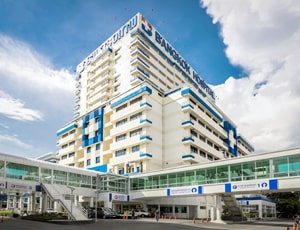
Bangkok Hospital
Bangkok, Thailand
Bangkok Hospital located in Bangkok, Thailand is accredited by JCI. Also listed below are some of the most prominent infrastructural details:
- It is recognised for the application of the newest healthcare technology.
- Blood analysis center that is not just the best in Thailand but in Asia Pacific as well.
- Biomolecule center that is the seed of healthcare equipment for Thailand and overseas.
- International affiliations and collaborations with universities and hospitals in Japan and the United States of America.
- 11 hospitals are recognised as Centers of Excellence.
- Known excellence in Trauma, Orthopedics, Cardiovascular, Neurology as well as Cancer Care.
- There is a proper streamlined patient services process followed in Bangkok Dusit Medical Services, Bangkok, Thailand.
- A well developed research center showcases the intent of the organisation to provide research based treatment opportunities to the patients.
- The group has several Medical industry partnerships as well to ensure healthcare solutions.

Sikarin Hospital
Bangkok, Thailand
Apart from in-detail treatment procedures available, Sikarin Hospital located in Bangkok, Thailand has a wide variety of facilities available for International Patients. Some of the facilities which are provided by them are Airport Transfer, Choice of Meals, Interpreter, SIM, TV inside room. Also listed below are some of the most prominent infrastructural details:
- Sikarin Hospital has a 258-bed capacity.
- The hospital caters to the healthcare needs of both local and international patients.
- Dedicated and skilled, experienced healthcare professionals are the strength of the organization.
It has also received many awards and certifications and some of them are:
- APSIC CSSD Center of Excellence Award (2017-18)
- Accreditation by the Joint Commission International
- HA-Hospital/Healthcare Accreditation
- HACCP Certificate of Registration
- The Best Under a Billion Award
- ISO 14001 Environment Management System
- ISO 9001 Quality Management System
The various clinics and centers of Sikarin Hospital are as follows:
- Pediatric Institute
- Orthopedic Institute
- Dental Center
- Health Check-up Center
- Heart Disease Center
- Cerebral and Nervous System Center
- Internal Medicine Clinic
- Diagnostic Radiology Center
- Diagnostic Laboratory
- Endoscopic Surgery Center
- International Medical Center
- Emergency Medical Center
- Sikarin Beauty Center
- Eye Center
- Rehabilitation Center
- Women’s Health Center
- Ear, Nose and Throat Center
- Specialized Internal Medicine Center
- Center for Gastrointestinal and Liver Diseases
The medical technology present in Sikarin Hospital is outlined here:
- MRI (Magnetic Resonance Imaging) magnetic resonance imaging
- Hybrid Operating Room
- Endoscopic Surgery - Gastrointestinal medical technology with tiny capsules
- S.R. Laboratory
- Cardiac Catheterization Lab
- Dental Operating Microscope, an innovative endoscopic root canal treatment
- 128-Slice CT Scan
- ORTHOPANTOMOGRAPH OP 3D oral X-ray machine
- Digital Mammogram
- Optical Coherence Tomography
- INFRARED (IR) IMAGING Surgical Technology “Cure Cancer” – Direct, Accurate, Fast
- 3D endoscopic surgery technology
- Laparoscopic Surgery
- Dental Aerosol Suction Dental Intraoral Aerosol Remover
- Comprehensive Dental Center
- iTeroElement 5D

Yanhee International Hospital
Bangkok, Thailand
Yanhee International Hospital located in Bangkok, Thailand is accredited by JCI. Also listed below are some of the most prominent infrastructural details:
- The hospital is located in 10 stories and 4 connected buildings.
- International patient care is provided with accommodation, flight booking, airport transfer, choice of meals available.
- There is a Cosmetic and Beauty Center and a 24/7 Dental Center in the hospital.
- Some of the important healthcare specialties are Cardiac Sciences, ENT, Gastroenterology, General Surgery, Gynecology, Neurology, and Orthopedics etc.
- The healthcare delivery by the Yanhee International Hospital stands strong with:
- 155 Physicians
- 183 Medical Specialists
- 2000 nurses and other healthcare personnel
Our Services to better your experience
Opinion & Option
We submit the most accurate opinion and options from one or more countries for your review
Consult Privately
Consult with a certified specialist privately on our telemedicine platform even before you decide to travel
Logistics
We handle flights, visas, transfers, and accommodation—so you can focus on your health.
Recovery
Our In-house rehabilitation service packages to better your recovery and treatment outcome
Why Choose Thailand for Hemorrhoid Treatment?
Thailand is gaining popularity as a destination for haemorrhoid treatment due to several advantages:
Advanced Medical Facilities: The country boasts a state-of-the-art healthcare system that offers modern diagnostic and treatment options, including minimally invasive procedures.
SkilledMedicalProfessionals: Thailand has highly trained proctology surgeons with significant experience, ensuring high treatment success rates.
Cost-Effective Care: Treatments in Thailand are often much more affordable than in Western countries without compromising quality.
NumerousTreatmentOptions: Thailand offers a wide range of haemorrhoid treatments, from traditional methods to the latest minimally invasive techniques, such as laser therapy, infrared coagulation, and rubber band ligation.
Frequently Asked Questions
Haemorrhoids may be prevented by consuming a high-fibre diet, drinking plenty of water, avoiding prolonged sitting, and exercising to help relieve constipation and reduce pressure on the rectal veins.
Second- and third-trimester pregnancy haemorrhoids are common. The reasons are constipation, increased blood supply, hormonal changes that relax blood vessels, and elevated pressure from the enlarged uterus. These causes can lead to the swelling of the rectal veins and haemorrhoids. Though they often improve after delivery, it is essential to treat them with a diet high in fibre, drink plenty of water, and not strain. For information about safe treatment options during pregnancy, always speak with your healthcare professional.
Yes, haemorrhoids can often be treated without surgery through dietary changes, such as consuming more fibre-rich foods and drinking plenty of water. Stool softeners, cold compresses, warm sitz baths, and topical drugs can all help with symptoms. Surgery is generally a last resort, though procedures such as rubber band ligation may be required in more serious cases.
While some pain after haemorrhoid surgery is possible, it is usually bearable using the proper care and medication. Patients can experience pain, swelling, and discomfort upon bowel movements for a few days to one week after the procedure. Prescribed pain medication, stool softeners, and warm sitz baths can all treat pain.
After the operation, most patients receive noticeable relief of symptoms, yet recovery is complete within a few weeks. Always follow your physician's post-operative guidelines to minimise discomfort and promote healing.
Yes, haemorrhoids can cause complications such as blood clots (thrombosis), chronic bleeding leading to anaemia, infection, or strangulation (where an internal haemorrhoid gets trapped and loses its blood supply). Early treatment can prevent these complications and enhance comfort.
The severity and duration of treatment may influence the time it takes for haemorrhoids to heal. Mild haemorrhoids treated at home with sitz baths, local medications, and a diet high in fibre resolve symptoms in a few days to a week. Healing may take two to four weeks for more serious cases, especially if surgery or other treatments are required. Frequent care and following your doctor's advice can enhance the recovery process.
The main difference between internal and external haemorrhoids is where they are located:
Internal haemorrhoids exist within the rectum and, unless they prolapse (bulge) outside the anus, are generally not painful or visible. Unless thrombosed or prolapsed, they often don't hurt, although they can cause rectal bleeding on defecation.
External Hemorrhoids: These are palpable and located under the skin around the anus. They can lead to swelling, itching, or bleeding and are uncomfortable, especially when thrombosed (with blood clots) or inflamed.
You can still work out if you have haemorrhoids, but it's important to select exercises that will not exacerbate the disease. Low-impact forms of exercise, such as yoga, swimming, and walking, are generally safe and can reduce pressure on the rectal area, promote circulation, and decrease constipation.
One standard non-surgical treatment for internal haemorrhoids is rubber band ligation. One or two tiny rubber bands are applied around the bottom to cut the blood supply to the haemorrhoid. The haemorrhoid then dries up and comes out in a few days to a week. The procedure is suitable for mild to severe haemorrhoids and is often carried out under local anaesthesia in a physician's clinic. It has a brief recovery time, is the least invasive, and has a low risk of complications.
If the cause, like habitual constipation, straining to have a bowel movement or diet, is not corrected, haemorrhoids can come back after treatment. Lifestyle habits and rectal vein pressure may lead to recurrence even after successful therapies such as surgery or rubber band ligation. Maintaining a high-fibre diet, having adequate fluid intake, avoiding straining, and exercising regularly enhance regular bowel movements to reduce the likelihood of haemorrhoids returning.
In fact, with numerous options depending on the severity and nature of treatment, haemorrhoids can be treated at a lower cost in Thailand compared to Western countries.
Haemorrhoids may be prevented by consuming a high-fibre diet, drinking plenty of water, avoiding prolonged sitting, and exercising to help relieve constipation and reduce pressure on the rectal veins.
Author

Dr. Shagufta Parveen
Dr. Shagufta Parveen is a Clinical researcher and medical writer with expertise in clinical pharmacology and pharmacotherapeutics. She holds a B.Pharm and Doctor of Pharmacy (Post-Baccalaureate) degree from Teerthanker Mahaveer University, Moradabad.
During her clinical stint at BLK-Max Super Speciality Hospital and Indraprastha Apollo Hospital, she gained hands-on experience in the Clinical Pharmacology Department. Combining scientific knowledge with strong medical writing skills, Dr. Shagufta develops evidence-based healthcare content, treatment guides, and patient education resources.
Her work focuses on simplifying complex medical concepts while maintaining scientific accuracy, helping readers better understand healthcare advancements and treatment options.
In addition to her writing expertise, she is actively involved in scientific research and has contributed to peer-reviewed publications.
Her research work is accessible through the following links:
https://scholar.google.com/citations?user=lMVK1eIAAAAJ&hl=en
https://carcinogenesis.com/index.php/JOC/article/view/870
https://carcinogenesis.com/index.php/JOC/article/view/868
https://wjpsronline.com/abstract/0000000760
View MoreReviewer

Dr. Ashish George
Gastroenterologist
18 Years of Experience
Dr. Ashish George is one of the leading names in HPB surgery & liver transplantation and has about 18+ years of experience.He is a principal consultant & unit head of liver transplant at Fortis Shalimar Bagh. View More
Last Reviewed - January 2026