Gastric Ulcer Treatment in India
- Top Accredited Hospitals
- Global Medical Standards
- Cutting-Edge Technology
- Proven Treatment Options
- High Success Rate
- Trusted by Millions

What is a Gastric Ulcer?
A gastric ulcer is an open sore that develops in the lining of the stomach when the protective lining is damaged. It is a type of peptic ulcer and can cause upper abdominal pain, indigestion, nausea, bloating, or early fullness. Some people may have few or no symptoms until a complication such as bleeding occurs. The two most common causes of peptic ulcers are Helicobacter pylori (H. pylori) infection and the use of nonsteroidal anti-inflammatory drugs (NSAIDs).
What is the Importance of Timely Treatment?
Timely diagnosis and treatment can help the ulcer heal and reduce the risk of complications. An untreated gastric ulcer may cause bleeding, perforation of the stomach wall, penetration into nearby organs, or gastric outlet obstruction. Treatment also involves identifying and addressing the underlying cause, particularly H. pylori infection or NSAID use. A gastric ulcer that does not heal or keeps returning may require further evaluation, including endoscopy and biopsy, to identify the cause and rule out other conditions affecting the stomach.
What are the Common Symptoms of a Gastric Ulcer?
- Burning or aching pain in the upper abdomen
- Indigestion or abdominal discomfort
- Feeling full sooner than usual while eating
- Uncomfortably full after meals
- Nausea or vomiting
- Bloating
- Belching
- Reduced appetite in some patients
Causes and Risk Factors of a Gastric Ulcer
Causes
- H. pylori infection: One of the most common causes of gastric and peptic ulcers.
- NSAID use: Medicines such as aspirin, ibuprofen, and naproxen can damage the stomach's protective lining, particularly with prolonged or high-dose use.
- Other less common causes may include certain infections, medicines used with NSAIDs, conditions affecting the stomach, severe illness, and rare disorders such as Zollinger-Ellison syndrome.
Risk Factors
- H. pylori infection
- Long-term or high-dose NSAID use
- Previous history of peptic ulcer disease
- Smoking
- Older age
- Use of medicines that can increase ulcer or bleeding risk, particularly when combined with NSAIDs
- Certain chronic illnesses or conditions affecting
Latest Research and Technologies in the Treatment of Gastric Ulcers in India
- Modern gastric ulcer care focuses on identifying the underlying cause, particularly H. pylori infection or NSAID use, and evaluating the ulcer when endoscopy is indicated. Advances include high-definition upper GI endoscopy with biopsy, endoscopic techniques such as clips and thermal therapy to control bleeding, updated H. pylori eradication regimens, and test-of-cure methods such as urea breath or stool antigen testing to confirm successful treatment.
Treatment options for Gastric Ulcer
Proton Pump Inhibitors (PPIs): Suppress gastric acid production to allow the stomach tissue to heal.
H. pylori Eradication: Eliminates bacterial infections using a strict combination of antibiotics and acid reducers.
NSAID Therapy Modification: Stops or reduces the use of ulcer-causing pain relievers like ibuprofen.
Upper Gastrointestinal (UGI) Endoscopy : During this procedure, a gastroenterologist inserts a thin, flexible tube equipped with a light and a camera (an endoscope) through the mouth and down into the stomach to visually inspect the digestive lining
Cost Start From 150Explore Options
Endoscopic Hemostasis: Stops active internal bleeding using clips, heat therapy, or targeted injections.
Surgical Intervention: Repairs life-threatening complications like stomach wall perforations or unmanageable bleeding.
- Clinical assessment:
- Review of symptoms, including abdominal pain, nausea, vomiting, indigestion, early fullness, and signs of bleeding.
- Medical and family history, including previous ulcers, H. pylori infection, NSAID use, and relevant gastrointestinal conditions.
- Review of prescription, over-the-counter, and other medicines.
- Physical examination, including assessment of abdominal tenderness and signs of complications.
- Assessment for warning signs such as gastrointestinal bleeding, severe abdominal pain, dizziness, or fainting.
- Imaging Tests:
- Upper GI endoscopy: A flexible camera directly examines the oesophagus, stomach, and duodenum. It can identify an ulcer and allow tissue samples when needed.
- Upper GI series: X-rays are taken after the patient swallows a contrast material to examine the upper digestive tract.
- CT imaging: May be used when complications such as perforation or other abdominal problems are suspected, depending on the clinical situation.
- Medicines used in gastric ulcer management may include proton pump inhibitors (PPIs) to reduce stomach acid and support ulcer healing, H2-receptor blockers for acid reduction in selected patients, antibiotics as part of combination regimens when H. pylori infection is present, and bismuth-containing medicines in selected H. pylori eradication regimens. Pain-management alternatives may also be considered when NSAIDs are contributing to ulcer formation, while other medicines may be prescribed depending on the underlying cause and complications.
Instantly Connect with our Specialists


Hospitals for Gastric Ulcer in India
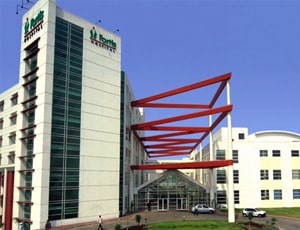
Fortis Hospital
Noida, India
Fortis Healthcare Limited is one of India’s prominent providers of integrated healthcare services, offering comprehensive medical care across multiple specialities. The company’s operations span hospitals, diagnostic centres, and day-care speciality facilities, ensuring a wide range of healthcare solutions under one umbrella. Fortis has established a strong presence across the country, managing 33 healthcare facilities, which include joint ventures and operational & management (O&M) setups, across 11 states.
The company’s hospital network comprises more than 5,700 operational beds, including O&M beds, catering to patients with varied healthcare needs. In addition to inpatient services, Fortis operates around 400 diagnostic laboratories, providing reliable and timely diagnostic support for accurate medical care. This extensive network enables Fortis to deliver high-quality healthcare services consistently and efficiently, from routine diagnostics to specialised treatments and complex procedures.

VPS Lakeshore Hospital
Kochi, India
VPS Lakeshore Hospital located in Kochi, India is accredited by NABH. Also listed below are some of the most prominent infrastructural details:
- Advanced hi-tech healthcare facility
- Innovative diagnostic & therapeutic medical technologies
- Diagnostic endoscopy of nose, esophagoscopy, Laryngoscopy, Bronchoscopy
- Cardiac department- Coronary Artery Bypass Grafting, Total Arterial Coronary Revascularization, Heart Valve Repairs and
- Replacements, Surgery for Heart Failure, Intracardiac Repair of Congenital Anomalies of the Heart, Surgery for Atrial Fibrillation
- Neurosurgery department: Keyhole Surgery for disc & other spine disorders, such as Spine Tumors, Navigation-guided, and Endoscopic Brain Tumor Surgery, Minimally invasive Brain Surgery, Advanced Head Injury Management with the ICP Monitoring
- State-of-the-art-hemodialysis Units
- Kidney Transplantation is done with Laparoscopic Donor Nephrectomy
- 24 hour rapid TAT team equipped with four specialists have increased survival and decreased patient morbidity
- Joint preservation techniques include autologous chondrocyte implantation
- Cutting edge operation theaters & world-class transplant ICUs
- Urology department: 3D Laparoscopy, Minimally Invasive Surgery, Ureteroscopy, RIRS, Endourology: PCNL
- Objective swallowing evaluation services such as functional endoscopic evaluation of Swallowing & Video Fluoroscopic Swallow

Manipal Hospital, Dwarka
Delhi, India
Manipal Hospital Dwarka is a leading multi-super speciality tertiary care hospital offering world-class, affordable, and accessible healthcare. Backed by renowned doctors, advanced technology, and global standards in clinical care, the hospital provides comprehensive preventive, diagnostic, and therapeutic services for all age groups. With 380 beds, 13 modular OTs, 118 critical care beds, and 24/7 emergency services, it combines excellence in patient care with innovations like AI, telemedicine, remote monitoring, and EMR—striving to become a fully digital, paperless hospital setting new standards in modern healthcare.
Our Services to better your experience
Opinion & Option
We submit the most accurate opinion and options from one or more countries for your review
Consult Privately
Consult with a certified specialist privately on our telemedicine platform even before you decide to travel
Logistics
We handle flights, visas, transfers, and accommodation—so you can focus on your health.
Recovery
Our In-house rehabilitation service packages to better your recovery and treatment outcome
Why Choose India for Gastric Ulcer Treatment?
- Experienced Gastroenterology Specialists: Look for hospitals with experienced gastroenterologists and gastrointestinal surgeons who manage gastric ulcers, H. pylori infection, and complications such as gastrointestinal bleeding. Specialist expertise matters, especially when endoscopic or surgical treatment is needed.
- Advanced Endoscopy and Diagnostic Facilities: Access to upper GI endoscopy, biopsy, H. pylori testing, and pathology services can support accurate diagnosis and treatment planning. Endoscopy may also allow doctors to treat bleeding ulcers when required.
- Emergency and Multidisciplinary Care: Hospitals should have emergency and intensive-care facilities for patients who develop serious complications such as severe bleeding or perforation. Multidisciplinary teams can coordinate gastroenterology, surgery, radiology, and critical care when needed.
- Comprehensive Treatment and Follow-Up: Patients can consider hospitals that provide complete care, from diagnosis and H. pylori eradication to endoscopic treatment and follow-up. Continuity of care is important to monitor healing and confirm successful treatment when required.
- International Patient Support: International patients may also consider hospitals experienced in treating overseas patients, with support for communication, appointments, treatment coordination, documentation, and follow-up. These services can make coordinating treatment from abroad easier.