Gallbladder Polyps Treatment in India
- Top Accredited Hospitals
- Global Medical Standards
- Cutting-Edge Technology
- Proven Treatment Options
- High Success Rate
- Trusted by Millions

What are Gallbladder Polyps?
Gallbladder polyps are growths or polyp-like lesions that project from the inner lining of the gallbladder. Most are benign and represent cholesterol deposits or other non-neoplastic pseudopolyps rather than true tumors. A smaller proportion are neoplastic polyps that may have malignant potential. Gallbladder polyps are often discovered incidentally during abdominal ultrasound performed for another reason.
What is the Importance of Timely Treatment?
Timely evaluation helps distinguish small, low-risk lesions that may only require observation from polyps with features associated with a higher risk of neoplasia. Management is generally based on ultrasound appearance, size, growth, symptoms, and relevant patient factors rather than the presence of a polyp alone. Some small polyps require no follow-up, while larger or higher-risk lesions may require surgical consultation and possible gallbladder removal.
What are the Common Symptoms of Gallbladder Polyps?
- Right upper abdominal discomfort or pain
- Upper abdominal fullness or discomfort after eating
- Nausea or vomiting
- Bloating or indigestion
- Symptoms resembling gallstone-related biliary pain
- Rarely, jaundice when another biliary condition is present
Causes and Risk Factors of Gallbladder Polyps
Causes
- Cholesterol accumulation within the gallbladder wall
- Inflammatory or hyperplastic changes
- Adenomatous or other neoplastic growths
- Intracholecystic papillary neoplasms and other uncommon epithelial lesions
- Gallbladder wall changes associated with chronic inflammation
- In some cases, the exact cause of a polypoid lesion cannot be determined from ultrasound alone
Risk Factors
- Increasing age, particularly in patients with other concerning features
- Primary sclerosing cholangitis (PSC)
- Sessile or broad-based polyp morphology
- Focal gallbladder wall thickening associated with the lesion
- Larger polyp size
- Documented growth during surveillance
- Certain geographic or genetic populations with higher background risk of gallbladder cancer
- Gallbladder symptoms when no other cause is identified
Latest Research and Technologies in the Treatment of Gallbladder Polyps in India
- Current management increasingly emphasises risk-stratified evaluation rather than automatically removing every gallbladder containing a small polyp. Transabdominal ultrasound remains the primary investigation, while high-resolution ultrasound, Doppler techniques, contrast-enhanced ultrasound, and endoscopic ultrasound may provide additional information in selected or difficult cases. Recent reviews also emphasise careful assessment of polyp morphology, vascularity, size, and interval growth.
Treatment options for Gallbladder Polyps
Cholecystectomy : Surgical removal of the gallbladder may be recommended for sufficiently large polyps or lesions with concerning features.
Cost Start From 2750Explore Options
- Clinical assessment:
- Medical and Symptom History: Evaluation includes abdominal pain, nausea, vomiting, jaundice, previous gallstones or gallbladder disease, weight changes, prior imaging findings, family history, relevant medical conditions, and risk factors for gallbladder malignancy.
- Physical Examination: The clinician evaluates for right upper abdominal tenderness, abdominal masses, jaundice, fever, or other findings suggesting gallbladder inflammation, biliary obstruction, or another abdominal condition.
- Polyp Characteristics: The clinician assesses size, number, location, morphology, attachment to the gallbladder wall, stalk characteristics, and adjacent wall thickening because these features influence risk stratification and follow-up.
- Assessment of Growth: Comparison with previous ultrasound examinations can determine whether a lesion has remained stable, increased in size, decreased, or disappeared.
- Assessment of Associated Conditions: Evaluation may identify gallstones, gallbladder inflammation, biliary obstruction, primary sclerosing cholangitis, or other conditions that may affect management.
- Imaging Tests:
- Abdominal Ultrasound: The primary imaging investigation for detecting and monitoring gallbladder polyps. It can assess size, morphology, wall attachment, gallstones, and associated gallbladder abnormalities.
- High-Resolution and Doppler Ultrasound: May provide additional information about lesion morphology and vascularity in selected cases.
- Contrast-Enhanced Ultrasound: May help characterise vascular patterns and distinguish certain benign from potentially neoplastic lesions in experienced centres.
- Endoscopic Ultrasound (EUS): May be considered when conventional ultrasound findings are indeterminate or when more detailed evaluation is required.
- MRI/MRCP: May be used selectively when there is concern about associated biliary disease, complex anatomy, or possible malignant disease.
- CT Scan: May be considered when a larger or suspicious lesion requires assessment of the gallbladder, liver, lymph nodes, or surrounding structures.
MediRehab (a chain of Rehab centres, part of MediGence) provides comprehensive rehabilitation services designed to support patients with Gallbladder Polyps in India. These Services include:
- Early Mobilisation After Surgery: Patients undergoing laparoscopic cholecystectomy are generally encouraged to begin gentle movement and walking as tolerated after surgery.
- Gradual Activity Progression: Daily activities can usually be increased progressively according to surgical advice and individual recovery.
- Postoperative Wound and Pain Care: Patients should follow instructions regarding incision care, pain management, lifting restrictions, and signs of infection.
- Medicines may treat associated symptoms or conditions such as gallstone-related pain, inflammation, or other gastrointestinal disorders, but treatment should target the underlying condition rather than dissolve a true gallbladder polyp.
Instantly Connect with our Specialists


Hospitals for Gallbladder Polyps in India
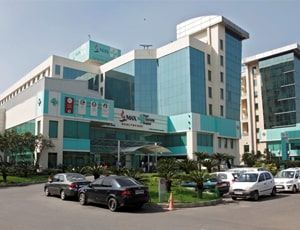
Max Super Speciality Hospital, Saket
Delhi, India
Max Smart Super Speciality Hospital, Saket, is a 250-bed tertiary care hospital awarded NABH accreditation, which provides advanced medical care in various specialities such as Cardiac Sciences, Orthopaedics, Neurology, Urology, Kidney Transplant, Paediatrics, and Obstetrics & Gynaecology. The hospital provides quality, safe, integrated, and patient-centric medical care using modular OTs, ICUs, Cath Labs, CT, MRI and Dialysis units.

Manipal Hospital, Hebbal
Bangalore, India
Manipal Hospitals, a group of Manipal Education Medical Group, is India’s leading multi-speciality network, comprising over 650 beds. Dedicated to clinical excellence, patient-centric care and ethical practices, it provides sophisticated diagnostics, surgery and home care services to both domestic and international patients, while also improving access to affordable healthcare for underprivileged communities.

The Madras Institute of Orthopedics and Traumatology
Chennai, India
MIOT started its journey with only 70 beds and focusing on Orthopedics and Trauma care. However, we grew into a multi-specialty hospital with time. MIOT is now a 1000-bedded hospital and can offer an extensive range of services across 63 specialties. The state of art laboratory of our hospital is ranked 8th internationally. We have 21 super-specialty operation theaters equipped with cutting-edge technology to help our doctors with complex procedures.
We take great care to make our patient rooms comfortable enough. The patient rooms get plenty of fresh air as well as natural light. The soothing views from the rooms do not let the patients feel cut off from the outside world. We use separate entrances for emergency patients, out-patients, in-patients, and their attendants. We put our patients’ safety first which is why we use a superior air system to ensure a near-zero infection healthy environment.
Apart from that, MIOT’s 24 hours blood bank provides all kinds of blood work related services which include blood collection to component separation. This state-of-art blood bank alone handles more than 30,000 units of blood over the course of a year. Every month around 600 blood transfusions are managed by this blood bank.
MIOT’s SIGNA Pioneer 3T MRI machine is made with noise reduction technology. This silent MRI machine can deliver superior quality neuroimages without wasting any time. The department of Radiology and Imaging Sciences can give tough competition to any international hospital with its advanced technology and accuracy.
The PET CT service at MIOT International is the first of its kind in South India enabling better and more accurate diagnosis than earlier. The superior diagnosis is also possible for the two digital cath labs at MIOT Heart Revive center.
We also have a physiotherapy team where a team of highly efficient physiotherapists deals with the mobility and functional disability issues of our patients. They listen to the patients carefully to identify the root of the pain and use therapeutic exercises to reduce their pain.
The CCU of MIOT is something to be proud of. The specially-trained staff of this unit is dedicated to ensuring top-quality medical support to serious patients. This unit along with the MIOT International Laboratory is the backbone of our facility.
Furthermore, what makes MIOT unique is our Telemedicine service. In the new normal, we are trying everything to reach our patients. Our one of its kind Telemedicine service connects our patients to our 250 full-time doctors over email, phone, chat and video consultations.
Our Services to better your experience
Opinion & Option
We submit the most accurate opinion and options from one or more countries for your review
Consult Privately
Consult with a certified specialist privately on our telemedicine platform even before you decide to travel
Logistics
We handle flights, visas, transfers, and accommodation—so you can focus on your health.
Recovery
Our In-house rehabilitation service packages to better your recovery and treatment outcome
Why Choose India for Gallbladder Polyps Treatment?
- Experienced Gastrointestinal and Hepatobiliary Specialists: Indian hospitals have gastroenterologists and hepatobiliary surgeons experienced in evaluating gallbladder polyps and distinguishing low-risk lesions from those requiring surgical assessment.
- Advanced Diagnostic Facilities: Many centres provide high-quality abdominal ultrasound, Doppler imaging, CT, MRI/MRCP, endoscopic ultrasound, and laboratory investigations when clinically required.
- Risk-Based Treatment Options: Patients may have access to surveillance, repeat imaging, minimally invasive cholecystectomy, and specialist evaluation for suspicious lesions depending on individual risk.
- Multidisciplinary Care: Radiologists, gastroenterologists, hepatobiliary surgeons, oncologists, and pathologists can assess complex cases when needed.
- International Patient Support: Major Indian hospitals may provide medical-record review, specialist coordination, treatment scheduling, travel assistance, accommodation support, and postoperative or surveillance follow-up for international patients.