Epiretinal Membrane Treatment in India
- Top Accredited Hospitals
- Global Medical Standards
- Cutting-Edge Technology
- Proven Treatment Options
- High Success Rate
- Trusted by Millions

What is an Epiretinal Membrane?
An epiretinal membrane (ERM), also known as a cellophane membrane or macular pucker, is a thin layer of scar-like tissue that forms on the surface of the retina when the vitreous gel, a gel-like substance that fills the inside of the eye, migrates onto the surface of the retina. This membrane can shrink or contract and cause the retina to wrinkle, which may lead to blurred or distorted vision.
What is the Importance of Timely Treatment?
Early diagnosis and management can prevent further loss of vision and minimize complications such as blurry or distorted vision. If the membrane has a big effect on vision, treatment may improve or stabilize sight.
What are the common symptoms of an Epiretinal Membrane?
- Distorted vision
- Wavy lines in the center of vision
- Double vision
- Blurry vision
- Color distortion
- Decreased central vision
Causes and Risk Factors of Epiretinal Membrane
Causes
- Age-related changes: The natural changes in the eye with aging can cause a membrane to form.
- Changes in the vitreous: As the gel inside the eye changes with age, it can press upon the retina and may trigger scar-like tissue formation.
- Eye inflammation: Inflammation within the eye can result in the development of this membrane.
- Retinal problems: A retinal tear, detachment, or other retinal disease can sometimes cause an epiretinal membrane.
Risk Factors
- Older age
- Diabetic retinopathy
- Previous eye surgery
- Previous eye injury or trauma
Latest Research and Technologies in the Treatment of Epiretinal Membrane in India
- One of the biggest advances is the use of AI and advanced OCT imaging to improve ERM detection and determine who will benefit most from surgery. New deep-learning algorithms have been developed that can classify different types of ERM based on an OCT scan, which could lead to faster and more accurate diagnosis.
Treatment options for Epiretinal Membrane
Vitrectomy: it is a minimally invasive eye surgery used when an epiretinal membrane significantly affects vision. During the procedure, the surgeon makes tiny openings in the eye to remove the vitreous gel and then carefully peels away the membrane from the surface of the retina. This can help reduce blurred or distorted vision and may improve or stabilize eyesight.
Cost Start From 2000Explore Options
Clinical assessment:
- Visual acuity test: Checks how clearly the patient can see from various distances.
- Amsler grid test: Helps detect distortion, such as straight lines appearing wavy.
- Slit-lamp examination: Allows the detailed examination of the front and back of the eye.
- Dilated eye examination: The pupil is dilated with eye drops so the doctor can examine the retina and macula.
- Assessment of symptoms: The doctor takes a detailed history about the symptoms like blurred vision, distorted vision, difficulty reading, or vision changes.
Imaging Tests:
- Optical coherence tomography: This imaging test provides detailed cross-sectional images of the retina, allowing your eye care professional to assess the thickness and characteristics of the epiretinal membrane
- Fluorescein angiography: It may be conducted when the doctor suspects an additional retinal issue or wishes to assess for any leakage from the blood vessels in the retina.
In some cases, the doctor may recommend medications, such as corticosteroids, to reduce inflammation and swelling associated with the epiretinal membrane. If the symptoms are limited, doctors may recommend regular monitoring rather than medication.
Instantly Connect with our Specialists


Hospitals for Epiretinal Membrane in India
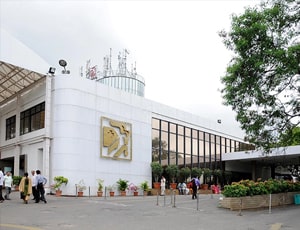
Apollo Hospitals
Hyderabad, India
Apollo Hospitals located in Hyderabad, India is accredited by JCI, NABH. Also listed below are some of the most prominent infrastructural details:
- A premier multi-specialty hospital with 477-bed capacity
- More than 50 specialties, super-specialties
- 12 Centers of Excellence
- The Institutes for Heart Diseases, Neurosciences, Cancer, Emergency, Orthopaedics, Renal Diseases, and Transplants
- Centers of Excellence are known for patient care, training and research
- Doctors with years of truly global experience in healthcare delivery
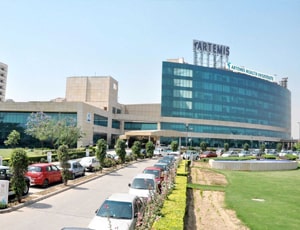
Artemis Health Institute
Gurgaon, India
Artemis Hospital, established in 2007 in Gurgaon, India, is a 750+ bed, state-of-the-art multi-speciality hospital and the first in Gurgaon accredited by JCI and NABH. A flagship of the Apollo Tyres Group, it offers advanced care across cardiology, oncology, orthopaedics, neurology, and transplant medicine, supported by modern infrastructure and 60+ world-class operating theatres. Its Centres of Excellence span critical areas like heart, cancer, neurosciences, orthopaedics, and women & child care. Guided by values of Service, Compassion, and Integrity, Artemis combines innovation, technology, and affordability, making it a trusted international healthcare destination for comprehensive and compassionate patient care.

Sterling Wockhardt Hospital
Mumbai, India
Sterling Wockhardt Hospital located in Mumbai, India is accredited by NABH. Also listed below are some of the most prominent infrastructural details:
- The bed capacity of Sterling Wockhardt Hospital is 50.
- Critical care and complex cases resolution is done with excellent results.
- Emergency departments with 3 beds capacity and Intensive Care Unit with 10 beds capacity.
- The healthcare delivery focus of the hospital is both on prevention as well curing the conditions.
- Diagnostics are well developed with the latest technological developments.
- Pharmacy, operating rooms, lab services are at par with the best in the country.
- 24/7 ambulance services to cover healthcare requirements in Panvel and Vashi.
- Accommodation, airport transfers, flight bookings and translation services are all available for international patients.
Our Services to better your experience
Opinion & Option
We submit the most accurate opinion and options from one or more countries for your review
Consult Privately
Consult with a certified specialist privately on our telemedicine platform even before you decide to travel
Logistics
We handle flights, visas, transfers, and accommodation—so you can focus on your health.
Recovery
Our In-house rehabilitation service packages to better your recovery and treatment outcome
Why Choose India for Epiretinal Membrane Treatment?
- Specialized eye specialists: Access to experienced vitreoretinal surgeons.
- Advanced technology: Current techniques like OCT and advanced vitrectomy procedures are accessible.
- Complete eye care: Diagnosis, surgery, and follow-up care can often be provided at the same hospital.
- International patient support: Many hospitals assist with appointments, travel, accommodation, and communication.