Epigastric Hernia Treatment in India
- Top Accredited Hospitals
- Global Medical Standards
- Cutting-Edge Technology
- Proven Treatment Options
- High Success Rate
- Trusted by Millions

What is an Epigastric Hernia?
An epigastric hernia is a type of abdominal wall hernia that develops through a weakness or defect in the upper midline of the abdominal wall, between the lower end of the breastbone and the umbilicus. The hernia may contain preperitoneal fat and, less commonly, abdominal organs or bowel when the defect is larger. It may appear as a small bulge that becomes more noticeable while standing, coughing, straining, or exercising. Some epigastric hernias cause no symptoms, while others can lead to pain, tenderness, pressure, or complications such as incarceration or strangulation.
What is the Importance of Timely Treatment?
Timely evaluation helps determine the size and location of the abdominal wall defect, whether the hernia is reducible, and whether symptoms or complications are present. Small, asymptomatic epigastric hernias may be monitored, while painful, enlarging, or functionally troublesome hernias may require elective repair. Sudden severe pain, vomiting, abdominal distension, or a firm hernia that cannot be pushed back may indicate incarceration or strangulation and requires urgent medical assessment.
What are the Common Symptoms of an Epigastric Hernia?
- A visible or palpable lump in the upper middle abdomen
- A bulge that becomes more prominent while standing, coughing, or straining
- Pain or tenderness at the hernia site
- A feeling of pressure or pulling in the upper abdomen
- Discomfort during lifting, exercise, or other physical activity
- Increasing size of the abdominal bulge
- Local sensitivity around the hernia
- Cosmetic concerns related to the abdominal contour
- Nausea or vomiting when complications occur
- Severe abdominal pain or inability to reduce the hernia when incarceration or strangulation develops
Causes and Risk Factors of Epigastric Hernia
Causes
- A congenital or acquired weakness in the upper abdominal wall
- Separation or weakness of the fibres of the linea alba
- Increased intra-abdominal pressure
- Repeated coughing or straining
- Chronic constipation and straining during bowel movements
- Heavy physical work or repeated lifting
- Certain abdominal wall structural abnormalities
- Previous abdominal trauma or surgery in selected cases
Risk Factors
- Obesity or increased abdominal pressure
- Chronic cough
- Chronic constipation
- Repeated heavy lifting or strenuous physical activity
- Pregnancy
- Multiple pregnancies
- Conditions associated with increased intra-abdominal pressure
- Connective-tissue disorders or impaired abdominal wall strength
- Previous abdominal surgery or trauma in selected patients
- Increasing age and age-related changes in tissue strength
Latest Research and Technologies in the Treatment of Epigastric Hernia in India
- Modern treatment of epigastric hernia emphasises individualised assessment based on defect size, symptoms, anatomy, patient characteristics, and recurrence risk. For clinically uncertain cases, ultrasound can help identify small abdominal wall defects, while CT or MRI may be considered when additional anatomical information or detailed preoperative planning is required. For patients requiring repair, open mesh-based repair is commonly used for many symptomatic primary midline ventral hernias, while laparoscopic or other minimally invasive approaches may be considered for selected larger defects or patients at increased risk of wound complications.
Treatment options for Epigastric Hernia
Open Hernia Repair: Open repair involves exposing the abdominal wall defect and closing or reinforcing it, often with mesh depending on defect size and patient factors. For many symptomatic primary epigastric hernias, an open preperitoneal mesh repair is an established approach. Very small defects may sometimes be treated with sutures depending on the clinical situation.
Laparoscopic Repair : Minimally invasive approaches use small incisions and specialised instruments to repair and reinforce the abdominal wall. They may be considered for selected larger defects, multiple defects, recurrent hernias, or patients in whom minimising wound complications is particularly important.
Cost Start From 2500Explore Options
Emergency Hernia Repair: If the hernia becomes incarcerated or strangulated, emergency surgical treatment may be required. The surgical approach depends on the patient's stability, bowel involvement, defect characteristics, and contamination level.
- Clinical assessment:
- Medical History: Evaluation includes the duration and progression of the abdominal bulge, pain or tenderness, changes with coughing or straining, previous abdominal surgery or trauma, bowel symptoms, physical activity, pregnancy history, and relevant medical conditions.
- Physical Examination: The clinician examines the abdomen while the patient is standing and lying down. The clinician may ask the patient to cough or strain to make the hernia more prominent. The clinician assesses the location, size, tenderness, reducibility, and characteristics of the abdominal wall defect.
- Assessment for Complications: The clinician evaluates for incarceration, strangulation, bowel obstruction, severe tenderness, skin changes, vomiting, abdominal distension, and inability to pass stool or gas.
- Preoperative Assessment: Patients being considered for surgery may undergo assessment of general health, nutritional status, cardiovascular and respiratory fitness, weight, relevant medical conditions, and factors that may influence wound healing or postoperative recovery.
- Imaging Tests:
- Ultrasound: Can help identify small or occult epigastric hernias and may allow dynamic assessment during coughing or straining.
- CT Scan: Provides detailed information about the abdominal wall defect, its contents, surrounding anatomy, and other abdominal conditions and may be useful for complex or uncertain cases.
- MRI: May be used selectively when further soft-tissue or abdominal wall assessment is required or when radiation exposure is undesirable.
- Dynamic Imaging: Ultrasound or MRI performed with Valsalva or other maneuvers may help detect small or intermittently visible hernias.
MediRehab (a chain of Rehab centres, part of MediGence) provides comprehensive rehabilitation services designed to support Incisional Hernia patients in India. These Services include:
- Early Mobilisation: Gentle walking and movement are generally encouraged after hernia repair as tolerated and according to the surgeon's advice.
- Gradual Activity Progression: Daily activities can usually be increased progressively while avoiding excessive strain during the initial healing period.
- Abdominal Wall Rehabilitation: Selected patients may benefit from physiotherapy focused on posture, breathing, core control, and gradual restoration of abdominal wall function.
- Weight and Lifestyle Management: Maintaining a healthy weight, managing constipation and chronic cough, and avoiding smoking can support abdominal wall health and recovery.
- Postoperative Follow-Up: Follow-up helps assess wound healing, pain, activity progression, abdominal wall function, and possible recurrence. Restrictions on heavy lifting and strenuous exercise should be individualised based on the repair and the surgeon's recommendations.
- Medicines cannot close or permanently repair an epigastric hernia. Pain-relieving medicines may be used for temporary symptom control when appropriate. Treatment of conditions that increase abdominal pressure, such as chronic cough or constipation, may help reduce symptoms. Weight management and control of associated medical conditions may also improve surgical readiness. Antibiotics are used to treat bacterial infection, not the hernia itself.
Instantly Connect with our Specialists


Hospitals for Epigastric Hernia in India
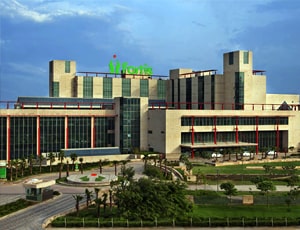
Fortis Memorial Research Institute
Gurgaon, India
Fortis Healthcare Limited stands as one of India's largest integrated healthcare providers, managing 33 hospitals across 11 states and operating more than 5,700 beds and 400 diagnostic labs. Four of our hospitals are accredited by JCI and 26 by NABH. With a workforce of over 12,500 healthcare professionals, we combine clinical excellence, a patient-focused approach, and innovation to provide high-quality, affordable, and compassionate healthcare to patients in India.
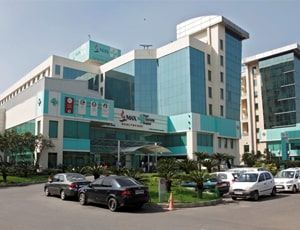
Max Super Speciality Hospital, Saket
Delhi, India
Max Smart Super Speciality Hospital, Saket, is a 250-bed tertiary care hospital awarded NABH accreditation, which provides advanced medical care in various specialities such as Cardiac Sciences, Orthopaedics, Neurology, Urology, Kidney Transplant, Paediatrics, and Obstetrics & Gynaecology. The hospital provides quality, safe, integrated, and patient-centric medical care using modular OTs, ICUs, Cath Labs, CT, MRI and Dialysis units.

Manipal Hospital, Hebbal
Bangalore, India
Manipal Hospitals, a group of Manipal Education Medical Group, is India’s leading multi-speciality network, comprising over 650 beds. Dedicated to clinical excellence, patient-centric care and ethical practices, it provides sophisticated diagnostics, surgery and home care services to both domestic and international patients, while also improving access to affordable healthcare for underprivileged communities.
Our Services to better your experience
Opinion & Option
We submit the most accurate opinion and options from one or more countries for your review
Consult Privately
Consult with a certified specialist privately on our telemedicine platform even before you decide to travel
Logistics
We handle flights, visas, transfers, and accommodation—so you can focus on your health.
Recovery
Our In-house rehabilitation service packages to better your recovery and treatment outcome
Why Choose India for Epigastric Hernia Treatment?
- Experienced Hernia Surgeons: Indian hospitals have surgeons experienced in managing primary ventral and epigastric hernias, including symptomatic, recurrent, and complex cases.
- Advanced Diagnostic Facilities: Many centres provide ultrasound, CT, MRI, and other investigations to assess abdominal wall defects and support treatment planning.
- Minimally Invasive Treatment Options: Depending on the patient's condition, hospitals may offer open, laparoscopic, robotic, and other abdominal wall repair techniques.
- Comprehensive Perioperative Care: Patients can receive coordinated care from surgeons, anesthesiologists, physiotherapists, nutrition specialists, and other healthcare professionals, as needed.
- International Patient Support: Major Indian hospitals may provide medical-record review, specialist coordination, treatment scheduling, travel assistance, accommodation support, and postoperative follow-up for international patients.