Discoid Meniscus Treatment in India
- Top Accredited Hospitals
- Global Medical Standards
- Cutting-Edge Technology
- Proven Treatment Options
- High Success Rate
- Trusted by Millions

What is a Discoid Meniscus?
A discoid meniscus is a thicker, more rounded meniscus than the normal crescent-shaped structure. It is usually present from birth and most commonly occurs in the outer part of the knee. An unstable or torn discoid meniscus may cause pain, clicking, locking, and difficulty moving the knee.
What is the Importance of Timely Treatment?
Timely evaluation helps identify meniscal tears or instability, manage symptoms, preserve knee function, and reduce the risk of further cartilage damage. Early treatment can also help patients return to normal activities and sports when appropriate.
What are the Common Symptoms of a Discoid Meniscus?
- Knee Pain: Pain may occur along the outer side of the knee, particularly during movement or activity.
- Clicking or Popping: A discoid meniscus may produce audible or noticeable clicking during knee movement.
- Knee Swelling: Inflammation or meniscal irritation can cause swelling around the knee.
- Knee Locking: A torn or unstable meniscus may cause the knee to catch or temporarily lock.
- Limited Movement: Pain, swelling, or mechanical symptoms may restrict normal knee motion.
- Feeling of Instability: Some patients may feel the knee giving way during activity.
Causes and Risk Factors of Discoid Meniscus
Causes
- Abnormal Meniscal Development: A discoid meniscus develops when the meniscus forms with an atypical shape and thickness.
- Congenital Variation: The condition is generally present from birth rather than caused by an injury.
- Meniscal Injury: A discoid meniscus may be more prone to tearing or instability, which can cause symptoms.
Risk Factors
- Congenital Anatomy: Having a discoid-shaped meniscus is the primary underlying factor.
- Sports Activities: Twisting, pivoting, or repetitive knee movement may increase the risk of symptomatic tears.
- Knee Trauma: A direct injury or twisting movement can damage an already abnormal meniscus.
- Meniscal Instability: An unstable discoid meniscus may be more likely to cause mechanical symptoms.
Latest Research and Technologies in the Treatment of Discoid Meniscus in India
Current treatment approaches emphasise preserving as much healthy meniscal tissue as possible. Advances in MRI improve diagnosis and assessment of associated tears, while knee arthroscopy allows minimally invasive evaluation and treatment. Arthroscopic saucerization, with repair when instability or a significant tear is present, is commonly used for symptomatic discoid menisci. Modern rehabilitation protocols focus on restoring movement, strength, and function while supporting a gradual return to activities.
Treatment options for Discoid Meniscus
Treatment depends on symptoms, meniscal stability, associated tears, activity level, and the extent of knee damage.
Observation: Asymptomatic discoid menisci may not require treatment but can be monitored when clinically appropriate.
Activity Modification: Temporary reduction of activities that worsen pain may help manage symptoms.
Physiotherapy: Exercises can improve knee strength, flexibility, stability, and function.
Arthroscopic Saucerization: Excess meniscal tissue is removed to reshape the discoid meniscus while preserving healthy tissue.
Meniscectomy : Tears or unstable portions may be repaired when preservation is possible. Damaged or unstable meniscal tissue may be selectively removed when necessary.
Cost Start From 3000Explore Options
Combined Arthroscopic Treatment: Saucerization and repair may be performed together when both abnormal shape and instability are present.
Clinical assessment:
- Medical History: Reviews pain, clicking, locking, swelling, previous injuries, and activity-related symptoms.
- Knee Examination: Assesses tenderness, swelling, range of movement, and joint stability.
- Meniscal Tests: Specific clinical manoeuvres help assess possible meniscal involvement.
- Gait Assessment: Evaluates walking pattern and functional changes caused by knee symptoms.
- Functional Assessment: Determines how symptoms affect daily activities and sports.
Imaging Tests:
- X-rays: Assess the bones and help rule out other causes of knee symptoms.
- MRI: Provides detailed images of the meniscus and helps identify tears, instability, and associated cartilage damage.
- CT Scan: May be used selectively when detailed bone assessment is required.
- Ultrasound: Can assess selected soft-tissue abnormalities but is not the primary test for diagnosing a discoid meniscus.
MediRehab (a chain of Rehab centres, part of MediGence) provides comprehensive rehabilitation services designed to support Discoid Meniscus patients in India. These services include:
- Physiotherapy may include range-of-motion exercises, quadriceps and hamstring strengthening, balance training, gait exercises, and a gradual return to sports or other activities following treatment.
- Medicines may help control pain and inflammation but do not change the meniscus's abnormal shape. Treatment may include pain relievers or NSAIDs when appropriate, based on the patient's condition and medical advice.
Instantly Connect with our Specialists


Hospitals for Discoid Meniscus in India

Seven Hills Hospital
Mumbai, India
Seven Hills Hospital located in Mumbai, India is accredited by JCI, NABH, NABL. Also listed below are some of the most prominent infrastructural details:
- It is spread over an area of 17 acres.
- There is also an academic institute with research facilities.
- SevenHills Hospital has excellent diagnostic services including a laboratory and a provision for various tests.
- Given that their are specific departments for various kinds of diagnostsic. Tests like PET Scan, MRI, CT scan and biopsies are completed regularly.
- Biochemistry, Hematology, Microbiology are some of the important diagnostic departments.
- Endoscopies as well as non-invasive procedures are done through their respective departments.
- Day care specialty services are available for those kinds of requirements.
- Health Check up packages are also present as are the collaborations with many insurance organisations.
- There are professionally managed in-patient and out-patient facilities.
- There are more than 30 super specialties in Seven Hills Hospital Mumbai.
- There are also Centres of Excellence in Cardiac Care, Neurosciences, Bone & Joint Care, Cancer Care, Nephrology and Cosmetic Dermatology.
- International patient care services are also implemented for the best assistance to overseas patients.
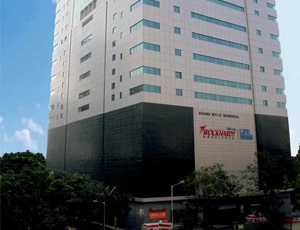
Wockhardt Hospital - A new Age Hospital
Mumbai, India
Wockhardt Hospital - A New Age Hospital located in Mumbai, India is accredited by NABH. Also listed below are some of the most prominent infrastructural details:
- 20-storeyed building at Mumbai Central (South Mumbai)
- Capacity of 350-beds
- Two highly-advanced cath labs with ultra-modern technologies to perform high risk coronary procedures and neurological surgeries
- 8 Operation Theatres- Cardiac, Joint Replacement, Neurology, Oncology, MAS and Organ Transplantation
- 100 beds dedicated to Critical Care, which are connected to IntelliSpace Critical Care & Anaesthesia (ICCA) system
- Largest Paediatric Cardiac Unit
- It has the largest Intelligent ICCA System
- Possess Hi-tech GPS-enabled Ambulances and largest state-of-the-art Accident & Emergency unit in South Mumbai
- As far as accommodation facility is considered, the Hospital makes it easily accessible for the patients in nearby hotels/lodges

Jaypee Hospital
Noida, India
Jaypee Hospital located in Noida, India is accredited by ISO, NABH, NABL. Also listed below are some of the most prominent infrastructural details:
- 525 beds in the first phase
- 150 Critical Care beds
- 325 ward beds with Suite, Deluxe, Twin Sharing, and Economy options
- 18 Modular OTs
- 4 Cardiac Catheterization Lab with unqie Hybrid Operating Room
- 24 bedded Advanced Neonatal ICUs20 bedded Dialysis Units
- 2 Linear Accelerator (IMRT, VMAT, I
- GRT), Wide Bore CT Simulator, one Brachytherapy Suite
- True Beam STx Linear Accelerator
- 2 MRI (3.0 Tesla) with High-Intensity Focused Ultrasound
- 64 Slice PET CT, Gamma Camera, Dual Head 6 Slice SPECT CT
- 256 Slice CT Scan, CT Simulation
- Amongst the few GOLD LEED-certified hospital buildings in India
- Appointment Scheduling
- Flow motion 64 Slice PET CT technology
- Pick and drop facility from/to the Airport
- Foreign exchange facility
- Treatment packages
- Visa assistance
- Admission in the hospital
- Wi-Fi/internet service in the room
- Travel arrangement for patient & attendant after discharge
- Tele-consults after discharge
- Dedicated Guest House for International Patients maintained by Jaypee Hospital
- In-house translators for patient’s comfort
- Assistance in getting doctor’s opinion
- Registration with the Foreigners Regional Registration Office
- Accommodation arrangements after discharge
- Accommodation arrangement for the accompanying attendant
- Customized diet for patient and attendant
- Laundry services
- Prayer room
- Dialysis facility for 60 patients
- Cadaver organs
- Blood bank facilities
- Advanced Laboratory facilities
- Diagnostic and Radiology facilities
- High-end Ultrasound facilities
Our Services to better your experience
Opinion & Option
We submit the most accurate opinion and options from one or more countries for your review
Consult Privately
Consult with a certified specialist privately on our telemedicine platform even before you decide to travel
Logistics
We handle flights, visas, transfers, and accommodation—so you can focus on your health.
Recovery
Our In-house rehabilitation service packages to better your recovery and treatment outcome
Why Choose India for Discoid Meniscus Treatment?
- Experienced Orthopedic Specialists: India has orthopedic and sports medicine specialists experienced in managing meniscal and knee conditions.
- Advanced Diagnostic Facilities: Leading hospitals provide access to MRI, X-rays, arthroscopy, and other diagnostic technologies.
- Minimally Invasive Treatment: Arthroscopic techniques can be used for selected symptomatic discoid meniscus cases.
- Meniscus-Preserving Approach: Treatment can focus on preserving healthy meniscal tissue whenever clinically appropriate.
- Personalised Treatment Plans: Management is chosen based on symptoms, meniscal stability, associated injuries, activity level, and individual needs.
- Rehabilitation Support: Structured physiotherapy can support recovery of strength, movement, and knee function.