Diabetic Nephropathy Treatment in India
- Top Accredited Hospitals
- Global Medical Standards
- Cutting-Edge Technology
- Proven Treatment Options
- High Success Rate
- Trusted by Millions

What is Diabetic Nephropathy?
Diabetic nephropathy, also called diabetic kidney disease (DKD), is kidney damage caused by diabetes. Persistently high blood glucose and associated high blood pressure can damage the small blood vessels and filtering structures of the kidneys, reducing their ability to remove waste and excess fluid from the blood. The condition may develop gradually and can progress to chronic kidney disease or kidney failure if not adequately managed.
What is the Importance of Timely Treatment?
Early detection and treatment can help slow the progression of diabetic kidney disease and reduce the risk of kidney failure and cardiovascular complications. Because many people have few or no symptoms in the early stages, regular urine albumin and kidney-function testing is important for people with diabetes. Management focuses on controlling blood glucose and blood pressure, reducing albuminuria, protecting kidney function and addressing cardiovascular risk.
What are the Common Symptoms of Diabetic Nephropathy?
- Increased urination, particularly at night
- Swelling of the feet, ankles, legs or around the eyes
- Fatigue and weakness
- Loss of appetite
- Nausea or vomiting
- Itching or dry skin
- Muscle cramps
- Difficulty concentrating
- Shortness of breath due to fluid accumulation
- Changes in urine, including foamy urine caused by increased protein excretion
- High blood pressure
- Reduced urine output in advanced kidney disease
Causes and Risk Factors of Diabetic Nephropathy
Causes
- Diabetic nephropathy develops primarily because prolonged high blood glucose damages the blood vessels and filtering structures within the kidneys.
- Diabetes-related changes in the kidneys can increase albumin leakage into the urine and gradually reduce the glomerular filtration rate.
- High blood pressure can further accelerate kidney damage.
Risk Factors
- Long duration of diabetes
- Poorly controlled blood glucose
- High blood pressure
- Persistent albuminuria
- Overweight or obesity
- Smoking
- Physical inactivity
- High-sodium diet
- Cardiovascular disease
- Family history of kidney failure
- Previous or coexisting kidney disease
- Increasing age
Latest Research and Technologies in the Treatment of Diabetic Nephropathy in India
- Treatment of diabetic kidney disease has increasingly moved beyond glucose and blood-pressure control toward therapies that directly reduce kidney and cardiovascular risk. Finerenone, a nonsteroidal mineralocorticoid receptor antagonist, is recommended for selected patients with type 2 diabetes, CKD and albuminuria when kidney function and potassium levels are appropriate.
Treatment options for Diabetic Nephropathy
Hemodialysis : It is the most common form of renal replacement therapy (RRT) for patients whose Diabetic Nephropathy (Diabetic Kidney Disease) has progressed to Stage 5 End-Stage Renal Disease (ESRD).
Cost Start From 80Explore Options
- Clinical assessment:
- Medical and Diabetes Assessment: A detailed medical history is taken to assess the duration and control of diabetes, blood-pressure history, cardiovascular disease, medications and other conditions that may affect kidney function. Physical examination may include assessment of blood pressure, fluid retention, swelling and other complications of diabetes.
- Kidney Function and Urine Assessment: Blood tests commonly include serum creatinine and estimated GFR, while urine testing includes the urine albumin-to-creatinine ratio (UACR) and urinalysis.
- Metabolic and Laboratory Assessment: Additional testing may include blood glucose, HbA1c, electrolytes, blood urea nitrogen, albumin, calcium, phosphorus and complete blood count.
- Assessment for Other Kidney Diseases: If findings are atypical, rapidly progressive or inconsistent with diabetic kidney disease, doctors may investigate other causes of CKD and consider additional blood tests or kidney biopsy when clinically appropriate.
- Imaging Tests:
- Kidney Ultrasound: Helps assess kidney size, structure and possible urinary tract obstruction or other structural abnormalities.
- Doppler Ultrasound: May be used to evaluate renal blood flow when vascular abnormalities are suspected.
- CT or MRI: May be considered when structural abnormalities, stones, masses or other complications require further evaluation.
- Kidney Biopsy: Not routinely required for typical diabetic kidney disease but may be considered when another kidney disorder is suspected or the clinical presentation is unusual.
MediRehab (a chain of Rehab centres, part of MediGence) provides comprehensive rehabilitation services designed to support Diabetic Nephropathy patients in India. These services include:
- Exercise and Physical Activity: Individualised physical activity can help maintain strength, mobility, cardiovascular health and diabetes control.
- Weight Management: Structured nutrition and physical-activity programmes may help people achieve or maintain a healthy weight when appropriate.
- Management of Functional Complications: Patients with advanced CKD, weakness, fatigue, neuropathy or other complications may benefit from physiotherapy and occupational therapy.
- Long-Term Lifestyle and Self-Management Support: Education regarding medication adherence, blood glucose monitoring, blood-pressure management, smoking cessation and regular follow-up can support long-term kidney health.
- Medicines for diabetic nephropathy aim to control blood glucose and blood pressure, reduce albuminuria and slow kidney disease progression. ACE inhibitors or ARBs are commonly used for people with diabetes, hypertension and albuminuria. Selected patients with type 2 diabetes, CKD and albuminuria may also receive finerenone, with kidney function and potassium monitored during treatment. Other medicines may be prescribed for anemia, fluid retention, cholesterol abnormalities, diabetes or other CKD-related complications.
Instantly Connect with our Specialists


Hospitals for Diabetic Nephropathy in India
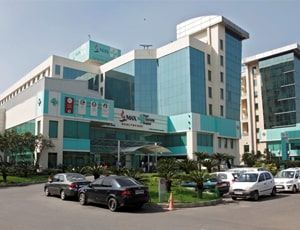
Max Super Speciality Hospital, Saket
Delhi, India
Max Smart Super Speciality Hospital, Saket, is a 250-bed tertiary care hospital awarded NABH accreditation, which provides advanced medical care in various specialities such as Cardiac Sciences, Orthopaedics, Neurology, Urology, Kidney Transplant, Paediatrics, and Obstetrics & Gynaecology. The hospital provides quality, safe, integrated, and patient-centric medical care using modular OTs, ICUs, Cath Labs, CT, MRI and Dialysis units.

Manipal Hospital, Hebbal
Bangalore, India
Manipal Hospitals, a group of Manipal Education Medical Group, is India’s leading multi-speciality network, comprising over 650 beds. Dedicated to clinical excellence, patient-centric care and ethical practices, it provides sophisticated diagnostics, surgery and home care services to both domestic and international patients, while also improving access to affordable healthcare for underprivileged communities.

The Madras Institute of Orthopedics and Traumatology
Chennai, India
MIOT started its journey with only 70 beds and focusing on Orthopedics and Trauma care. However, we grew into a multi-specialty hospital with time. MIOT is now a 1000-bedded hospital and can offer an extensive range of services across 63 specialties. The state of art laboratory of our hospital is ranked 8th internationally. We have 21 super-specialty operation theaters equipped with cutting-edge technology to help our doctors with complex procedures.
We take great care to make our patient rooms comfortable enough. The patient rooms get plenty of fresh air as well as natural light. The soothing views from the rooms do not let the patients feel cut off from the outside world. We use separate entrances for emergency patients, out-patients, in-patients, and their attendants. We put our patients’ safety first which is why we use a superior air system to ensure a near-zero infection healthy environment.
Apart from that, MIOT’s 24 hours blood bank provides all kinds of blood work related services which include blood collection to component separation. This state-of-art blood bank alone handles more than 30,000 units of blood over the course of a year. Every month around 600 blood transfusions are managed by this blood bank.
MIOT’s SIGNA Pioneer 3T MRI machine is made with noise reduction technology. This silent MRI machine can deliver superior quality neuroimages without wasting any time. The department of Radiology and Imaging Sciences can give tough competition to any international hospital with its advanced technology and accuracy.
The PET CT service at MIOT International is the first of its kind in South India enabling better and more accurate diagnosis than earlier. The superior diagnosis is also possible for the two digital cath labs at MIOT Heart Revive center.
We also have a physiotherapy team where a team of highly efficient physiotherapists deals with the mobility and functional disability issues of our patients. They listen to the patients carefully to identify the root of the pain and use therapeutic exercises to reduce their pain.
The CCU of MIOT is something to be proud of. The specially-trained staff of this unit is dedicated to ensuring top-quality medical support to serious patients. This unit along with the MIOT International Laboratory is the backbone of our facility.
Furthermore, what makes MIOT unique is our Telemedicine service. In the new normal, we are trying everything to reach our patients. Our one of its kind Telemedicine service connects our patients to our 250 full-time doctors over email, phone, chat and video consultations.
Our Services to better your experience
Opinion & Option
We submit the most accurate opinion and options from one or more countries for your review
Consult Privately
Consult with a certified specialist privately on our telemedicine platform even before you decide to travel
Logistics
We handle flights, visas, transfers, and accommodation—so you can focus on your health.
Recovery
Our In-house rehabilitation service packages to better your recovery and treatment outcome
Why Choose India for Diabetic Nephropathy Treatment?
- Multidisciplinary Specialist Care: Patients can access nephrologists, diabetologists/endocrinologists, cardiologists, dietitians and other specialists when required.
- Advanced Kidney Diagnostics: Major centres may provide UACR testing, eGFR assessment, renal imaging, specialised laboratory investigations and kidney biopsy when indicated.
- Modern Kidney-Protective Treatment: Specialised centres can provide evidence-based therapies including SGLT2 inhibitors, GLP-1 receptor agonists, ACE and inhibitors/ARBs for appropriately selected patients.
- Management of Advanced Kidney Disease: Hospitals with nephrology and dialysis services can provide comprehensive care for patients with advanced CKD or kidney failure.
- Rehabilitation and International Patient Support: Nutritional counselling, physiotherapy, diabetes education, follow-up and international-patient coordination can be incorporated into the treatment pathway.