Congenital Deafness Treatment in India
- Top Accredited Hospitals
- Global Medical Standards
- Cutting-Edge Technology
- Proven Treatment Options
- High Success Rate
- Trusted by Millions

What is Congenital Deafness?
Numerous reasons, such as genetic abnormalities, prenatal infections, and delivery difficulties, can result in congenital deafness, or hearing loss that is present at birth.
Types: Three categories of congenital hearing loss exist:
- Issues with the middle or outer ear are known as conductive hearing loss
- Problems with the inner ear or the nerves that connect the ear to the brain are known as sensorineural hearing loss
- Combining sensorineural and conductive hearing loss results in mixed hearing loss.
What is the Importance of Timely Treatment?
Children who receive early intervention are able to acquire language skills at a rate that is comparable to that of their hearing counterparts. Serious language and communication impairments may result from postponed treatment. Cognitive growth and hearing are intimately related. Better cognitive outcomes, such as enhanced academic performance and problem-solving abilities, are supported by early treatment.
What are the symptoms of Congenital Deafness?
- Hearing loss, including the incapacity to detect subtle noises
- Not reacting to sound
- Delay in young children's language and speech development
- Uncertain speaking
Causes and Risk Factors of Tethered Congenital Deafness
Causes
- Genetic Factors: Genetic factors account for almost half of cases of congenital hearing loss. These may be X-linked, autosomal dominant, or autosomal recessive, among other inheritance types. Down syndrome, Usher syndrome, Treacher Collins syndrome, Crouzon syndrome, and Alport syndrome2 are a few genetic syndromes linked to hearing loss.
- Prenatal Infections: Congenital hearing loss may result from infections contracted during pregnancy, including toxoplasmosis, rubella, cytomegalovirus, and herpes simplex virus
- Birth complications include low birth weight, premature birth, birth trauma, and anoxia, or lack of oxygen during birth, all of which can cause hearing loss
- Maternal Health Conditions: The chance of congenital hearing loss might be raised by conditions such as maternal diabetes, high blood pressure (preeclampsia), and Rh factor issues.
Risk Factors
A family history of hearing loss, facial abnormalities, ICU admission, history of meningitis, hearing loss-related syndromes, low Apgar scores at birth, medications known to cause hearing loss (such as aminoglycosides), elevated bilirubin, certain prenatal maternal infections, or suspicion of hearing loss are risk factors for congenital hearing loss.
Connect with our advisor for a PRIORITY response
Congenital Deafness Prevention Tips
The majority of congenital deafness instances can be avoided by immunisation (rubella), awareness of the negative effects (alcohol), or early treatment (T. gondii, hyperbilirubinemia), even if environmental causes account for 50% of occurrences.
Treatment options for Congenital Deafness
Cochlear Implant: A cochlear implant can be an option if your child has severe hearing loss and does not respond well to hearing aids. These are electronic gadgets that are surgically inserted into the ear. Positive results and much better hearing are experienced by children who receive cochlear implants. The use of cochlear implants to treat hearing loss is becoming more and more popular.
Cost Start From USD 15000 - USD 40000Explore Options
- To guarantee the early detection of a possible congenital hearing problem, almost all hospitals have required hearing screening programs for infants
- A second hearing test will be conducted if your child does not pass the first one. Usually, it is completed during or soon after their hospital stay as a newborn. If a hearing loss is detected, otolaryngologists will see your kid. In order to determine the cause of the hearing loss, they will conduct a thorough medical history and physical examination. Ear infections or chronic effusions (fluid behind the eardrums) are frequently the cause. Additional testing is necessary for other children who have sensorineural (nerve) hearing loss
- To determine the reason for your child's hearing loss and to assess the ear and hearing nerve, your specialist might prescribe additional tests (such as CT and MRI). Other systems that are related to hearing loss, like kidney USG and ECG, may require additional testing. Options for testing may include:
- CT scan (computed tomography)
- EKG, or electrocardiogram
- Ultrasound of the kidneys
- An MRI scan, or magnetic resonance imaging
MediRehab (chain of Rehab center) - part of MediGence provides comprehensive rehabilitation services designed to support arthritis patients in India. These services include:
- Personalized Therapy Plans: Improving communication skills requires early intervention with speech and language therapy. Children's speech, language, and listening skills are enhanced by therapists.
- Sign Language Therapy: For people who are congenitally deaf, learning sign language can be a useful communication tool. It can be combined with other forms of communication.
- Rehabilitation Post Cochlear Implant: Cochlear implants can provide those with severe to profound hearing loss a sense of sound. These devices need to be surgically implanted and treated continuously with therapy.
- Nutrition Guidance: A balanced diet can promote general hearing health and possibly lessen some related problems. Food rich in the following vitamins and minerals are helpful:
- Vitamin B12
- Omega-3 Fatty Acids
- Magnesium
- Zinc
- Potassium
- Vitamin B9
- Vitamin C
- Antioxidants
Congenital deafness cannot be cured by any one drug.
Instantly Connect with our Specialists


Hospitals for Congenital Deafness in India

Apollo Hospitals Bannerghatta
Bangalore, India
Apollo Hospitals Bannerghatta located in Bengaluru, India is accredited by JCI, NABH. Also listed below are some of the most prominent infrastructural details:
- Bed Capacity is 250
- Largest and most sophisticated sleep laboratory in the world
- Technological powerhouse with latest equipments
- 120 slice CT angiogram
- 3 Tesla MRI
- Low energy & High energy Linear Accelerators
- Navigation System in surgical procedures
- 4-D Ultrasound for 4 dimensional sonography
- Digital Fluoroscopy
- Gamma Camera
- Stereotactic Robotic Radio- surgery
- Autologous Bone Marrow Transplantation
- Robotic assisted surgeries
- Thallium Laser-First in India
- Holmium Laser-First in South India
- Digital X-Ray-First in Karnataka
- 100 plus consultants
- Uses Y shaped stent for tracheoesophageal fistula
- Four autologous chondrocyte implantations procedure is performed and several more like Spinal angiolipoma excision, Tibial tuberosity shift with MPSL reconstruction
- Biggest series of airway stents in India
- The Minimal Access Surgery Centre (MASC) centre of excellence

Sarvodaya Hospital and Research Centre
Faridabad, India
Sarvodaya Hospital and Research Centre located in Faridabad, India is accredited by NABH, NABL. Also listed below are some of the most prominent infrastructural details:
- Sarvodaya Hospital has a 500 bed capacity which is inclusive of 65 ICU beds.
- A dedicated dialysis unit for people with kidney conditions.
- The hospital has a cancer center which makes cancer treatment a seamless process.
- There is an upcoming oncology center in Sarvodaya Hospital Faridabad.
- Technologies such as 128 Slice CT scan, 500 MA X-Ray, 1.5 Tesla MRI and Mammography facility.

Fortis Hospital
Bangalore, India
Fortis Hospital, Bannerghatta Road, Bangalore, has been a leading multi-speciality healthcare institution, offering advanced medical services with a patient-centric approach. The hospital features 400+ beds, state-of-the-art infrastructure, and experienced specialists across various specialities, providing comprehensive and compassionate care. Trusted by patients from India and abroad, Fortis Bannerghatta Road combines modern technology with high-quality treatment to deliver world-class healthcare.
Our Services to better your experience
Opinion & Option
We submit the most accurate opinion and options from one or more countries for your review
Consult Privately
Consult with a certified specialist privately on our telemedicine platform even before you decide to travel
Logistics
We handle flights, visas, transfers, and accommodation—so you can focus on your health.
Recovery
Our In-house rehabilitation service packages to better your recovery and treatment outcome
Why Choose India for Congenital Deafness Treatment?
Here are some of the reasons for choosing India:
- Due to advancements in medical facilities, such as minimally invasive surgical techniques and cochlear implants.
- World-class experts include highly experienced doctors, JCI, and NABH-accredited healthcare institutions.
- Compared to other countries, treatment in Indian hospitals is cost-effective.
- Indian hospitals provide international patient services, including a multilingual support system.
- Improved treatment methods and biological therapies.
Frequently Asked Questions
Congenital deafness cannot be cured, however there are therapies that can greatly enhance a person's quality of life and communication skills, such as cochlear implants and hearing aids.
Significant progress has been made in cochlear implant surgery and technology in India. These implants, which can give people with severe to profound hearing loss a sense of sound, are available in many hospitals and clinics.
Yes, many Indian hospitals offer the following for Congenital Deafness treatment:
- Advanced diagnostic tools like MRI, CT scan, electromyography, and PET scan for accurate diagnoses.
- Skilled ENT physicians and therapists performing therapies Congenital Deafness.
- Comprehensive care and rehabilitation for long-term health benefit
Always consider the following factors when selecting Indian hospitals:
- Hospitals that are accredited (authorised by JCI and NABH).
- Patient reviews and success rates.
- Hospitals that provide seamless care to patients from abroad.
Of course! With the correct help and early intervention, many people with congenital deafness have happy, successful lives.
- Children with congenital deafness may face difficulties in language development and communication abilities if early assistance is not provided. This can impact their ability to interact with others and succeed in educational settings
- Educational Challenges: In regular classroom settings, children who are congenitally deaf may encounter challenges. To reach their full academic potential, they might need certain assistance and accommodations
- Social and Emotional Impact: Social relationships can be impacted by hearing loss, which can result in emotions of frustration or loneliness. It might also affect emotional health and self-worth
- Cognitive Development: Language, memory, and problem-solving abilities are among the domains where hearing loss can have an impact on cognitive development. Early intervention and support can help mitigate these effects.

Reviewer
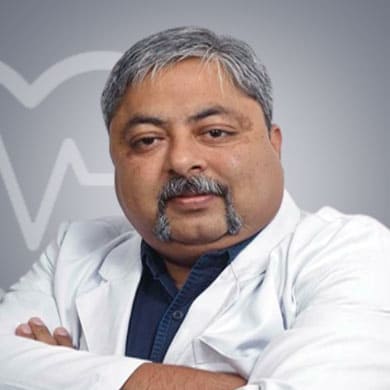
Dr. Vidit Tripathi
ENT Surgeon
24 Years of Experience
One of the finest ENT Surgeon in New Delhi, India, Dr. Vidit Tripathi, has worked with several world class multidisciplinary hospitals over the years. Dr. Vidit Tripathi has over 24+ years of experience in his field. The specialist treats and manages a wide range of conditions such as Goiter, Radiation Necrosis in Neck, Neck Injury, Perforates Eardrum View More
Last Reviewed - January 2026