Choledocholithiasis Treatment in India
- Top Accredited Hospitals
- Global Medical Standards
- Cutting-Edge Technology
- Proven Treatment Options
- High Success Rate
- Trusted by Millions

What is Choledocholithiasis?
Choledocholithiasis is the presence of one or more gallstones in the common bile duct (CBD). These stones may form in the gallbladder and migrate into the bile duct or, less commonly, develop directly within the bile ducts. A blocked bile duct can interfere with bile flow and may lead to jaundice, cholangitis or pancreatitis.
What is the Importance of Timely Treatment?
Timely diagnosis and treatment can help relieve bile duct obstruction and reduce the risk of complications such as acute cholangitis, obstructive jaundice and gallstone pancreatitis. When bile duct stones are confirmed, stone removal is generally recommended for patients who are fit to undergo treatment.
What are the Common Symptoms of Choledocholithiasis?
- Severe or intermittent upper abdominal pain
- Pain that may radiate to the back or right shoulder
- Jaundice or yellowing of the skin and eyes
- Dark urine and pale stools
- Nausea and vomiting
- Fever and chills, particularly when cholangitis develops
- Itching associated with obstructive jaundice
Causes and Risk Factors of Choledocholithiasis
Causes
- Migration of gallstones: Stones formed in the gallbladder can pass into the common bile duct.
- Primary bile duct stones: Stones may occasionally form within the bile ducts.
- Biliary obstruction: Narrowing or abnormalities of the bile ducts can promote stone formation.
- Biliary stasis: Reduced bile movement may contribute to stone development.
- Previous biliary procedures: Certain procedures or anatomical changes can increase the risk of recurrent bile duct stones.
Risk Factors
- Gallstones or previous gallstone disease
- Increasing age
- Obesity and metabolic risk factors
- Previous biliary surgery or procedures
- Conditions causing bile duct narrowing or obstruction
- Previous history of common bile duct stones
Latest Research and Technologies in the Treatment of Choledocholithiasis in India
- Modern management of choledocholithiasis uses risk-based diagnosis and minimally invasive stone removal. Endoscopic ultrasound (EUS) and magnetic resonance cholangiopancreatography (MRCP) are recommended to confirm stones when clinical suspicion remains but the initial ultrasound does not provide sufficient evidence.
Treatment options for Choledocholithiasis
ERCP with stone extraction : A minimally invasive procedure used to access the bile duct and remove stones.
Cost Start From 1100Explore Options
Endoscopic sphincterotomy: The opening of the bile duct may be carefully enlarged to facilitate stone removal.
Balloon dilation: Large-balloon dilation may be used with sphincterotomy for selected large or difficult stones.
Cholangioscopy-guided lithotripsy: Laser or electrohydraulic energy can fragment difficult stones before extraction.
Laparoscopic cholecystectomy: Removal of the gallbladder is generally considered when gallstones are the underlying source, helping reduce recurrent biliary events.
Biliary stenting: A temporary stent may be placed when stones cannot be removed immediately, and biliary drainage is required.
- Clinical assessment:
- Medical History: The doctor reviews abdominal pain, jaundice, previous gallstones, fever, vomiting and previous biliary procedures.
- Physical Examination: The doctor may look for abdominal tenderness, jaundice, fever, and other signs of biliary obstruction or infection.
- Liver Function Tests: Bilirubin and liver enzymes can help identify abnormalities associated with bile duct obstruction.
- Pancreatic Enzymes: Assess amylase and lipase when gallstone pancreatitis is suspected.
- Risk Assessment: Combine symptoms, laboratory findings, and imaging results to determine the likelihood of common bile duct stones and the need for further testing.
- Imaging Tests:
- Abdominal Ultrasound: Usually one of the initial imaging tests for suspected gallstone disease and may show bile duct dilation or gallstones.
- MRCP: Magnetic resonance cholangiopancreatography provides detailed, non-invasive images of the bile ducts and can help detect stones.
- Endoscopic Ultrasound (EUS): EUS can provide high-resolution images of the bile duct and detect stones that may not be clearly visible on conventional ultrasound.
- ERCP: Although primarily therapeutic, ERCP can directly visualise the bile ducts and is used to remove confirmed stones when indicated.
- CT Scan: CT may be used when complications or alternative causes of abdominal pain are suspected, although it is not always the first-line test for bile duct stones.
- Medicines do not usually remove established common bile duct stones. They may be used to manage pain, nausea, infection or complications while definitive treatment is planned. Antibiotics are particularly important when acute cholangitis is present, while intravenous fluids and supportive treatment may be required in patients with significant vomiting, dehydration or pancreatitis.
Instantly Connect with our Specialists


Hospitals for Choledocholithiasis in India

nM Virani Wockhardt
Rajkot, India
A leading multispecialty hospital in Rajkot, Wockhardt Hospital is committed to providing top-notch medical care and modern treatments. With a 95% satisfaction rating, Wockhardt has successfully treated 200,000 emergency cases and more than 1.4 million OPD patients. The hospital's dedication to providing high-quality care and safety is demonstrated by its NABH and NABL accreditation. Wockhardt guarantees easily accessible, high-quality healthcare by providing a surgery 0% interest-free EMI option and a fully furnished 'ICU on Wheels' that is open 24/7. Wockhardt Hospital is a reliable option for patients looking for advanced medical care in Rajkot and beyond because of its staff of skilled specialists and outstanding reputation for excellence.
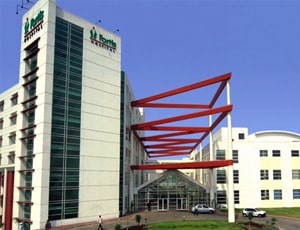
Fortis Hospital
Noida, India
Fortis Healthcare Limited is one of India’s prominent providers of integrated healthcare services, offering comprehensive medical care across multiple specialities. The company’s operations span hospitals, diagnostic centres, and day-care speciality facilities, ensuring a wide range of healthcare solutions under one umbrella. Fortis has established a strong presence across the country, managing 33 healthcare facilities, which include joint ventures and operational & management (O&M) setups, across 11 states.
The company’s hospital network comprises more than 5,700 operational beds, including O&M beds, catering to patients with varied healthcare needs. In addition to inpatient services, Fortis operates around 400 diagnostic laboratories, providing reliable and timely diagnostic support for accurate medical care. This extensive network enables Fortis to deliver high-quality healthcare services consistently and efficiently, from routine diagnostics to specialised treatments and complex procedures.

VPS Lakeshore Hospital
Kochi, India
VPS Lakeshore Hospital located in Kochi, India is accredited by NABH. Also listed below are some of the most prominent infrastructural details:
- Advanced hi-tech healthcare facility
- Innovative diagnostic & therapeutic medical technologies
- Diagnostic endoscopy of nose, esophagoscopy, Laryngoscopy, Bronchoscopy
- Cardiac department- Coronary Artery Bypass Grafting, Total Arterial Coronary Revascularization, Heart Valve Repairs and
- Replacements, Surgery for Heart Failure, Intracardiac Repair of Congenital Anomalies of the Heart, Surgery for Atrial Fibrillation
- Neurosurgery department: Keyhole Surgery for disc & other spine disorders, such as Spine Tumors, Navigation-guided, and Endoscopic Brain Tumor Surgery, Minimally invasive Brain Surgery, Advanced Head Injury Management with the ICP Monitoring
- State-of-the-art-hemodialysis Units
- Kidney Transplantation is done with Laparoscopic Donor Nephrectomy
- 24 hour rapid TAT team equipped with four specialists have increased survival and decreased patient morbidity
- Joint preservation techniques include autologous chondrocyte implantation
- Cutting edge operation theaters & world-class transplant ICUs
- Urology department: 3D Laparoscopy, Minimally Invasive Surgery, Ureteroscopy, RIRS, Endourology: PCNL
- Objective swallowing evaluation services such as functional endoscopic evaluation of Swallowing & Video Fluoroscopic Swallow
Our Services to better your experience
Opinion & Option
We submit the most accurate opinion and options from one or more countries for your review
Consult Privately
Consult with a certified specialist privately on our telemedicine platform even before you decide to travel
Logistics
We handle flights, visas, transfers, and accommodation—so you can focus on your health.
Recovery
Our In-house rehabilitation service packages to better your recovery and treatment outcome
Why Choose India for Choledocholithiasis Treatment?
- Experienced Gastroenterologists: Indian hospitals have gastroenterology specialists experienced in diagnosing and treating bile duct stones and related complications.
- Advanced Endoscopy: Specialized centres offer ERCP, EUS and other advanced endoscopic procedures for diagnosis and minimally invasive stone removal.
- Modern Lithotripsy Techniques: Selected centres provide cholangioscopy-guided laser or electrohydraulic lithotripsy for large or difficult bile duct stones.
- Multidisciplinary Care: Gastroenterologists, hepatobiliary surgeons, radiologists, and other specialists can manage complex cases.
- International Patient Support: Many Indian hospitals provide medical tourism services such as medical record review, specialist appointments, treatment coordination and assistance with travel-related arrangements.