Cervical Herniated Disc Treatment in India
- Top Accredited Hospitals
- Global Medical Standards
- Cutting-Edge Technology
- Proven Treatment Options
- High Success Rate
- Trusted by Millions

What is a Cervical Herniated Disc?
When the soft core material from a cervical spine disc breaks through a torn outer layer of the disc, the condition becomes a herniation. The development of a cervical herniated disc results from three main elements: changes due to age, physical demands, and hereditary factors.
What is the Importance of Timely Treatment?
Cervical Herniated Disc treatment must be provided promptly since these ruptures can cause lasting disabilities without proper medical intervention. Here's why it’s crucial:
- Treatment of a Cervical or Herniated Disc becomes vital since displaced spinal canal pieces increase the risk of disc herniation, which could result in paralysis. The early medical response helps stop and reduce potential tissue damage as a result of this kind of spinal injury.
- An Unmanaged Cervical Herniated Disc will result in prolonged pain alongside permanent disabilities together with diminished motor function, primarily when the condition impacts the spinal cord.
- Patient recovery times shorten, results improve because of prompt diagnosis followed by suitable treatment approaches such as surgical intervention and non-surgical measures.
What are the Common Symptoms of a Cervical Herniated Disc?
- Severe back pain
- Neurological symptoms
- Numbness or tingling
- Weakness in the limbs or paralysis
- Loss of bowel or bladder control
- Spinal deformity
Causes and Risk Factors of Cervical Herniated Disc
Causes
- Age-Related Degeneration (Degenerative Disc Disease)
- Trauma or Injury
- Repetitive Strain or Overuse
- Improper Lifting Techniques
- Disc Bulging or Prolapse
Risk Factors
- Age
- Genetics
- Occupation
- Poor Posture
- Obesity
- Smoking
- Sedentary Lifestyle
- Previous Back Problems
- Gender
Connect with our advisor for a PRIORITY response
Latest Research and Technologies in the Treatment of Cervical Herniated Discs in India
The medical treatment of Cervical Herniated Discs in India adapts the latest research and technologies to meet worldwide clinical standards and healthcare capabilities.
- Smaller incisions and MISS procedures permit herniated disc material removal, thus limiting muscular damage and enabling quick postoperative recovery.
- Physicians use endoscopic spine surgery to examine the spine using a small incision by inserting an endoscope - a thin tube with an internal camera. The surgeon utilises specialised tools under guidance from the endoscope to remove damaged disc material.
- Artificial Disc Replacement (ADR) includes physicians using synthetic components to replace damaged spinal discs instead of merging the vertebrae as traditional surgical methods perform. The surgical procedure keeps spinal movement regular despite the operation.
- Robotics plays a vital role in spine surgery through robotic-assisted surgery. These systems assist surgeons in conducting precise procedures. These surgical systems elevate precision levels, decreasing complications and risks and enabling patients to heal faster.
- Applying stem cells promises to rebuild degenerated discs and natural disc architecture while decreasing pain symptoms.
- Cervical Disc Nucleoplasty delivers minimally invasive care by using needles to extract specific components of the herniated disc to cut down nerve pressure.
Cervical Herniated Disc Prevention Tips
These strategies help prevent herniated disc development in the cervical spine:
- While moving, maintain ear alignment with shoulder position while standing, sitting, and walking.
- Breaks should be taken at least every thirty to sixty minutes when you sit for extensive time, including desk work or driving. The back and neck muscles remain less stiff because this method minimises neck strain.
- Proper posture can be achieved by strengthening the abdominal, core, and neck muscles and stabilising your spine while providing necessary support. The discs receive minimal strain because well-developed muscles operate effectively.
- Bending your knees while squatting down is the proper way to lift heavy items, instead of bending your waist forward. Carry the object near your body while keeping your spine away from twists.
- The right pillow supports the natural neck curve when you sleep by positioning your head correctly. The proper position for your pillow is to keep your head straight against your spine while preventing your neck from being in crooked positions in front or to the sides.
- Excessive body weight increases spinal disk strain because it increases pressure, leading to long-term degeneration. Managing your body weight protects the cervical spine from herniated disc development.
- Regular medical check-ups from a healthcare professional detect early spinal problems for individuals who suffer from neck or back difficulties or work in spine-straining environments.
Treatment options for Cervical Herniated Disc
The majority of cervical herniated discs can undergo successful treatment with non-surgical approaches that belong to the conservative therapy category. These procedures aim to decrease pain and reduce inflammation, accelerating recovery processes while bypassing the requirement of surgical intervention.
Microdisectomy {microdisectomy}: A microdiscectomy procedure requires doctors to remove the compressed section of the disc material that disturbs nerve structures. Medical instruments and a small opening perform the procedure, so it causes minimal harm to the tissue surrounding the herniated disc.
Anterior Cervical Discectomy and Fusion (ACDF): The surgical treatment that medical practitioners use most often for cervical herniated discs is Anterior Cervical Discectomy and Fusion (ACDF). Doctors remove the decaying disc and then do a bone graft or synthetic material fusion between the neighbouring vertebrae.
Cervical Laminoplasty: A cervical laminoplasty serves patients with spinal canal stenosis and herniated disks. Surgeons achieve spinal cord space expansion through bone plate reorientation, also known as lamina.
These are the standard diagnostic methods for diagnosing Cervical Herniated Discs:
- Clinical Evaluation:
- History and Symptoms: During the assessment, the physician must complete information about the injury and evaluate symptoms of neck pain, numbness, and weakness to determine spinal cord involvement.
- Physical Examination: During the examination, you must move your neck through multiple positions to determine whether the pain activates or reduces your range of motion.
- Imaging Studies:
- X-rays (Radiographs): These tests provide vital information about degeneration, alignment issues, or narrowing of the spaces between vertebrae.
- CT Scan (Computed Tomography): The technique displays original bone structures in a three-dimensional format to calculate the extent of disc herniation.
- MRI (Magnetic Resonance Imaging): This method shows providers detailed pictures of soft tissues to investigate the herniated discs.
- Myelogram: A contrast dye is deposited into the spinal canal during a lumbar puncture before performing X-ray or CT scanning for improved spinal cord imaging and nerve root visualisation.
- Electrodiagnostic Tests: The electrical signals within muscles are measured through EMG testing to detect nerve-related issues or compression. The test identifies if herniated disc-related nerve damage affects muscles, causing arm and hand weakness or functional disabilities.
MediRehab (a chain of Rehab centres, part of MediGence) provides comprehensive rehabilitation services designed to support patients in India. Additional services are as per the patient's requirement. These services include:
- Physical therapy aims to decrease pain and increase mobility while targeting neck flexibility through strengthening exercises that improve posture and manually treat the area.
- Using cold compresses and heat therapy brings two benefits to cervical extension injury patients: inflammation reduction through cold therapy and muscle relaxation and blood circulation improvement through heat therapy.
- Traction through cervical devices and spinal manipulations helps decrease disk pressure at the nerve sites while improving spinal ability.
- Deep tissue massage and acupuncture are beneficial since they lower muscle tension and help deliver pain reduction.
- Proper lifestyle adjustments, enhanced posture, and proper adjustments to the workspace will help protect the cervical spine from additional stress.
Pain relievers, muscle relaxants, and nerve pain medications are cervical herniated disc treatments since they minimise pain and inflammation, alleviate muscle spasms, and address nerve discomfort.
Instantly Connect with our Specialists


Hospitals for Cervical Herniated Disc in India

Apollo Hospitals Bannerghatta
Bangalore, India
Apollo Hospitals Bannerghatta located in Bengaluru, India is accredited by JCI, NABH. Also listed below are some of the most prominent infrastructural details:
- Bed Capacity is 250
- Largest and most sophisticated sleep laboratory in the world
- Technological powerhouse with latest equipments
- 120 slice CT angiogram
- 3 Tesla MRI
- Low energy & High energy Linear Accelerators
- Navigation System in surgical procedures
- 4-D Ultrasound for 4 dimensional sonography
- Digital Fluoroscopy
- Gamma Camera
- Stereotactic Robotic Radio- surgery
- Autologous Bone Marrow Transplantation
- Robotic assisted surgeries
- Thallium Laser-First in India
- Holmium Laser-First in South India
- Digital X-Ray-First in Karnataka
- 100 plus consultants
- Uses Y shaped stent for tracheoesophageal fistula
- Four autologous chondrocyte implantations procedure is performed and several more like Spinal angiolipoma excision, Tibial tuberosity shift with MPSL reconstruction
- Biggest series of airway stents in India
- The Minimal Access Surgery Centre (MASC) centre of excellence

Sarvodaya Hospital and Research Centre
Faridabad, India
Sarvodaya Hospital and Research Centre located in Faridabad, India is accredited by NABH, NABL. Also listed below are some of the most prominent infrastructural details:
- Sarvodaya Hospital has a 500 bed capacity which is inclusive of 65 ICU beds.
- A dedicated dialysis unit for people with kidney conditions.
- The hospital has a cancer center which makes cancer treatment a seamless process.
- There is an upcoming oncology center in Sarvodaya Hospital Faridabad.
- Technologies such as 128 Slice CT scan, 500 MA X-Ray, 1.5 Tesla MRI and Mammography facility.

Fortis Hospital
Bangalore, India
Fortis Hospital, Bannerghatta Road, Bangalore, has been a leading multi-speciality healthcare institution, offering advanced medical services with a patient-centric approach. The hospital features 400+ beds, state-of-the-art infrastructure, and experienced specialists across various specialities, providing comprehensive and compassionate care. Trusted by patients from India and abroad, Fortis Bannerghatta Road combines modern technology with high-quality treatment to deliver world-class healthcare.
Our Services to better your experience
Opinion & Option
We submit the most accurate opinion and options from one or more countries for your review
Consult Privately
Consult with a certified specialist privately on our telemedicine platform even before you decide to travel
Logistics
We handle flights, visas, transfers, and accommodation—so you can focus on your health.
Recovery
Our In-house rehabilitation service packages to better your recovery and treatment outcome
Why Choose India for Cervical Herniated Disc Treatment?
Several advantages exist for choosing India for Cervical Herniated Disc treatment.
- Effective Cost: The cost of medical treatment in India proves more economical than Western pricing yet remains equivalent to high-end treatment standards. The treatment path covers operative steps and follows all post-surgical phases.
- World-Class Infrastructure: The healthcare system in India operates multiple facilities accredited at the international level, which combine highly experienced orthopaedic surgeons who receive patients with complicated spine injuries, including Cervical Herniated Discs.
- Advanced Technology: The diagnosis and treatment in Indian medical centres benefit from state-of-the-art equipment and cutting-edge procedures, including minimally invasive surgical methods and robotic-assisted solutions.
- Skilled Specialists: Doctors specialising in orthopaedics and neurosurgery are in high numbers throughout India because Indian medical specialists possess international recognition for their outstanding spinal treatment capabilities.
- Language Support: Indian hospitals offer multilingual support to fulfil international patient needs by assisting in numerous country languages.
Frequently Asked Questions
Non-surgical interventions, which include physical therapy treatments along with medication use and rest, become successful approaches for cervical herniated discs in most situations. The length of recovery depends specifically on how severe the herniated tissue is.
People might require surgery after exhausting all non-operative treatment options when pain remains substantial and nerve-related deficiencies persist, such as muscle weakness or hand function impairment.
The recovery process depends on the level of herniation damage and the choice of treatment method. The majority of herniation patients heal through physical therapy sessions combined with lifestyle changes, although recovery times become longer among patients with severe manifestations.
The absence of proper treatment for a herniated disc can result in ongoing pain, together with damaged nerves and weak muscles. Spinal cord compression, in severe cases, produces severe complications that include problems with walking along with bladder control issues.
Surgical procedures for cervical herniated discs carry acceptable safety risks when performed at well-established medical facilities in India. The success rates of discectomy along with spinal fusion surgeries remain high, while minimally invasive approaches improve safety statistics and speed up patient recovery durations. Swelling can pose health risks, so an experienced spine surgeon is needed.
The surgical procedure for cervical herniated discs stands safe in India, specifically within hospitals that demonstrate well-established practices. Patients experience high success rates from discectomy and spinal fusion procedures while minimally invasive methods decrease both treatment dangers and recovery durations. You must select an experienced surgeon who performs spine surgery because it ensures safety during the procedure.
A cervical herniated disc leads to tension-type headaches or migraines when it affects the neck and upper back nerves so that pain spreads to the head area.
Most individuals can heal from cervical herniated disc conditions through nonsurgical treatment. Spinal symptoms and functional improvement usually succeed when patients undergo physical therapy, pain medication, and lifestyle changes.

Reviewer
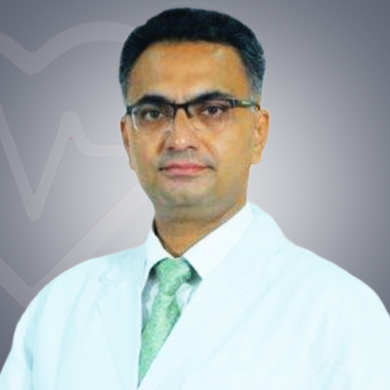
Dr. Puneet Mishra
Orthopaedic Surgeon
25 Years of Experience
Known among his patients for treating with compassion and personal care, Dr. Puneet Mishra is one of the best orthopedic surgeons in New Delhi. Dr. Puneet completed his MBBS from Maulana Azad Medical College in 1996 and from the same college he completed his MS (orthopedics) in 2000. With almost 25+ years of surgical experience under him, Dr. Pankaj takes pride in working with some of the finest medical institutions of the world such as University Hospital, Bern, Maulana Azad Medical College, New Delhi, Endoklinik, Germany, and Professor and Consultant orthopedician at Guru Teg Bahadur Hospital, New Delhi. View More
Last Reviewed - January 2026