Carotid Artery Stenosis Treatment in India
- Top Accredited Hospitals
- Global Medical Standards
- Cutting-Edge Technology
- Proven Treatment Options
- High Success Rate
- Trusted by Millions

What is a Carotid Artery Stenosis?
Carotid Artery Stenosis occurs when plaque accumulates inside the carotid arteries and narrows the passage through which blood flows to the brain. The plaque is commonly made up of cholesterol, fatty substances, calcium, and other materials. Mild narrowing may cause no symptoms, while more significant disease can increase the risk of TIA or ischemic stroke.
What is the Importance of Timely Treatment?
Timely diagnosis is important because carotid artery stenosis may remain unnoticed until a TIA or stroke occurs. Evaluation helps determine the degree of narrowing, whether symptoms are related to the affected artery, and the most appropriate treatment. Managing the condition can reduce the risk of future stroke and address cardiovascular risk factors.
What are the Common Symptoms of a Carotid Artery Stenosis?
- Sudden Weakness or Numbness: Weakness or numbness, particularly on one side of the face or body, may occur during a TIA or stroke.
- Speech Difficulties: Sudden difficulty speaking, finding words, or understanding speech may indicate impaired blood flow to areas of the brain responsible for language.
- Vision Changes: Temporary or persistent vision loss in one eye can occur when blood flow to the eye is affected.
- Dizziness or Loss of Balance: Sudden dizziness, difficulty walking, or loss of coordination may occur during a neurological event.
- Confusion: Sudden confusion or difficulty understanding surroundings can be a warning sign of a TIA or stroke.
- Severe or Sudden Neurological Symptoms: Sudden severe headache, weakness, vision problems, or difficulty speaking requires immediate medical assessment.
Causes and Risk Factors of Carotid Artery Stenosis
Causes
- Atherosclerosis: Plaque buildup inside the carotid artery is the most common cause.
- High Cholesterol: Excess cholesterol can contribute to plaque formation and progression.
- Arterial Inflammation: Certain inflammatory conditions can affect the blood-vessel wall.
- Carotid Artery Dissection: A tear in the artery wall can narrow the vessel and may occur for different reasons.
- Radiation or Previous Neck Treatment: Previous radiation therapy to the neck can contribute to vascular disease in some individuals.
- Rare Vascular Disorders: Fibromuscular dysplasia and other less common vascular conditions may affect carotid arteries.
Risk Factors
- Older Age: The risk of atherosclerotic carotid disease generally increases with age.
- High Blood Pressure: Persistent hypertension can damage arterial walls and promote atherosclerosis.
- High Cholesterol: Elevated LDL cholesterol contributes to plaque formation.
- Smoking: Tobacco exposure significantly increases vascular disease and stroke risk.
- Diabetes: Diabetes can accelerate atherosclerosis and increase cardiovascular risk.
- Obesity and Physical Inactivity: These factors can contribute to high blood pressure, abnormal cholesterol, and other vascular risks.
- Previous TIA or Stroke: A previous neurological event may indicate an increased risk of future events.
Latest Research and Technologies in the Treatment of Carotid Artery Stenosis in India
- Advances in carotid artery disease management increasingly focus on accurate assessment of plaque, stroke risk, and individual patient characteristics rather than treating narrowing based on percentage alone. High-resolution vascular imaging, improved ultrasound techniques, CT angiography, and MR angiography can help clinicians evaluate the degree of stenosis and plaque characteristics. Modern treatment also includes improved medical therapy for atherosclerotic disease, including intensive cholesterol management, blood-pressure control, diabetes management, smoking cessation, and antiplatelet therapy when appropriate.
Treatment options for Carotid Artery Stenosis
Antiplatelet Therapy: Medications like aspirin or clopidogrel are essential to prevent platelets from aggregating on the plaque and causing an ischemic stroke.
Statin Therapy: High-intensity statins are a cornerstone of treatment, used not only to lower LDL cholesterol but also to stabilise the plaque and prevent rupture.
Balloon Angioplasty : Carotid artery stenosis can be treated with balloon angioplasty, a minimally invasive procedure that opens narrowed neck arteries and restores blood flow to the brain.
Cost Start From 3500Explore Options
Carotid Endarterectomy (CEA) : This is the gold-standard open surgical procedure to physically remove the plaque.
Cost Start From 6500Explore Options
Carotid Artery Stenting (CAS): A traditional transfemoral catheter-based procedure used for patients who are high-risk for open surgery.
Transcarotid Artery Revascularisation (TCAR): A newer, advanced hybrid procedure that accesses the carotid artery directly through a small incision in the neck and uses temporary flow reversal to protect the brain from microemboli during stenting.
- Clinical assessment:
- Medical History: Assessment of previous TIA or stroke, vascular disease, cardiovascular risk factors, medications, and neurological symptoms.
- Neurological Examination: Evaluation of speech, strength, sensation, coordination, vision, and other neurological functions.
- Blood Pressure Measurement: Helps identify hypertension, an important cardiovascular risk factor.
- Blood Tests: Cholesterol, blood glucose or HbA1c, and other tests may help assess cardiovascular risk and treatment needs.
- Cardiovascular Assessment: Consider evaluation for associated coronary, peripheral, or other vascular disease.
- Imaging Tests:
- Carotid Doppler Ultrasound: A non-invasive first-line test that evaluates blood flow and estimates the degree of carotid narrowing.
- CT Angiography (CTA): Provides detailed images of the carotid arteries and can help define the location and severity of stenosis.
- Magnetic Resonance Angiography (MRA): Uses MRI-based techniques to assess blood vessels and may be used when additional vascular information is required.
- Cerebral Imaging: CT or MRI of the brain may be performed when a TIA or stroke is suspected or has occurred.
- Digital Subtraction Angiography (DSA): An invasive angiographic test that may be used when detailed vascular assessment is required, particularly for procedural planning in selected cases.
MediRehab (a chain of Rehab centres, part of MediGence) provides comprehensive rehabilitation services designed to support Carotid Artery Stenosis patients in India. These services include:
- Physical Activity: Gradual, medically supervised physical activity can help improve cardiovascular fitness and support vascular health.
- Physiotherapy: Patients recovering from a stroke may require physiotherapy to improve strength, balance, coordination, walking, and mobility.
- Occupational Therapy: Helps patients regain independence in daily activities and adapt to physical or neurological limitations after a stroke.
- Speech and Language Therapy: May be required for patients experiencing speech, communication, or swallowing difficulties following a stroke.
- Medical treatment aims to reduce the risk of stroke and slow progression of atherosclerotic disease. Depending on the patient's condition, treatment may include antiplatelet medicines, statins or other lipid-lowering therapy, blood-pressure medicines, and diabetes management. The treating physician determines the exact combination based on symptoms, degree of stenosis, cardiovascular risk, and other medical conditions.
Instantly Connect with our Specialists


Hospitals for Carotid Artery Stenosis in India
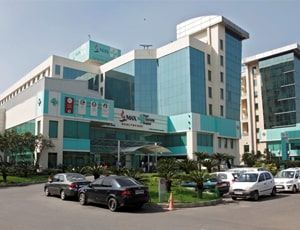
Max Super Speciality Hospital, Saket
Delhi, India
Max Smart Super Speciality Hospital, Saket, is a 250-bed tertiary care hospital awarded NABH accreditation, which provides advanced medical care in various specialities such as Cardiac Sciences, Orthopaedics, Neurology, Urology, Kidney Transplant, Paediatrics, and Obstetrics & Gynaecology. The hospital provides quality, safe, integrated, and patient-centric medical care using modular OTs, ICUs, Cath Labs, CT, MRI and Dialysis units.

Bai Jerbai Wadia Hospital for Children
Mumbai, India
Bai Jerbai Wadia Hospital for Children located in Mumbai, India is accredited by AAAHC. Also listed below are some of the most prominent infrastructural details:
- There are two parts of the hospital, one is focused on women's care and the other is focused on child care.
- Bai Jerbai Wadia hospital for Children
- 300 bed capacity
- 60 Pediatricians
- 10,000 in-patients (annual)
- 100,000 outpatients (annual)
- Biggest Neonatal ICU (West zone)
- Nowrosjee Wadia Maternity Hospital
- Obstetrics and Gynecological disciplines (several)
- 20 specialists
- 305 bed capacity
- It is also a referral centre for women who are rehabilitating as well as their families.

VPS Rockland Hospital
Gurgaon, India
VPS Rockland Hospital located in Gurugram, India is accredited by NABH, NABL. Also listed below are some of the most prominent infrastructural details:
- Well-designed compact 103-bed hospital expanding over120,000 square feet
- Well equipped modular operation theatres, intensive care unit, interventional Cath lab, and in-patient rooms ranging from economy to luxury
- Offers a bouquet of services like Internal Medicine, Obstetrics & Gynaecology, Surgery, Pediatrics
- High-end diagnostic services like 1.5 T MRI and 128 slice CT Scan
- Advanced non-invasive assessment with echo & TMT machines
- State of the art cardiac Cath-Lab
- Appointment Scheduling
- Treatment packages
- Accommodation arrangement for the accompanying attendant
- Customized diet for patient and attendant
- Laundry services
- Prayer room
- Visa assistance
- Pick and drop facility from/to the Airport
- Foreign exchange facility
- Registration with the Foreigners Regional Registration Office
- Dedicated Neuro-Intensive care unit managed by expert intensivists
- Accommodation arrangements post discharge
- Highly advanced instruments for deep brain stimulation, stereotaxy, micro-neurosurgery, pediatric neurosurgery & neurophysiology
- Most advanced dialysis machines and advanced diagnostic and therapeutic facilities
- Renal replacement therapy for hemo-dynamically unstable patient
- Technologically advanced endoscopy suite
- Wi-Fi/internet service in the room
- Travel arrangement for patient & attendant post discharge
- Tele-consults post discharge
- Dialysis beds
- 24x7 ‘Trauma & Emergency Center
- Dedicated blood bank
- 24x7 comprehensive patient care.
- Deployed high-end technologies & smart digital system
- Robust Hospital Information Systems to meet complex medical needs of patients
- Robotic-assisted surgeries
- International Patients Lounge
Our Services to better your experience
Opinion & Option
We submit the most accurate opinion and options from one or more countries for your review
Consult Privately
Consult with a certified specialist privately on our telemedicine platform even before you decide to travel
Logistics
We handle flights, visas, transfers, and accommodation—so you can focus on your health.
Recovery
Our In-house rehabilitation service packages to better your recovery and treatment outcome
Why Choose India for Carotid Artery Stenosis Treatment?
- Experienced Vascular and Neurology Specialists: Patients can access vascular surgeons, neurologists, interventional specialists, and cardiologists experienced in managing carotid and cerebrovascular disease.
- Advanced Vascular Imaging: Major centres may offer carotid Doppler, CT angiography, MR angiography, and advanced neurological imaging for detailed assessment.
- Modern Treatment Options: Eligible patients may have access to carotid endarterectomy, carotid artery stenting, and selected minimally invasive revascularisation techniques.
- Multidisciplinary Stroke Care: Vascular surgery, neurology, interventional radiology, neuroradiology, emergency medicine, and rehabilitation teams can collaborate for complex cases.
- Personalised Treatment Planning: Treatment can be selected according to symptoms, degree of stenosis, plaque characteristics, age, overall health, and procedural risk.
- Comprehensive Risk-Factor Management: Hospitals can provide coordinated management of cholesterol, hypertension, diabetes, smoking, and other cardiovascular risk factors.
- International Patient Support: Many major Indian hospitals provide international patient services, including appointment coordination, treatment planning, accommodation assistance, and follow-up arrangements.