Carcinoid Tumor Treatment in Thailand
- Top Accredited Hospitals
- Global Medical Standards
- Cutting-Edge Technology
- Proven Treatment Options
- High Success Rate
- Trusted by Millions

What is a Carcinoid Tumor?
Carcinoid tumour comes into the category of cancer types that grow slowly and develop in the body's neuroendocrine cells in several organs, including the lungs, gastrointestinal tract, and rectum. These tumours are broader neuroendocrine tumours (NET).
What is the Importance of Timely Treatment?
Early diagnosis and treatment
significantly improve the chances for positive treatment outcomes. GISTs are much more treatable when localised, meaning they have not spread outside to other organs. If the tumours are treated early, the chance for survival is increased and a lesser chance of recurrence.
To Prevent Tumor Growth and Spread
An early intervention aims to prevent the tumour from getting too big or spreading (metastasising) in the body. For GISTs, early initiation of targeted therapeutic agents (e.g., Imatinib) greatly restricts the growth of the tumour and decreases the risk of metastasis.
GISTs, if left untreated
It can cause pathological conditions which may compromise life, such as bleeding, obstruction, or organ damage. Treatment early on, therefore, prevents these life-threatening complications and enhances the quality of life for the patient.
Less Aggressive Treatment
Early-stage GISTs are often managed by methods that are less strenuous on the body, such as surgery, with fewer side effects and complications or targeted therapies. GISTs diagnosed at a later stage will require more intensive therapy, such as chemotherapy, radiotherapy, or experimental treatments.
Better Quality of Life
Timely treatment also helps manage symptoms, be it pain, bleeding from the gastrointestinal tract, or obstruction.
What are the Common Symptoms of Carcinoid Tumor?
- Flushing
- Diarrhea
- Wheezing and Shortness of Breath
- Abdominal Pain or Discomfort
- Carcinoid Syndrome
- Heart Issues (Carcinoid Heart Disease)
- Fatigue
Types of Carcinoid Tumors:
Gastrointestinal Carcinoid
It can be located in the small intestine, appendix, and rectum.
Pulmonary Carcinoids
These tumours grow in the lungs, especially bronchi. It has two subtypes: typical (slow-growing) and atypical (more aggressive).
Liver Carcinoid Tumors
Carcinoid tumours rarely arise in the liver but metastasise into this organ.
Pancreatic Carcinoid Tumors
These tumours in the pancreas usually manifest with some degree of disequilibrium in their hormonal status.
Ovarian Carcinoid Tumors
Such rare tumours exist in the ovaries; in most cases, they would be identified inside a struma ovari.
Thymic Carcinoid Tumors
Sporadic tumours occur in the thymus, sometimes accompanied by chest pain and shortness of breath.
Urinary Tract Carcinoid Tumors
Carcinoid bladder or kidney tumours are rare.
Skin Carcinoids
These rare carcinoid tumours developing in the skin as small, firm nodules usually accompany carcinoid syndrome symptoms.
Causes and Risk Factors of Carcinoid Tumor
Causes
- Genetic Mutations
- Hormonal Imbalance
Risk Factors
- Age
- Gender
- Inherited Syndromes
- Chronic Inflammation
- Family History
- Exposure to Certain Chemicals
Connect with our advisor for a PRIORITY response
Latest Research and Technologies in the Treatment of Carcinoid Tumor in Thailand
Therapy of peptide receptor radionuclide (PRRT) is present to offer high-precision treatment with less damage to surrounding healthy tissues. Minimally invasive and robotic-assisted surgeries would be done for localised tumours to aid in speedy recovery with less complication. Studies have been conducted in Thailand to explore using biological agents and prospective immune therapy to augment the immune response against carcinoid tumours. Personalised treatment plans designed by a multidisciplinary team of experts are created individually for each patient, comprising surgery, directed therapies, and medications.
Carcinoid Tumor Prevention Tip:
Regular screening
People with a family history of neuroendocrine tumours or genetic conditions should be screened regularly and have medical check-ups, which can lead to the early detection of tumours and improved treatment outcomes.
Healthy lifestyle
Eating well, working out, and avoiding tobacco and excessive alcohol are healthy choices that may help reduce the risk, including carcinoids.
Manage chronic conditions
Try to manage inflammation with the help of your doctor, under the premise that these could reduce carcinoid tumours of the gastrointestinal tract.
Genetic counselling
If there is a family history of carcinoid or neuroendocrine tumours, genetic counselling and testing can help identify people at risk. With early detection through regular screenings, better outcomes may arise.
Prolonged consultation
Do not wait to consult your doctor if you experience several symptoms, such as abdominal pain of unclear origin, flushing, diarrhoea, or wheezing. If a tumour exists, an early diagnosis can equate to far greater chances of successful treatment.
Treatment options for Carcinoid Tumor
The medical treatment for Carcinoid Tumors requires evaluating the patient's severity and medical condition. The following are the treatment options:
Surgery: It is the primary treatment option for localised carcinoid tumours, and the tumour must be surgically excised. If the tumour reaches the liver, liver resection may be performed to eliminate affected parts.
Analogue Treatment: Treatments that control symptoms of carcinoid syndrome (flushing, diarrhoea) by inhibiting hormone production by the tumour and thus improving the quality of life.
Targeted therapy: These medications slow tumour growth in patients suffering from advanced carcinoids. These therapies block specific signals that stimulate tumour growth and can be applied to metastasis cases.
Cost Start From USD 3500Explore Options
Chemotherapy and Radiotherapy: Advanced or metastatic carcinoid tumours are treated by chemotherapy; however, this treatment is less effective. PRRT and external radiation are sources of radiation that target tumours, most especially those in the liver.
Cost Start From USD 1000 - USD 6800Explore Options
Liver-directed therapies include radiofrequency ablation and SIRT, which address hepatic metastasis. Palliative care, such as effective pain relief and symptom control for carcinoid syndrome, is also essential for the quality of life.
These are the standard diagnostic methods for diagnosing Carcinoid Tumor:
Imaging Studies
- CT Scan: Computed tomography scans help locate the tumour by providing information about its size and checking for metastases, particularly in the abdomen, liver, and lungs.
- MRI: MRI is a good tool for detecting soft tissue and tumours, especially those involving the liver and neighbouring organs.
- Receptor Scintigraphy: This scans the patient utilising a radioactive tracer that can bind to receptors on carcinoid tumours and be seen on imaging. It is particularly valuable for tumours elsewhere, which are hard to detect by other imaging techniques.
- PET scan: PET scan is extremely sensitive to detecting carcinoid tumours. It helps detect tiny tumours and metastatic disease by identifying somatostatin receptors on the tumour cells.
Blood tests
- Serotonin and Urinary 5-HIAA Test: Carcinoid tumours release serotonin, which is often elevated in blood and urine. The measurement helps diagnose carcinoid tumours and monitor their activity.
- Chromogranin A: This blood test measures the chromogranin A protein, which is usually elevated in neuroendocrine tumours, including carcinoid tumours.
Biopsy
- Tissue biopsy: In a biopsy, a small portion of tumour tissue is excised for laboratory studies. This signifies the confirmation of diagnosis for a carcinoid tumour, grading, and staging.
- Endoscopy with biopsy involves an endoscopic examination of the gastrointestinal tract to detect tumours from which biopsy specimens can be obtained.
MediRehab (a chain of Rehab centres, part of MediGence) provides comprehensive rehabilitation services to support patients through Teleconsulations and online therapy sessions.
A Physical Rehabilitation Program
The physical rehabilitation of the patients after surgery supports strength and mobility development. The regimen involves aerobic exercise and flexibility programs, especially where poor stamina has developed following treatment.
Lifestyle modifications
The dietary alterations that are sometimes necessary to correct specific problems caused by the tumour or its treatment concerning digestion are supported by a dietitian to negate adverse reactions and offer nutrition to the patient symptomatically suffering from diarrhoea and malabsorption.
Psychosocial Support
Another possibility refers to counselling and offers intensive psychosocial support to patients and their families dealing with the emotional trials associated with being diagnosed with carcinoid tumours.
Symptom Management
The rehabilitation team will also look into managing carcinoid syndrome symptoms, including diarrhoea and abdominal aches, through pharmacologic and alternative modalities like yoga or relaxation techniques.
Long-Term Monitoring and Lifestyle Modifications
Periodic checkups and blood testing are paramount in searching for tumour recurrence. This nature's lifestyle modification promotes health and well-being and emphasises exercise and stress management.
Instantly Connect with our Specialists


Hospitals for Carcinoid Tumor in Thailand

Piyavate Hospital
Bangkok, Thailand
Piyavate Hospital located in Bangkok, Thailand is accredited by JCI. Also listed below are some of the most prominent infrastructural details:
Medicine Centre: Piyavate Hospital provides advanced holistic treatment for their patients. They offer a complete range of services and physicians that specialize in various fields like the endocrine system, the nervous system, kidney function, cardiovascular care, respiratory and digestive system. They pride themselves for the familial care that they provide to their patients.
Fertility and In-Vitro Fertilization Centre: Helping the couples who walk into the Piyavate Hospital to achieve their dream of having a family. They have a medical team that specializes in male and female fertility. They offer consultation services, fertility check-up for both men and women and complete IVF services. They have advanced IVF cycle treatment facilities that offer a high rate of success.
Bone and Joint Institute: Piyavate Hospital houses one of the frontrunners in Orthopaedic health care in all of SouthEast Asia. They offer a wide range of services and surgeries in their bone and joint institute that include hand surgery, hip and knee replacement surgery, spinal cord surgery, upper extremity surgery, arthroscopic surgery and sports medicine.
Eye and Lasik Centre: Piyavate Hospital is fully equipped with the latest and most advanced technology for eye care and houses highly skilled ophthalmologists, sub-specialists and qualified nurses.
Physical Therapy and Rehabilitation Centre: One of the first hospitals to be equipped with the Hybrid Assistive Limb technology that will help a neurologically challenged patient to control the rehabilitation robot limb with a signal from their brain. The Physical Therapy and Rehabilitation Centre at Piyavate Hospital uses this system encourage patients to regain muscle memory to walk and function normally.
Amenities for Patient’s Family:
Piyavate Hospital also offers additional apartment facilities to house the kin of the patients who come to visit them from distant places. A restaurant, a flower shop and a café are a few of the other amenities provided by the hospital.
These are the most popular services offered by the Piyavate Hospital in Bangkok, Thailand. They also provide a plethora of other medical services that are listed below:
Diabetic Foot Centre
Check-up centre
Urology Centre
Heart Institute
Paediatric Centre
Obstetrics and Gynaecology Centre
Surgery Centre
Ear Nose Throat Centre
Haemodialysis Centre
Dental Centre
X-Ray Centre
Gastroenterology Centre
Cancer Centre
Neonatal Intensive Care Unit (NICU)
Emergency Services and Centre
Tele-medicine

Phyathai 2 International Hospital
Bangkok, Thailand
Phyathai 2 International Hospital located in Bangkok, Thailand is accredited by JCI. Also listed below are some of the most prominent infrastructural details:
- Fully equipped rooms are available for convenience of the patients- Gold B Room, Gold A Room, Pediatric Gold A, Platinum room, and Prestige ward
- Nearby accommodations are also available- Abloom Service Apartments, Bangkok Patio, VIB Best Western Sanam Pao, VIC3 Hotel
- Operating room
- International Patient Medical Center to assist overseas patients
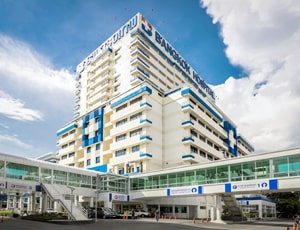
Bangkok Hospital
Bangkok, Thailand
Bangkok Hospital located in Bangkok, Thailand is accredited by JCI. Also listed below are some of the most prominent infrastructural details:
- It is recognised for the application of the newest healthcare technology.
- Blood analysis center that is not just the best in Thailand but in Asia Pacific as well.
- Biomolecule center that is the seed of healthcare equipment for Thailand and overseas.
- International affiliations and collaborations with universities and hospitals in Japan and the United States of America.
- 11 hospitals are recognised as Centers of Excellence.
- Known excellence in Trauma, Orthopedics, Cardiovascular, Neurology as well as Cancer Care.
- There is a proper streamlined patient services process followed in Bangkok Dusit Medical Services, Bangkok, Thailand.
- A well developed research center showcases the intent of the organisation to provide research based treatment opportunities to the patients.
- The group has several Medical industry partnerships as well to ensure healthcare solutions.
Our Services to better your experience
Opinion & Option
We submit the most accurate opinion and options from one or more countries for your review
Consult Privately
Consult with a certified specialist privately on our telemedicine platform even before you decide to travel
Logistics
We handle flights, visas, transfers, and accommodation—so you can focus on your health.
Recovery
Our In-house rehabilitation service packages to better your recovery and treatment outcome
Why Choose Thailand for Carcinoid Tumor Treatment?
The following are the much-growing reasons for Thailand being frequented for Carcinoid Tumor treatment:
World-Class Health Services at Affordable Costs
The nation is proficient in advanced medical technologies and treatments, including high-quality care at often dissimilar cost ratios of Western countries.
Qualified Professionals
Patients will find internationally trained, renowned hepatologists, surgeons, and specialists. Medical and individualised treatment options will complement the value of the care provided by the best experts in Thailand.
Complete Medical Services
From advanced diagnostic tools such as elastography and imaging to liver transplants, Thailand has gone the extra mile to provide patients with cutting-edge facilities for total Carcinoid Tumor treatment.
Easy Medical Tourism
Thailand is becoming a central international hub for medical tourism. Many accredited hospitals provide excellent service to international patients, including easy accessibility, visa assistance, and organised packages.
Holistic Treatment
Most hospitals in Thailand work towards a mainstream plus traditional treatment regime, including even Ayurvedic treatments, for complete liver health recovery and wellness, thus attending to emotional and physical wellness.
Frequently Asked Questions
Carcinoid tumours are classified as a form of cancer, although they develop slowly at times and stay asymptomatic for years. Some may extend to other body parts (like the liver and the lungs), although, in general, they have better survival chances than other cancer types that are more serious.
Carcinoid tumours can recur after their operation or treatment, especially when it has undergone metastasis. Thus, follow-up visits and imaging scans must regularly be given to observe and check for recurrence.
Carcinoid syndrome does present symptoms such as flushing, diarrhoea, wheezing, and symptoms involving the heart due to the production of hormones, mainly serotonin, by carcinoid tumours. The syndrome is more prevalent in metastatic carcinoid tumours and those with liver metastasis.
Prognosis varies by location, stage, and whether it has spread to other organs in carcinoid tumour patients. Localised, early-stage tumours usually have good prognoses, but ongoing treatment and management may be necessary with metastatic or advanced ones.
Dietary therapy does not cause carcinoid tumours; however, some patients might need nutritional changes to avoid the effects of carcinoid syndrome on experiencing symptoms like diarrhoea or weight loss. However, the proper diet should be well balanced and adjusted to individual needs to maintain health overall.
Several clinical studies are ongoing, concentrating on advancing carcinoid tumour treatments, including newer drugs, therapies, and symptom management approaches. Such trials are available for participation by patients who meet the requirements.
Medical teams in Thailand design individualised and integrated tailored treatment plans, such as surgery and targeted therapy, through advanced supportive care for optimal clinical success.
Specialising in treating neuroendocrine and carcinoid tumours, Thailand has highly trained oncologists, surgical teams, and nuclear medicine specialists following international protocols.
Almost all Thai hospitals have special international patient departments that permit the arrangement of visas, translations, and other personalised arrangements, all integrated into one package.

Reviewer

Dr. Mohit Agarwal
Medical Oncologist
14 Years of Experience
One of the finest Oncologist in New Delhi, India, Dr. Mohit Agarwal has worked with several world class multidisciplinary hospitals over the years. Dr. Mohit Agarwal has over 14+ years of experience in his field. The doctor treats and manages a wide range of conditions such as Stomach Cancer, Rectal Cancer, Breast Cancer, Brain Cancer View More
Last Reviewed - January 2026