Biliary Dyskinesia Treatment in India
- Top Accredited Hospitals
- Global Medical Standards
- Cutting-Edge Technology
- Proven Treatment Options
- High Success Rate
- Trusted by Millions

What is Biliary Dyskinesia?
Biliary dyskinesia is a functional disorder in which the gallbladder does not empty normally, usually causing biliary-type abdominal pain without gallstones or another obvious structural abnormality. It is commonly evaluated when a person has recurrent right upper abdominal or upper abdominal pain and routine imaging does not show gallstones or another clear cause.
What is the Importance of Timely Treatment?
Timely evaluation is important because biliary-type pain can have several causes, including gallstones, peptic or gastrointestinal disorders, pancreatitis, liver disease, and other biliary conditions. Appropriate assessment helps rule out these conditions before diagnosing biliary dyskinesia. For selected patients with typical biliary pain, no structural abnormality, and objectively abnormal gallbladder emptying, laparoscopic cholecystectomy may be considered.
What are the Common Symptoms of Biliary Dyskinesia?
- Pain that may radiate to the back or right shoulder
- Nausea
- Vomiting
- Abdominal fullness or discomfort
- Bloating or indigestion
- Reduced appetite during painful episodes
- Recurrent episodes of upper abdominal discomfort despite normal routine gallbladder imaging
Causes and Risk Factors of Biliary Dyskinesia
Causes
- Abnormal contraction or emptying of the gallbladder
- Impaired response of the gallbladder to hormonal stimulation
- Functional abnormalities of gallbladder motility
- Altered coordination between the gallbladder and biliary tract
- Functional biliary disorders without an identifiable structural abnormality
Risk Factors
- Recurrent biliary-type abdominal pain
- Previous episodes of unexplained upper abdominal pain
- Abnormal gallbladder emptying on functional testing
- Functional gastrointestinal disorders
- Gallbladder or biliary motility abnormalities
- Biliary sludge or microlithiasis that may not be detected on routine ultrasound
Latest Research and Technologies in the Treatment of Biliary Dyskinesia in India
- Current evaluation of biliary dyskinesia focuses on accurately identifying typical biliary pain while excluding gallstones and other structural or gastrointestinal causes. Abdominal ultrasound remains an important first-line investigation for structural gallbladder disease, while HIDA scanning with CCK stimulation can assess gallbladder emptying and calculate the ejection fraction.
Treatment options for Biliary Dyskinesia
Laparoscopic Cholecystectomy Surgical removal of the gallbladder may be considered for selected patients with typical biliary pain, no gallstones or other structural explanation, and abnormal gallbladder emptying on appropriately performed functional testing.
Cost Start From 2750Explore Options
- Clinical assessment:
- Medical and Symptom History: Evaluation includes the location, duration, frequency, severity, and characteristics of abdominal pain; its relationship to meals; radiation to the back or shoulder; nausea; vomiting; previous gallbladder symptoms; dietary triggers; medications; and associated gastrointestinal symptoms.
- Physical Examination: The clinician assesses the abdomen for right upper-quadrant tenderness, epigastric tenderness, guarding, abdominal distension, palpable masses, and other findings that may suggest gallbladder, gastrointestinal, pancreatic, or hepatic disease.
- Laboratory Assessment: Blood tests may include liver enzymes, bilirubin, complete blood count, kidney function, electrolytes, and pancreatic enzymes when clinically indicated.
- Assessment for Structural Disease: Before diagnosing biliary dyskinesia, clinicians generally assess for gallstones, biliary obstruction, gallbladder inflammation, peptic disease, pancreatic disorders, and other structural or functional conditions that could explain the symptoms.
- Functional Gallbladder Assessment: A HIDA scan with an appropriate stimulant such as CCK may be used to assess gallbladder contraction and calculate the gallbladder ejection fraction.
- Imaging Tests:
- Abdominal Ultrasound: Usually the initial imaging test for suspected gallbladder disease. It can detect gallstones, gallbladder-wall abnormalities, biliary dilation, sludge, and other structural abnormalities.
- HIDA Scan with CCK: Hepatobiliary scintigraphy can assess gallbladder filling and emptying and calculate the gallbladder ejection fraction. Reduced emptying may support gallbladder dyskinesia when the clinical picture is appropriate.
- Endoscopic Ultrasound: Consider when microlithiasis or biliary sludge is suspected despite a normal transabdominal ultrasound.
- MRCP: Magnetic resonance cholangiopancreatography may be used when additional evaluation of the bile ducts or other biliary abnormalities is required.
- CT Scan: Consider when alternative abdominal or pancreatic pathology needs evaluation or when ultrasound findings are inconclusive.
MediRehab (a chain of Rehab centres, part of MediGence) provides comprehensive rehabilitation services designed to support patients with Biliary Dyskinesia in India. These Services include:
- Gradual Return to Activity: Patients with biliary dyskinesia who are not undergoing surgery can generally remain physically active, depending on their symptoms and overall health.
- Early Mobilisation After Surgery: Patients undergoing laparoscopic cholecystectomy are generally encouraged to walk and begin gentle movement as tolerated after surgery.
- Gradual Activity Progression: Patients can usually resume normal daily activities progressively after surgery, while strenuous lifting should follow the surgeon's recommendations.
- Treatment may include appropriate pain-relieving medicines and dietary modification while the diagnosis is being established or when conservative management is selected. Medicines may also treat other gastrointestinal or biliary conditions that can produce similar symptoms. If persistent typical biliary pain is accompanied by objectively abnormal gallbladder emptying and other causes have been excluded, a specialist may consider laparoscopic cholecystectomy rather than long-term medication alone.
Instantly Connect with our Specialists


Hospitals for Biliary Dyskinesia in India

Indraprastha Apollo Hospital
Delhi, India
Indraprastha Apollo Hospital is known for delivering treatment to over 200,000 patients every year; 10,000 of which are generally medical tourists. The efficient team of doctors has the record of 99.6 percent success rate. Indraprastha Apollo Hospital deals in treatment of over 50 specialities.
Let’s see some of the features of the infrastructure:
- Spread over 15 acres, the hospital has 710 beds.
- 6 beds dedicated to bone marrow transplant units with very strict infection control practices.
- 64-Slice Scan coupled with data acquisition which provides highest temporal resolution
- One of the hospitals to be using Da Vinci Robotics Surgery System
- In South Asia, the Spect-CT and Pet-CT got their first installation at Indraprastha Apollo Hospital in India
- Technologies such as PET- MR, BrainLab Navigation System, PET-CT, Portable CT Scanner, Tilting MRI, NovalisTx, Cobalt based HDR Brachytherapy, Hyperbaric Chamber, DSA Lab, Fibroscan, 3 Tesla MRI, Endosonography, 128 Slice CT scanner are all installed at the hospital.
- The Cancer Institute at Indraprastha Apollo is equipped with a highly advanced Radiation Oncology Center with ClinaciX, NovalisTx, and HDR-Brachytherapy.
- It is equipped with the largest Sleep Lab in Asia, & has one of the largest Dialysis Units in India.
- A large number of ICU beds than any other Private Hospitals in India.
- WIFI is accessible across the whole campus.

nM Virani Wockhardt
Rajkot, India
A leading multispecialty hospital in Rajkot, Wockhardt Hospital is committed to providing top-notch medical care and modern treatments. With a 95% satisfaction rating, Wockhardt has successfully treated 200,000 emergency cases and more than 1.4 million OPD patients. The hospital's dedication to providing high-quality care and safety is demonstrated by its NABH and NABL accreditation. Wockhardt guarantees easily accessible, high-quality healthcare by providing a surgery 0% interest-free EMI option and a fully furnished 'ICU on Wheels' that is open 24/7. Wockhardt Hospital is a reliable option for patients looking for advanced medical care in Rajkot and beyond because of its staff of skilled specialists and outstanding reputation for excellence.
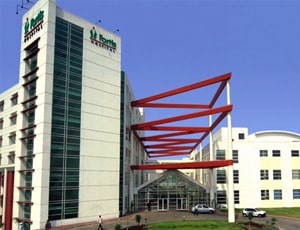
Fortis Hospital
Noida, India
Fortis Healthcare Limited is one of India’s prominent providers of integrated healthcare services, offering comprehensive medical care across multiple specialities. The company’s operations span hospitals, diagnostic centres, and day-care speciality facilities, ensuring a wide range of healthcare solutions under one umbrella. Fortis has established a strong presence across the country, managing 33 healthcare facilities, which include joint ventures and operational & management (O&M) setups, across 11 states.
The company’s hospital network comprises more than 5,700 operational beds, including O&M beds, catering to patients with varied healthcare needs. In addition to inpatient services, Fortis operates around 400 diagnostic laboratories, providing reliable and timely diagnostic support for accurate medical care. This extensive network enables Fortis to deliver high-quality healthcare services consistently and efficiently, from routine diagnostics to specialised treatments and complex procedures.
Our Services to better your experience
Opinion & Option
We submit the most accurate opinion and options from one or more countries for your review
Consult Privately
Consult with a certified specialist privately on our telemedicine platform even before you decide to travel
Logistics
We handle flights, visas, transfers, and accommodation—so you can focus on your health.
Recovery
Our In-house rehabilitation service packages to better your recovery and treatment outcome
Why Choose India for Biliary Dyskinesia Treatment?
- Experienced Gastroenterology Specialists: Indian hospitals have gastroenterologists and gastrointestinal surgeons experienced in evaluating functional and structural gallbladder disorders.
- Advanced Diagnostic Facilities: Many centres provide abdominal ultrasound, HIDA scanning, CT, MRI/MRCP, endoscopic ultrasound, and laboratory testing when clinically required.
- Laparoscopic Treatment Options: Selected patients who meet appropriate clinical criteria may have access to minimally invasive laparoscopic cholecystectomy.
- Multidisciplinary Evaluation: Gastroenterologists, radiologists, gastrointestinal surgeons, hepatobiliary specialists, and other clinicians may assess complex or persistent abdominal pain as needed.
- International Patient Support: Major Indian hospitals may provide medical-record review, specialist coordination, treatment scheduling, travel assistance, accommodation support, and postoperative follow-up for international patients.