Basal Cell Carcinoma (BCC) Treatment in Turkey
- Top Accredited Hospitals
- Global Medical Standards
- Cutting-Edge Technology
- Proven Treatment Options
- High Success Rate
- Trusted by Millions

What is Basal cell carcinoma?
Basal cell carcinoma (BCC) is a type of skin cancer that develops in the skin's basal cells. Basal cells are found in the lower epidermis, the skin's outer layer. Basal cell carcinoma appears as a tiny, occasionally glossy lump or scaly flat spot on the skin that gradually increases over time.
What is the Importance of Timely Treatment?
- Early basal cell carcinoma (BCC) treatment is essential for preventing it from spreading to neighbouring tissues.
- Although BCC rarely spreads to other organs, untreated tumours can cause extensive local harm and disfigurement.
- Early intervention improves the likelihood of total eradication and minimises the danger of recurrence. It also enables simpler, less intrusive procedures, resulting in faster recovery and improved cosmetic effects.
- Furthermore, quick treatment reduces consequences such as infections and ulcers. Overall, treating BCC early improves the prognosis and quality of life.
What are the Common Symptoms of Basal cell carcinoma?
Basal cell carcinoma typically develops on sun-exposed areas of your body, particularly the head and neck. Basal cell carcinoma can occasionally occur in regions of your body that are usually sheltered from the sun, such as your genitals.
Basal cell carcinoma manifests as a change in the skin, such as a growth or a persistent sore. These changes in the skin (lesions) typically have one of the following characteristics:
- A shiny, skin-coloured hump that is translucent, allowing you to see through its surface. The bump may seem pearly white or pink on white skin. On brown and black skin, the bump appears brown or glossy black. Tiny blood vessels may be visible, but they are difficult to see on brown and black skin. The bump may bleed or scab over.
- A brown, black, or blue lesion with dark patches and a slightly elevated, translucent border.
- A flat, scaly area with a raised border. Over time, these patches can become highly enormous.
- A white, waxy, scar-like lesion with no distinct border.
Causes, Risk Factors and Complications of Basal cell carcinoma
Causes
- Basal cell carcinoma occurs as a result of a DNA alteration. This transformation typically happens after your skin has been exposed to too much ultraviolet (UV) radiation from sunshine or tanning beds.
- Your genes tell your body's DNA to create new cells to replace cells that have reached the end of their lives through self-replication. If one of your genes is mutated, your DNA will not have the proper instructions to generate new cells.
- Basal cells produce excessive cells, resulting in lumps (tumours) or lesions in the outer layer of your skin (epidermis).
- Basal cell nevus syndrome (Gorlin syndrome) is an uncommon hereditary disorder that causes BCC to emerge in childhood.
Risk Factors
Factors that increase your risk of basal cell carcinoma include:
- Chronic sun exposure
- Radiation therapy
- Fair skin
- Increasing age
- A personal or family history of skin cancer
- Immune-suppressing drugs
- Exposure to arsenic
- Inherited syndromes that cause skin cancer
Complications
Complications of basal cell carcinoma can include:
- A risk of recurrence. Basal cell carcinomas commonly recur, even after successful treatment.
- An increased risk of other types of skin cancer. A history of basal cell carcinoma may also increase the chance of developing different kinds of skin cancer, such as squamous cell carcinoma.
- Cancer that spreads beyond the skin. Basal cell carcinoma can rarely spread (metastasise) to nearby lymph nodes and other body areas, such as the bones and lungs.
Connect with our advisor for a PRIORITY response
Latest Research and Technologies in the Treatment of Basal Cell Carcinoma in Turkey
- In Turkey, basal cell carcinoma (BCC) treatment has evolved thanks to precision surgical techniques. Targeted medicines and new techniques, such as Laser-Assisted Drug Delivery (LADD), improve therapeutic efficacy.
- Ongoing research demonstrates shifting skin cancer trends, with fewer BCC cases and more squamous cell carcinoma (SCC), reflecting developing epidemiological patterns and enhanced diagnostic capabilities.
Basal Cell Carcinoma Prevention Tips
To reduce your risk of basal cell carcinoma, you can:
- Avoid the sun during the middle of the day. In many places, the sun's rays are strongest between 10 a.m. and 4 p.m. Schedule outdoor activities for other times of the day, even during winter or when the sky is cloudy.
- Wear sunscreen year-round. Use a broad-spectrum sunscreen with an SPF of at least 30, even on cloudy days. Apply sunscreen generously, and reapply every two hours — or more often if you're swimming or perspiring.
- Wear protective clothing. Cover your skin with dark, tightly woven clothing that covers your arms and legs and a broad hat, which provides more protection than a baseball cap or visor.
- Check your skin regularly and report changes to your doctor. Examine your skin often for new skin growths or changes in moles, freckles, bumps and birthmarks. With the help of mirrors, check your face, neck, ears and scalp.
Treatment options for Basal Cell Carcinoma (BCC)
Radiation therapy: Radiation therapy uses high-energy beams, such as X-rays and protons, to kill cancer cells. Radiation therapy is sometimes used after surgery when there is an increased risk that the cancer will return. It might also be used when surgery isn't an option.
Targeted drug therapy: Targeted drug treatments focus on specific weaknesses in cancer cells. By blocking these weaknesses, targeted drug treatments can cause cancer cells to die. Targeted therapy drugs for basal cell carcinoma block molecular signals that keep the cancers growing. They might be considered after other treatments or when other treatments aren't possible.
Cost Start From USD 7500 - USD 12000Explore Options
Chemotherapy: Chemotherapy uses powerful medications to kill cancer cells. It might be an option when other treatments haven't helped.
Cost Start From USD 7420 - USD 30000Explore Options
- Skin biopsy: Your healthcare provider will remove a piece of the affected skin area (lesion) to examine it under a microscope.
- Imaging tests: It’s extremely rare for basal cell carcinoma to spread throughout your body. If your healthcare provider suspects your cancer has spread elsewhere in your body, they might perform an MRI or a CT scan to detect cancer in lymph nodes or internal organs.
- Wound Healing and Care
- Proper wound care: Following surgery or other treatments, follow the prescribed regimen to prevent infection and promote healing
- Massage therapy: Gentle massage on the scarred area (once healed) can improve circulation and soften the tissue.
- Sun protection: After treatment, the skin is more sensitive. Use broad-spectrum sunscreen with SPF 30+ on treated areas, as sun exposure can worsen scars and lead to recurrence.
Medicinal options for Basal Cell Carcinoma (BCC) treatment:
- Topical Treatments:
- Immune System Modulators: These treatments boost the body's immune response to target and destroy cancer cells on the skin's surface.
- Oral Medications: These medications target specific pathways that drive cancer cell growth and are used for advanced or recurrent BCC that cannot be treated surgically.
Instantly Connect with our Specialists


Hospitals for Basal Cell Carcinoma (BCC) in Turkey

Medicana International Samsun Hospital
Samsun, Turkey
Medicana International Samsun Hospital located in Samsun, Turkey is accredited by ISO, JCI. Also listed below are some of the most prominent infrastructural details:
- International Samsun Hospital provides services in a closed area of 30.000 m2
- 9 elevators with pressure control have been designed for you in the hospital with 3 blocks, two of which are 11 floors and the other 10 floors
- Capacity of 249 beds
- 7 Operating Theatres
- 109 Intensive Care beds (19 Newborn, 7 Paediatric, 20 Coronary, 8 CVS, and 54 General)
- Laboratories - Biochemistry, Pathology, Hormone, Microbiology, Sleep Lab
- IVF Center
- Oncology Center
- The Hospital serves patients with a team of about 99 specialists and academicians in 40 branches and 631 employees
- Medicana International Samsun uses advanced technology & modern equipment such as BT/MR 1.5 Tesla, 3d Conformal, Thermal Welding, Holmium Laser, 4D Ultrasonography, Color Doppler Ultrasonography, Mammography, and Radiotherapy; in order to perform safe, authentic and quick treatment
- All kinds of rooms are available for the patients- Single, Suite and VIP Rooms. Patient rooms are equipped with the latest technology and comfort
- Amenities provided in the room for patients and their relatives- TV and Minibar in each room, 24-hour interrupted Cafeteria service, central air-conditioning ventilation system in each room, Internet access, phones in rooms, and much more
- Cafeteria/Restaurant
- Pharmacies on Duty
- Parking lot with a capacity for 50 vehicles

Medicana International Istanbul
Istanbul, Turkey
Medicana International Istanbul located in Istanbul, Turkey is accredited by ISO, JCI. Also listed below are some of the most prominent infrastructural details:
- Covers an indoor area of 30.000 m
- Capacity of 191 beds
- 34 ICUs
- 8 NICUs
- 8 Operation Theatres
- Inpatient Floors
- Outpatient Floors
- Internal and Surgical Intensive Unit Care
- Cardiovascular Surgery Intensive Care Unit
- Coronary Intensive Care Unit
- Neonatal Intensive Care Unit
- Patient comfort CIP, VIP and Standard Patient Rooms
- Intensive care patient rooms
- Technology Advancement- PET-CT, ERCP, BT/MR 1.5 Tesla

Medicana International Ankara Hospital
Ankara, Turkey
Medicana International Ankara Hospital located in Ankara, Turkey is accredited by ISO, JCI. Also listed below are some of the most prominent infrastructural details:
- Area of 20.000 m2
- Capacity for 207 bed capacity
- 8 Operating rooms
- 26 Observation beds
- 17 internal and surgical intensive care units
- 9 cardiovascular intensive care units
- 10 incubators
- 5 Coronary Intensive Care Unit
- Neonatal intensive care unit (NICU)
- IVF Center
- Advanced Oncology Unit
- Bone Marrow Center
- Organ Transplant Center
- Cardiology center
- Obesity Center
- Clinical Services
- In-house Pharmacies
- Parking capacity of 50 vehicles and free valet service
- Patients rooms are fully equipped and categorized as Suite room, VIP room and standard room
Our Services to better your experience
Opinion & Option
We submit the most accurate opinion and options from one or more countries for your review
Consult Privately
Consult with a certified specialist privately on our telemedicine platform even before you decide to travel
Logistics
We handle flights, visas, transfers, and accommodation—so you can focus on your health.
Recovery
Our In-house rehabilitation service packages to better your recovery and treatment outcome
Why Choose Turkey for Basal Cell Carcinoma Treatment?
Here are some of the reasons for choosing Turkey:
- Expert Dermatologists: Turkey has highly trained dermatologists who specialise in skin cancer therapy.
- Advanced Technology: Turkey's hospitals use cutting-edge technologies like Mohs surgery and tailored therapy.
- Affordable Care: Treatment expenses in Turkey are competitive compared to Western countries, resulting in high-quality care at lower costs.
- International Patient Services: Turkish hospitals provide seamless services to international patients, such as multilingual support and individualised care.
Frequently Asked Questions
BCC rarely spreads to other parts of the body (metastasising). It is locally invasive, which means it may grow into surrounding tissues but doesn’t typically spread to distant organs.
BCC is highly curable when treated early. Most cases are treated successfully with surgery, with a very low chance of recurrence after proper treatment.
Yes, treating Basal Cell Carcinoma (BCC) using topical medications in Turkey is generally safe, mainly when carried out under the care of a skilled dermatologist. Turkey's hospitals use advanced treatment options and closely monitor patients throughout their therapy. However, the efficacy of topical treatments differs according to the kind and stage of BCC. As a result, patients should consult with an expert professional for personalised treatment.
After treatment, it’s essential to:
- Follow post-treatment care instructions for wound healing.
- Avoid sun exposure and wear sunscreen.
- Have regular follow-up appointments with your doctor to check for any recurrence.
Yes, BCC treatment in Turkey is frequently less expensive than in Western countries while maintaining good standards of care.
BCC usually develops slowly over several months or years. It may start as a small, often unnoticed lesion that gradually grows over time, typically in areas exposed to the sun.
In Turkey, risk factors for basal cell carcinoma (BCC) include prolonged sun exposure, pale skin, a history of sunburns, advanced age, male gender, and genetic susceptibility. Occupational UV radiation exposure and immunosuppression, as well as a family history of skin cancer, all enhance the risk.
While BCC is most common in sun-exposed areas like the face, neck, and hands, it can also occur in regions that aren’t directly exposed to the sun, though less frequently.
While sunscreen significantly reduces the risk of developing BCC, it doesn’t eliminate it. Consistent sunscreen use and other sun protection measures (like wearing hats and avoiding peak sun exposure) are essential for lowering risk.
Yes, basal cell carcinoma (BCC) is frequent in Turkey, particularly among those with pale skin who spend much time in the sun. Its prevalence is rising due to increased UV exposure.

Reviewer
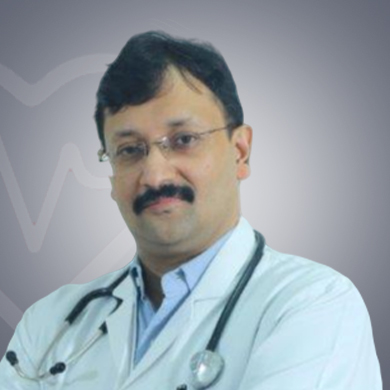
Dr. Mohit Agarwal
Medical Oncologist
14 Years of Experience
One of the finest Oncologist in New Delhi, India, Dr. Mohit Agarwal has worked with several world class multidisciplinary hospitals over the years. Dr. Mohit Agarwal has over 14+ years of experience in his field. The doctor treats and manages a wide range of conditions such as Stomach Cancer, Rectal Cancer, Breast Cancer, Brain Cancer View More
Last Reviewed - January 2026