Basal Cell Carcinoma (BCC) Treatment in Thailand
- Top Accredited Hospitals
- Global Medical Standards
- Cutting-Edge Technology
- Proven Treatment Options
- High Success Rate
- Trusted by Millions

What is Basal cell carcinoma?
Basal cell carcinoma (BCC) is a type of skin cancer that develops in the skin's basal cells. Basal cells are found in the lower epidermis, the skin's outer layer. Basal cell carcinoma appears as a tiny, occasionally glossy lump or scaly flat spot on the skin that gradually increases over time.
What is the Importance of Timely Treatment?
- Early basal cell carcinoma (BCC) treatment is essential for preventing it from spreading to neighbouring tissues.
- Although BCC rarely spreads to other organs, untreated tumours can cause extensive local harm and disfigurement.
- Early intervention improves the likelihood of total eradication and minimises the danger of recurrence. It also enables simpler, less intrusive procedures, resulting in faster recovery and improved cosmetic effects.
- Furthermore, quick treatment reduces consequences such as infections and ulcers. Overall, treating BCC early improves the prognosis and quality of life.
What are the Common Symptoms of Basal cell carcinoma?
Basal cell carcinoma typically develops on sun-exposed areas of your body, particularly the head and neck. Basal cell carcinoma can occasionally occur in regions of your body that are usually sheltered from the sun, such as your genitals.
Basal cell carcinoma manifests as a change in the skin, such as a growth or a persistent sore. These changes in the skin (lesions) typically have one of the following characteristics:
- A shiny, skin-coloured hump that is translucent, allowing you to see through its surface. The bump may seem pearly white or pink on white skin. On brown and black skin, the bump appears brown or glossy black. Tiny blood vessels may be visible, but they are difficult to see on brown and black skin. The bump may bleed or scab over.
- A brown, black, or blue lesion with dark patches and a slightly elevated, translucent border.
- A flat, scaly area with a raised border. Over time, these patches can become highly enormous.
- A white, waxy, scar-like lesion with no distinct border.
Causes, Risk Factors and Complications of Basal cell carcinoma
Causes
- Basal cell carcinoma occurs as a result of a DNA alteration. This transformation typically happens after your skin has been exposed to too much ultraviolet (UV) radiation from sunshine or tanning beds.
- Your genes tell your body's DNA to create new cells to replace cells that have reached the end of their lives through self-replication. If one of your genes is mutated, your DNA will not have the proper instructions to generate new cells.
- Basal cells produce excessive cells, resulting in lumps (tumours) or lesions in the outer layer of your skin (epidermis).
- Basal cell nevus syndrome (Gorlin syndrome) is an uncommon hereditary disorder that causes BCC to emerge in childhood.
Risk Factors
Factors that increase your risk of basal cell carcinoma include:
- Chronic sun exposure
- Radiation therapy
- Fair skin
- Increasing age
- A personal or family history of skin cancer
- Immune-suppressing drugs
- Exposure to arsenic
- Inherited syndromes that cause skin cancer
Complications
Complications of basal cell carcinoma can include:
- A risk of recurrence. Basal cell carcinomas commonly recur, even after successful treatment.
- An increased risk of other types of skin cancer. A history of basal cell carcinoma may also increase the chance of developing different kinds of skin cancer, such as squamous cell carcinoma.
- Cancer that spreads beyond the skin. Basal cell carcinoma can rarely spread (metastasise) to nearby lymph nodes and other body areas, such as the bones and lungs.
Connect with our advisor for a PRIORITY response
Latest Research and Technologies in the Treatment of Basal Cell Carcinoma in Thailand
- In Thailand, Basal Cell Carcinoma is treated using modern procedures such as surgery, targeted therapies, laser treatments, and immunotherapy in more complicated instances. These novel treatments provide effective solutions for controlling BCC, ensuring that patients receive high-quality care.
Basal Cell Carcinoma Prevention Tips
To reduce your risk of basal cell carcinoma, you can:
- Avoid the sun during the middle of the day. In many places, the sun's rays are strongest between 10 a.m. and 4 p.m. Schedule outdoor activities for other times of the day, even during winter or when the sky is cloudy.
- Wear sunscreen year-round. Use a broad-spectrum sunscreen with an SPF of at least 30, even on cloudy days. Apply sunscreen generously, and reapply every two hours — or more often if you're swimming or perspiring.
- Wear protective clothing. Cover your skin with dark, tightly woven clothing that covers your arms and legs and a broad hat, which provides more protection than a baseball cap or visor.
- Check your skin regularly and report changes to your doctor. Examine your skin often for new skin growths or changes in moles, freckles, bumps and birthmarks. With the help of mirrors, check your face, neck, ears and scalp.
Treatment options for Basal Cell Carcinoma (BCC)
Radiation therapy: Radiation therapy uses high-energy beams, such as X-rays and protons, to kill cancer cells. Radiation therapy is sometimes used after surgery when there is an increased risk that the cancer will return. It might also be used when surgery isn't an option.
Targeted drug therapy: Targeted drug treatments focus on specific weaknesses in cancer cells. By blocking these weaknesses, targeted drug treatments can cause cancer cells to die. Targeted therapy drugs for basal cell carcinoma block molecular signals that keep the cancers growing. They might be considered after other treatments or when other treatments aren't possible.
Cost Start From USD 3500Explore Options
Chemotherapy: Chemotherapy uses powerful medications to kill cancer cells. It might be an option when other treatments haven't helped.
Cost Start From USD 1000 - USD 6800Explore Options
- Skin biopsy: Your healthcare provider will remove a piece of the affected skin area (lesion) to examine it under a microscope.
- Imaging tests: It’s extremely rare for basal cell carcinoma to spread throughout your body. If your healthcare provider suspects your cancer has spread elsewhere in your body, they might perform an MRI or a CT scan to detect cancer in lymph nodes or internal organs.
- Wound Healing and Care
- Proper wound care: Following surgery or other treatments, follow the prescribed regimen to prevent infection and promote healing
- Massage therapy: Gentle massage on the scarred area (once healed) can improve circulation and soften the tissue.
- Sun protection: After treatment, the skin is more sensitive. Use broad-spectrum sunscreen with SPF 30+ on treated areas, as sun exposure can worsen scars and lead to recurrence.
Medicinal options for Basal Cell Carcinoma (BCC) treatment:
- Topical Treatments:
- Immune System Modulators: These treatments boost the body's immune response to target and destroy cancer cells on the skin's surface.
- Oral Medications: These medications target specific pathways that drive cancer cell growth and are used for advanced or recurrent BCC that cannot be treated surgically.
Instantly Connect with our Specialists


Hospitals for Basal Cell Carcinoma (BCC) in Thailand
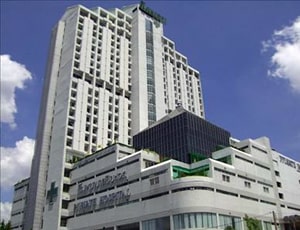
Piyavate Hospital
Bangkok, Thailand
Piyavate Hospital located in Bangkok, Thailand is accredited by JCI. Also listed below are some of the most prominent infrastructural details:
Medicine Centre: Piyavate Hospital provides advanced holistic treatment for their patients. They offer a complete range of services and physicians that specialize in various fields like the endocrine system, the nervous system, kidney function, cardiovascular care, respiratory and digestive system. They pride themselves for the familial care that they provide to their patients.
Fertility and In-Vitro Fertilization Centre: Helping the couples who walk into the Piyavate Hospital to achieve their dream of having a family. They have a medical team that specializes in male and female fertility. They offer consultation services, fertility check-up for both men and women and complete IVF services. They have advanced IVF cycle treatment facilities that offer a high rate of success.
Bone and Joint Institute: Piyavate Hospital houses one of the frontrunners in Orthopaedic health care in all of SouthEast Asia. They offer a wide range of services and surgeries in their bone and joint institute that include hand surgery, hip and knee replacement surgery, spinal cord surgery, upper extremity surgery, arthroscopic surgery and sports medicine.
Eye and Lasik Centre: Piyavate Hospital is fully equipped with the latest and most advanced technology for eye care and houses highly skilled ophthalmologists, sub-specialists and qualified nurses.
Physical Therapy and Rehabilitation Centre: One of the first hospitals to be equipped with the Hybrid Assistive Limb technology that will help a neurologically challenged patient to control the rehabilitation robot limb with a signal from their brain. The Physical Therapy and Rehabilitation Centre at Piyavate Hospital uses this system encourage patients to regain muscle memory to walk and function normally.
Amenities for Patient’s Family:
Piyavate Hospital also offers additional apartment facilities to house the kin of the patients who come to visit them from distant places. A restaurant, a flower shop and a café are a few of the other amenities provided by the hospital.
These are the most popular services offered by the Piyavate Hospital in Bangkok, Thailand. They also provide a plethora of other medical services that are listed below:
Diabetic Foot Centre
Check-up centre
Urology Centre
Heart Institute
Paediatric Centre
Obstetrics and Gynaecology Centre
Surgery Centre
Ear Nose Throat Centre
Haemodialysis Centre
Dental Centre
X-Ray Centre
Gastroenterology Centre
Cancer Centre
Neonatal Intensive Care Unit (NICU)
Emergency Services and Centre
Tele-medicine

Phyathai 2 International Hospital
Bangkok, Thailand
Phyathai 2 International Hospital located in Bangkok, Thailand is accredited by JCI. Also listed below are some of the most prominent infrastructural details:
- Fully equipped rooms are available for convenience of the patients- Gold B Room, Gold A Room, Pediatric Gold A, Platinum room, and Prestige ward
- Nearby accommodations are also available- Abloom Service Apartments, Bangkok Patio, VIB Best Western Sanam Pao, VIC3 Hotel
- Operating room
- International Patient Medical Center to assist overseas patients
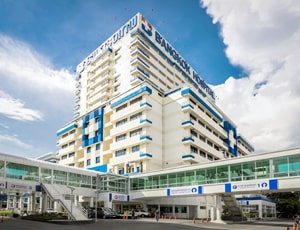
Bangkok Hospital
Bangkok, Thailand
Bangkok Hospital located in Bangkok, Thailand is accredited by JCI. Also listed below are some of the most prominent infrastructural details:
- It is recognised for the application of the newest healthcare technology.
- Blood analysis center that is not just the best in Thailand but in Asia Pacific as well.
- Biomolecule center that is the seed of healthcare equipment for Thailand and overseas.
- International affiliations and collaborations with universities and hospitals in Japan and the United States of America.
- 11 hospitals are recognised as Centers of Excellence.
- Known excellence in Trauma, Orthopedics, Cardiovascular, Neurology as well as Cancer Care.
- There is a proper streamlined patient services process followed in Bangkok Dusit Medical Services, Bangkok, Thailand.
- A well developed research center showcases the intent of the organisation to provide research based treatment opportunities to the patients.
- The group has several Medical industry partnerships as well to ensure healthcare solutions.
Our Services to better your experience
Opinion & Option
We submit the most accurate opinion and options from one or more countries for your review
Consult Privately
Consult with a certified specialist privately on our telemedicine platform even before you decide to travel
Logistics
We handle flights, visas, transfers, and accommodation—so you can focus on your health.
Recovery
Our In-house rehabilitation service packages to better your recovery and treatment outcome
Why Choose Thailand for Basal Cell Carcinoma Treatment?
Here are some of the reasons for choosing Thailand:
- Expert Dermatologists: Thailand has highly trained dermatologists specialising in skin cancer therapy.
- Advanced Technology: Thailand's hospitals use cutting-edge technologies like Mohs surgery and tailored therapy.
- Affordable Care: Treatment expenses in Thailand are competitive compared to Western countries, resulting in high-quality care at cheaper costs.
- International Patient Services: Thai hospitals provide seamless services to international patients, such as multilingual support and individualised care.
Frequently Asked Questions
BCC rarely spreads to other parts of the body (metastasising). It is locally invasive, which means it may grow into surrounding tissues but doesn’t typically spread to distant organs.
BCC is highly curable when treated early. Most cases are treated successfully with surgery, with a very low chance of recurrence after proper treatment.
Yes, treating Basal Cell Carcinoma (BCC) using topical medicines in Thailand is generally safe, mainly when done under the supervision of a skilled dermatologist. Thailand's hospitals employ innovative treatment options and constantly monitor patients throughout their treatment. However, the suitability of topical treatments varies according to the kind and stage of BCC. Therefore, patients should consult with an experienced professional for tailored therapy.
After treatment, it’s essential to:
- Follow post-treatment care instructions for wound healing.
- Avoid sun exposure and wear sunscreen.
- Have regular follow-up appointments with your doctor to check for any recurrence.
Yes, BCC treatment in Thailand is often less expensive than in Western countries while keeping a high quality of care.
BCC usually develops slowly over several months or years. It may start as a small, often unnoticed lesion that gradually grows over time, typically in areas exposed to the sun.
In Thailand, risk factors for Basal Cell Carcinoma (BCC) include extensive sun exposure due to the tropical climate, pale skin, a family history of skin cancer, and increasing age. People with fair skin and extensive sun exposure are especially vulnerable. Regular skin checks and sun protection are critical for lowering the risk of BCC.
While BCC is most common in sun-exposed areas like the face, neck, and hands, it can also occur in regions that aren’t directly exposed to the sun, though less frequently.
While sunscreen significantly reduces the risk of developing BCC, it doesn’t eliminate it. Consistent sunscreen use and other sun protection measures (like wearing hats and avoiding peak sun exposure) are essential for lowering risk.
Thailand's warm environment and high sun exposure make Basal Cell Carcinoma (BCC) relatively frequent.

Reviewer

Dr. Mohit Agarwal
Medical Oncologist
14 Years of Experience
One of the finest Oncologist in New Delhi, India, Dr. Mohit Agarwal has worked with several world class multidisciplinary hospitals over the years. Dr. Mohit Agarwal has over 14+ years of experience in his field. The doctor treats and manages a wide range of conditions such as Stomach Cancer, Rectal Cancer, Breast Cancer, Brain Cancer View More
Last Reviewed - January 2026