Basal Cell Carcinoma (BCC) Treatment in India
- Top Accredited Hospitals
- Global Medical Standards
- Cutting-Edge Technology
- Proven Treatment Options
- High Success Rate
- Trusted by Millions

What is Basal cell carcinoma?
Basal cell carcinoma (BCC) is a type of skin cancer that develops in the skin's basal cells. Basal cells are found in the lower epidermis, the skin's outer layer. Basal cell carcinoma appears as a tiny, occasionally glossy lump or scaly flat spot on the skin that gradually increases over time.
What is the Importance of Timely Treatment?
Early basal cell carcinoma (BCC) treatment is essential for preventing it from spreading to neighbouring tissues. Although BCC rarely spreads to other organs, untreated tumours can cause extensive local harm and disfigurement. Early intervention improves the likelihood of total eradication and minimises the danger of recurrence. It also enables simpler, less intrusive procedures, resulting in faster recovery and improved cosmetic effects. Furthermore, quick treatment reduces consequences such as infections and ulcers. Overall, treating BCC early improves the prognosis and quality of life.
What are the Common Symptoms of Basal cell carcinoma?
Basal cell carcinoma typically develops on sun-exposed areas of your body, particularly the head and neck. Basal cell carcinoma can occasionally occur in regions of your body that are usually sheltered from the sun, such as your genitals.
Basal cell carcinoma manifests as a change in the skin, such as a growth or a persistent sore. These changes in the skin (lesions) typically have one of the following characteristics:
- A shiny, skin-coloured hump that is translucent, allowing you to see through its surface. The bump may seem pearly white or pink on white skin. On brown and black skin, the bump appears brown or glossy black. Tiny blood vessels may be visible, but they are difficult to see on brown and black skin. The bump may bleed or scab over.
- A brown, black, or blue lesion, or with dark patches and a slightly elevated, translucent border.
- A flat, scaly area with a raised border. Over time, these patches can become highly enormous.
- A white, waxy, scar-like lesion with no distinct border.
Causes, Risk Factors and Complications of Basal cell carcinoma
Causes
- Basal cell carcinoma occurs as a result of a DNA alteration. This transformation typically happens after your skin has been exposed to too much ultraviolet (UV) radiation from sunshine or tanning beds.
- Your genes tell your body's DNA to create new cells to replace cells that have reached the end of their lives through self-replication. If one of your genes is mutated, your DNA will not have the proper instructions to generate new cells.
- Basal cells produce excessive cells, resulting in lumps (tumours) or lesions in the outer layer of your skin (epidermis).
- Basal cell nevus syndrome (Gorlin syndrome) is an uncommon hereditary disorder that causes BCC to emerge in childhood.
Risk Factors
Factors that increase your risk of basal cell carcinoma include:
- Chronic sun exposure
- Radiation therapy
- Fair skin
- Increasing age
- A personal or family history of skin cancer
- Immune-suppressing drugs
- Exposure to arsenic
- Inherited syndromes that cause skin cancer
Complications
Complications of basal cell carcinoma can include:
- A risk of recurrence. Basal cell carcinomas commonly recur, even after successful treatment.
- An increased risk of other types of skin cancer. A history of basal cell carcinoma may also increase the chance of developing different kinds of skin cancer, such as squamous cell carcinoma.
- Cancer that spreads beyond the skin. Basal cell carcinoma can rarely spread (metastasise) to nearby lymph nodes and other body areas, such as the bones and lungs.
Connect with our advisor for a PRIORITY response
Latest Research and Technologies in the Treatment of Basal cell carcinoma in India
Recent advancements in BCC treatment in India include:
- Targeted therapies (hedgehog inhibitors) for advanced BCC.
- Immunotherapy to boost the immune system.
- Laser treatments for superficial BCCs.
- Mohs surgery for precise, tissue-preserving removal.
- Improved topical treatments
Basal Cell Carcinoma Prevention Tips
To reduce your risk of basal cell carcinoma, you can:
- Avoid the sun during the middle of the day. In many places, the sun's rays are strongest between 10 a.m. and 4 p.m. Schedule outdoor activities for other times of the day, even during winter or when the sky is cloudy.
- Wear sunscreen year-round. Use a broad-spectrum sunscreen with an SPF of at least 30, even on cloudy days. Apply sunscreen generously, and reapply every two hours — or more often if you're swimming or perspiring.
- Wear protective clothing. Cover your skin with dark, tightly woven clothing that covers your arms and legs and a broad hat, which provides more protection than a baseball cap or visor.
- Check your skin regularly and report changes to your doctor. Examine your skin often for new skin growths or changes in moles, freckles, bumps and birthmarks. With the help of mirrors, check your face, neck, ears and scalp.
Treatment options for Basal Cell Carcinoma (BCC)
Radiation therapy: Radiation therapy uses high-energy beams, such as X-rays and protons, to kill cancer cells. Radiation therapy is sometimes used after surgery when there is an increased risk that the cancer will return. It might also be used when surgery isn't an option.
Targeted drug therapy: Targeted drug treatments focus on specific weaknesses in cancer cells. By blocking these weaknesses, targeted drug treatments can cause cancer cells to die. Targeted therapy drugs for basal cell carcinoma block molecular signals that keep the cancers growing. They might be considered after other treatments or when other treatments aren't possible.
Cost Start From USD 8000 - USD 12000Explore Options
Chemotherapy: Chemotherapy uses powerful medications to kill cancer cells. It might be an option when other treatments haven't helped.
Cost Start From USD 600 - USD 700Explore Options
Skin biopsy: Your healthcare provider will remove a piece of the affected skin area (lesion) to examine it under a microscope.
Imaging tests: It’s extremely rare for basal cell carcinoma to spread throughout your body. If your healthcare provider suspects your cancer has spread elsewhere in your body, they might perform an MRI or a CT scan to detect cancer in lymph nodes or internal organs.
Wound Healing and Care
- Proper wound care: Following surgery or other treatments, follow the prescribed regimen to prevent infection and promote healing.
Scar Management
- Massage therapy: Gentle massage on the scarred area (once healed) can improve circulation and soften the tissue.
- Sun protection: After treatment, the skin is more sensitive. Use broad-spectrum sunscreen with SPF 30+ on treated areas, as sun exposure can worsen scars and lead to recurrence.
Medicinal options for Basal Cell Carcinoma (BCC) treatment:
- Topical Treatments:
- Immune System Modulators: These treatments boost the body's immune response to target and destroy cancer cells on the skin's surface.
- Oral Medications: These medications target specific pathways that drive cancer cell growth and are used for advanced or recurrent BCC that cannot be treated surgically.
Instantly Connect with our Specialists


Hospitals for Basal Cell Carcinoma (BCC) in India
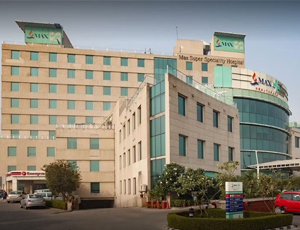
Max Super Specialty Hospital, Shalimar Bagh
Delhi, India
- Max Super Speciality Hospital, Shalimar Bagh, is a 402-bed quaternary-care hospital in New Delhi, offering advanced treatment across 37+ specialities, including Cancer, Cardiac, Neurosciences, Gastroenterology, Orthopaedics, and Renal Transplant.
- Equipped with state-of-the-art technology and a team of highly skilled doctors and nurses, the hospital provides complex procedures, minimally invasive surgeries, and targeted cancer treatments, making it one of India’s leading healthcare destinations.
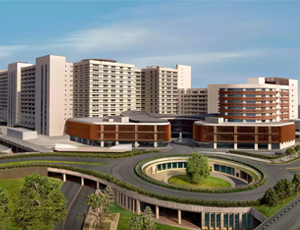
Amrita Hospital
Faridabad, India
Founded in 1998 by Mata Amritanandamayi (Amma), the Amrita Institute of Medical Sciences and Research Centre is one of India’s leading healthcare institutions, accredited by ISO, NABH, and NABL. With 2 branches, 7 medical colleges, and a network of 800+ doctors and 2,600+ beds, it offers comprehensive care across 81 specialties and 12 super-specialty departments, supported by 60+ modern operating theatres and 534 critical care beds. The Faridabad campus, a world-class multispeciality facility, houses advanced centers for oncology, neurosciences, cardiac sciences, gastro-sciences, mother and child care, and trauma care, along with India’s most comprehensive infectious disease unit. Guided by a mission of compassion and innovation, Amrita Hospitals combine cutting-edge medicine with humanitarian service to empower communities and promote holistic well-being.

Rajagiri Hospital
Kochi, India
- Rajagiri Hospital, Kochi, Kerala, is a leading multi-speciality tertiary care hospital known for providing world-class medical services with advanced technology and compassionate care.
- Accredited by JCI, NABH, and NABL, the hospital offers comprehensive treatment across specialities like Cardiology, Oncology, Neurology, Gastroenterology, Orthopaedics, Nephrology, Urology, and Paediatrics, making it a trusted healthcare destination in South India.
Our Services to better your experience
Opinion & Option
We submit the most accurate opinion and options from one or more countries for your review
Consult Privately
Consult with a certified specialist privately on our telemedicine platform even before you decide to travel
Logistics
We handle flights, visas, transfers, and accommodation—so you can focus on your health.
Recovery
Our In-house rehabilitation service packages to better your recovery and treatment outcome
Why Choose India for Basal Cell Carcinoma Treatment?
Here are some of the reasons for choosing India:
- Due to advancements in medical facilities, such as minimally invasive surgical techniques.
- World-class experts include highly experienced doctors, JCI, and NABH-accredited healthcare institutions.
- Compared to other countries, treatment in Indian hospitals is cost-effective.
- Indian hospitals provide International patient services, including a multilingual support system.
- Improved treatment methods and biological therapies.
Frequently Asked Questions
BCC rarely spreads to other parts of the body (metastasise). It is locally invasive, which means it may grow into surrounding tissues but doesn’t typically spread to distant organs.
BCC is highly curable when treated early. Most cases are treated successfully with surgery, with a very low chance of recurrence after proper treatment.
Topical treatments are safe and effective for superficial BCCs. These medications are widely available in India and are commonly prescribed for early-stage BCC. However, they should only be used under the supervision of a dermatologist.
After treatment, it’s important to:
- Follow post-treatment care instructions for wound healing.
- Avoid sun exposure and wear sunscreen.
- Have regular follow-up appointments with your doctor to check for any recurrence.
BCC usually develops slowly over several months or years. It may start as a small, often unnoticed lesion that gradually grows over time, typically in areas exposed to the sun.
In India, fair-skinned individuals, those with a history of sunburns, and people who have a family history of skin cancer are at higher risk. Additionally, people who work outdoors or live in sunny areas are more likely to develop BCC due to prolonged sun exposure.
While BCC is most common on sun-exposed areas like the face, neck, and hands, it can also occur in the regions that aren’t directly exposed to the sun, though less frequently.
While sunscreen significantly reduces the risk of developing BCC, it doesn’t eliminate it. Consistent sunscreen use and other sun protection measures (like wearing hats and avoiding peak sun exposure) are essential for lowering risk.

Reviewer

Dr. Mohit Agarwal
Medical Oncologist
14 Years of Experience
One of the finest Oncologist in New Delhi, India, Dr. Mohit Agarwal has worked with several world class multidisciplinary hospitals over the years. Dr. Mohit Agarwal has over 14+ years of experience in his field. The doctor treats and manages a wide range of conditions such as Stomach Cancer, Rectal Cancer, Breast Cancer, Brain Cancer View More
Last Reviewed - January 2026