Atrial tachycardia Treatment in Thailand
- Top Accredited Hospitals
- Global Medical Standards
- Cutting-Edge Technology
- Proven Treatment Options
- High Success Rate
- Trusted by Millions

What is Atrial tachycardia?
An arrhythmia, or irregular heart rhythm, known as atrial tachycardia, results in your heart's upper chambers, or atria, beating more quickly than usual. Their heart rates range from 100 to 250 beats per minute. SVT, or supraventricular tachycardia, includes atrial tachycardia. Your heart's upper chambers, or atria, are where they occur.
What is the Importance of Timely Treatment?
Atrial tachycardia needs to be treated quickly to avoid significant consequences like stroke, heart failure, and even sudden cardiac arrest.
If treatment is not administered, the fast heart rate of atrial tachycardia may limit the heart's ability to pump blood effectively, resulting in insufficient oxygen delivery to vital organs.
What are the Common Symptoms of Atrial tachycardia?
When atrial tachycardia occurs briefly, it might occur without any symptoms. When it does cause symptoms in adults, they commonly include:
- Palpitations of heart
- Lightheadedness and dizziness.
- Fainting or losing consciousness.
- Ache in the chest (angina).
- Breathlessness.
Children and infants may exhibit the following signs of atrial tachycardia:
- Vomiting
- Feeding issues
- Breathing rapidly
Types of Atrial tachycardia
- Focal atrial tachycardia: This type of atrial tachycardia begins in a particular area (focus) of your heart. Usually, it's not harmful. But if it persists for a longer time, it might be.
- Multifocal atrial tachycardia: Abnormal and fast cardiac rhythms caused by several defective electrical foci in the atria.
- Micro-reentrant atrial tachycardia: Although it impacts a larger area, this kind of atrial tachycardia functions similarly to reentry. Additionally, it usually occurs because the signal must pass through a scar tissue area or a portion of your heart.
Causes, Risk Factors and Complications of Atrial tachycardia
Causes
Atrial tachycardia can have several causes. Among them are:
- Cardiac illness, including coronary artery disease.
- Heart attack.
- Chronic Obstructive Pulmonary Disorder, or COPD
- Unbalanced electrolytes
- Alcohol intake
- Adverse effects of digoxin, a medication used to treat irregular heartbeats
- Other stimulants, such as recreational medications and caffeine
Risk Factors
Atrial tachycardia risk factors include:
- Heart problems include coronary artery disease,
- heart valve disease, and other heart ailments
- Heart failure.
- A congenital heart defect is a heart abnormality that exists from birth.
- Previous heart surgery.
- Apnea during sleep.
- Thyroid conditions.
- Chronic obstructive pulmonary disease (COPD) is one type of lung illness.
- Diabetes.
Some medications, such as those for colds, allergies, and asthma.
- The following are other factors that could raise the risk of atrial tachycardia:
- Stress on an emotional level.
- Caffeine overdose.
- Heavy alcohol consumption
- Smoking and using nicotine.
- Stimulants and cocaine.
Complications
These side effects are uncommon, but they can result from either kind of ablation:
- Bleeding
- Infection
- Blood clots
- Injury close to the treatment area
Connect with our advisor for a PRIORITY response
Latest Research and Technologies in the Treatment of Atrial tachycardia in Thailand
- In Thailand, atrial tachycardia treatment has advanced with 3D mapping technologies for precise catheter ablation and radiofrequency and cryoablation procedures for improved results.
- Ongoing research into remote monitoring and wearable technologies enables continuous tracking, assuring timely interventions.
- These advancements in Thailand provide patients with more effective and minimally intrusive therapy choices for atrial tachycardia.
Atrial tachycardia Prevention Tips
- Limiting alcohol and stimulant intake, quitting tobacco products, and managing health via food and exercise are all ways to lower the risk of atrial tachycardia.
- Avoiding possible triggers and preventing or postponing conditions that can cause atrial tachycardia can help lower the risk, even if unexpected and unpreventable.
Treatment options for Atrial tachycardia
Catheter ablation: A tiny, flexible tube called a catheter is inserted by a physician into a blood vessel in the heart during a technique known as catheter ablation. The catheter restores a regular heartbeat by blocking abnormal electrical signals and making tiny scars in the heart tissue using sensors and radiofrequency energy.
Pacemaker: A little gadget called a pacemaker is inserted into the chest to help regulate the heartbeat. It helps adjust the heart's rhythm by sending an electrical signal when it detects an irregular heartbeat. If atrial tachycardia cannot be treated with existing methods, a pacemaker may be required.
Cost Start From USD 8000 - USD 12000Explore Options
- Clinical Assessment
- Physical Exam: During a physical examination, a medical professional might listen to your heart and take your pulse to detect an irregular beating.
- Electrocardiogram (ECG or EKG): This test uses sensors attached to your chest skin to assess the electrical activity of your heart. This test can be obtained in a medical facility in minutes.
- Blood tests: Thyroid disease, heart disease, and other disorders that may impact the heartbeat can be detected by blood tests.
- Stress test: An exercise stress test can help you determine how well your heart works when exerting itself.
- Electrophysiology study (EPS): Your heart's electrical activity is mapped and measured throughout this operation. This may indicate regions where your heart's electrical activity isn't commonly occurring.
- Imaging Tests
- Echocardiogram: This test, often known as a heart ultrasound, creates images of the beating heart using sound waves.
- Holter monitor: Like an ECG, this captures heart activity over days or weeks. You bring this gadget home with you, and when the predetermined recording time is up, you return it.
- Other Diagnostic:
- Ambulatory monitors: These gadgets work similarly to an electrocardiogram. But you wear them for up to 30 days after you get home. Some monitors just capture the data when you turn the gadget on, but they continuously follow the activity of your heart.
The main goals of rehabilitation therapies for arrhythmias are to improve heart function following treatment or surgery, manage symptoms, and improve overall cardiovascular health. The following are some rehabilitation options:
- Physical therapy: If the patient suffers physical weakness or restricted movement due to heart surgery, physical therapists can provide exercises to increase strength, endurance, and mobility.
- Changes in Lifestyle:
- Refrain from smoking and using tobacco
- Eat foods that are good for your heart
- Keep your weight in check.
- Engage in regular exercise.
- Lower stress and control blood sugar, cholesterol, and blood pressure
- Make an appointment for regular medical exams
- Steer clear of booze
- Make sure you get adequate sleep
Doctors frequently prescribe the following medications to treat atrial tachycardia:
- Beta-blockers
- Calcium channel blockers
- Other arrhythmia medications: Other anti-arrhythmia medicines may be helpful, depending on the initial aetiology of the arrhythmia. Your healthcare provider can provide options depending on the risks, advantages, and potential adverse effects.
Instantly Connect with our Specialists


Hospitals for Atrial tachycardia in Thailand

Phyathai 2 International Hospital
Bangkok, Thailand
Phyathai 2 International Hospital located in Bangkok, Thailand is accredited by JCI. Also listed below are some of the most prominent infrastructural details:
- Fully equipped rooms are available for convenience of the patients- Gold B Room, Gold A Room, Pediatric Gold A, Platinum room, and Prestige ward
- Nearby accommodations are also available- Abloom Service Apartments, Bangkok Patio, VIB Best Western Sanam Pao, VIC3 Hotel
- Operating room
- International Patient Medical Center to assist overseas patients
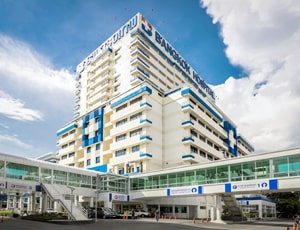
Bangkok Hospital
Bangkok, Thailand
Bangkok Hospital located in Bangkok, Thailand is accredited by JCI. Also listed below are some of the most prominent infrastructural details:
- It is recognised for the application of the newest healthcare technology.
- Blood analysis center that is not just the best in Thailand but in Asia Pacific as well.
- Biomolecule center that is the seed of healthcare equipment for Thailand and overseas.
- International affiliations and collaborations with universities and hospitals in Japan and the United States of America.
- 11 hospitals are recognised as Centers of Excellence.
- Known excellence in Trauma, Orthopedics, Cardiovascular, Neurology as well as Cancer Care.
- There is a proper streamlined patient services process followed in Bangkok Dusit Medical Services, Bangkok, Thailand.
- A well developed research center showcases the intent of the organisation to provide research based treatment opportunities to the patients.
- The group has several Medical industry partnerships as well to ensure healthcare solutions.

Vejthani Hospital
Bangkok, Thailand
Vejthani Hospital located in Bangkok, Thailand is accredited by NABH, NABL. Also listed below are some of the most prominent infrastructural details:
- It is among the topmost private hospitals functioning in Thailand.
- The bed capacity of the hospital is 263.
- There are more than three hundred thousand patients visiting the hospital every year.
- Vejthani hospital has more than 40 outpatient clinics and centers.
- International patient care center with all kinds of services: air ambulance, transfers, travel, stay, embassy liaison, patient coordinators, prayer rooms, visa coordination and translators for 20 languages.
- The special facilities are:
- International Certified Laboratory
- 10 Operating Rooms
- Radiology Section: Portable X-ray, CT-scan and C-ARM and MRI
- Neonatal Critical Care Unit
- Water-jet technique applied for liposuction
- Computer navigation and mini-invasive technique for Joint Replacement surgery
Our Services to better your experience
Opinion & Option
We submit the most accurate opinion and options from one or more countries for your review
Consult Privately
Consult with a certified specialist privately on our telemedicine platform even before you decide to travel
Logistics
We handle flights, visas, transfers, and accommodation—so you can focus on your health.
Recovery
Our In-house rehabilitation service packages to better your recovery and treatment outcome
Why Choose Thailand for Atrial Tachycardia Treatment?
Thailand is a good option for treating atrial tachycardia for the following reasons:
- Advanced Technologies: Thailand provides 3D mapping systems and precision catheter ablation techniques for efficient atrial tachycardia management.
- Cardiologists with extensive experience use cutting-edge techniques such as radiofrequency and cryoablation to provide the best possible results.
- Innovative Research: Ongoing research into remote monitoring and wearable ECG equipment allows continuous heart rhythm surveillance and individualised care.
- Affordable Care: Compared to many Western countries, treatment in Thailand is less expensive while maintaining high quality.
- Thailand's hospitals offer bilingual support, international patient services, and seamless care to global patients.
Frequently Asked Questions
Atrial tachycardia is not seen to be dangerous if it just occurs briefly. However, if you have experienced atrial tachycardia or experience it frequently, it may lead to a condition known as cardiomyopathy, which can weaken and harm your heart. Cardiomyopathy can cause heart failure and even death if left untreated.
In general, atrial tachycardia therapies in Thailand are highly successful. Catheter ablation operations performed with modern 3D mapping technologies have success rates ranging from 80% to 90%, depending on the patient's condition and technique.
Cryoablation and radiofrequency ablation have equal success rates, with many patients seeing significant improvement in heart rhythm and fewer occurrences of tachycardia.
Thailand's competent cardiologists and cutting-edge technology help to achieve these favourable results.
Yes, treatment in Thailand is more cost-effective than in many Western countries when providing high-quality care.
- No. They are not the same. The top chambers of your heart usually beat between 100 and 250 beats per minute when you have atrial tachycardia.
- Because it causes your heart's upper chambers to beat 350–600 beats per minute, atrial fibrillation is harmful.
- As a result, the upper chambers of your heart may be unable to pump all the blood currently inside them.
Yes, Thailand has a strong healthcare system, with modern hospitals providing high care and safety to overseas patients.
Consult your doctor if you experience any of the following symptoms:
- Breathing becomes worse.
- Start to disrupt your life.
- Happen more often.
Emergency medical attention should be sought if you unexpectedly:
- Become breathless.
- Experience ache in your chest.
- Become extremely lightheaded or faint for no apparent reason.
Symptoms of atrial tachycardia are also commonly seen in many more severe cardiac conditions, such as heart attacks.
Most patients with catheter-based procedures can return home the same day or the day after. However, the recovery period following surgery may be longer, possibly several days.
When taking medicine for atrial tachycardia, your doctor can tell you when you should expect to feel better.
They will also arrange a follow-up appointment to find out if the medication is working or if you require a change in dosage or kind of medication.
Depending on the type, atrial tachycardia is usually curable. Atrial tachycardia can frequently be stopped by treating the underlying chronic condition.
Atrial tachycardia may also resolve independently in certain situations, mainly for brief periods.
Generally speaking, anyone can develop atrial tachycardia. However, different forms of atrial tachycardia are more likely to occur at various ages.
When you have atrial tachycardia, your heart's upper chambers contract more quickly than its lower chambers. This may result from a malfunctioning cell or a bad electrical signal. There are three typical methods for this to occur:
- Automaticity: When sodium, potassium, or calcium levels are out of balance, abnormal heart cells regulate the heart's rhythm.
- Triggered Activity: Unexpected firing of cardiac muscle cells due to chemical imbalances throws off the regular rhythm.
- Reentry: When electrical signals are redirected, a circuit is created that results in irregular heartbeats. This is frequently brought on by cardiac surgery or scar tissue.
Author

Alvina Hasan
Alvina Hasan is a dedicated medical researcher and scientific writer with a strong foundation in pharmaceutical sciences. She holds a B.Pharm from Jamia Hamdard University and an M.Pharm in Quality Assurance from DIPSAR University.
With deep medical expertise and a strong interest in healthcare communication, she focuses on transforming complex clinical and scientific information into clear, engaging, and easy-to-understand narratives. She develops insightful healthcare articles and research-driven content designed to support both medical professionals and patients, helping bridge the gap between advanced medical knowledge and practical understanding.
Readers can explore her published research and articles here:
https://carcinogenesis.com/index.php/JOC/article/view/868
https://carcinogenesis.com/index.php/JOC/article/view/870
View MoreReviewer

Dr. Nityanand Tripathi
Interventional Cardiologist
29 Years of Experience
With a rich experience of more than 29 years, Dr. Nityanand has gained a vast spectrum of skills and expertise in performing all types of complex cardiac procedures. He is an expert in clinical & interventional cardiology and electrophysiology. He studied his medicine (MBBS) and MD from the Institute of Medical Sciences of Banaras Hindu University, Varanasi, and later completed his DM in Cardiology from the prestigious King George Medical University, Lucknow. View More
Last Reviewed - January 2026