Aortic Stenosis Treatment in Thailand
- Top Accredited Hospitals
- Global Medical Standards
- Cutting-Edge Technology
- Proven Treatment Options
- High Success Rate
- Trusted by Millions

What is Aortic Stenosis?
Aortic valve stenosis, also called valvular heart disease, is a type of heart valve disease. The aortic valve sits between the aorta, the body's principal artery, and the heart's lower left chamber. Aortic valve stenosis causes the valve to narrow and not open completely. As a result, blood flow from the heart to the aorta and the rest of the body is decreased or stopped.
What is the Importance of Timely Treatment?
Timely treatment for aortic stenosis is crucial because it helps prevent serious complications like heart failure, stroke, or even sudden cardiac arrest. The risk of life-threatening consequences can be significantly decreased, symptoms can be improved, and quality of life can be improved with early intervention through treatments such as valve replacement or repair.
What are the Common Symptoms of Aortic Stenosis?
Aortic valve stenosis symptoms can include:
- Tightness or soreness in the chest when moving.
- Experiencing lightheadedness, fainting, or fainting with activity.
- Breathlessness, particularly when straining oneself.
- Fatigue, particularly when engaging in more strenuous activities.
- Fluttering, fast heartbeat.
Other symptoms of aortic valve stenosis in children include:
- Not eating enough.
- Not putting on enough weight.
Heart failure may result from aortic valve stenosis. Swollen ankles and feet, shortness of breath, and excessive fatigue are all signs of heart failure.
Causes, Risk Factors and Complications of Aortic Stenosis
Causes
There are three primary causes of aortic stenosis in adults:
- Age-related wear and tear: Calcium can accumulate on your valve over time, reducing blood flow.
- Infection-related damage: Untreated infection-related bacteria accumulate on heart valves, impairing the immune system. This is most frequently the situation in strep throat or scarlet fever.
- Other inherited or chronic conditions: Paget's disease of the bone, renal failure, and familial hypercholesterolemia are further uncommon conditions that can result in aortic valve stenosis. Additionally, autoimmune or inflammatory conditions like lupus and rheumatoid arthritis are associated with aortic stenosis.
Risk Factors
- Among the risk factors for aortic valve stenosis include older age.
- Congenital heart defects are heart disorders that appear from birth.
- Risk factors for heart disease include high blood pressure, high cholesterol, and diabetes.
- Infections such as infective endocarditis and rheumatic fever can impact the heart.
- Chest radiation treatment.
- Long-term kidney disease.
Complications
Possible complications of aortic valve stenosis are:
- Heart failure
- Arrhythmias (irregular heartbeats)
- Infections like endocarditis that impact the heart
- Stroke
- Blood clots
- Bleeding
Connect with our advisor for a PRIORITY response
Latest Research and Technologies in the Treatment of Aortic Stenosis in Thailand
- In Thailand, surgical and non-surgical treatments for aortic stenosis have advanced significantly.
- Thailand is researching biocompatible valve technology and regenerative medicine to improve the durability and results of valve replacements.
- These developments help improve patient recovery and reduce problems in treating aortic stenosis.
Aortic Stenosis Prevention Tips
Aortic valve stenosis may be avoided in the following ways:
- Eating a nutritious diet
- Maintaining a consistent workout routine
- Avoid smoking and using illegal medications.
- Visiting your physician as needed or for your yearly checkup
- Maintaining control of diseases like high blood pressure, diabetes, high cholesterol, and kidney issues
- To avoid endocarditis, see your dentist every six months and practice good oral hygiene.
- To prevent developing rheumatic fever, consult your physician if you think you may have strep throat.
Treatment options for Aortic Stenosis
Aortic valve replacement: Treatment for aortic valve stenosis frequently involves replacing the aortic valve. The surgeon removes the damaged aortic valve and installs a mechanical valve. A biological tissue valve is a type of tissue valve.
Aortic valve repair: Aortic valve repair is a surgical procedure that repairs a broken aortic valve to allow it to function normally again. To repair the aortic valve, surgeons may separate stuck-together valve flaps.
Cost Start From USD 10000 - USD 14000Explore Options
- Clinical Assessment
- Physical Exam: Besides listening to your heart, your doctor might check for swelling in your ankles and lower legs. Using a stethoscope, healthcare professionals can frequently detect a heart murmur, a crucial indicator of aortic stenosis.
- Imaging Tests
- Chest X-ray: An X-ray of the chest reveals the state of the lungs and heart. It may indicate a larger-than-normal heart, which can happen in aortic valve stenosis. Additionally, it can detect calcium accumulation in the aortic valve.
- Echocardiogram: This test creates an image of your heart's inside using ultrasonic waves.
- Heart MRI (magnetic resonance imaging): A cardiac MRI produces defined pictures of the heart using radio waves and magnetic fields.
- Other Diagnostic
- Electrocardiogram (ECG or EKG): This assesses the electrical activity of your heart.
- Exercise Stress Testing: This exam evaluates how well your heart works when moving.
- Cardiac Catheterization (Angiography): To see inside your heart, a healthcare professional inserts a catheter via your arteries.
Following treatment or surgery, rehabilitation treatments for aortic stenosis mainly concentrate on strengthening general cardiovascular health, controlling symptoms, and improving heart function. Here are a few possibilities for rehabilitation:
- Physical therapy: Exercises to increase strength, endurance, and mobility can be provided by physical therapists, mainly if cardiac surgery has resulted in physical weakness or restricted mobility.
- Lifestyle Changes:
- Avoid tobacco usage and smoking
- Consume heart-healthy food.
- Maintain a healthy weight.
- Get frequent exercise.
- Reduce stress and regulate blood pressure, cholesterol, and blood sugar.
- Schedule routine medical examinations
- Avoid alcohol consumptions
- Get enough rest.
To manage symptoms or lower the chance of consequences, some aortic valve stenosis patients may require medication. Medicines, for instance, can reduce your blood pressure or stop irregular heartbeats.
Instantly Connect with our Specialists


Hospitals for Aortic Stenosis in Thailand

Sikarin Hospital
Bangkok, Thailand
Apart from in-detail treatment procedures available, Sikarin Hospital located in Bangkok, Thailand has a wide variety of facilities available for International Patients. Some of the facilities which are provided by them are Airport Transfer, Choice of Meals, Interpreter, SIM, TV inside room. Also listed below are some of the most prominent infrastructural details:
- Sikarin Hospital has a 258-bed capacity.
- The hospital caters to the healthcare needs of both local and international patients.
- Dedicated and skilled, experienced healthcare professionals are the strength of the organization.
It has also received many awards and certifications and some of them are:
- APSIC CSSD Center of Excellence Award (2017-18)
- Accreditation by the Joint Commission International
- HA-Hospital/Healthcare Accreditation
- HACCP Certificate of Registration
- The Best Under a Billion Award
- ISO 14001 Environment Management System
- ISO 9001 Quality Management System
The various clinics and centers of Sikarin Hospital are as follows:
- Pediatric Institute
- Orthopedic Institute
- Dental Center
- Health Check-up Center
- Heart Disease Center
- Cerebral and Nervous System Center
- Internal Medicine Clinic
- Diagnostic Radiology Center
- Diagnostic Laboratory
- Endoscopic Surgery Center
- International Medical Center
- Emergency Medical Center
- Sikarin Beauty Center
- Eye Center
- Rehabilitation Center
- Women’s Health Center
- Ear, Nose and Throat Center
- Specialized Internal Medicine Center
- Center for Gastrointestinal and Liver Diseases
The medical technology present in Sikarin Hospital is outlined here:
- MRI (Magnetic Resonance Imaging) magnetic resonance imaging
- Hybrid Operating Room
- Endoscopic Surgery - Gastrointestinal medical technology with tiny capsules
- S.R. Laboratory
- Cardiac Catheterization Lab
- Dental Operating Microscope, an innovative endoscopic root canal treatment
- 128-Slice CT Scan
- ORTHOPANTOMOGRAPH OP 3D oral X-ray machine
- Digital Mammogram
- Optical Coherence Tomography
- INFRARED (IR) IMAGING Surgical Technology “Cure Cancer” – Direct, Accurate, Fast
- 3D endoscopic surgery technology
- Laparoscopic Surgery
- Dental Aerosol Suction Dental Intraoral Aerosol Remover
- Comprehensive Dental Center
- iTeroElement 5D
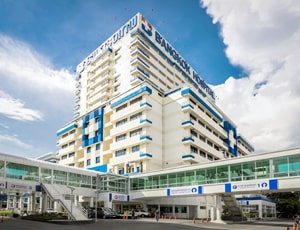
Bangkok Hospital
Bangkok, Thailand
Bangkok Hospital located in Bangkok, Thailand is accredited by JCI. Also listed below are some of the most prominent infrastructural details:
- It is recognised for the application of the newest healthcare technology.
- Blood analysis center that is not just the best in Thailand but in Asia Pacific as well.
- Biomolecule center that is the seed of healthcare equipment for Thailand and overseas.
- International affiliations and collaborations with universities and hospitals in Japan and the United States of America.
- 11 hospitals are recognised as Centers of Excellence.
- Known excellence in Trauma, Orthopedics, Cardiovascular, Neurology as well as Cancer Care.
- There is a proper streamlined patient services process followed in Bangkok Dusit Medical Services, Bangkok, Thailand.
- A well developed research center showcases the intent of the organisation to provide research based treatment opportunities to the patients.
- The group has several Medical industry partnerships as well to ensure healthcare solutions.

Yanhee International Hospital
Bangkok, Thailand
Yanhee International Hospital located in Bangkok, Thailand is accredited by JCI. Also listed below are some of the most prominent infrastructural details:
- The hospital is located in 10 stories and 4 connected buildings.
- International patient care is provided with accommodation, flight booking, airport transfer, choice of meals available.
- There is a Cosmetic and Beauty Center and a 24/7 Dental Center in the hospital.
- Some of the important healthcare specialties are Cardiac Sciences, ENT, Gastroenterology, General Surgery, Gynecology, Neurology, and Orthopedics etc.
- The healthcare delivery by the Yanhee International Hospital stands strong with:
- 155 Physicians
- 183 Medical Specialists
- 2000 nurses and other healthcare personnel
Our Services to better your experience
Opinion & Option
We submit the most accurate opinion and options from one or more countries for your review
Consult Privately
Consult with a certified specialist privately on our telemedicine platform even before you decide to travel
Logistics
We handle flights, visas, transfers, and accommodation—so you can focus on your health.
Recovery
Our In-house rehabilitation service packages to better your recovery and treatment outcome
Why Choose Thailand for Aortic Stenosis Treatment?
Here are some of the reasons for choosing Thailand:
- Thailand offers Transcatheter Aortic Valve Replacement (TAVR) as a less invasive option.
- Experienced Experts: Highly competent specialists use cutting-edge procedures and technologies to achieve excellent results.
- Cutting-Edge Technology: 3D echocardiography and cardiac MRI provide precise diagnosis and treatment planning.
- Affordable Care: Treatment in Thailand with high-quality care is cheaper than in many Western countries.
- Comprehensive Care: Excellent post-operative care and long-term monitoring ensure a full recovery and positive outcomes.
Frequently Asked Questions
The provider's technique will determine how well aortic valve stenosis repair or replacement goes. The most extended procedures are surgical ones. After surgery, patients usually stay in the hospital for a few days, generally taking several weeks to recover fully.
Aortic stenosis can cause serious problems, including heart failure if treatment is not received. This condition causes the heart muscle to weaken and expand, which can lead to life-threatening symptoms and even death since the heart cannot pump enough blood throughout the body.
After valve replacement, many people lead busy, healthy lives, but it's essential to see a cardiologist regularly.
The success rate of aortic stenosis treatment in Thailand is generally very high. The success rates for TAVR are typically about 90-95% for patients who are not candidates for open surgery, whereas surgical valve replacement success rates are similarly high, leading 95% in most situations. Thailand’s modern medical technologies and trained cardiologists contribute to these favourable outcomes.
- Indeed, a few of the most significant hospitals in Thailand have state-of-the-art equipment for treating aortic stenosis. Top hospitals employ advanced diagnostic procedures like MRIs, CT scans, and echocardiograms to identify the ailment appropriately.
- In addition, they offer cutting-edge treatment options such as standard aortic valve replacement (AVR) procedures and less invasive treatments.
- To guarantee the best results for patients, these facilities employ highly qualified cardiologists and cardiac surgeons who use the newest technologies.
There are four levels of aortic stenosis: mild, moderate, severe, and critical. Your general health, your symptoms, the stage at which you are diagnosed, and whether or not you receive treatment will all affect how quickly you progress.
Although the exact pace of advancement of aortic stenosis is unknown, some risk factors might be linked to a faster rate of progression.
Recovery time varies by procedure, but for TAVR, patients typically stay in the hospital for 3-5 days and can return to normal activities within 1-2 weeks. Open surgery recovery time can range from 6 to 8 weeks.
Aortic valve stenosis can develop gradually and take years for certain people. Others may experience it considerably more quickly.

Reviewer

Dr. Nityanand Tripathi
Interventional Cardiologist
29 Years of Experience
With a rich experience of more than 29 years, Dr. Nityanand has gained a vast spectrum of skills and expertise in performing all types of complex cardiac procedures. He is an expert in clinical & interventional cardiology and electrophysiology. He studied his medicine (MBBS) and MD from the Institute of Medical Sciences of Banaras Hindu University, Varanasi, and later completed his DM in Cardiology from the prestigious King George Medical University, Lucknow. View More
Last Reviewed - January 2026