Aortic Dissection Treatment in India
- Top Accredited Hospitals
- Global Medical Standards
- Cutting-Edge Technology
- Proven Treatment Options
- High Success Rate
- Trusted by Millions

What is an Aortic Dissection?
An aortic dissection occurs when a tear in the aorta's inner lining lets blood into the wall and separates its layers, creating a false lumen. The dissection may involve the ascending aorta, descending thoracic aorta, abdominal aorta, or multiple segments.
Aortic dissections are commonly classified as:
- Type A: Involves the ascending aorta and may extend into the aortic root, arch, coronary arteries, or other branches.
- Type B: Does not involve the ascending aorta and usually begins in the descending aorta.
A dissection can interfere with blood flow to the heart, brain, kidneys, intestines, spinal cord, or limbs and may cause complications such as rupture, cardiac tamponade, aortic valve leakage, stroke, or organ ischemia.
What is the Importance of Timely Treatment?
Aortic dissection can rapidly become life-threatening. A tear involving the ascending aorta can lead to rupture, cardiac tamponade, aortic regurgitation, coronary artery obstruction, stroke, or reduced blood flow to other organs.
Acute Type A aortic dissection requires immediate evaluation by an experienced aortic or cardiac surgical team, with emergency operative repair generally recommended. Patients who are stable enough for transfer may be transferred to a high-volume aortic centre with appropriate expertise.
What are the Common Symptoms of an Aortic Dissection?
- Sudden, severe chest pain
- Severe upper-back pain
- Pain that may spread to the neck, jaw, abdomen, or back
- Shortness of breath
- Fainting or loss of consciousness
- Sweating, weakness, or a feeling of impending illness
- Stroke-like symptoms such as weakness, numbness, confusion, or difficulty speaking
- Abdominal pain
- Reduced blood flow to an arm or leg, which may cause pain, weakness, numbness, or a cold limb
- Unequal blood pressure or pulses between limbs
Causes and Risk Factors of Aortic Dissection
Causes
- Long-standing or severe hypertension
- Aortic aneurysm
- Genetic connective-tissue disorders
- Marfan syndrome
- Loeys-Dietz syndrome
- Vascular Ehlers-Danlos syndrome
- Bicuspid aortic valve and associated aortic disease
- Previous aortic surgery or procedures
- Significant chest trauma
- Certain inflammatory or vascular conditions
- Pregnancy-related aortic disease in susceptible individuals
Risk Factors
- Uncontrolled high blood pressure
- Personal or family history of aortic disease
- Thoracic aortic aneurysm
- Inherited aortic disorders
- Bicuspid aortic valve
- Increasing age
- Smoking
- Previous aortic surgery
Latest Research and Technologies in the Treatment of Aortic Dissection in India
- Modern management of aortic dissection focuses on rapid diagnosis, accurate anatomical assessment, specialised surgical or endovascular treatment, and intensive postoperative monitoring. CT angiography, echocardiography, and MRI are used when appropriate to define the location and extent of disease. Treatment may include open ascending aortic or arch repair, valve or aortic-root procedures, hybrid approaches, and endovascular techniques for selected descending-aorta dissections.
Treatment options for Aortic Dissection
Open Surgical Repair: Acute Type A aortic dissection generally requires emergency open surgery. The procedure may involve replacement of the ascending aorta, hemiarch or arch reconstruction, and repair of associated complications such as aortic regurgitation or coronary involvement.
Bentall Procedure : A Bentall procedure may be performed when the aortic root and aortic valve are significantly affected. It involves replacement of the aortic root and ascending aorta with a composite graft containing an artificial valve, with reimplantation of the coronary arteries into the graft.
Cost Start From 10000Explore Options
Valve-Sparing Aortic Root Repair: In selected Type A dissections involving the aortic root, the native aortic valve may be preserved when appropriate. The dilated or dissected root is replaced or reconstructed while retaining the patient's own valve, when clinically appropriate.
Endovascular Repair (TEVAR): Thoracic endovascular aortic repair (TEVAR) may be considered for Type B dissection when complications such as rupture, malperfusion, persistent pain, uncontrolled hypertension, or other high-risk features are present and the anatomy is suitable.
- Clinical assessment:
- Symptom assessment: Sudden chest or back pain, pain radiation, shortness of breath, fainting, or neurological symptoms.
- Blood pressure: Measurement in both arms to identify significant differences that may indicate impaired blood flow.
- Pulse examination: Checking pulses in the arms and legs for differences or reduced blood flow.
- Cardiovascular examination: Assessment for abnormal heart sounds, aortic regurgitation, or signs of cardiac complications.
- Neurological assessment: Checking for weakness, numbness, confusion, speech difficulties, or other signs of stroke or reduced blood flow to the brain.
- Organ and limb perfusion: Assessment for signs of reduced blood supply to the kidneys, intestines, spinal cord, or limbs.
- Medical history: Review of hypertension, aortic aneurysm, previous aortic procedures, or known cardiovascular disease.
- Family history: Assessment for a family history of aortic disease or inherited connective-tissue disorders.
- Underlying conditions: Evaluation for conditions such as Marfan syndrome, other connective-tissue disorders, or bicuspid aortic valve.
- Imaging Tests:
- CT Angiography (CTA): Provides rapid, detailed images of the aorta and can identify the location and extent of the dissection and involvement of major branches.
- Transesophageal Echocardiography (TEE): Provides detailed assessment of the ascending aorta, aortic root, valves, heart function, and complications such as pericardial effusion.
- Transthoracic Echocardiography (TTE): Helps evaluate heart function, aortic valve regurgitation, and pericardial effusion, although it does not fully visualise the entire aorta.
- MRI/MRA: Provides detailed aortic imaging and can be useful for selected patients, particularly during longer-term surveillance.
MediRehab (a chain of Rehab centres, part of MediGence) provides comprehensive rehabilitation services designed to support Aortic Dissection patients in India. These services include:
- Rehabilitation after aortic dissection or surgical repair is gradual and should be guided by the treating cardiovascular team.
- It may include supervised physical activity, gradual walking, breathing exercises, strength and mobility work, blood-pressure monitoring, medication education, nutritional guidance, and strategies to support cardiovascular health.
- Patients may need restrictions on heavy lifting and high-intensity activities. Rehabilitation timing and intensity depend on the type of dissection, treatment performed, complications, cardiovascular status, and follow-up imaging.
- Medicines reduce stress on the aortic wall, control blood pressure and heart rate, relieve pain, and manage associated cardiovascular risks. Treatment may include beta-blockers, intravenous antihypertensive medicines, other blood-pressure-lowering medicines, and analgesics. Clinicians may use diuretics or other medicines when indicated.
Instantly Connect with our Specialists


Hospitals for Aortic Dissection in India
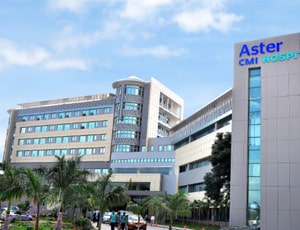
Aster CMI Hospital
Bangalore, India
Aster CMI Hospital located in Bengaluru, India is accredited by JCI, NABH. Also listed below are some of the most prominent infrastructural details:
- Around 500 bed capacity
- Primary care to Quaternary care services
- Outpatient and inpatient departments
- Day care center for small children
- Availability of Surgical suites
- Intensive Care Units
- 24-hour Emergency and Trauma Care
- Emergency Unit especially for children
- Newly launched the Lung and Heart Transplant Centre
- Video Consultation with doctors available on GraphMyHealth
- A specialised Aster Center of Excellence for Women & Children
- Latest Minimally Invasive Procedures being performed
- Safe Interventional Procedures
- Control of Infection protocols are strictly followed
- Aster Holistic Collaborative Care: Aster Palliative Care for lowering suffering if critically ill patients, Physical Medicine & Rehabilitation, Aster Wellness, Psychology, Chronic Pain Management, Nutrition & Dietetic, Podiatry Care etc.
- 11 Centers of Excellence
- An academics focus with BSc Program, MEM Program, Pediatric Fellowship Program
- A streamlined International patient care center with dedicated services and technology enabled processes

Max Super Specialty Hospital, Vaishali
Ghaziabad, India
- Max Super Speciality Hospital, Vaishali, Ghaziabad, is a leading multi-speciality hospital with 387+ beds and 37+ clinical specialities, offering advanced care in Cardiology, Neuro Sciences, Oncology, Orthopaedics, Transplants, Gastroenterology, and Reconstructive Surgery.
- Supported by 389+ doctors and 1038+ trained staff, the hospital combines state-of-the-art technology, including robotic surgery and advanced imaging systems, with compassionate, patient-centred care.
- Accredited by NABH and NABL, Max Vaishali is a trusted destination for both domestic and international patients seeking high-quality, integrated medical services.

MGM Healthcare
Chennai, India
There are a wide variety of healthcare facilities and specialized, targeted treatments provided by MGM HealthCare. Some of its most prominent services are listed below:
Institute of Heart and Lung Transplant and Mechanical Circulatory Support: Well renowned for having the third-highest number of heart transplants in a year (102) and also the successful completion of several other transplant surgeries and cardiac surgeries.
Cardiac Sciences: They offer a variety of screening tests and facilities including Tilt Table Test, Coronary Angioplasty and Stenting, CT Angiography, Coronary Artery Bypass Grafting, Stress Echocardiogram, Cardiac Stress Test and Cardiac Catheterisation.
Obstetrics and Gynaecology: They provide all services to ensure a woman’s well-being. Some of the services offered are Menstrual Cramps Treatment, Colposcopy, Myomectomy, Vaginal Hysterectomy, Breastfeeding Support, Ovarian Cyst Removal, Menopause Management, Vaginal Birth After Caesarean (VBAC), and Menorrhagia Treatment.
Orthopedics: Bilateral Knee Replacement, Total hip Replacement, and Knee Arthroscopy are all the procedures that are offered in this department.
Liver Transplantation: An exceptionally skilled team of professionals who have performed over 4,000 liver transplant surgeries and an operation theatre and ICU specifically dedicated to HBP surgery is available at the patient’s disposal.
Emergency Medicine: MGM Healthcare has a fully functioning facility dedicated to emergency medicine that operates 24 hours a day and 7 days a week.
Oncology: The patients will be in the safe hands of well-trained medical personnel qualified in the field of oncology and specialize in procedures like Bowel resection surgery, Biopsy, Lumpectomy, Liver Resection Surgery, Lung Cancer resection surgery, Lymph Node Surgery, and Laparoscopic Prostatectomy. They also provide cancer treatments like Chemotherapy, Immunotherapy, and Targeted Therapy.
Anaesthesiology and SICU: They specialize in the field of local, general and regional anesthesia and work to assist doctors during surgical procedures.
Neurosciences and Spine: The doctors in this department handle difficult procedures like Brain Tumour Surgery, Spine Reconstructive Surgery, Neuro Surgeries, and Spine Surgeries with the utmost ease and professionalism. They also have a specific area dedicated to Neuroanaesthesia and NeuroCritical Care.
Do visit the environment-friendly medical facility in Chennai and experience medical excellence.
Our Services to better your experience
Opinion & Option
We submit the most accurate opinion and options from one or more countries for your review
Consult Privately
Consult with a certified specialist privately on our telemedicine platform even before you decide to travel
Logistics
We handle flights, visas, transfers, and accommodation—so you can focus on your health.
Recovery
Our In-house rehabilitation service packages to better your recovery and treatment outcome
Why Choose India for Aortic Dissection Treatment?
- World-Class Healthcare Infrastructure: India is home to numerous JCI (Joint Commission International) accredited hospitals equipped with state-of-the-art cardiothoracic surgical suites, specialized aortic intensive care units (ICUs), and advanced hybrid operating theaters designed for complex vascular repairs.
- Highly Skilled Cardiothoracic Surgeons: Vascular and cardiothoracic surgeons are globally renowned for their expertise, often having trained or worked in top medical institutions in the US, UK, and Europe. They routinely manage high volumes of complex aortic emergencies, including Bentall procedures and Frozen Elephant Trunk (FET) reconstructions.
- Cost Advantage: Emergency or elective aortic reconstruction in India costs a fraction of what it does in other nations, without compromising clinical quality.
- Cutting-Edge Diagnostic and Surgical Technology: Indian cardiac centres use the latest medical advancements, including intra-operative fusion imaging, Intravascular Ultrasound (IVUS), and specialised hybrid prostheses, ensuring precise stent deployment and surgical accuracy.
- Minimal Wait Times: Unlike public healthcare systems in some countries where waiting lists can delay complex vascular care, private cardiac centres in India offer immediate admission and rapid surgical deployment, which is vital for a life-threatening condition like an aortic dissection.
- Dedicated Cardiac Teams and Comprehensive Care: Leading Indian hospitals employ multidisciplinary Aortic Teams, including cardiac surgeons, interventional radiologists, cardiologists, and intensive care specialists, to deliver coordinated emergency care and structured post-operative rehabilitation.