aortic aneurysm Treatment in India
- Top Accredited Hospitals
- Global Medical Standards
- Cutting-Edge Technology
- Proven Treatment Options
- High Success Rate
- Trusted by Millions

What is an Aortic Aneurysm?
The aorta is the largest artery in the body, carrying blood and oxygen from the heart to other parts. Any artery can develop an aneurysm.
An aortic aneurysm forms when there is a weakening in the aortic wall. The weak spot of your aorta develops a bulge that resembles a balloon due to the pressure of blood pouring through the artery. We refer to this bulge as an aortic aneurysm.
What is the Importance of Timely Treatment?
To prevent rupture, which can result in fatal internal bleeding and shock, timely treatment of an aortic aneurysm is essential. Early intervention significantly increases survival rates and lowers the danger of consequences like organ damage, whether it be by surgery or minimally invasive techniques like EVAR.
Early intervention also helps manage risk factors, such as hypertension, which stops the aneurysm from getting more significant. Immediate attention guarantees improved surgical results, a quicker recovery, and a decreased risk of long-term health problems.
What are the Common Symptoms of Aortic Aneurysm?
When an aortic aneurysm forms, you may have symptoms such as:
- Shortness of breath or difficulty breathing
- Even after a short lunch, feeling satisfied
- The aneurysm may cause neck, back, chest, or belly pain, depending on where it is forming
- Swallowing that hurts or is challenging
- Swelling in your face, arms, or neck
Symptoms of a ruptured aneurysm can include the following:
- Dizziness or lightheadedness
- Elevated heart rate
- Rapid, Intense back, stomach, or chest discomfort
Types of Aortic Aneurysm
Aortic aneurysms can be classified into two categories. They have an impact on several bodily parts:
- Abdominal aortic aneurysm: The section of the aorta that goes through the abdomen region is where an abdominal aortic aneurysm develops.
- Thoracic aortic aneurysm: The section of the aorta that goes through the chest cavity is where a thoracic aortic aneurysm develops.
Causes, Risk Factors and Complications of Aortic Aneurysm
Causes
Although the exact causes of aortic aneurysms are frequently unknown, they may include:
- Atherosclerosis, or artery narrowing
- An artery's inflammation
- Hereditary disorders, particularly those affecting connective tissue (e.g., Ehlers-Danlos syndrome, Marfan syndrome)
- Aortic injury
- Syphilis
Risk Factors
The most common causes of aortic aneurysms are:
- Smoke
- Are older than 65
- Were born with a male allocated to them
- Possess a history of aortic aneurysms in your family
- Possess hypertension or elevated blood pressure
Complications
- Although the exact causes of aortic aneurysms are frequently unknown, they may include:
- Atherosclerosis, or artery narrowing
- An artery's inflammation
- Hereditary disorders, particularly those affecting connective tissue (e.g., Ehlers-Danlos syndrome, Marfan syndrome)
- Aortic injury
- Syphilis
Connect with our advisor for a PRIORITY response
Latest Research and Technologies in the Treatment of Aortic Aneurysm in India
- The treatment of aortic aneurysms has advanced due to study, medical science, and technology. Patients with aortic aneurysms see a significant improvement in their quality of life due to endovascular procedures like EVAR and TEVAR, combination operations, and medications.
Aortic Aneurysm Prevention Tips
An aortic aneurysm is likely to occur if you use tobacco products, have high blood pressure, or have high cholesterol. You can lower your risk by continuing to lead a healthy life. Consuming a heart-healthy diet is one example of this.
- Exercising regularly
- Keeping a healthy weight in mind
- Use of tobacco products and smoking should be limited
Treatment options for aortic aneurysm
Open-heart surgery: To repair the artery, the doctor removes the aneurysm and stitches a graft—a piece of specialised tubing—into place. Additionally, open aneurysm repair surgery can be required if an aneurysm ruptures, or Endovascular aneurysm repair (EVAR), a less invasive technique for treating aortic aneurysms, is endovascular surgery.
Bentall procedure: The Bentall treatment involves surgery to replace a portion of the aorta and the heart's aortic valve due to an aortic aneurysm.
Cost Start From USD 9000 - USD 12000Explore Options
Aortic aneurysms are discovered during an imaging test of the chest or abdomen:
- Echocardiogram: An ultrasound examination called an echocardiography examines the anatomy and physiology of your heart
- Computed tomography (CT): An imaging test called a CT (computed tomography) scan aids medical professionals in identifying illnesses and wounds regarding aneurysm
- Ultrasound: Ultrasound is a medical imaging method that uses high-frequency sound waves to provide live images of the body's interior.
- MRI: MRI (Magnetic Resonance Imaging), a non-invasive medical imaging method, is used to provide finely detailed images of the body's internal structures.
Aortic aneurysms options include:
Cardiac Rehabilitation Programs: Coordinated efforts that support cardiac rehabilitation via exercise, education, and therapy.
Exercise and Physical Activity: Under supervision, exercise plans to improve cardiovascular health and endurance.
Lifestyle Changes: Encouraging heart-healthy habits include controlling weight, giving up smoking, and making dietary changes.
If an aortic aneurysm ruptures, it can become lethal very fast. To fix it, you'll require emergency surgery.
Additionally, you will need to manage your cholesterol and blood pressure. Your physician might recommend medication to aid with that, like:
- Beta-blockers
- Angiotensin-converting enzyme (ACE) inhibitors
- Statins
- Angiotensin 2 receptor blockers (ARBs)
Instantly Connect with our Specialists


Hospitals for aortic aneurysm in India

Dr. Rela Institute and Medical Centre
Chennai, India
The mega-structure of RIMC serves as a hospital as well as an educational institute. Hence, it offers a huge array of medical services and facilities to cater to the needs of its patients.
Fertility Services - RIMC specializes in both male and female fertility and in procedures like IntraCytoplasmic Sperm Injection (ICSI), Uterine Transplants, Preimplantation genetics and Laser Assisted Hatching (LAH).
Anaesthesia and ICU - The ICU rooms in RIMC are equipped to serve the individual needs of every patient. They boast the largest liver transplant ICU in India and a specific ICU dedicated to pediatrics multi-organ transplants.
Radiology and Imaging Sciences - RIMC has the infrastructure to support high-quality scans including 128 Slice CT, Cardiac MRI, and 3 Tesla MRIs.
Blood Bank and Transfusion Medicine - RIMC has an active blood bank system with facilities dedicated to Blood Component Separation and Therapy. They use high-end technology like the Automated 1H500 Analyser and have a separate Therapeutic Apheresis Unit.
Advanced Endoscopy - Dr. Rela Institute and Medical Centre has one of the most advanced hospital facilities with an individual healthcare unit specifically dedicated to Endoscopy. Advanced procedures like Spyglass Cholangioscopy, Laser therapy, Endoscopic Ultrasound, Capsule Endoscopy, and special ERCP and EUS Suite.
Some of the other healthcare facilities, departments, and services offered by Dr. Rela Institute and Medical Healthcare are listed below:
- Orthopaedics
- Obstetrics and Gynaecology
- Reproductive Medicine
- Hepatology
- Cardiology
- Internal Medicine and Diabetology
- Advanced Paediatrics
- Ear Nose and Throat
- Emergency Medicine
- Interventional Radiology and Imaging Services
- Neonatology
- Neurology
- Liver Disease and Transplantation
- Gastroenterology
- Medical Oncology
- Nephrology
- Neonatology
- Pathology
- Ophthalmology
- Plastic and Reconstructive Surgery
- Radiation Oncology
- Pulmonary Medicine
- Urology
- Surgical Oncology
- Transfusion Medicine
Apart from these facilities, Dr. Rela Institute and Medical Centre also have a preventive health check lounge, 72 consultation suites, and 360 degrees including lab facilities specifically for outpatients.
Visit Dr. Rela Institute and Medical Centre in Chromepet, Chennai today and find the best care for you and your loved ones.

Apollo Multispecialty Hospitals
Kolkata, India
Apollo Multispecialty Hospitals located in Kolkata, India is accredited by JCI, NABH. Also listed below are some of the most prominent infrastructural details:
- International patient Center
- Focus on research and innovation
- Different amenities: Transport, Security, Travel Desk, Places of Worship, Telecommunication Service, Special Nurse, Food & Dietary Services
- Several kinds of rooms: General ward, Semi Private Rooms, Private Rooms, Deluxe, Super Deluxe, Suite, Maharaja Suite, HDU, Gastro ICU, Emergency, Neonatal ICU, Level 1, Level 2 & Level 3
- Health Insurance coverage available
- Here is a comprehensive list of the various kinds of key medical procedures performed through the latest technology.
- Arthroscopy
- Bone Marrow Transplant
- Cosmetic Surgery
- Da Vinci Robotic Surgical System
- Fractional Flow Reserve (FFR)
- Hand Microsurgery
- Hip Arthroscopy
- Minimally Invasive Cardiac Surgery
- Minimally Invasive Subvastus Total Knee Replacement
- Oral & Maxillofacial Surgery
- 128 Slice PET CT
- Bioresorbable Vascular Scaffold (BVS)
- ECMO
- OCT Technique - Optical Coherence Tomography
- Single Port Endoscopic technique of Carpal Tunnel Release (ECTR)

Apollo Hospital
Chennai, India
Apollo Hospital located in Chennai, India is accredited by JCI, NABH. Also listed below are some of the most prominent infrastructural details:
- Committed Centers of Excellence involving many major specialties, super specialties
- Assistance in trip planning and execution
- Insurance related assistance
- Visa facilitation
- International patient representatives for complete end to end travel and transfer processing for medical travellers
- Language translators availability
- Robust safety and infection protocols
- Personalised, Visa and Premium Health Checks available
- Health Library and accessing health records online
- Wide variety of procedures accomplished including complex and critical procedures
- Technologically advanced systems and procedures in place
- Research and academics base of healthcare delivery
Our Services to better your experience
Opinion & Option
We submit the most accurate opinion and options from one or more countries for your review
Consult Privately
Consult with a certified specialist privately on our telemedicine platform even before you decide to travel
Logistics
We handle flights, visas, transfers, and accommodation—so you can focus on your health.
Recovery
Our In-house rehabilitation service packages to better your recovery and treatment outcome
Why Choose India for Aortic Aneurysm Treatment?
Here are some of the reasons for choosing India:
- Due to advancements in medical facilities, such as minimally invasive surgical techniques.
- World-class experts include highly experienced doctors, JCI, and NABH-accredited healthcare institutions.
- Compared to other countries, treatment in Indian hospitals is cost-effective.
- Indian hospitals provide International patient services, including a multilingual support system.
- Improved treatment methods and biological therapies.
Frequently Asked Questions
An aortic aneurysm often doesn't cause symptoms unless it ruptures. If it does, the aneurysm will cause you to experience abrupt, severe pain. In addition to feeling lightheaded or queasy, you might have a weak pulse and a rapid heartbeat.
According to reports, the success rate for aortic aneurysm procedures in India, specifically Endovascular Aneurysm Repair (EVAR), is between 95 and 97 per cent, comparable to international norms. The success rates for open surgery are usually between 90 and 93 per cent.
You need emergency surgery as soon as possible if an aortic aneurysm bursts to survive. Over 95% of patients who undergo surgery before aneurysm rupture survive the procedure.
Following aneurysm surgery, recovery takes at least one month. Your doctor will monitor if the aneurysm grows, changes, or causes problems. Most of the of patients recover well from surgery.
Every procedure carries some risk.
Following surgery, possible consequences are as follows:
- Endoleak, or blood leaking around the graft
- Displacement of the graft from its original location.
- Blood clot formation.
- Infection.
An aortic aneurys likely to occur if you use tobacco products, have high blood pressure, or have high cholesterol. You can lower your risk by continuing to lead a healthy life by :
- Consuming a heart-healthy diet
- Exercising regularly.
- Keeping a healthy weight in mind.
- Limitingthe use of tobacco products and smoking
The size and risk of rupture determine how frequently the area is monitored. Imaging is usually performed every six to twelve months for minor aneurysms. Regular monitoring may be necessary for larger aneurysms or those growing.
An aortic aneurysm won't heal by itself, sorry. Depending on size and location, it must be managed clinically or surgically.
Blood pressure control is essential to stop the aneurysm from getting bigger and to lower the chance of rupture. To help in maintaining a healthy blood pressure level, doctors may prescribe medication.
An aortic aneurysm rupture could be the cause of sudden back or chest pain, which is a medical emergency. To avoid complications, get medical help right away.

Reviewer
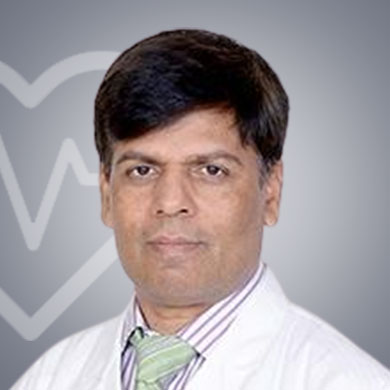
Dr. Nityanand Tripathi
Interventional Cardiologist
29 Years of Experience
With a rich experience of more than 29 years, Dr. Nityanand has gained a vast spectrum of skills and expertise in performing all types of complex cardiac procedures. He is an expert in clinical & interventional cardiology and electrophysiology. He studied his medicine (MBBS) and MD from the Institute of Medical Sciences of Banaras Hindu University, Varanasi, and later completed his DM in Cardiology from the prestigious King George Medical University, Lucknow. View More
Last Reviewed - January 2026