Anorectal Varicosities Treatment in India
- Top Accredited Hospitals
- Global Medical Standards
- Cutting-Edge Technology
- Proven Treatment Options
- High Success Rate
- Trusted by Millions

What are Anorectal Varicosities?
Anorectal varicosities, also called anorectal or rectal varices, are abnormally enlarged veins in and around the rectum and anus. They usually develop as collateral blood vessels when portal hypertension causes increased pressure in the portal venous system, most commonly in people with advanced liver disease or other conditions affecting portal blood flow.
What is the Importance of Timely Treatment?
Anorectal varices may remain asymptomatic, but they can cause significant or potentially life-threatening rectal bleeding when a varix ruptures. Prompt evaluation is particularly important in patients with portal hypertension who develop unexplained rectal bleeding. Early diagnosis also allows doctors to identify and manage the underlying cause of portal hypertension and reduce the risk of recurrent bleeding.
What are the Common Symptoms of Anorectal Varicosities?
- Rectal bleeding
- Blood in the stool
- Anemia
- Anorectal discomfort
- Symptoms of underlying liver disease
Causes and Risk Factors of Anorectal Varicosities
Causes
- Portal hypertension: Increased pressure in the portal venous system is the principal underlying mechanism.
- Liver cirrhosis: Advanced chronic liver disease can increase portal pressure and promote formation of collateral veins.
- Portal vein thrombosis: Obstruction of portal blood flow can contribute to portal hypertension and collateral vessel formation.
- Non-cirrhotic portal hypertension: Conditions such as extrahepatic portal venous obstruction or other vascular disorders can also cause anorectal varices.
- Other causes of portal hypertension: Any condition that significantly increases portal venous pressure may contribute to development of ectopic varices.
Risk Factors
- Chronic liver disease or cirrhosis
- Portal hypertension
- Portal vein thrombosis or obstruction
- Previous abdominal or pelvic surgery in selected patients
- Conditions causing non-cirrhotic portal hypertension
- Previous episodes of variceal bleeding
Latest Research and Technologies in the Treatment of Anorectal Varicosities in India
- Management of anorectal varices increasingly involves a multidisciplinary approach combining gastroenterology, hepatology, endoscopy, and interventional radiology. Treatment selection depends on bleeding severity, portal pressure, venous anatomy, and the underlying condition. Endoscopic ultrasound (EUS) with colour Doppler can help identify deep rectal varices, assess blood-flow patterns, and support treatment planning. In patients with persistent or severe bleeding, interventional radiology procedures, including embolisation and, in selected cases, transjugular intrahepatic portosystemic shunt (TIPS), may be considered to control bleeding and address portal hypertension.
Treatment options for Anorectal Varicosities
Endoscopic treatment: Endoscopic band ligation, sclerotherapy or other local techniques may be used to control bleeding when anatomically appropriate.
EUS-guided therapy : EUS-guided injection techniques, including selected glue-based approaches, may be considered in specialised centres.
Cost Start From 150Explore Options
Interventional radiology: Embolisation can control bleeding when endoscopic treatment is unsuccessful or unsuitable.
TIPS: In selected patients with significant portal hypertension and recurrent or uncontrolled bleeding, TIPS may decompress the portal venous system.
- Clinical assessment:
- Medical History: The doctor reviews rectal bleeding, previous episodes, liver disease, portal hypertension and any history of abdominal or pelvic procedures.
- Physical Examination: Examination of the abdomen and anorectal region helps assess bleeding and distinguish possible varices from other causes such as hemorrhoids.
- Blood Tests: Complete blood count and coagulation testing can help identify anemia, blood loss and abnormalities that may affect treatment.
- Liver and Portal Hypertension Assessment: Clinically indicated, liver function tests and investigations for the underlying cause of portal hypertension may be performed.
- Endoscopic Assessment: Anoscopy, proctoscopy or flexible sigmoidoscopy may be used as initial tools to identify anorectal varices and locate a bleeding source.
- Imaging Tests:
- Endoscopic Ultrasound (EUS): EUS can identify deep rectal varices and assess their venous anatomy and blood flow.
- Colour Doppler Ultrasound: Doppler imaging can evaluate portal and collateral venous blood flow and may help assess portal hypertension.
- Contrast-Enhanced CT: CT can demonstrate collateral vessels, portal venous abnormalities and the broader abdominal vascular anatomy.
- MRI/MR Angiography: MRI-based imaging can provide detailed information about pelvic and portal venous anatomy when additional assessment is required.
- Portal Venography/Angiographic Assessment: In selected patients, interventional radiological imaging can map abnormal venous channels and assist with treatment planning.
- Medicines for anorectal varices mainly help control portal hypertension and bleeding rather than directly removing the varices. Treatment may include beta-blockers to reduce portal pressure, vasoactive medicines such as octreotide or terlipressin during acute bleeding, and antibiotics when indicated. Severe blood loss may require blood transfusion, while treating the underlying liver or vascular condition is essential to reduce recurrence.
Instantly Connect with our Specialists


Hospitals for Anorectal Varicosities in India
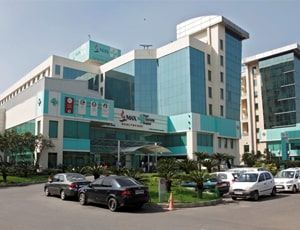
Max Super Speciality Hospital, Saket
Delhi, India
Max Smart Super Speciality Hospital, Saket, is a 250-bed tertiary care hospital awarded NABH accreditation, which provides advanced medical care in various specialities such as Cardiac Sciences, Orthopaedics, Neurology, Urology, Kidney Transplant, Paediatrics, and Obstetrics & Gynaecology. The hospital provides quality, safe, integrated, and patient-centric medical care using modular OTs, ICUs, Cath Labs, CT, MRI and Dialysis units.

Manipal Hospital, Hebbal
Bangalore, India
Manipal Hospitals, a group of Manipal Education Medical Group, is India’s leading multi-speciality network, comprising over 650 beds. Dedicated to clinical excellence, patient-centric care and ethical practices, it provides sophisticated diagnostics, surgery and home care services to both domestic and international patients, while also improving access to affordable healthcare for underprivileged communities.

VPS Rockland Hospital
Gurgaon, India
VPS Rockland Hospital located in Gurugram, India is accredited by NABH, NABL. Also listed below are some of the most prominent infrastructural details:
- Well-designed compact 103-bed hospital expanding over120,000 square feet
- Well equipped modular operation theatres, intensive care unit, interventional Cath lab, and in-patient rooms ranging from economy to luxury
- Offers a bouquet of services like Internal Medicine, Obstetrics & Gynaecology, Surgery, Pediatrics
- High-end diagnostic services like 1.5 T MRI and 128 slice CT Scan
- Advanced non-invasive assessment with echo & TMT machines
- State of the art cardiac Cath-Lab
- Appointment Scheduling
- Treatment packages
- Accommodation arrangement for the accompanying attendant
- Customized diet for patient and attendant
- Laundry services
- Prayer room
- Visa assistance
- Pick and drop facility from/to the Airport
- Foreign exchange facility
- Registration with the Foreigners Regional Registration Office
- Dedicated Neuro-Intensive care unit managed by expert intensivists
- Accommodation arrangements post discharge
- Highly advanced instruments for deep brain stimulation, stereotaxy, micro-neurosurgery, pediatric neurosurgery & neurophysiology
- Most advanced dialysis machines and advanced diagnostic and therapeutic facilities
- Renal replacement therapy for hemo-dynamically unstable patient
- Technologically advanced endoscopy suite
- Wi-Fi/internet service in the room
- Travel arrangement for patient & attendant post discharge
- Tele-consults post discharge
- Dialysis beds
- 24x7 ‘Trauma & Emergency Center
- Dedicated blood bank
- 24x7 comprehensive patient care.
- Deployed high-end technologies & smart digital system
- Robust Hospital Information Systems to meet complex medical needs of patients
- Robotic-assisted surgeries
- International Patients Lounge
Our Services to better your experience
Opinion & Option
We submit the most accurate opinion and options from one or more countries for your review
Consult Privately
Consult with a certified specialist privately on our telemedicine platform even before you decide to travel
Logistics
We handle flights, visas, transfers, and accommodation—so you can focus on your health.
Recovery
Our In-house rehabilitation service packages to better your recovery and treatment outcome
Why Choose India for Anorectal Varicosities Treatment?
- Specialised Gastroenterology Care: Indian hospitals have gastroenterology and hepatology departments experienced in evaluating portal hypertension and gastrointestinal bleeding.
- Advanced Endoscopic Facilities: Specialised centres offer diagnostic and therapeutic endoscopy, including EUS and Doppler-assisted assessment.
- Interventional Radiology Expertise: Selected hospitals offer procedures such as embolisation and TIPS for complex portal-hypertension-related bleeding.
- Multidisciplinary Treatment: Gastroenterologists, hepatologists, interventional radiologists, and surgeons can manage complex cases collaboratively.
- International Patient Support: Many Indian hospitals provide international-patient services such as medical record review, specialist appointments, treatment coordination and assistance with travel-related arrangements.