Adenoid Cystic Carcinoma Treatment in India
- Top Accredited Hospitals
- Global Medical Standards
- Cutting-Edge Technology
- Proven Treatment Options
- High Success Rate
- Trusted by Millions

What is Adenoid Cystic Carcinoma?
Adenoid Cystic Carcinoma (ACC) is a rare cancer found in most cases within the salivary glands. However, it is also able to be found elsewhere in the body including the female breast/right atrium/breast/mammary gland, respiratory transitions, vagina, and female anatomy. ‘Adenoid cystic carcinoma is a slowly growing cancer that tends to spread along nerves aggressively.
What is the Importance of Timely Treatment?
- Local Tumor Treatment and Distant Tumors: Tumor growth and the transition to more complex locations can be effectively prevented via immediate diagnosis of ACC. As the cancer gradient is known to be the enemy, the tumor may overcome this threshold, eventually spreading along an inflammatory pattern.
- Nerve Invasion Risk Is Decreased: ACC has a propensity to invade nerves as it grows, which is called neurotropism. If neurological tumors are developed, premature treatment is helpful to stop the spread of such tumors along the nerve tracts in the body.
- Curability of the disease: The patient’s quality of life and life expectancy must be considered regarding the stage rather than the location of the disease. Again, all of them are backed up with further facts, which means that more measures are required to cure the disease significantly if it has advanced to other parts.
What are the Common Symptoms of Adenoid Cystic Carcinoma?
- Painless Lump or Swelling (Head and neck)
- Facial Numbness or Weakness
- Difficulty Swallowing or Speaking
- Bleeding or Discharge
- Coughing
- Breathing Difficulty.
- Chest Pain
- Painless Lump in the breast
- Changes in Breast Shape or Size
- Pain or Tenderness
- Abnormal Discharge from the vagina
- Pain or Swelling, Fatigue or Weakness
- Unexplained Weight Loss
Causes and Risk Factors of Adenoid Cystic Carcinoma
Causes
- Genetic Mutations
- Uncontrolled Cell Growth
Risk Factors:
- Age
- Gender
- Previous Radiation Exposure
- Occupation/Environmental Exposures
- Family History
- Chronic Inflammation or Irritation
- Immune System Deficiencies
Connect with our advisor for a PRIORITY response
Latest Research and Technologies in the Treatment of Adenoid Cystic Carcinoma in India
The medical treatment of carcinoid tumours in India has adopted the newest research and technologies to meet worldwide clinical standards and healthcare capabilities.
- Specialised Esophageal Cancer Services: With the ever-increasing number of patients changing to better screening and early diagnostic methods with the help of high-resolution MRI, PET scans have focused on head and neck adeno cystic carcinoma to help in better management.
- Minimally Invasive Correct Procedures: Robot-assisted corrective procedures are gaining prominence and advantages such as higher accuracy, less scarring, and shorter recovery periods are becoming more critical. This is particularly so for ACC neoplasms in unfavorable body parts, such as the head and neck.
- Targeted Therapy and Immunotherapy: Clinical experiments in India are currently underway, looking at the use of customised medicinal agents and immunotherapeutic agents in treatment, emphasising specific molecular targets and the genetic basis of the disease. These therapies are created to attack cancer cells better while bringing minimal to no injury to the healthy tissues.
- New treatment of interventional therapy: The latest advances in radiation treatment, such as protons or intensity-modulated radiation therapy, are one example. They are invaluable in treating tumours in locations like the salivary glands or nervous system, which are more sensitive.
Adenoid Cystic Carcinoma Prevention Tip:
- Reduced Exposure to Radiation: Minimize excessive exposure to ionising radiation, especially in the head and neck. Targeted therapy is necessary if radiation today is required and should only be used by definition when needed.
- Avoiding Occupational Hazards: Minimize exposure to hazardous substances or chemicals in the work environment, such as textile factories, paint manufacturing plants, and other manufacturing-industry plants where risks are prone. Provide personal protective equipment and follow safety instructions.
- Family History Monitoring: Although adenoid cystic carcinoma is sporadically inherited, it can develop in individuals with cancers in their family history. Discuss genetic counseling and early screenings with your doctor if cancer has occurred in your family in the past.
- Healthy Lifestyle: Adopt regular exercise, maintain a proper diet, and avoid smoking and over-consuming alcohol to minimise risks of different cancers, including ACC.
- Regular Medical Checkups: Do not ignore the most common symptoms of ACC tumours, and treat every swelling, lump, or other symptoms as profound malaise. Healthy habits and the proper medical treatments are based on the same principle: early detection through continuous screening.
Treatment options for Adenoid Cystic Carcinoma
The medical treatment for Adenoid Cystic Carcinoma requires evaluating the patient's severity and medical condition. The following are the treatment options:
Surgical Management: Surgery is usually the primary modality in treating Adenoid Cystic Carcinoma (ACC). The goal is to completely resect the tumour with clear margins. For tumors in the head and neck or salivary glands, wide local excision is standard.
Radiation therapy: When surgery cannot altogether remove the tumor or if there is a high risk for recurrence, most likely, it will be radiation therapy afterward. These are advanced radiation techniques; two examples are IMRT and proton therapy. This has the least effect on the surroundings.
Chemotherapy : ACCs usually respond poorly to standard chemotherapy drugs, so their use is discouraged in such cases. In exceptional cases with metastatic or advanced disease, or when surgery and radiotherapy are not good options or not possible in that situation, chemotherapy might be attempted.
Cost Start From USD 600 - USD 700Explore Options
Targeted Therapy: It is an emerging therapy that targets the selected molecular mutations in ACC. Tyrosine kinase inhibitors are in the pretesting stages, but they are helpful research questions in the treatment possibilities of advanced cases.
Cost Start From USD 8000 - USD 12000Explore Options
Immunotherapy : ACC immunological research concerns the immune checkpoint blockade, especially in the more advanced stages. For advanced and relapsing cases, palliative care focuses more on symptom management and quality of life improvement.
Cost Start From USD 3000 - USD 5000Explore Options
These are the standard diagnostic methods for diagnosing Adenoid Cystic Carcinoma:
- Physical examinations: Checking for swelling or lumps in the salivary glands, neck and head are noted during a physical exam, with subsequent diagnostic tests being carried out for confirmation.
- Imaging Studies:
- CT Scan (Computed Tomography): A CT scan that exposes deeper structures further determines the extent of the ACC spread.
- PET Scan (Positron Emission Tomography): People who have undergone a PET scan may have cancer in some parts of the body if the patient is a candidate for surgery or radiotherapy.
- MRI (Magnetic Resonance Imaging): It helps assess the extent, size, and location.
- Biopsy:
- Needle biopsy: A fine needle ablates the targeted tissue mass.
- Incisional biopsy: A small part of the tumor is removed but inspected.
- Fine Needle Aspiration (FNA): A skinny needle takes a small sample of an imaging-identified lesion. This is usually appropriate when the tumor is small and within reach in zones like the salivary gland and the neck.
MediRehab (a chain of Rehab centres, part of MediGence) provides comprehensive rehabilitation services designed to support patients in India. Additional services are as per the patient's requirement. These services include:
- Speech Therapy: Rehabilitation of the voice or exhausted swallowing ability is located near the mouth or throat, mainly when tumors are the causative agents.
- Physical Therapy: Brings mobility and muscle power restoration after surgery when nerves or muscles have been injured. It helps to keep flexibility in the area concerned with surgery, such as the neck or face.
- Psychological Support: It offers counseling, which is very vital in the emotional state of the post-treatment phase, which allows the patients to deal with anxiety, depression, and the, especially, emotional depravity.
- Lifestyle Modifications: Nutritional advice is essential to patient life after treatment because patients cannot swallow after attaining controlled or prescribed high amounts of nutrients. Patients must alter their diet or need tube feeding to distribute the required calories and nutrients.
- Management for Lymphedema: Reduction in the presence of swelling that follows surgery can be done through lymphedema therapy when that swelling fluid is made to be discharged and circulation is fastened. Also, manual lymphatic drainage, compression garments and even styles utilised during a massage session can likely be managed in swelling.
Treatment options for Adenoid Cystic Carcinoma (ACC) may often include chemotherapy. Still, it has been known to be less successful. However, there are emerging and targeted forms of therapy through tyrosine kinase inhibitors versus other phenomena that involve immunotherapy via immune checkpoint inhibitors for advanced stages.
Instantly Connect with our Specialists


Hospitals for Adenoid Cystic Carcinoma in India

Sri Ramachandra Medical Centre
Chennai, India
Sri Ramachandra Medical Centre located in Chennai, India is accredited by ISO, JCI, NABH, NABL. Also listed below are some of the most prominent infrastructural details:
- The best minds in healthcare including specialists, and other healthcare professionals work together to treat patients with simple to complex and critical conditions.
- The number of inpatients and outpatients (annually) are 35,000 and 2,50,000 respectively.
- A wide range of surgical specialties, sub specialties are available in Sri Ramachandra Medical Centre Chennai.
- The bed capacity of the hospital is 800 which is inclusive of 200 Intensive Care Unit beds.
- Blood Bank and Eye Bank are available on a 24/7 basis.

Max Smart Super Speciality Hospital
Delhi, India
- Max Smart Super Speciality Hospital, Saket, New Delhi, is a 250-bed tertiary care hospital known for advanced medical technology and patient-centred care.
- The hospital offers services across 22+ specialities, including Cardiac Sciences, Orthopaedics, Urology, Neurology, Neurosurgery, Paediatrics, Obstetrics, and Gynaecology.
- It is a regional hub for complex procedures such as neurovascular interventions, targeted cancer treatments, heart surgeries, kidney and liver transplants, and bariatric care.
- Equipped with a 3.0 Tesla MRI, 256 Slice CT Angio, Cath Labs, Digital Orthopaedic Suite, and advanced diagnostic tools, and supported by 275+ doctors and 606+ trained staff, Max Smart Saket provides high-quality, multidisciplinary care for domestic and international patients.
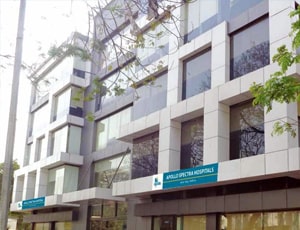
Apollo Spectra Hospital
Pune, India
Apollo Spectra Hospital located in Pune, India is accredited by JCI. Also listed below are some of the most prominent infrastructural details:
- Present in a 30000 sq. ft. area
- 5 beds are for critical care
- 5 ultra-modern modular OTs
- World class rehabilitation center
- In-house pharmacy
- Beautifully designed In-patients waiting area
- 80 plus healthcare professionals which also includes 45 specialist consultants
Our Services to better your experience
Opinion & Option
We submit the most accurate opinion and options from one or more countries for your review
Consult Privately
Consult with a certified specialist privately on our telemedicine platform even before you decide to travel
Logistics
We handle flights, visas, transfers, and accommodation—so you can focus on your health.
Recovery
Our In-house rehabilitation service packages to better your recovery and treatment outcome
Why Choose India for Adenoid Cystic Carcinoma Treatment?
The following are the much-growing reasons for India being frequented for Adenoid Cystic Carcinoma treatment:
- World-Class Health Services at Affordable Costs: The nation is proficient in advanced medical technologies and treatments, including high-quality care at often dissimilar cost ratios of Western countries.
- Most Qualified Professionals: Patients will find internationally trained, renowned hepatologists, surgeons, and specialists. Medical and individualised treatment options will complement the value of the care provided by the best experts in India.
- Complete Medical Services: From advanced diagnostic tools such as elastography and imaging to liver transplants, India has gone the extra mile to provide patients with cutting-edge facilities for total Adenoid Cystic Carcinoma treatment.
- Easy Medical Tourism: India is becoming a central international hub for medical tourism. Many accredited hospitals provide excellent service to international patients, including easy accessibility, visa assistance, and organised packages.
- Holistic Treatment: Most hospitals in India work towards a mainstream plus traditional treatment regime for complete liver health recovery and wellness, thus attending to emotional and physical wellness.
Frequently Asked Questions
ACC is a treatable but not easily curable cancer. If diagnosed early and treated appropriately, there is a good chance of managing the disease, but recurrence is common due to its slow-growing nature. Long-term follow-up is essential.
The prognosis for ACC depends on the tumour’s location, stage, and whether it has spread. With early detection and treatment, the survival rate is relatively good, but the disease’s tendency to recur or spread makes regular monitoring important.
While slow-growing, ACC can spread to other areas, particularly the lungs, bones, and liver. If the cancer metastasises, it becomes harder to treat but not impossible.
There are no known methods to prevent ACC. However, reducing exposure to radiation and avoiding smoking may lower the risk of developing certain cancers, including ACC.
ACC is a rare cancer in India, though it occurs in both adults and children, primarily affecting the salivary glands, head, neck, and airway. It is less common compared to other cancers but can still be diagnosed with increasing awareness.
The survival rate for ACC in India depends on early detection and treatment. With timely surgery and radiation therapy, many patients achieve favorable outcomes, though the disease tends to recur over time, requiring long-term monitoring.
Author

Dr. Shagufta Parveen
Dr. Shagufta Parveen is a Clinical researcher and medical writer with expertise in clinical pharmacology and pharmacotherapeutics. She holds a B.Pharm and Doctor of Pharmacy (Post-Baccalaureate) degree from Teerthanker Mahaveer University, Moradabad.
During her clinical stint at BLK-Max Super Speciality Hospital and Indraprastha Apollo Hospital, she gained hands-on experience in the Clinical Pharmacology Department. Combining scientific knowledge with strong medical writing skills, Dr. Shagufta develops evidence-based healthcare content, treatment guides, and patient education resources.
Her work focuses on simplifying complex medical concepts while maintaining scientific accuracy, helping readers better understand healthcare advancements and treatment options.
In addition to her writing expertise, she is actively involved in scientific research and has contributed to peer-reviewed publications.
Her research work is accessible through the following links:
https://scholar.google.com/citations?user=lMVK1eIAAAAJ&hl=en
https://carcinogenesis.com/index.php/JOC/article/view/870
https://carcinogenesis.com/index.php/JOC/article/view/868
https://wjpsronline.com/abstract/0000000760
View MoreReviewer

Dr. Mohit Agarwal
Medical Oncologist
14 Years of Experience
One of the finest Oncologist in New Delhi, India, Dr. Mohit Agarwal has worked with several world class multidisciplinary hospitals over the years. Dr. Mohit Agarwal has over 14+ years of experience in his field. The doctor treats and manages a wide range of conditions such as Stomach Cancer, Rectal Cancer, Breast Cancer, Brain Cancer View More
Last Reviewed - January 2026