Acute Cholecystitis Treatment in India
- Top Accredited Hospitals
- Global Medical Standards
- Cutting-Edge Technology
- Proven Treatment Options
- High Success Rate
- Trusted by Millions

What is an Acute Cholecystitis?
Acute cholecystitis is a sudden inflammation of the gallbladder, most commonly caused by a gallstone blocking the cystic duct. The blockage can lead to bile accumulation, gallbladder inflammation, swelling, and sometimes infection. Less commonly, acute cholecystitis can occur without gallstones, particularly in people who are critically ill or have certain serious medical conditions. If untreated, severe inflammation can result in complications such as gallbladder tissue death, perforation, abscess formation, or infection spreading into the abdominal cavity.
What is the Importance of Timely Treatment?
Timely treatment is important because acute cholecystitis can progress from localised gallbladder inflammation to more serious complications. Early assessment helps determine disease severity, identify gallstones or other causes of obstruction, assess infection and organ function, and select appropriate treatment. For patients who are suitable surgical candidates, early laparoscopic cholecystectomy is generally the preferred definitive treatment. Patients with severe disease or high surgical risk may require antibiotics, supportive treatment, gallbladder drainage, or delayed surgery depending on their clinical condition.
What are the Common Symptoms of an Acute Cholecystitis?
- Sudden or persistent pain in the upper right abdomen
- Pain that may spread to the right shoulder or back
- Abdominal tenderness, particularly beneath the right ribs
- Pain that may worsen after eating
- Fever and chills
- Nausea and vomiting
- Loss of appetite
- Abdominal bloating or discomfort
- Elevated heart rate
- General weakness or feeling unwell
- Jaundice in some patients, particularly when there is associated bile-duct obstruction
Causes and Risk Factors of Acute Cholecystitis
Causes
- Gallstone blocking the cystic duct
- Gallbladder inflammation caused by prolonged obstruction
- Bacterial infection occurring in association with biliary obstruction
- Acute acalculous cholecystitis without gallstones
- Reduced gallbladder blood supply in severe systemic illness
- Bile stasis
- Major trauma, burns, or critical illness
- Certain severe infections or systemic medical conditions
Risk Factors
- Gallstones or previous biliary colic
- Previous episodes of cholecystitis
- Female sex
- Increasing age
- Obesity
- Rapid weight loss
- Pregnancy or increased estrogen exposure
- Diabetes and metabolic disorders
- Family history of gallstones
- Hemolytic disorders that increase pigment-stone formation
- Liver disease or cirrhosis
- Prolonged fasting or parenteral nutrition
- Critical illness, major surgery, trauma, or burns
Latest Research and Technologies in the Treatment of Acute Cholecystitis in India
- Current management focuses on rapid diagnosis, severity assessment, early definitive treatment, and prevention of complications. Ultrasound is commonly used as the initial imaging investigation, while CT or other imaging may be used when the diagnosis is uncertain, or complications need assessment. Laboratory testing helps identify systemic inflammation, infection, and associated liver or pancreatic abnormalities. Laparoscopic cholecystectomy remains the standard definitive surgical treatment for suitable patients with acute cholecystitis. Gallbladder drainage, including percutaneous cholecystostomy, remains an option for selected high-risk patients who cannot safely undergo immediate surgery.
Treatment options for Acute Cholecystitis
Laparoscopic Cholecystectomy: Laparoscopic removal of the gallbladder is the preferred definitive treatment for most patients who are appropriate surgical candidates. Early surgery treats the source of inflammation and reduces the risk of recurrent attacks and complications.
Gallbladder Drainage: Critically ill patients or those with high operative risk may require gallbladder drainage instead of immediate surgery. Percutaneous cholecystostomy or other drainage techniques may control infection and inflammation, with subsequent management determined by the patient's recovery and surgical suitability.
- Clinical assessment:
- Medical and Symptom History: Evaluation includes the onset, location, duration, and severity of abdominal pain, relationship to meals, nausea or vomiting, fever, chills, jaundice, previous gallstone attacks, previous abdominal surgery, medical conditions, medications, and risk factors for gallstone disease.
- Physical Examination: The clinician assesses the abdomen for right upper-quadrant tenderness, guarding, abdominal distension, fever, and other signs of systemic illness. A positive Murphy-type finding may support the diagnosis when consistent with the overall clinical picture.
- Laboratory Assessment: Blood tests may include complete blood count, inflammatory markers, liver enzymes, bilirubin, kidney function, electrolytes, and pancreatic enzymes when clinically indicated.
- Severity and Complication Assessment: Patients are evaluated for systemic inflammatory response, organ dysfunction, sepsis, gallbladder gangrene, perforation, abscess formation, bile-duct obstruction, and pancreatitis.
- Preoperative Assessment: Patients being considered for surgery may undergo cardiovascular, respiratory, anesthetic, nutritional, and metabolic assessment, particularly when they are older, have significant comorbidities, or present with severe disease.
- Imaging Tests:
- Abdominal Ultrasound: Usually the initial imaging investigation. It can identify gallstones, gallbladder-wall thickening, gallbladder enlargement, pericholecystic fluid, and other findings supporting acute cholecystitis.
- CT Scan: May be used when ultrasound is inconclusive or when complications such as perforation, abscess, gangrene, or alternative abdominal pathology are suspected.
- MRI/MRCP: Magnetic resonance imaging and magnetic resonance cholangiopancreatography may be used when additional assessment of the gallbladder or bile ducts is required.
- Hepatobiliary Scintigraphy: A HIDA scan may be considered in selected patients when the diagnosis remains uncertain after clinical assessment and ultrasound.
- Endoscopic Ultrasound or ERCP: These may be considered when common bile-duct stones or other biliary obstruction is suspected. ERCP can also provide treatment when a bile-duct stone requires removal.
MediRehab (a chain of Rehab centres, part of MediGence) provides comprehensive rehabilitation services designed to support patients with Acute Cholecystitis in India. These Services include:
- Early Mobilisation: Walking and gentle movement are generally encouraged after stabilisation or surgery as tolerated to support recovery and reduce complications associated with prolonged inactivity.
- Gradual Activity Progression: Physical activity can usually be increased progressively after laparoscopic or open surgery according to the surgical team's recommendations.
- Postoperative Wound and Pain Management: Patients should follow instructions regarding incision care, pain control, lifting restrictions, and signs of infection after cholecystectomy.
- Medication treatment for acute cholecystitis generally focuses on controlling pain, supporting hydration and correcting electrolyte abnormalities, and treating suspected bacterial infection when indicated. Clinicians may use analgesics such as nonsteroidal anti-inflammatory drugs and other pain medicines based on the patient's condition, while selecting antibiotics based on severity, suspected organisms, local resistance patterns, allergies, kidney function, and institutional protocols.
Instantly Connect with our Specialists


Hospitals for Acute Cholecystitis in India

Manipal Hospital, Dwarka
Delhi, India
Manipal Hospital Dwarka is a leading multi-super speciality tertiary care hospital offering world-class, affordable, and accessible healthcare. Backed by renowned doctors, advanced technology, and global standards in clinical care, the hospital provides comprehensive preventive, diagnostic, and therapeutic services for all age groups. With 380 beds, 13 modular OTs, 118 critical care beds, and 24/7 emergency services, it combines excellence in patient care with innovations like AI, telemedicine, remote monitoring, and EMR—striving to become a fully digital, paperless hospital setting new standards in modern healthcare.

Dr. Rela Institute and Medical Centre
Chennai, India
The mega-structure of RIMC serves as a hospital as well as an educational institute. Hence, it offers a huge array of medical services and facilities to cater to the needs of its patients.
Fertility Services - RIMC specializes in both male and female fertility and in procedures like IntraCytoplasmic Sperm Injection (ICSI), Uterine Transplants, Preimplantation genetics and Laser Assisted Hatching (LAH).
Anaesthesia and ICU - The ICU rooms in RIMC are equipped to serve the individual needs of every patient. They boast the largest liver transplant ICU in India and a specific ICU dedicated to pediatrics multi-organ transplants.
Radiology and Imaging Sciences - RIMC has the infrastructure to support high-quality scans including 128 Slice CT, Cardiac MRI, and 3 Tesla MRIs.
Blood Bank and Transfusion Medicine - RIMC has an active blood bank system with facilities dedicated to Blood Component Separation and Therapy. They use high-end technology like the Automated 1H500 Analyser and have a separate Therapeutic Apheresis Unit.
Advanced Endoscopy - Dr. Rela Institute and Medical Centre has one of the most advanced hospital facilities with an individual healthcare unit specifically dedicated to Endoscopy. Advanced procedures like Spyglass Cholangioscopy, Laser therapy, Endoscopic Ultrasound, Capsule Endoscopy, and special ERCP and EUS Suite.
Some of the other healthcare facilities, departments, and services offered by Dr. Rela Institute and Medical Healthcare are listed below:
- Orthopaedics
- Obstetrics and Gynaecology
- Reproductive Medicine
- Hepatology
- Cardiology
- Internal Medicine and Diabetology
- Advanced Paediatrics
- Ear Nose and Throat
- Emergency Medicine
- Interventional Radiology and Imaging Services
- Neonatology
- Neurology
- Liver Disease and Transplantation
- Gastroenterology
- Medical Oncology
- Nephrology
- Neonatology
- Pathology
- Ophthalmology
- Plastic and Reconstructive Surgery
- Radiation Oncology
- Pulmonary Medicine
- Urology
- Surgical Oncology
- Transfusion Medicine
Apart from these facilities, Dr. Rela Institute and Medical Centre also have a preventive health check lounge, 72 consultation suites, and 360 degrees including lab facilities specifically for outpatients.
Visit Dr. Rela Institute and Medical Centre in Chromepet, Chennai today and find the best care for you and your loved ones.
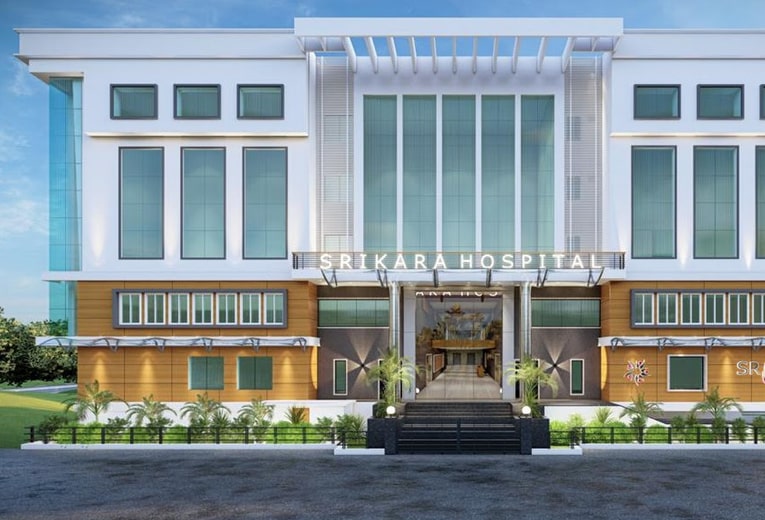
Srikara Hospital, RTC Cross Roads
Hyderabad, India
Srikara Group of Hospitals is an 850-Bedded Tertiary Care healthcare facility, spread over 7 branches and two states in Southern India. 6 out of these 7 branches are situated in the twin city of Hyderabad- Secunderabad and 1 branch is at Vijayawada, Andhra Pradesh. As the ultimate combination of benefits a hospital can provide, Srikara Ortho & Multi-Specialty Hospitals represents the infusion of quality, knowledge, technical proficiency, international standards, compassion, and reasonably priced care. Srikara Hospital is known for its excellence in Orthopedic as well as Neuro-Spine Surgeries. With top-of-the-chart technical proficiency, quality, and skills; Srikara is the destination of choice for patients from not only India but across the globe. Srikara Hospitals are the pioneers in doing Robotics-assisted Joint Replacements in Southern India. These hospitals have been using technologies like Computer Navigation and I-Suite theaters since their inception. Three of its 7 branches offer minimally Invasive Spine surgeries done with the use of top quality Operating microscopes. For patients from other countries seeking treatment at its facilities, Srikara has established a separate unit. By partnering with hospitals and institutions that share its commitment to and passion for ‘Patient Care’, it now hopes to expand its surgical expertise throughout the country and the world.
International quality care at affordable prices is what the Srikara Group of Hospitals strives for. The quality & compassion in care can be bought in only by the human skills behind world-class technology. Rich in human skills & experience, the team of doctors at Srikara Hospitals is decorated with a collective experience of more than 23000 Knee Replacement Surgeries over a period of two decades. 5000+ of these Knee Replacements were Robotic-assisted Knee Replacement surgeries. The team of surgeons and the Sports Medicine Unit at SRIKARA Group of Hospitals hold experience in doing more than 5500 Knee Ligament surgeries. The team of Neuro-spine surgeons holds a collective experience of 11+ years and offers various surgical remedies with and without the assistance of an Operating Microscope. Srikara Group of Hospitals offers a wide array of specialties like Orthopaedics, Neuro-spine, Urology, Laparoscopy, Cardiology, Cosmetic Surgery, etc. with the help of nationally and internationally acclaimed doctors.
To expand their healthcare services globally and for the ease of their patients, the doctors at Srikara Group of Hospitals are also providing Online Consultations to individuals who are unable to visit in person but are in need of medical attention. Srikara Group of Hospitals looks forward to continuing to cater to its domestic as well as overseas patients with compassion and evidence-based healthcare services. All the hospitals of Srikara Group are built in accordance to provide relaxing, serene surroundings, greenery, and a hygienic setting to the patients & visitors. With a large influx of people seeking the best care and facilities in Hyderabad, it is well renowned for its dedication to providing unique and evidence-based healthcare services.
Our Services to better your experience
Opinion & Option
We submit the most accurate opinion and options from one or more countries for your review
Consult Privately
Consult with a certified specialist privately on our telemedicine platform even before you decide to travel
Logistics
We handle flights, visas, transfers, and accommodation—so you can focus on your health.
Recovery
Our In-house rehabilitation service packages to better your recovery and treatment outcome
Why Choose India for Acute Cholecystitis Treatment?
- Experienced Gastrointestinal and Hepatobiliary Surgeons: Indian hospitals have surgeons experienced in managing acute cholecystitis, gallstones, bile-duct obstruction, and complicated gallbladder disease.
- Advanced Diagnostic Facilities: Many centres provide ultrasound, CT, MRI/MRCP, laboratory testing, endoscopic procedures, and other investigations needed for diagnosis and severity assessment.
- Minimally Invasive Surgery: Suitable patients may have access to laparoscopic cholecystectomy and advanced minimally invasive techniques, with open surgery available when clinically required.
- Comprehensive Emergency and Critical Care: Advanced hospitals can provide emergency surgery, ERCP, gallbladder drainage, anesthesia, intensive care, and multidisciplinary management for complicated cases.
- International Patient Support: Major Indian hospitals may provide medical-record review, specialist coordination, treatment scheduling, travel assistance, accommodation support, and postoperative follow-up for international patients.