Achondroplasia Treatment in India
- Top Accredited Hospitals
- Global Medical Standards
- Cutting-Edge Technology
- Proven Treatment Options
- High Success Rate
- Trusted by Millions

What is Achondroplasia?
Achondroplasia is a hereditary bone disorder that results in disproportionate short stature. The disorder results from a mutation in the FGFR3 gene, leading to abnormal cartilage and bone development. It is characterised by short hands and legs, a large head, prominent forehead, flat face, short fingers, and spinal or lower limb deformities. Most individuals with the condition have normal intelligence.
Achondroplasia is a lifelong genetic condition, but proper medical supervision can help manage it and reduce complications. Management may involve a team of specialists comprising a geneticist, pediatrician, orthopedist, neurosurgeon, cardiologist, ENT specialist, physiotherapist, and others depending upon the patient’s condition.
What is the Importance of Timely Treatment?
Currently, there is no cure for achondroplasia, but it is possible to avoid, determine, or cure complications by conducting surgeries when necessary. Constant monitoring is essential in the early years of patients’ lives because they may develop complications involving the foramen magnum, spine, breathing, auditory function, and movement that require intervention.
For instance, the compression of the craniocervical junction becomes complicated in infancy, while spinal stenosis can be problematic in childhood and adulthood. Timely treatment helps detect complications early, monitor growth, manage skeletal and neurological concerns, support mobility, provide rehabilitation, and promote greater independence and quality of life.
What are the Common Symptoms of Achondroplasia?
The features can vary between individuals. Common characteristics include:
- Disproportionately short stature
- Shortening of the upper arms and thighs
- Relatively large head size
- Prominent forehead
- Midface retrusion
- Short fingers with a characteristic hand configuration
- Limited elbow extension
- Bowing of the legs
- Increased lumbar curvature
- Thoracolumbar kyphosis, particularly during infancy
- Delayed motor milestones in some children
- Recurrent middle-ear problems
- Sleep-disordered breathing or obstructive sleep apnea
- Spinal stenosis, particularly in older children and adults
- Neurological symptoms caused by spinal or craniocervical compression
Not every person with achondroplasia develops all of these complications. Regular medical assessment helps determine appropriate monitoring or treatment.
Causes and Risk Factors of Achondroplasia
Causes
- Achondroplasia is caused by a pathogenic mutation in the FGFR3 gene, which disrupts normal cartilage-to-bone development and limits long-bone growth.
- The mutation increases FGFR3 activity, interfering with normal skeletal growth and bone development.
- Around 80% of cases result from new genetic mutations that occur for the first time in the affected individual rather than being inherited.
Risk Factors
- Affected Parent
- Autosomal Dominant Inheritance
- No Lifestyle-Related Risk Factors
- Usually No Family History
Latest Research and Technologies in the Treatment of Achondroplasia in India
Recent advances in achondroplasia treatment include growth-modulating therapies that target the FGFR3 pathway involved in abnormal bone growth. A CNP analogue can increase growth velocity in eligible children with open growth plates.
Newer therapies such as navepegritide are also being studied and approved in certain countries. Alongside medical therapies, advances in genetic testing, imaging, orthopedic surgery, neurosurgical techniques, and rehabilitation are improving the evaluation and management of achondroplasia and its complications.
Treatment options for Achondroplasia
Growth-Modulating Therapy: Eligible children with open growth plates may be considered for growth-modulating treatment such as vosoritide or other approved therapies, depending on local regulatory approval and clinical suitability.
Bow Leg Correction : Surgical corrections usually consist of osteotomy (bone cutting and realignment). The bones are fixed internally with plates and screws or externally with an external fixator. For younger patients, surgeons may sometimes perform guided growth surgery. Surgery is done under general anesthesia.
Cost Start From 3500Explore Options
Spinal Decompression and Fixation : Patients with symptomatic craniocervical compression or clinically significant spinal stenosis may require neurosurgical evaluation. Spinal decompression may be recommended when spinal canal stenosis causes neurological symptoms.
Cost Start From 6500Explore Options
Limb Lengthening Surgery : Limb-lengthening procedures are an elective option for selected individuals and are not required for everyone with achondroplasia. They involve prolonged treatment and can have significant complications.
Cost Start From 6500Explore Options
- Clinical Assessment
- Detailed Medical and Family History: Helps identify characteristic features, previous complications, treatments, and any family history of skeletal disorders.
- Growth Measurements: Height, weight, and head circumference are measured and compared with achondroplasia-specific growth standards.
- Neurological Examination: Evaluates reflexes, muscle strength, sensation, coordination, and other signs of neurological involvement.
- Musculoskeletal Assessment: Examines bone and joint structure, limb alignment, posture, mobility, and spinal curvature.
- Motor and Functional Assessment: Evaluates movement, motor development, physical abilities, and independence in age-appropriate activities.
- Breathing and Sleep Assessment: Identifies symptoms such as snoring, breathing difficulties, or possible sleep apnea.
- Hearing Evaluation: Hearing tests may be recommended to identify hearing loss or recurrent middle-ear problems.
- Spinal and Neurological Assessment: Helps detect symptoms that may indicate spinal stenosis or compression around the skull and spine.
- Imaging Tests
- X-rays: Help identify characteristic skeletal changes and assess bone alignment, limb deformities, and spinal abnormalities.
- Brain Imaging: May be performed when clinically indicated to assess brain structures or ventricular enlargement.
- Craniocervical MRI: Evaluates the junction between the skull and spine when neurological or compression-related concerns are suspected.
- Spinal Imaging: MRI or other appropriate imaging can help assess spinal stenosis, nerve compression, or other spinal abnormalities.
- Targeted Imaging: Additional scans may be recommended based on the patient's symptoms, age, examination findings, and suspected complications.
MediRehab (chain of Rehab centres - Part of MediGence) provides comprehensive rehabilitation services designed to support Achondroplasia patients in India. These services include:
- Physiotherapy
- Strength and flexibility exercises
- Mobility and balance training
- Functional training
- Guidance on posture and movement
- Support following orthopedic or spinal procedures
- Occupational therapy when required
- Advice on adapting daily activities
- Family and caregiver education
- No medicine completely cures achondroplasia. For eligible children with open growth plates, growth-modulating medicines may be considered. Vosoritide is a CNP analogue administered by subcutaneous injection and is intended to increase linear growth.
Instantly Connect with our Specialists


Hospitals for Achondroplasia in India
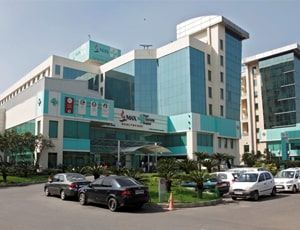
Max Super Speciality Hospital, Saket
Delhi, India
Max Smart Super Speciality Hospital, Saket, is a 250-bed tertiary care hospital awarded NABH accreditation, which provides advanced medical care in various specialities such as Cardiac Sciences, Orthopaedics, Neurology, Urology, Kidney Transplant, Paediatrics, and Obstetrics & Gynaecology. The hospital provides quality, safe, integrated, and patient-centric medical care using modular OTs, ICUs, Cath Labs, CT, MRI and Dialysis units.

Cure My Knee
Delhi, India
Founded in 2020 by Dr. D K Das, Cure My Knee (CMK) Hospital, located in the heart of Delhi, has quickly become a symbol of healthcare excellence. With a focus on orthopedic care, particularly knee surgeries, CMK combines cutting-edge technology with a patient-centric approach to provide seamless, personalized healthcare. The hospital offers a comprehensive range of services, from initial consultations and diagnostic tests to smooth hospital admissions, insurance support, and post-surgery follow-ups, ensuring patients receive the best care at every stage of their treatment journey. Led by a team of expert orthopedic surgeons, Cure My Knee is committed to delivering outstanding surgical outcomes and is expanding its services to multiple locations across India.

Manipal Hospital, Ghaziabad
Ghaziabad, India
Founded in 2010, Manipal Hospital-Ghaziabad (formerly Columbia Asia Hospital) is a well-known multispecialty hospital accredited by the National Accreditation Board for Hospitals and Healthcare Providers (NABH). With 100 beds, the hospital is committed to providing effective and reasonably priced healthcare in a clean and safe setting. The hospital has several departments that are known for their expertise, including Orthopaedics, Internal Medicine, Gastroenterology, Plastic Surgery, Obstetrics and Gynecology, ENT, and more. Due to this recognition, the hospital is now regarded as one of the best medical establishments in the Ghaziabad area.
Our Services to better your experience
Opinion & Option
We submit the most accurate opinion and options from one or more countries for your review
Consult Privately
Consult with a certified specialist privately on our telemedicine platform even before you decide to travel
Logistics
We handle flights, visas, transfers, and accommodation—so you can focus on your health.
Recovery
Our In-house rehabilitation service packages to better your recovery and treatment outcome
Why Choose India for Achondroplasia Treatment?
- Multidisciplinary Specialist Care: Access to orthopedic, neurosurgical, pediatric, genetic, and rehabilitation specialists.
- Advanced Diagnostic Facilities: Modern imaging, genetic testing, and clinical assessments help identify and monitor complications.
- Advanced Treatment Options: Eligible patients may have access to growth-modulating therapies and advanced surgical techniques.
- Personalised Treatment Plans: We tailor treatment to the patient’s age, symptoms, complications, and individual recovery goals.
- Rehabilitation and Recovery: Our facility, MediRehab, is an integral part of MediGence in India and offers speciality rehabilitation services to restore joint function and overall quality of life in osteoarthritis patients.