Your Notifications
All done, no notifications

2 Specialists

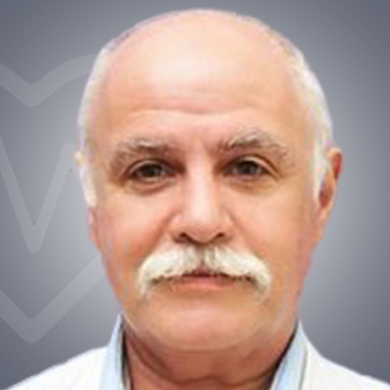
Dr. Alexander Greenstein

Urologist

, Tel Aviv, Israel

40 Years of experience

Speaks: English


Dr. Alexander Greenstein is a specialized Urosurgeon in Israel. And one of the most sought after medical specialists in Tel Aviv, Israel. The doctor has over 40 Years of experience and is associated with Assuta Hospital.

Association and Memberships Dr. Alexander Greenstein is part of:

  • Is the international association of impotence, researchers, associations of doctors of Israel, in the community of urologists US and Israel.

Qualifications :

  • The first medical education AT the Hebrew University then, where clause of He chose for Himself Urological direction. Mandatory internship took place in Ichilov Hospital. Not once raised the qualification at the Hebrew University, and the University of Tel Aviv. Graduate studies in Israel and the United States on a private clinical activity and geariatrii.

Hospital Address :

Assuta Hospital, HaBarzel Street, Tel Aviv-Yafo, Israel

View Profile
Dr. Gal Keren Paz

Urologist

, Tel Aviv, Israel

20 Years of experience

Speaks: Hebrew , English


Dr. Gal Keren Paz is a specialized Urosurgeon in Israel. And one of the most sought after medical specialists in Tel Aviv, Israel. The doctor has over 20 Years of experience and is associated with Tel Aviv Sourasky Medical Center -Ichilov Hospital.

Association and Memberships Dr. Gal Keren Paz is part of:

  • European Association of Urology
  • Israel Medical Association
  • Israel Urological Association
  • American Urological Association

Qualifications :

  • Medical School - Ben-Gurion University of the Negev, Beer-Sheva, 1996-2003
  • Urologic Oncology at Memorial Sloan-Kettering Cancer Center, New York, USA, 2011-2014

Hospital Address :

Tel Aviv Medical Center, Retsif Herbert Samuel Street, Tel Aviv-Yafo, Israel

View Profile

Frequently Asked Questions

What should I look for in the best Trans Urethral Resection of Bladder Tumor (TURBT)', Doctors?

TURBT is a kind of surgical procedure that is employed for the diagnosis and treatment of urethral tumors. Choosing the right doctor is one of the most crucial steps before starting TURBT. When searching for the best doctor consider the following factors to ensure comprehensive and quality care:

Urology Specialization: The first Factor is to look for doctors who specialize in urology, particularly those with expertise in the diagnosis and treatment of bladder conditions.

Board Certification: Ensure that the doctor is board-certified in urology.

Experience with TURBT: Always prefer a doctor with significant experience in performing TURBT procedures. Experience enhances proficiency and the ability to navigate potential challenges during the surgery.

Advanced Technology and Techniques: Select doctors who incorporate advanced technologies and surgical techniques in their practice. This may include the use of state-of-the-art cystoscopes and other equipment for optimal visualization and precision during TURBT.

Education and Training: You can also consider a doctor’s education and training and be updated on the latest advancements in urology.

Apart from these factors, Patient-centered care along with a multidisciplinary role are very important. Keep all these things in mind before finding the right doctor.

How can I find the top Trans Urethral Resection of Bladder Tumor (TURBT)', Doctors?

To find the best surgeon for TURBT, employ a strategic approach:

  • Seek Advice from Healthcare Professionals: Consult your healthcare providers for recommendations on top-notch gastrointestinal surgeons or general surgeons specializing in Lap Cholecystectomy. They can offer valuable insights based on their professional network.
  • Conduct Thorough Online Research: Delve into online research by exploring reputable websites and reading reviews. Real patient stories provide detailed information about surgeons experienced in laparoscopic cholecystectomy. Use this information to make an informed decision.
  • Ask for Personal Recommendations: You can also reach out to trusted sources such as friends, family, or online communities for recommendations. Personal referrals offer firsthand insights from individuals who have successfully undergone the surgery.
  • Explore Medigence: Visit Medigence's website, https://medigence.com, for a thoughtfully curated list of general surgeon experts in performing Laparoscopic gallbladder removal surgery. This platform serves as a reliable resource to connect with experienced healthcare professionals.

By combining these approaches, you can streamline your search and identify a highly skilled gastrointestinal surgeon for effective cholecystectomy.

How do I schedule an online consultation with one of the top Trans Urethral Resection of Bladder Tumor (TURBT)', Doctors listed here?

Scheduling an online consultation with a top TURBIT doctor is simple and convenient. Follow these easy steps:

  • Visit our website www.medigence.com.
  • Navigate to the online appointment booking page.
  • Find the doctor's profile, and locate the profile of the doctor you’d like to consult.
  • You can fill out the consultation request form and follow the instructions to submit your details.
  • Our team will then assist you in organizing a convenient virtual consultation with one of our renowned doctors to discuss your treatment options.
What should I expect during the initial consultation with a Trans Urethral Resection of Bladder Tumor (TURBT)', Doctors?

During the initial consultation with a doctor who specializes in Transurethral Resection of Bladder Tumors (TURBT), you can expect a comprehensive evaluation to determine the best course of action for your specific condition. Here's what you might experience during this consultation:

Medical History Review: The doctor will begin by asking about your medical history, including any previous or current bladder issues, urinary symptoms, and relevant details about your overall health.

Symptom Assessment: If you have any symptoms discussed openly, such as blood in the urine (hematuria), changes in urinary habits, pain, or discomfort.

Physical Examination: A thorough physical examination may be done by the doctor, mainly focusing on the abdomen, genitalia, and digital rectal examination (DRE) in men. This helps the doctor assess the condition of the bladder and surrounding structures.

Review of Diagnostic Tests: If you have undergone any tests previously, such as cystoscopy, imaging studies, or urine cytology, the doctor will review the test reports. These tests help in identifying the presence and characteristics of bladder tumors.

Discussion of Findings: Based on the medical history, symptoms, physical examination, and any diagnostic tests, the doctor will discuss their findings with you. If a bladder tumor is suspected, the doctor may recommend a TURBT procedure for further evaluation and treatment.

Explanation of TURBT Procedure: Your doctor will explain the TURBT procedure, including how it is performed, its purpose in diagnosing and treating bladder tumors, and potential benefits and risks. You will have the opportunity to ask questions and address any concerns.

Treatment Plan: Based on the evaluation, the doctor will outline a treatment plan tailored to your specific condition. This may include details about the TURBT procedure, any additional diagnostic tests, and potential follow-up care.

Addressing Questions and Concerns: Your doctor will encourage you to ask questions and express any concerns you may have about the procedure, recovery, or long-term outlook. it is very important to discuss all queries.

What are the conditions treated by TransUrethral Resection of Bladder Tumor (TURBT)', Doctors?

Transurethral Resection of Bladder Tumor (TURBT) is a surgical procedure mainly used for the diagnosis and treatment of bladder tumors. Doctors who perform TURBT are typically urologists, specializing in the diagnosis and treatment of conditions related to the urinary tract. TURBT doctors can also treat the following conditions:

  • Bladder Cancer
  • Non-Invasive Bladder Tumors
  • Bladder Polyps
  • Bladder Lesions and Abnormalities
  • Hematuria (Blood in Urine)
  • Bladder Tumor Staging
  • Follow-up and Surveillance