Your Notifications
All done, no notifications

136 Specialists

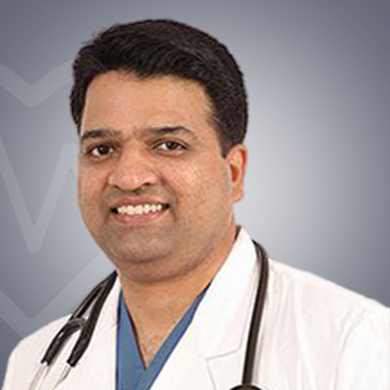
Dr. Deepak Krishnamurthy

Cardiologist

Bangalore, India

25 Years of experience

Speaks: Kannada , English


Dr Deepak Krishnamurthy is one of the leading Interventional Cardiologist in Bengaluru, India. The doctor holds over 17 years of experience and is associated with Sakra World Hospital.

Association and Memberships Dr. Deepak Krishnamurthy is part of:

  • Cardiological Society of India (CSI)
  • Indian Academy of Echocardiography

Qualifications :

  • MD
  • MBBS
  • DNB

Hospital Address :

Sakra World Hospital, Devarabisanahalli, Bellandur, Bengaluru, Karnataka, India

View Profile

Get Insight with our Blogs

Leadless Pacemakers in India: A New Era in Heart Rhythm Management
News

Leadless Pacemakers in India: A New Era in Heart Rhythm Management

India has become a global centre for advanced cardiac care due to steady advancements in clinical technology and therapeutic accessibility. The leadless pacemaker is a groundbreaking advancement in cardiovascular medicine that is revolutionising the treatment of bradycardia.

Published: 27 Oct, 2025
Updated: 27 Oct, 2025

Frequently Asked Questions

Why should a single-chamber pacemaker be implanted in India?

India provides modern cath labs, skilled electrophysiologists, and reasonably priced, high-quality cardiac care. Pacemakers from reputable international brands are used in hospitals. Medical travellers are supported by English-speaking staff. Safety and success rates are comparable to international norms.

Is it safe to implant a single-chamber pacemaker in India?

Yes, stringent infection control and procedural safety measures are followed in Indian hospitals. Under local anesthesia, the minimally invasive procedure is carried out. Major hospitals are JCI-accredited, and cardiologists have extensive training. Wound checks and ECG monitoring are part of post-operative care.

How much time does it take to recover from the procedure?

The actual implantation procedure takes one to two hours, and patients are observed for twenty-four to forty-eight hours after the procedure. The majority are released in two days. A week is typically needed for full recovery, during which time it is advisable to avoid activities that strain the shoulder and heavy lifting.

Do Indian cardiologists have experience with pacemaker implantation?

Indeed, a lot of them specialise in implanting devices and hold international fellowships. Every year, they carry out hundreds of these procedures. Prominent hospitals employ electrophysiologists who are knowledgeable about both single-chamber and dual-chamber systems.

Which Indian hospitals allow foreigners to have pacemakers implanted?

Popular options provide complete international patient services, cardiac intensive care unit support, and device labs. Assistance with reservations is available before arrival.

Before having pacemaker surgery, can I obtain a second opinion in India?

Of course. Indian hospitals provide teleconsultations or in-person consultations for second opinions. To confirm the diagnosis and treatment plan, doctors review Holter, echocardiogram (echo), and electrocardiogram (ECG) data. Before committing to the implant, this gives patients peace of mind. Medigence can assist you in getting a teleconsultation and a second opinion service through its platform.

In India, how is a single-chamber pacemaker implanted?

A lead is inserted into the right chamber of the heart, and the device is implanted beneath the skin close to the collarbone. It’s done under local anesthesia with sedation. The process takes one to two hours. Indian hospitals employ sterile procedures and fluoroscopy.

After pacemaker surgery, can I travel or fly in India?

Yes, if there are no complications, you can fly safely 7–10 days after the procedure. Physicians will provide a pacemaker identification card and a certificate confirming the patient is fit to fly. Steer clear of specific security scanners and don't carry magnets.

Will hospitals assist with lodging and medical visas?

Yes, Indian hospitals have international departments that assist with airport transfers, hotel reservations, and medical visa applications. To enable patients to focus on their care and recovery, concierge teams manage logistics.

Is it possible to monitor a pacemaker remotely in India?

Yes, hospitals provide devices for remote monitoring that send information to your cardiologist. For patients from abroad who are unable to visit often, this is perfect. It facilitates prompt problem solving and early issue detection.