Your Notifications
All done, no notifications

2 Specialists

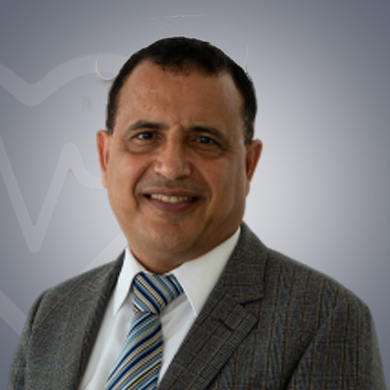
Dr. Mohamed Sulaiman

Pediatric Cardiologist

, Dubai, United Arab Emirates

22 Years of experience

Speaks: Arabic , English


Dr. Mohamed Sulaiman is a specialized Pediatric Cardiologist in United Arab Emirates. And one of the most sought after medical specialists in Dubai, United Arab Emirates. The doctor has over 21 Years of experience and is associated with Kings College Hospital Dubai.

Association and Memberships Dr. Mohamed Sulaiman is part of:

  • Member of the American Academy of Pediatrics
  • Member of The American College of Cardiology

Qualifications :

  • Fellowship in Pediatric Cardiac MRI, Boston Children's Hospital, Harvard Medical School, USA, 2012.
  • Fellowship in Pediatric Cardiology, University of Illinois, USA, 2005 – 2008
  • Board Certified, American Board of Pediatrics (Pediatric Cardiology), University of Illinois, USA, 2008.
  • Board Certified, American Board of Pediatrics (General Pediatrics), Columbia University, USA, 2002.
  • Bachelor of Medicine and Pediatric Residency Sanaa University, Yemen 1995.
  • Member of the American Academy of Pediatrics.
  • Member of the American College of Cardiology.
  • Lead Instructor: PALS, NALS.

Hospital Address :

' -

What is the medical expertise of Dr Mohamed Sulaiman?

  • Dr Mohamed Sulaiman is a leading pediatric cardiologist with 21 years of experience in treating acquired and congenital heart diseases in both children and adults. He is proficient in stress testing, cardiac MRI, transthoracic echocardiography, fetal echocardiography, and transesophageal echocardiography.
  • He is a Fellow of the American College of Cardiology and certified by the American Board of Pediatrics. Dr Sulaiman also completed a Pediatric Cardiac MRI Fellowship at the Boston Children's Hospital, Harvard Medical School, USA.
  • Professionally, Dr Sulaiman is affiliated with noteworthy organizations such as the American College of Cardiology, the American Medical Association and the American Academy of Pediatrics.
  • He has several publications to his credit such as
    1. Alsamri MT, Hamdan MA, Sulaiman M, Narchi H, Souid AK. Hypoxia due to intrapulmonary vascular dilatation in a toddler with a congenital portacaval shunt: a case report. BMC Pulm Med. 2019 Feb 22;19(1):49.
View Profile
Dr. Ahmed Mohammed Al Kamali

Pediatric Cardiologist

, Sharjah, United Arab Emirates

26 Years of experience

Speaks: English , Arabic


Dr. Ahmed Mohammed Al Kamali is a specialized Pediatric Cardiologist in United Arab Emirates. And one of the most sought after medical specialists in Sharjah, United Arab Emirates. The doctor has over 26 Years of experience and is associated with NMC Royal Hospital Sharjah.

Association and Memberships Dr. Ahmed Mohammed Al Kamali is part of:

  • American Academy of Paediatrics

Certifications :

  • Fellowship in Paediatric Cardiology, Canada
  • Fellow of the American Academy of Paediatrics, USA

Qualifications :

  • Degree in Paediatrics, Ireland
  • American Board of Pediatrics
  • Canadian Board of Pediatrics

Hospital Address :

Al Zahra Hospital - Sharjah - United Arab Emirates

What is the medical expertise of Dr Ahmed Mohammed Al Kamali?

  • Dr Ahmed Mohammed Al Kamali is a respected pediatric cardiologist with 26 years of experience in the field. He has treated more than 1000 congenital heart disease cases. His areas of expertise include echocardiography, stenting, coarctation of the aorta, atrial septal defect and aortic valve stenosis.
  • Dr Kamali completed his Pediatric Fellowship at McMaster University, Canada, a Diploma in Child health at the Royal College of Physicians and Surgeons in Ireland and a Pediatric Cardiology Fellowship at the University of Ottawa in Canada.
  • He is a Diplomate of the American Board of Pediatrics and a Fellow of the American Academy of Pediatrics.
View Profile

Frequently Asked Questions

Do UAE hospitals offer advanced technology for ASD closure using the Amplatzer Septal Occluder?

Yes. UAE hospitals are well-equipped with advanced interventional cardiology infrastructure for percutaneous ASD (Atrial Septal Defect) closure using the Amplatzer Septal Occluder. These minimally invasive, catheter-based procedures are performed in high-tech cardiac catheterisation labs with:

  • Real-time fluoroscopy and 3D echocardiographic imaging (TEE, ICE)
  • Septal Occluder and other FDA/CE-approved devices
  • Pediatric and adult cardiac cath labs
  • Transcatheter techniques under general or conscious sedation
  • Multidisciplinary heart teams, including interventional cardiologists and echocardiographers

MediGence partners with many of these hospitals, offering verified cardiologists and streamlined access to ASD device closure packages for both adult and paediatric patients.

Do UAE cardiologists have experience with ASD device closure procedures?

Yes. UAE interventional cardiologists, including those specialising in congenital and structural heart disease, routinely perform ASD closures using devices like the Septal Occluder. They follow global best practices established by:

  • American College of Cardiology (ACC)
  • European Society of Cardiology (ESC)
  • Gulf Heart Association (GHA)

MediGence lists only board-certified and fellowship-trained cardiologists with proven experience in structural heart interventions, including both complex and straightforward atrial septal defect closures.

What conditions require ASD closure with a device?

Percutaneous ASD closure using an Amplatzer device is indicated in patients with:

  • Secundum-type atrial septal defects (most suitable type for device closure)
  • Left-to-right shunt with right heart enlargement
  • Paradoxical embolism or stroke
  • Exercise intolerance, arrhythmias, or pulmonary overcirculation
  • Cryptogenic stroke with patent foramen ovale (PFO)

Device closure is typically done in patients who are asymptomatic but at risk of long-term complications or have symptoms such as fatigue, palpitations, or shortness of breath.

Can device closure of ASD cure the condition?

Yes. For suitable candidates, ASD device closure using the Amplatzer Septal Occluder offers a complete and permanent solution. It eliminates abnormal blood flow between the atria and reduces the risks of:

  • Heart failure or pulmonary hypertension
  • Atrial arrhythmias
  • Stroke due to embolism
  • Right heart dilation and dysfunction

Recovery is quick, with most patients discharged within 24–48 hours. Lifelong monitoring is recommended, but most resume full normal activities in a few weeks.

Is ASD device closure available in the UAE for international patients?

Yes. The UAE is a preferred destination for advanced heart care, including Amplatzer ASD device closures, for international patients. Benefits include:

  • Access to internationally trained cardiologists and hybrid cath labs
  • Fast-track diagnostic workup and same-day interventions
  • Concierge support for travel, medical visas, and translation
  • Child and adult ASD closure expertise under one roof
  • Personalised care pathways and follow-up arrangements

MediGence offers pre-negotiated packages and helps coordinate comprehensive care journeys, from consultation to device closure and post-operative support.

Can I consult with a UAE cardiologist online before travelling?

Yes. UAE-based cardiologists offer teleconsultation services via MediGence to:

  • Review echocardiograms, MRI/CT scans, or cardiac catheterisation reports
  • Determine device closure eligibility and discuss risks/benefits
  • Explain the closure procedure and device type (e.g., Amplatzer)
  • Provide treatment plans, cost estimates, and expected outcomes
  • Assist with medical travel and scheduling hospital admission

Virtual consultations ensure timely and informed decision-making, especially for overseas patients seeking elective or second-opinion procedures.

What qualifications and experience do UAE cardiologists have for ASD device closure?

UAE cardiologists typically:

  • Hold certifications in interventional cardiology and structural heart interventions.
  • Are trained in centres of excellence in the US, UK, Europe, or India
  • Perform both paediatric and adult congenital heart defect closures
  • Are licensed by the Dubai Health Authority (DHA) or the Department of Health – Abu Dhabi
  • Are affiliated with global societies like ESC, ACC, EAPCI, and Emirates Cardiac Society

MediGence carefully vets all listed specialists, ensuring that only qualified and experienced interventional cardiologists are recommended for ASD device closure.

How can I verify the credibility of a UAE cardiologist for ASD closure?

You can verify a specialist’s credentials by:

  • Searching the doctor on the DHA or DoH online registries
  • Viewing their qualifications and training on hospital or MediGence profiles
  • Reading verified patient reviews and outcome testimonials

MediGence ensures transparency by listing only pre-screened, highly experienced physicians and facilities.

What are the advantages of using the Amplatzer Septal Occluder?

The Amplatzer Septal Occluder is one of the most widely used and clinically tested devices for ASD closure, offering:

  • Excellent long-term closure rates (>95%)
  • Low risk of embolisation or device-related complications
  • Minimally invasive approach without open-heart surgery
  • Rapid patient recovery and early discharge
  • Suitability for both children and adults

The device is self-expanding, made from nitinol wire mesh, and placed securely across the septal defect under imaging guidance.

What post-procedure care is required after ASD device closure?

Post-closure care in the UAE includes:

  • Monitoring in a cardiac step-down or day-care unit for 12–24 hours
  • Medications for 3–6 months
  • Follow-up echocardiograms at 1, 6, and 12 months
  • Restrictions on strenuous activity for 1–2 weeks
  • Guidance on infective endocarditis prophylaxis during dental or surgical procedures

MediGence helps patients book their follow-up visits, track medication adherence, and access international second opinions if needed.