Your Notifications
All done, no notifications

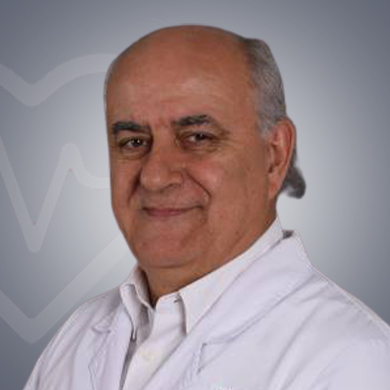
Dr. Josep Brugada

Pediatric Cardiologist

, Barcelona, Spain

40 Years of experience

Speaks: Spanish , Catalan , English , French , Italian


Dr. Josep Brugada is a specialized Pediatric Cardiologist in Spain. And one of the most sought after medical specialists in Barcelona, Spain. The doctor has over 40 Years of experience and is associated with Centro Medico Teknon.

Association and Memberships Dr. Josep Brugada is part of:

  • President of the European Heart Rhythm Association (EHRA) between 2006 and 2008.
  • Member of the Executive Committee, European Society of Cardiology, 2008-2009.
  • Member of the International Advisory Board of the North American Society of Pacing and Electrophysiology (NASPE), 1998-2002.

Qualifications :

  • Masters degree in Integrated Health Services Management. ESADE Business School (2004 2005).
  • Cardiology Specialist, Montpellier, and Sports Medicine and Biology Specialist, Montpellier (1987 1988).
  • PhD in Medicine and Surgery, University of Barcelona (1986 1987).
  • Bachelors Degree in Medicine and Surgery, University of Barcelona (1978 1982).

Hospital Address :

Centro M

Medical Expertise of Dr. Josep Brugada

  • Dr. Brugada Terradellas has more than 20 years of experience as a Medical Director of Cardiology.
  • A recognised expert in cardiac arrhythmia and sports cardiology.
  • He has authored numerous national and international scientific articles, and his research contributions include a profile of a sickness that causes abrupt death (Brugada Syndrome).
  • Dr. Brugada has also received numerous awards for professional performance and is a member of the major medical associations in his field.
  • President of the European Heart Rhythm Association (EHRA) between 2006 and 2008.
  • Member of the Executive Committee, European Society of Cardiology, 2008-2009, Member of the International Advisory Board of the North American Society of Pacing and Electrophysiology (NASPE), 1998-2002.
  • Rich Research and Teaching Experience with 486 publications in journals with an impact factor, total impact factor: 1,824; citations: 20,903; H-index: 68.
View Profile

Frequently Asked Questions

Do Hospitals in Spain Utilise Advanced Cardiac Technologies for Balloon Atrial Septostomy?

Yes. Leading tertiary cardiac centres and paediatric hospitals in Spain are fully equipped with state-of-the-art cardiac catheterisation labs for Balloon Atrial Septostomy (BAS), particularly for neonates and infants with complex congenital heart disease.

Advanced Technologies Include:

  • Paediatric cardiac cath labs with real-time fluoroscopy and echocardiography
  • Transesophageal echocardiography (TEE) and intracardiac echo (ICE)
  • 3D cardiac imaging and mapping systems
  • High-frequency ventilators and neonatal resuscitation equipment
  • Fully equipped NICUs and paediatric ICUs with 24/7 cardiology teams
Do Paediatric Cardiologists in Spain Have Experience with BAS Procedures?

Yes. Spain is home to some of the most experienced paediatric cardiologists and interventional teams in Europe. These specialists:

  • Follow protocols from AEPC, ESC, and SECPCC (Spanish Society of Paediatric Cardiology and Congenital Heart Disease)
  • Are trained in neonatal catheter-based interventions
  • Perform BAS routinely in conditions like TGA, HLHS, and tricuspid atresia

Many Spanish cardiologists have trained in France, Germany, the UK, or the US, and are affiliated with European congenital heart programs.

What Conditions Require Balloon Atrial Septostomy?

BAS is typically performed in the first hours or days of life for infants with cyanotic congenital heart defects, where inter-atrial mixing is inadequate.

Indications Include:

  • Transposition of the Great Arteries (TGA)
  • Tricuspid Atresia
  • Pulmonary Atresia with Intact Ventricular Septum (PA/IVS)
  • Hypoplastic Left Heart Syndrome (HLHS)
  • Double Outlet Right Ventricle (DORV) with restrictive foramen ovale
Is Balloon Atrial Septostomy Curative for Congenital Heart Disease?

No, BAS is a palliative procedure, not curative.

Purpose:

  • Temporarily improves oxygenation
  • Allows stabilisation for definitive corrective surgery (e.g., arterial switch, Fontan, or Glenn procedures)
  • Reduces risk of metabolic or neurologic injury during early infancy
Is BAS Available for International Patients in Spain?

Yes. Spain has a long history of serving international paediatric cardiac patients with:

  • 24/7 emergency catheterisation and neonatal cardiac care
  • International patient departments are fluent in English, Arabic, and French
  • Visa assistance, lodging support, and airport-hospital transfer coordination

MediGence partners with major paediatric cardiac centres in Spain, streamlining urgent admissions for patients requiring life-saving interventions such as BAS.

Can I Consult a Spanish Paediatric Cardiologist Online Before Travelling?

Yes. With MediGence, you can:

  • Upload fetal echocardiograms, MRI, postnatal scans, or genetic reports
  • Discuss: Urgency of the procedure, Hospital readiness & Timing of transfer after delivery
  • Get pre-arrival instructions for NICU preparedness
  • Understand costs, success rates, and long-term follow-up plans
What Qualifications Do Spanish Cardiologists Hold for BAS Procedures?

Spanish paediatric cardiologists performing BAS are:

  • Board-certified in Paediatric Cardiology
  • Fellowship-trained in interventional cardiology or congenital heart disease
  • Licensed under the Spanish Ministry of Health and often holds European Board of Paediatric Cardiology credentials
  • Affiliated with Sociedad Española de Cardiología Pediátrica (SECPCC) and European Society of Cardiology (ESC)
How Can I Verify the Credibility of a Paediatric Cardiologist in Spain?

To verify:

  • Use the SECPCC database or the General Council of Medical Colleges (CGCOM) portal
  • Check hospital affiliations and international fellowships
  • Ask MediGence form: Case volume and Outcomes
  • Read verified reviews and consult ratings on MediGence
How Soon Should Balloon Atrial Septostomy Be Performed?

Timing:

  • Ideally within 24 to 72 hours of life
  • Delay can cause: Hypoxia, Neurological injury, Cardiogenic shock

Spain’s hospitals are well-equipped for emergency catheter-based interventions, and MediGence coordinates prenatal planning to ensure rapid postnatal action.

What Post-Procedural Care Is Needed After BAS?

Post-Procedure NICU Care Includes:

  • Continuous SpO₂ and ECG monitoring
  • Repeat echocardiography to confirm atrial septal communication
  • Medications: Prostaglandins, diuretics, or inotropes as needed
  • Nutritional support for growth and stability
  • Planning of surgical intervention within 2–4 weeks (arterial switch, etc.)