Your Notifications
All done, no notifications

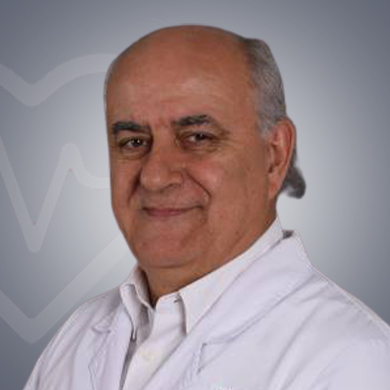
Dr. Josep Brugada

Pediatric Cardiologist

, Barcelona, Spain

40 Years of experience

Speaks: Spanish , Catalan , English , French , Italian


Dr. Josep Brugada is a specialized Pediatric Cardiologist in Spain. And one of the most sought after medical specialists in Barcelona, Spain. The doctor has over 40 Years of experience and is associated with Centro Medico Teknon.

Association and Memberships Dr. Josep Brugada is part of:

  • President of the European Heart Rhythm Association (EHRA) between 2006 and 2008.
  • Member of the Executive Committee, European Society of Cardiology, 2008-2009.
  • Member of the International Advisory Board of the North American Society of Pacing and Electrophysiology (NASPE), 1998-2002.

Qualifications :

  • Masters degree in Integrated Health Services Management. ESADE Business School (2004 2005).
  • Cardiology Specialist, Montpellier, and Sports Medicine and Biology Specialist, Montpellier (1987 1988).
  • PhD in Medicine and Surgery, University of Barcelona (1986 1987).
  • Bachelors Degree in Medicine and Surgery, University of Barcelona (1978 1982).

Hospital Address :

Centro M

Medical Expertise of Dr. Josep Brugada

  • Dr. Brugada Terradellas has more than 20 years of experience as a Medical Director of Cardiology.
  • A recognised expert in cardiac arrhythmia and sports cardiology.
  • He has authored numerous national and international scientific articles, and his research contributions include a profile of a sickness that causes abrupt death (Brugada Syndrome).
  • Dr. Brugada has also received numerous awards for professional performance and is a member of the major medical associations in his field.
  • President of the European Heart Rhythm Association (EHRA) between 2006 and 2008.
  • Member of the Executive Committee, European Society of Cardiology, 2008-2009, Member of the International Advisory Board of the North American Society of Pacing and Electrophysiology (NASPE), 1998-2002.
  • Rich Research and Teaching Experience with 486 publications in journals with an impact factor, total impact factor: 1,824; citations: 20,903; H-index: 68.
View Profile

Frequently Asked Questions

How Do I Choose the Best Specialist for Balloon Angioplasty in Spain?

Balloon angioplasty, also known as Percutaneous Transluminal Coronary Angioplasty (PTCA), is a minimally invasive cardiac procedure that opens blocked or narrowed coronary arteries using a small balloon catheter. It can be performed with or without stent implantation, depending on the type of lesion and the patient's profile.

Key Expertise:

Choose a board-certified interventional cardiologist in Spain with:

  • Extensive experience in balloon angioplasty and PCI
  • Use of advanced tools like intravascular ultrasound (IVUS) or OCT
  • Specialisation in multi-vessel, diabetic, and CTO lesions
  • Skilled in radial and femoral vascular access techniques
How Do I Choose the Best Hospital for Balloon Angioplasty in Spain?

Choose a JCI-accredited or Ministry of Health-approved hospital with a dedicated cardiac catheterisation lab and interventional cardiology unit.

Look For:
  • State-of-the-art cath labs with real-time fluoroscopy and DSA
  • Use of drug-eluting balloons (DEB) when stenting is not suitable
  • Full suite of services for elective and emergency PCI
  • Access to post-intervention cardiac rehab and medication monitoring
Can I Consult with a Specialist Online Before Travelling to Spain?

Yes. Leading hospitals and MediGence offer teleconsultations for cardiac procedures.

You Can:
  • Upload angiograms, ECG, Echo, TMT, and blood results
  • Clarify whether balloon-only angioplasty is appropriate
  • Understand procedural risks, alternatives, and recovery plans
  • Receive a cost breakdown and admission schedule
How Long Will I Need to Stay in Spain for Balloon Angioplasty and Recovery?

Depending on whether the case is elective or urgent, the total stay is typically 7–10 days.

Typical Timeline:
  • Day 1–2: Consultation, diagnostics (lab, imaging, pre-op clearance)
  • Day 3: Angioplasty procedure (usually 1–1.5 hours)
  • Day 4–5: Post-procedure observation (ICU/ward)
  • Day 6–7: Medication titration, discharge planning
  • Day 8–10: Optional follow-up visit and fit-to-fly clearance

Most patients can fly home 3–5 days post-discharge, based on physician approval.

Can International Patients Access Balloon Angioplasty in Spain?

Yes. Spain is a premier medical tourism destination for cost-effective and high-quality cardiac care.

MediGence Provides:
  • Pre-travel case evaluation and cardiologist matching
  • Support with Schengen visa letters and embassy documentation
  • Coordination for airport transfers, interpreter services, and lodging
  • Remote post-treatment consultations and discharge continuity
What Qualifications Should a Balloon Angioplasty Specialist in Spain Have?
Credentials:
  • MD + Cardiology specialisation (via MIR pathway in Spain)
  • Fellowship in Interventional Cardiology or Structural Heart Disease
  • Registered with the Spanish Society of Cardiology (SEC)
Experience:
  • 500+ angioplasty and PCI cases
  • Expertise in complex lesions, restenosis, and high-risk patients
  • Familiarity with DEB, CTO revascularisation, and imaging-guided PCI
Can I Get a Second Opinion from Another Specialist in Spain?

Yes. You can request a second opinion to:

  • Confirm the need for balloon-only PCI vs. stenting
  • Assess risks related to diabetes, age, or renal function
  • Explore surgical vs. interventional options (CABG, hybrid approaches)

MediGence enables remote multi-specialist cardiac panel reviews.

What Should I Expect During a Teleconsultation for Balloon Angioplasty via MediGence?
Your consultation will cover:
  • Review of ECG, Angiography, Echo, TMT, and symptom profile
  • Explanation of balloon angioplasty vs. DES/DEB strategy
  • Clarification of:
    • Procedure duration and access site
    • Medications (aspirin, statins, dual antiplatelet therapy)
    • Dietary and travel precautions
    • Follow-up and recurrence prevention
Can Balloon Angioplasty Be Performed Without a Stent?

Yes. Balloon-only angioplasty (PTCA) is viable when:

  • The artery expands well after balloon dilation
  • Blood thinners are contraindicated (e.g., bleeding risk)
  • It’s a case of in-stent restenosis, treatable with drug-coated balloons (DCBs)
  • However, restenosis rates may be higher compared to stenting, so case selection is critical.