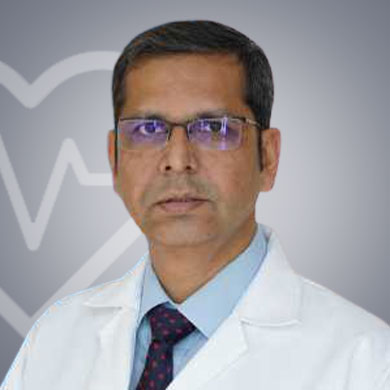
Surgical Oncologist ·
Aakash Healthcare Super Speciality Hospital , Delhi, India
22 Years of experience ·
Languages Spoken: Hindi,English
Conditions treated by Dr. Arun Kumar Giri
Book a secure video consultation for expert Cancer Specialist care.
Upload MRI/CT scans, laboratory reports, prescriptions, and previous medical records. Supported formats: PDF, JPEG, and DICOM.
Consult the Doctor in your preferred language. A family member or caregiver is welcome to join.
Receive a signed medical opinion with diagnosis, treatment recommendations, and next steps in a downloadable PDF.
If needed, our team can assist with a second opinion, hospital appointments, or medical travel arrangements.
A. Dr. Arun Kumar Giri is available to teleconsultate on the MediGence platform.
A. The consultation can last up to 15 to 30 minutes. It may go beyond the estimated time which is dependent on the patient’s queries and the medical suggestions of the doctor.
A. We have Medical specialists and board-certified doctors on our panel of doctors. The consultation will be organized within 24 to 48 hours or based on the availability of the doctor and the patient.
A. No, the follow-up consultation fee is not included in the consultation price. The patient will be required to re-book the consultation.
A. The option to share your medical records is available between the steps of the form provided to you on the website.
A. Yes. If you are satisfied with the consultation, then you can go ahead with treatment packages for your diagnosis with the help of our case managers.
A. Yes. The cost estimate will be provided to you by our case manager including the doctor’s opinion, the cost estimate, and the crucial information about traveling to your medical destination.
Surgical oncologists are specialists who have received training in the diagnosis and treatment of cancer through surgery. A surgical oncologist performs procedures like biopsy and surgery to remove cancerous tissues. A surgical oncologist performs surgeries to know which parts of the body cancer has spread. In order to diagnose cancer, a surgical oncologist might perform biopsies. After a biopsy, a surgical oncologist sends the samples to a pathologist. If cancer is detected, you may need to consult the surgical oncologist again to have the tumor removed. The surgical oncologist performs a staging surgery to determine a tumor’s size.
Some of the most common test performed for the diagnosis of cancer are:
A biopsy is the most common procedure to diagnose most types of cancer. While other tests can only suggest if cancer is present, a biopsy can make an accurate diagnosis. During this process, the doctor removes a very small amount of tissues to observe under a microscope.
You may see a surgical oncologist in case you have abnormal growth or tumor. If your primary doctor suspects cancer, they will refer you to a surgical oncologist for diagnosis. If you have been diagnosed with cancer, a doctor will refer you to surgical oncologists for your cancer treatment. Consider seeking assistance from a surgical oncologist in the below-listed situations:

BPT, MS in Healthcare Mgmt
4 Years of Experience
Last Reviewed - June 2026

Alvina Hasan is a dedicated medical researcher and scientific writer with a strong foundation in pharmaceutical sciences. She holds a B.Pharm from Jamia Hamdard University and an M.Pharm in Quality Assurance from DIPSAR University.
With deep medical expertise and a strong interest in healthcare communication, she focuses on transforming complex clinical and scientific information into clear, engaging, and easy-to-understand narratives. She develops insightful healthcare articles and research-driven content designed to support both medical professionals and patients, helping bridge the gap between advanced medical knowledge and practical understanding.
Readers can explore her published research and articles here:
Have your reports reviewed by independent oncology experts to help you make a confident treatment decision, all online within 48 hours

Surgical procedures, radiation therapy, medications, and other treatments are used to treat cancer. Healing, reducing, or preventing the spread of cancer is the aim of cancer treatment.